
keep Oriental Cockroaches Out of your Home
Get expert guidance on identifying, preventing, and managing this dark, moisture-seeking pest with confidence.
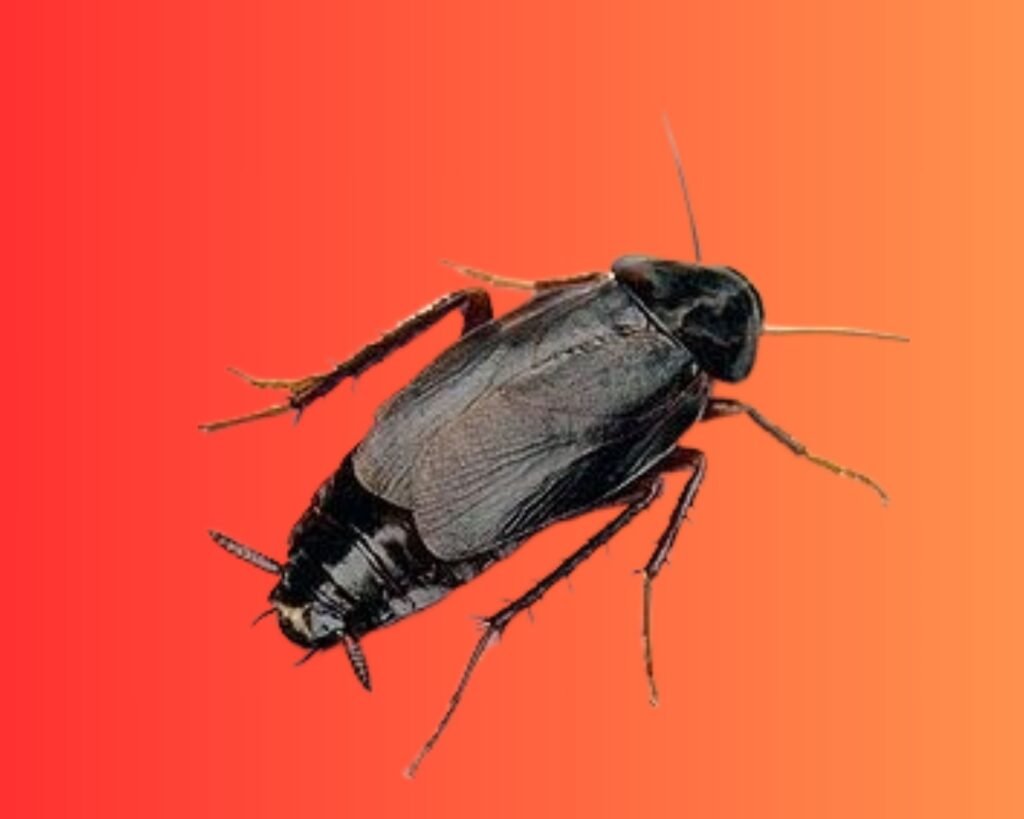
The Oriental Cockroach (Blatta orientalis) is a common household pest known for its dark, glossy appearance and preference for damp environments. Often referred to as the “water bug” or “black beetle cockroach,” this species is distinct from the faster-moving German and American cockroaches, making it easier to identify once you know what to look for.
Understanding the Oriental Cockroach is important for homeowners and business owners alike, as infestations can pose significant health and hygiene risks. These cockroaches are known to carry bacteria, contaminate food, and trigger allergic reactions, especially in sensitive individuals. Beyond the health risks, they are unsightly and can quickly multiply in hidden areas such as basements, drains, and crawl spaces.
If left unchecked, Oriental Cockroaches can become a persistent nuisance, thriving in damp, dark areas where they are difficult to detect. This guide will help you identify, prevent, and control Oriental Cockroaches effectively, offering practical tips for keeping your home or workplace safe and hygienic while minimizing the risk of infestations.
Identification & Physical Characteristics
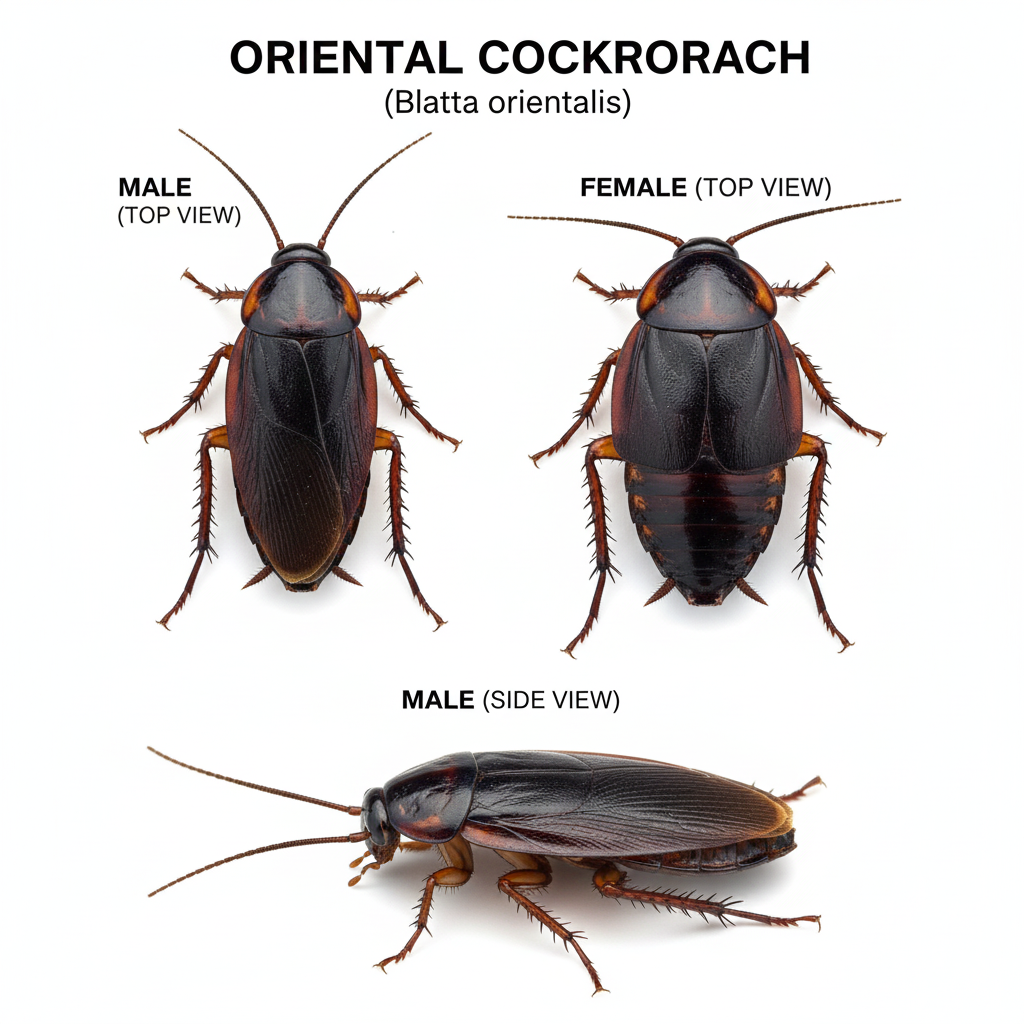
Oriental Cockroaches (Blatta orientalis) are one of the most easily recognizable household pests due to their distinct dark, glossy appearance and slow-moving behavior. Understanding their physical characteristics is crucial for proper identification and effective control.
Size & Appearance
Oriental Cockroaches are relatively large compared to some other common cockroach species, with adults typically measuring around 1 inch (2.5 cm) in length. They have a dark brown to black coloration and a shiny, almost glossy body surface, which can make them appear wet or slick. Unlike American or German cockroaches, Oriental Cockroaches are slow-moving and less likely to scatter when disturbed.
Sexual dimorphism is notable in this species. Males are slightly smaller, with wings that extend about halfway down their abdomen. However, they rarely fly. Females are larger, bulkier, and either wingless or have very short wings that do not allow flight. This difference in appearance makes it easier to identify adult males and females at a glance.
Life Stages
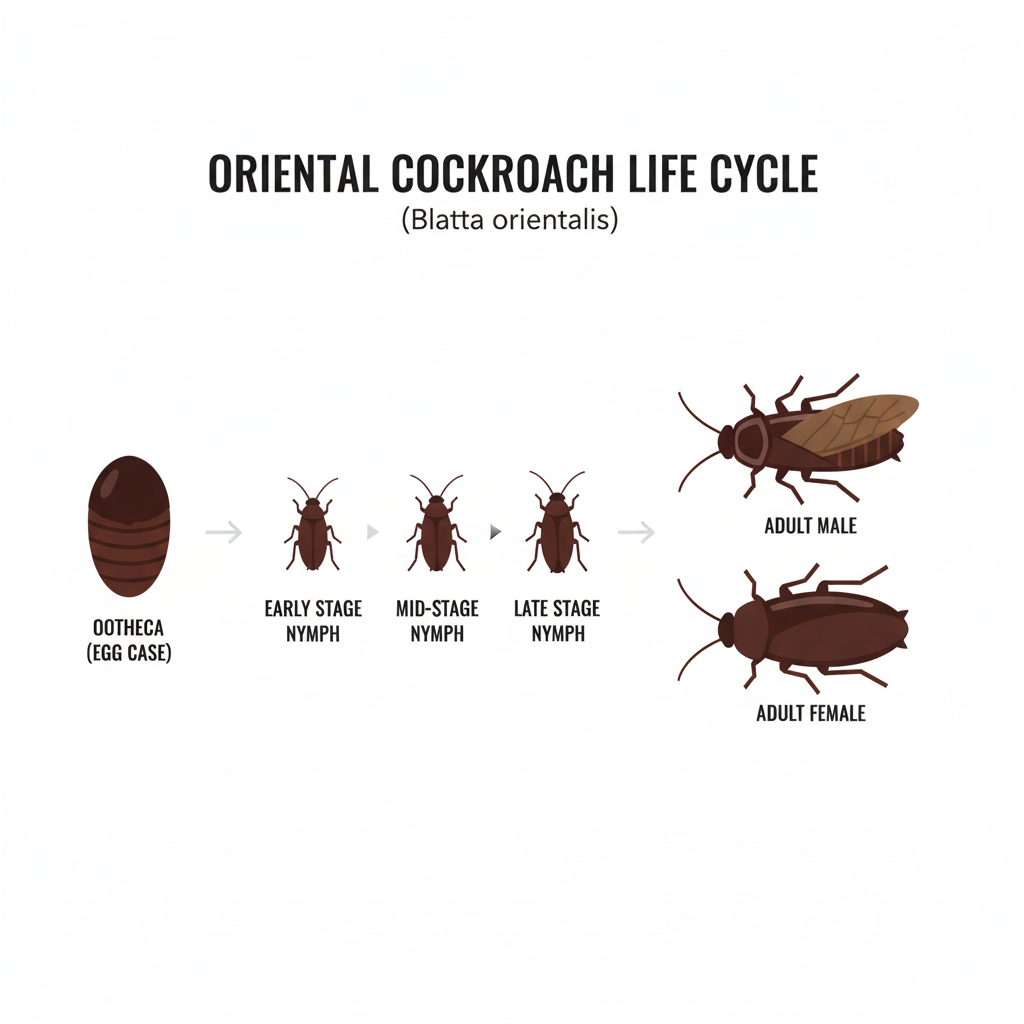
- Egg Cases (Ootheca): Female Oriental Cockroaches produce brown, capsule-like egg cases containing 16–18 eggs. These oothecae are often deposited in damp, hidden locations, making early detection challenging.
- Nymphs: Newly hatched cockroaches are called nymphs. They are smaller, wingless, and dark brown, gradually darkening as they mature.
- Adults: Fully grown cockroaches are dark, glossy, and slow-moving. Adult females tend to stay near moisture sources, while males may roam slightly further in search of mates.
Distinguishing Features
Oriental Cockroaches differ from other common species:
- German cockroaches are smaller, light brown, and faster.
- American cockroaches are larger, reddish-brown, and more agile.
Behaviorally, Oriental Cockroaches are more likely to be found in damp, dark environments, including basements, sewers, drains, and under mulch or leaf litter outside. Their slow movement and preference for moist areas are key indicators when identifying this species. Observing these traits can help homeowners quickly determine the presence of Oriental Cockroaches and take steps to control infestations before they spread.
Habitat & Behavior
Oriental Cockroaches (Blatta orientalis) are commonly found in damp, dark, and secluded environments. Their preference for moisture and low-light areas makes them one of the most persistent household pests, especially in older buildings, basements, and areas with plumbing issues. Understanding their habitat and behavior is key to preventing and controlling infestations.
Preferred Locations
Oriental Cockroaches thrive in damp, dark, and secluded areas, making them particularly common in places with high moisture. Indoors, they are often found in basements, crawl spaces, bathrooms, and kitchens, especially near sinks, drains, and leaky pipes. Outdoors, they can inhabit sewers, storm drains, mulch piles, compost heaps, and leaf litter, where moisture and organic material provide both shelter and food. These cockroaches prefer environments with limited light and high humidity, which is why they are rarely seen during the day.
Activity Patterns
Oriental Cockroaches are nocturnal, meaning they are most active at night when searching for food or water. During daylight hours, they hide in cracks, crevices, or other dark, protected areas to avoid predators and human activity. Their slow movement makes them easier to spot when disturbed, but it also allows them to stay hidden and undetected for long periods, increasing the risk of unnoticed infestations.
Diet
These cockroaches are omnivorous scavengers, feeding on a wide variety of organic materials. Their diet includes decaying plant matter, food scraps, garbage, and even pet food. This adaptability in feeding allows them to survive in both indoor and outdoor environments. Indoors, they are attracted to improperly stored food, dirty dishes, and garbage bins, making sanitation a key factor in controlling infestations.
Behavioral Traits
- Slow movement: Oriental Cockroaches move much more slowly than German or American cockroaches, which contributes to their “creeping” appearance.
- Limited flying ability: Males have wings but rarely fly, while females are mostly wingless.
- Reproduction patterns: Females can produce one ootheca every 4–6 weeks, each containing 16–18 eggs. Under ideal conditions, their population can grow quickly, making early detection crucial.
Health Risks & Concerns
Oriental Cockroaches (Blatta orientalis) are more than just an unsightly nuisance—they can pose significant health risks to humans. Understanding these risks is crucial for homeowners, businesses, and anyone managing environments where these pests may thrive.
Potential to Spread Diseases
Oriental Cockroaches are capable of contaminating food and surfaces as they move, carrying bacteria and pathogens on their bodies. They have been associated with the potential transmission of harmful bacteria, including Salmonella and E. coli, which can lead to gastrointestinal illnesses in humans.
Allergic Reactions
Cockroach droppings, shed skins, and body parts are common allergens, potentially triggering asthma attacks, respiratory issues, or skin irritation, especially in children or sensitive individuals.
Psychological Impact
The presence of cockroaches in a home can cause stress, anxiety, and discomfort, particularly if infestations are large or recurring. Many people experience a strong aversion or fear toward cockroaches, making early prevention and removal important for mental well-being.
Signs of Infestation
Detecting an Oriental Cockroach infestation early can help prevent a larger problem. Common signs include:
- Fecal droppings: Small, dark, cylindrical droppings often found near food sources or hiding spots.
- Unpleasant odor: A musty, oily smell may develop in areas with heavy infestations.
- Egg cases (ootheca) sightings: Brown, capsule-like egg cases deposited in hidden, damp areas.
- Stains or smears: Marks along walls, baseboards, or surfaces where cockroaches travel.
- Sightings in damp areas: Seeing cockroaches in basements, drains, crawl spaces, or around sinks, particularly at night, is a clear indication of their presence.
Identifying these signs early allows homeowners to take action before the infestation spreads and becomes more difficult to control.
Prevention & DIY Measures
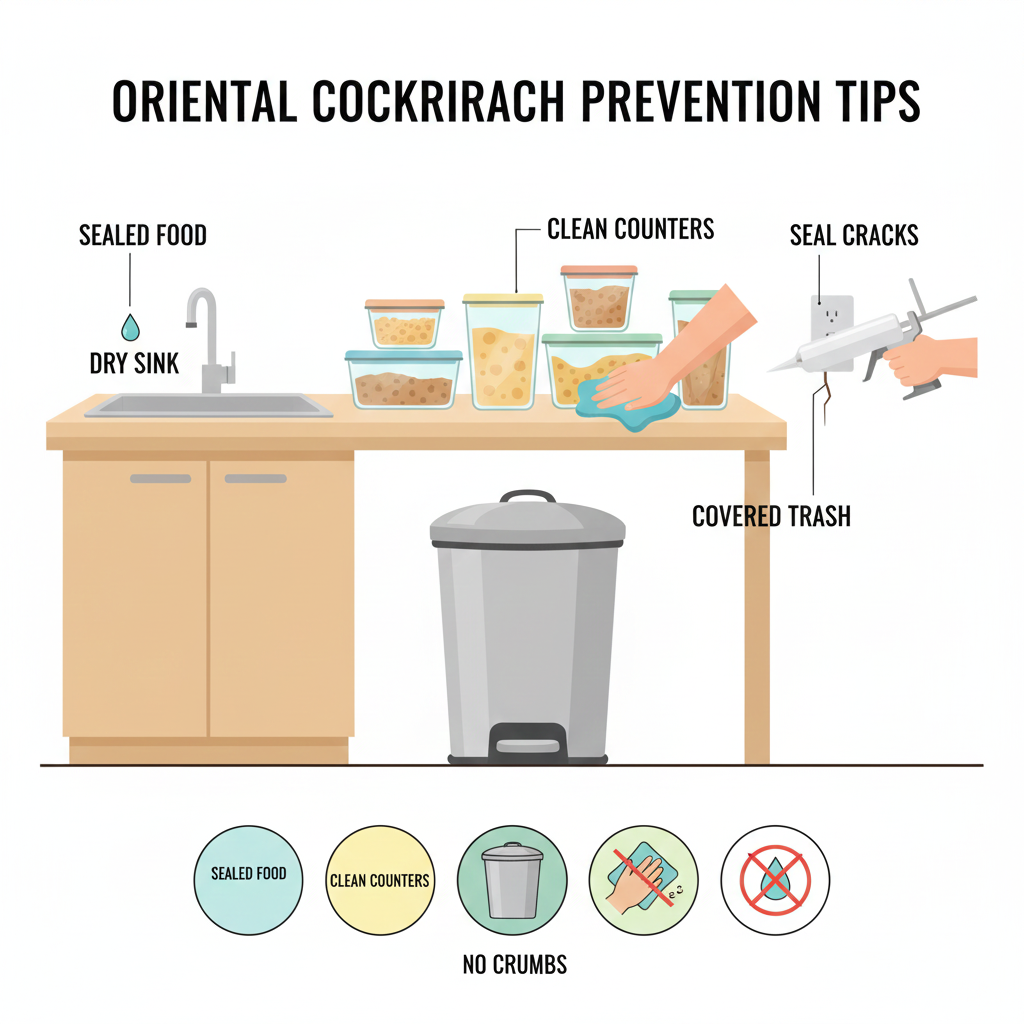
Preventing Oriental Cockroach infestations requires a combination of sanitation, moisture control, sealing entry points, and strategic use of traps or baits. These measures can significantly reduce the likelihood of infestations before they become severe.
Sanitation Tips
Maintaining a clean environment is one of the most effective ways to prevent cockroach problems. Key steps include:
- Regular Cleaning: Frequently sweep, vacuum, and mop floors to remove food debris and crumbs. Clean under appliances and furniture where food particles can accumulate.
- Proper Food Storage: Store food in airtight containers, and avoid leaving pet food out overnight. Make sure pantry items are sealed and check for spills or leaks regularly.
- Trash Management: Empty garbage bins daily and use tightly sealed trash cans. Avoid leaving outdoor trash near the foundation of your home, as it can attract cockroaches.
Moisture Control
Oriental Cockroaches thrive in damp environments. Reducing moisture can make your home less hospitable:
- Fix Leaks & Reduce Standing Water: Repair dripping faucets, leaking pipes, and water damage promptly. Ensure there is no standing water in sinks, bathtubs, or basements.
- Ventilation Improvements: Use exhaust fans in bathrooms and kitchens, and consider dehumidifiers in basements or crawl spaces to keep humidity levels low.
Sealing Entry Points
Prevent cockroaches from entering your home by addressing structural gaps:
- Caulking Cracks, Doors, and Windows: Seal openings around windows, doors, vents, and foundation cracks. Pay attention to gaps near plumbing pipes, drains, and electrical conduits.
- Door Sweeps & Weather Stripping: Install door sweeps and weather stripping to block cockroach access under doors and around entry points.
Traps & Baits
Traps and baits can help reduce populations and monitor activity:
- Homemade vs Commercial Traps: Sticky traps can capture cockroaches for monitoring, while gel baits target feeding adults. Commercial baits are often more effective due to their attractants and insecticidal properties.
- Placement: Place traps along walls, behind appliances, and near moisture-prone areas for best results.
Professional Control & Extermination
While DIY methods are helpful for prevention or small infestations, professional pest control may be necessary for persistent or severe Oriental Cockroach problems.
When to Call a Professional
- Large Infestations: If cockroaches are seen frequently in multiple areas of the home.
- Persistent Problems: When DIY efforts fail to reduce sightings, or infestations continue to spread despite preventive measures.
Methods Used
Professionals employ several strategies to eliminate cockroaches effectively:
- Chemical Treatments: Gel baits, insecticidal sprays, and dusts designed to target cockroaches while minimizing exposure to humans.
- Integrated Pest Management (IPM): A holistic approach combining sanitation, moisture control, sealing entry points, monitoring, and chemical treatments for long-term control.
Safety Tips
When using chemical treatments, it’s essential to prioritize safety:
- Handling Chemicals: Follow label instructions, wear gloves, and avoid direct contact with skin.
- Protecting Pets and Children: Keep treated areas off-limits until chemicals are fully dry or settled, and store insecticides out of reach.
Oriental Cockroach vs Other Common Cockroaches
Understanding the differences between cockroach species helps with accurate identification and control. Here’s a quick comparison:
Feature | Oriental Cockroach | German Cockroach | American Cockroach |
Appearance | Dark brown to black, glossy; females wingless or short wings | Light brown with two dark stripes on pronotum | Reddish-brown, larger, with fully developed wings |
Behavior | Slow-moving, prefers damp areas | Fast, agile, often found indoors | Fast, more mobile, may fly short distances |
Habitat | Basements, drains, sewers, damp outdoor areas | Kitchens, pantries, bathrooms | Basements, garages, sewers, outdoor debris |
Speed of Movement | Slow | Very fast | Fast |
By comparing these traits, homeowners can identify the species present and implement the most effective control measures. Proper identification is crucial because different species respond differently to treatments, making tailored prevention and extermination strategies more effective.
Frequently Asked Questions (FAQs)
1. Are Oriental Cockroaches dangerous?
Oriental Cockroaches are not venomous and do not bite humans under normal circumstances. However, they are considered a health hazard because they can contaminate food, kitchen surfaces, and utensils. They often carry bacteria and pathogens picked up from sewers, drains, and decaying organic matter, including Salmonella and E. coli, which can cause foodborne illnesses. Their droppings, shed skins, and body parts can also act as allergens, triggering asthma, respiratory issues, or allergic reactions in sensitive individuals.
- How do Oriental Cockroaches enter homes?
These cockroaches are skilled at exploiting small openings. Common entry points include:
- Cracks around doors, windows, and baseboards
- Gaps near pipes, vents, and utility lines
- Openings around sewers, drains, and crawl spaces
They can also migrate from outdoor damp areas, such as mulch, compost, or leaf litter, into basements or other moist indoor areas. Proper home maintenance and sealing gaps are crucial to keep them out.
- How long do Oriental Cockroaches live?
The average lifespan is 6–12 months, depending on environmental conditions. Females tend to live longer and are capable of producing multiple egg cases (oothecae) during their lifetime, each containing 16–18 eggs. In favorable conditions with abundant moisture and food, populations can increase rapidly, making early detection and control essential.
- Do Oriental Cockroaches bite?
Oriental Cockroaches are not aggressive and rarely bite humans. They primarily scavenge for decaying organic material, food scraps, and garbage. Bites are extremely uncommon and generally occur only if a cockroach is accidentally trapped against the skin. Their main concern is contamination and health risk, not direct physical harm.
- Can I get rid of them without a professional?
Small infestations can often be handled with DIY prevention and control measures, including:
- Maintaining strict cleanliness and sanitation
- Reducing moisture and humidity
- Sealing entry points such as cracks and gaps
- Using traps, baits, or sticky monitors strategically
However, for large or persistent infestations, DIY methods may not be sufficient. Professional pest control ensures comprehensive elimination, especially when cockroaches have spread to hidden or hard-to-reach areas.
- Where are Oriental Cockroaches most commonly found?
Indoors, they prefer basements, crawl spaces, kitchens, bathrooms, and laundry rooms, particularly near water sources like sinks, drains, and pipes. Outdoors, they inhabit sewers, storm drains, compost piles, mulch, leaf litter, and damp soil. Their preference for dark, moist environments helps them survive and reproduce, often unnoticed until populations grow.
- How do I prevent Oriental Cockroaches from returning?
Prevention focuses on eliminating food, water, and shelter:
- Clean regularly, especially under appliances and along walls
- Store food in airtight containers and remove pet food overnight
- Repair leaks and reduce moisture in bathrooms, kitchens, and basements
- Seal cracks, gaps, and openings around doors, windows, and utilities
- Use traps and baits to monitor and reduce activity
Consistency is key—even a small lapse in sanitation or moisture control can attract cockroaches.
- How can I tell Oriental Cockroaches apart from other species?
Oriental Cockroaches are dark brown to black, with a glossy body, flattened shape, and slow movement. Females are wingless or have very short wings, while males have short wings but rarely fly. In contrast:
- German cockroaches are smaller, light brown, fast-moving, and found mainly indoors.
- American cockroaches are larger, reddish-brown, more agile, and capable of short flights.
Behavioral traits like slow movement and preference for damp areas also help in identification.
- Are Oriental Cockroaches attracted to light?
No, Oriental Cockroaches are nocturnal and avoid light. They hide in dark, moist areas during the day and come out at night to search for food and water. This behavior makes early detection difficult, as they are seldom seen in well-lit areas unless disturbed.
- What are the signs of an infestation?
Common indicators include:
- Fecal droppings: small, dark, cylindrical pellets near hiding areas
- Unpleasant odor: a musty or oily smell in heavily infested areas
- Egg cases (oothecae): brown capsules hidden in damp, dark corners
- Stains or smears: along walls, baseboards, or under sinks
- Sightings at night: especially in basements, drains, or crawl spaces
Early detection is essential to prevent rapid population growth and extensive contamination.
Conclusion
Oriental Cockroaches are persistent, moisture-loving pests that thrive in damp, dark environments and pose both health and hygiene risks. While they do not bite, their ability to contaminate food and surfaces and trigger allergies makes them a serious concern for households and businesses alike.
The key to controlling these pests is a combination of:
- Identification: Recognize their appearance, behavior, and preferred habitats.
- Prevention: Maintain cleanliness, reduce moisture, and seal entry points.
- Early action: Use traps, baits, or professional services before infestations spread.
For small issues, homeowners can implement DIY measures like sanitation, moisture control, and baiting. For larger or recurring infestations, professional pest control ensures safe, thorough, and lasting results.