Can't Identify the Bug? Accurate insect Identification made easy
Get clear, expert guidance to help you recognize unfamiliar insects and understand what type of pest you’re dealing with.
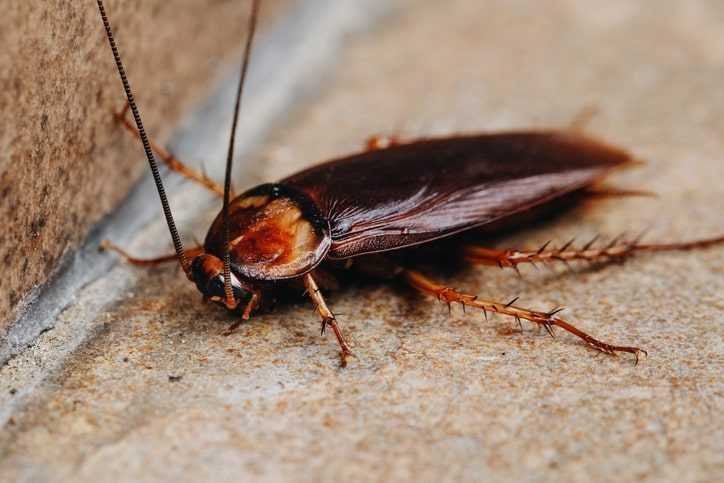
Many homeowners frequently encounter unidentified insects in their homes, garages, or gardens and are often unsure whether these small creatures pose a threat. It’s common to see a tiny brown bug in the kitchen, a crawling insect near the bathroom, or even an unusual critter in the basement and immediately assume the worst. While some insects, like cockroaches, termites, or disease-carrying flies, can affect health or property, many lookalike insects are harmless and require no treatment. Misidentifying insects can result in unnecessary stress, wasted effort, or the application of chemicals that aren’t needed.
Accurate identification is therefore essential before taking any action. Understanding exactly what you’re dealing with allows you to determine whether an infestation is real, what risk it poses, and what steps—if any—are necessary to eliminate it safely and effectively. Mistaken assumptions can lead to wasted time, ineffective DIY treatments, and in some cases, exposure to unnecessary pesticides.
To help homeowners make informed decisions, this guide provides detailed comparison tools, high-quality photographs, and clear identification criteria for common household and garden insects. By following this structured approach, you can quickly distinguish between problematic pests and harmless lookalikes, saving both time and money.
Call-to-Action: Start with our step-by-step identification guide to determine exactly what insect you’re seeing, and learn the safest and most effective way to address it.
Why Proper Identification Matters
Understanding the type of insect you’re dealing with is crucial for safety, effectiveness, and efficiency. Here’s why:
1. Health and Safety
Some insects, like cockroaches, termites, and certain flies, pose significant health or property risks. Cockroaches can contaminate food and surfaces with bacteria, while termites can cause structural damage over time. Meanwhile, many insects commonly mistaken for cockroaches—such as silverfish, earwigs, or sowbugs—are harmless and do not carry diseases or destroy property. Accurate identification allows homeowners to focus efforts on actual threats and avoid unnecessary concern over harmless insects.
2. Targeted Control
Different insects require different control strategies. Misidentifying an insect can make treatments ineffective or even counterproductive. For example:
Treating silverfish like cockroaches may involve unnecessary pesticides with no real effect.
Termite infestations require professional treatment, whereas harmless beetles may only need sanitation and exclusion measures.
Knowing the species ensures that control measures are appropriate, effective, and safe.
3. Prevention of Unnecessary Chemicals
Using chemicals without knowing the species can expose your family, pets, and the environment to unnecessary toxins. By identifying the insect first, you can decide whether a simple preventive measure, like cleaning or sealing gaps, is sufficient, or whether professional intervention is necessary.
4. Encourage a Methodical Approach
Instead of reacting impulsively or guessing, take a calm, methodical approach: observe the insect carefully, note its physical characteristics and behavior, and compare it with reference images or guides. A thoughtful approach reduces stress, prevents mistakes, and ensures that your pest management strategy is both safe and effective.
Start With Identification Guide
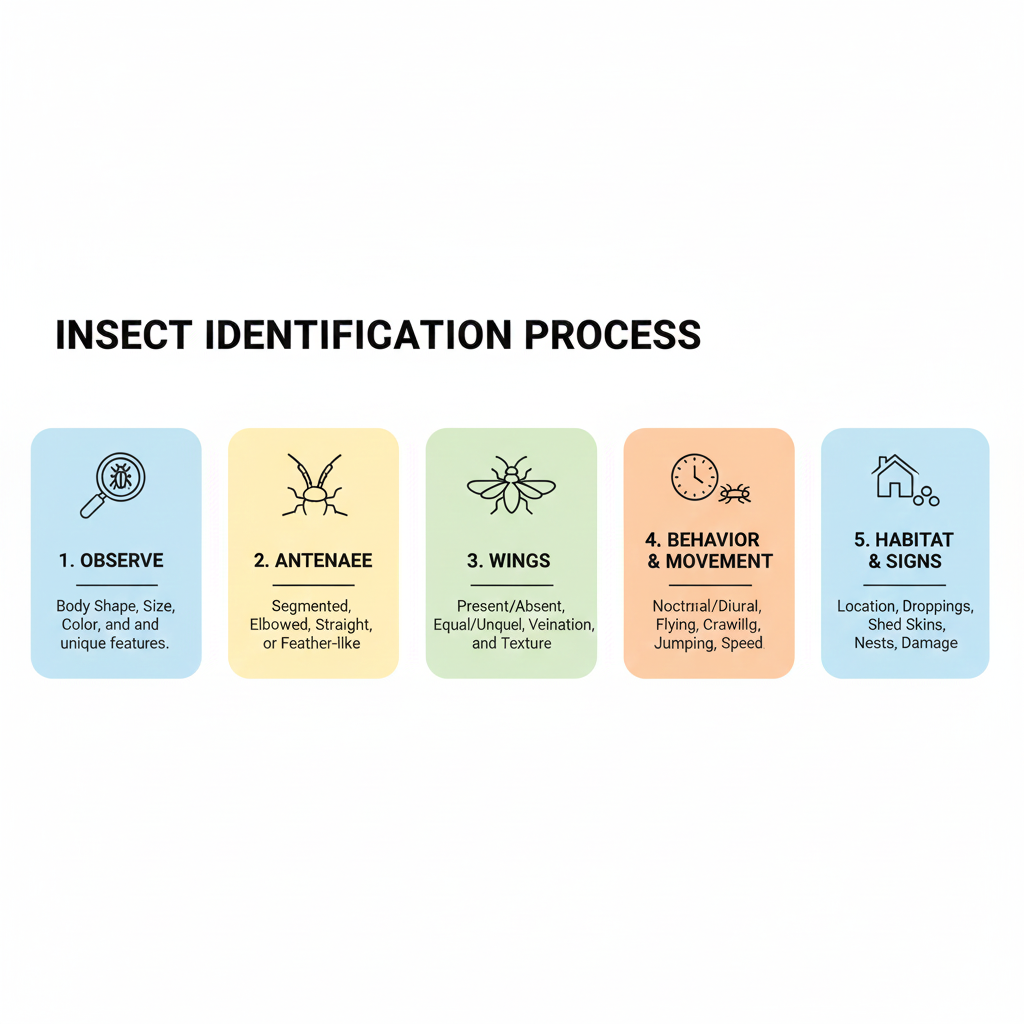
To identify insects accurately, follow this step-by-step process, which combines observation, behavior analysis, habitat assessment, and visual comparison.
A. Step-by-Step Identification Process
Accurate insect identification is the foundation of effective pest control. Whether you’re trying to determine if a bug is a cockroach, beetle, silverfish, termite, or something else entirely, following a structured process helps ensure you reach the right conclusion—without guesswork or unnecessary treatments.
Below is a clear, thorough, homeowner-friendly identification procedure designed to help anyone quickly narrow down the possibilities and match the insect to the correct species.
1. Observe the Insect
Careful observation is the foundation of accurate identification. Take note of:
Color and pattern: Is it brown, black, or multicolored? Does it have stripes, spots, or other markings?
Size and shape: Is the body flattened, cylindrical, oval, or segmented?
Wings: Are there fully developed wings, small wings, or no wings at all?
Legs: Count the number and observe whether they are long, short, adapted for jumping, or crawling.
Antennae: Note length, thickness, and shape. Cockroach antennae, for example, are long and slender, while beetle antennae are often shorter and thicker.
Tip: If possible, take a clear close-up photo. A photo allows for more accurate comparison with guides and can be shared with professionals if needed.
2. Behavior and Movement
Observing how an insect moves provides important clues:
Activity patterns: Is it nocturnal, active only at night, or does it move during the day?
Type of movement: Does it crawl, scuttle, jump, or fly?
Location: Where was it found—kitchen, bathroom, basement, garden, or outside? This helps distinguish indoor pests from harmless outdoor insects.
3. Habitat Preferences
Understanding the preferred habitat of an insect is critical:
Indoor vs. outdoor: Some insects invade homes occasionally, while others live exclusively indoors.
Damp areas, wood, soil, or leaf litter: Termites are wood dwellers, cockroaches prefer moisture and food sources, silverfish like damp areas, and earwigs prefer mulch or garden debris.
Food sources: Note whether the insect is near stored food, decaying organic matter, or plant material.
4. Signs of Infestation
Look for indirect evidence that indicates a real infestation:
Droppings: Unique to species like cockroaches.
Egg cases or shed skins: Found in dark, hidden areas.
Structural damage: Chewed wood or paper may indicate termites or silverfish.
Odors: Musty, oily smells can indicate cockroach activity.
5. Compare to Reference Images
Finally, match your observations with high-quality reference photos:
Side-by-side comparisons highlight distinguishing features like body shape, wing type, antennae, and legs.
Look at guides for common household insects and garden pests to identify both threats and harmless lookalikes.
Reference images allow you to confirm identification confidently before deciding whether treatment is needed.
Tools and Resources
To further support accurate identification, the guide includes:
1. Photo Galleries
- High-resolution images of cockroaches, beetles, ants, termites, silverfish, earwigs, and more
- Multiple angles (top, side, close-up of antennae, wings, legs)
- Life stages (nymphs, adults, swarmers, larvae)
2. Comparison Charts
Quick-reference visuals that compare:
- Body shapes
- Antennae type
- Wing structure
- Behavior patterns
- Common hiding spots
3. Printable Identification Sheets
- Easy-to-use worksheets for checking off insect characteristics
- Perfect for DIY inspections or monitoring over time
Common Household Insects and Their Lookalikes
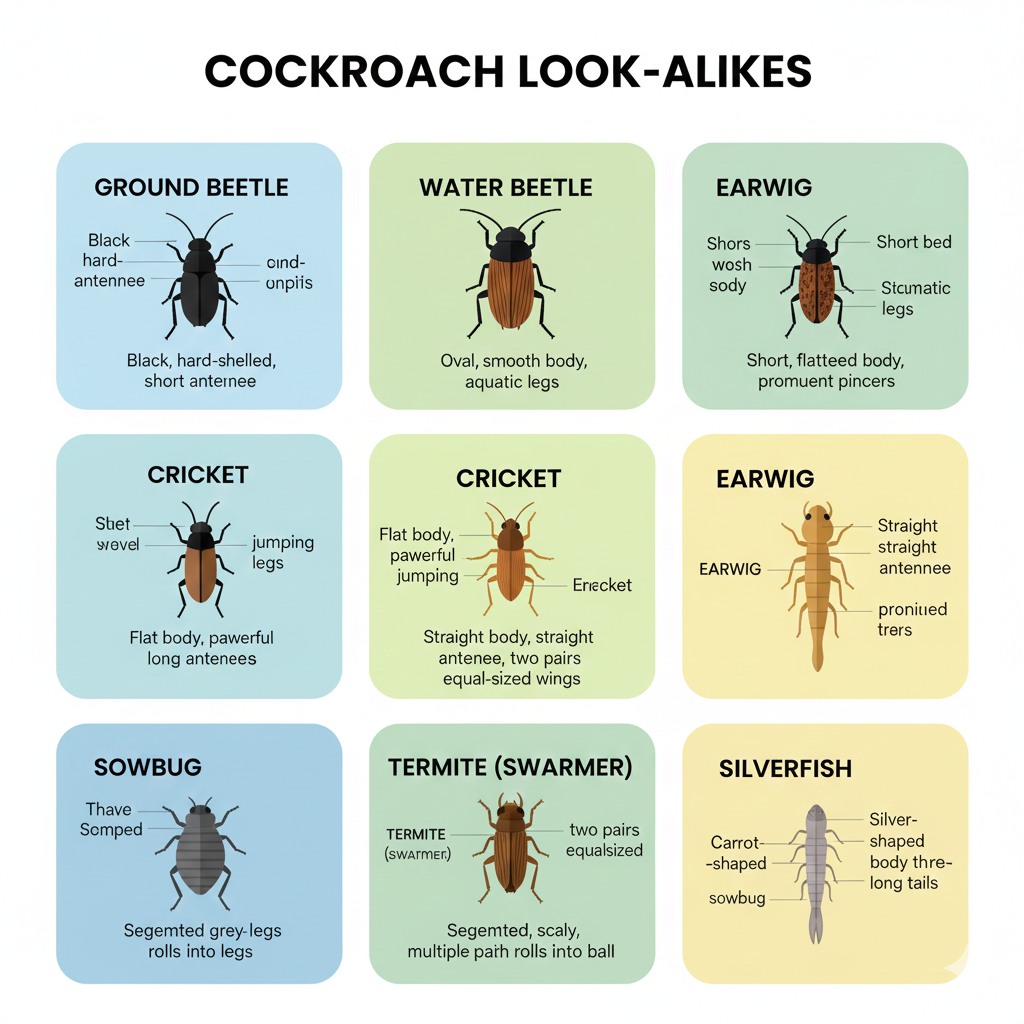
Many insects found indoors look surprisingly similar at first glance. This often leads to confusion, unnecessary panic, or even misdirected pest-control efforts. The sections below break down the most commonly confused insects, helping homeowners understand the differences and determine whether the insect poses a risk.
Cockroaches vs. Beetles, Earwigs, Crickets, Silverfish
Description
Many homeowners panic when they spot a dark, crawling insect in their kitchen or basement, assuming it’s a cockroach. However, numerous insects share similar shapes, colors, or movement patterns and are often misidentified. Cockroaches—especially Oriental, German, and American varieties—are commonly confused with ground beetles, earwigs, crickets, and silverfish.
Distinguishing Features
- Cockroaches have flat, oval bodies, long whip-like antennae, and a shield-like pronotum that partially hides the head. Their wings vary by species, and they move quickly when disturbed.
- Beetles have hard wing covers (elytra), shorter antennae, and a rounded or domed shape. They cannot flatten their bodies like cockroaches can.
- Earwigs have noticeable pincers (cerci) at the back of their abdomen and long, narrow bodies. Their pincers make them easy to identify.
- Crickets possess large, powerful hind legs built for jumping, which cockroaches lack. They also produce chirping sounds.
- Silverfish have tapered, carrot-shaped bodies with silvery scales and three tail-like appendages. Their movement is quick and fish-like.
Typical Habitats
- Cockroaches: Kitchens, bathrooms, basements, drains, behind appliances, and areas with moisture and food debris.
- Beetles: Near doors, basements, outdoor entry points, or near lights at night.
- Earwigs: Damp foundations, mulch, bathrooms, and basements.
- Crickets: Warm, dark areas like basements, utility rooms, and garages.
- Silverfish: Bathrooms, closets, attics, bookshelves, and storage boxes.
High-Quality Photo Examples
Include close-up photos of:
- Cockroach vs ground beetle (antennae and body shape comparison)
- Cockroach vs earwig (cerci and body length comparison)
- Cockroach vs cricket (legs and posture comparison)
- Cockroach vs silverfish (body texture and shape comparison)
Ants vs. Termites (Winged Swarms)
Description
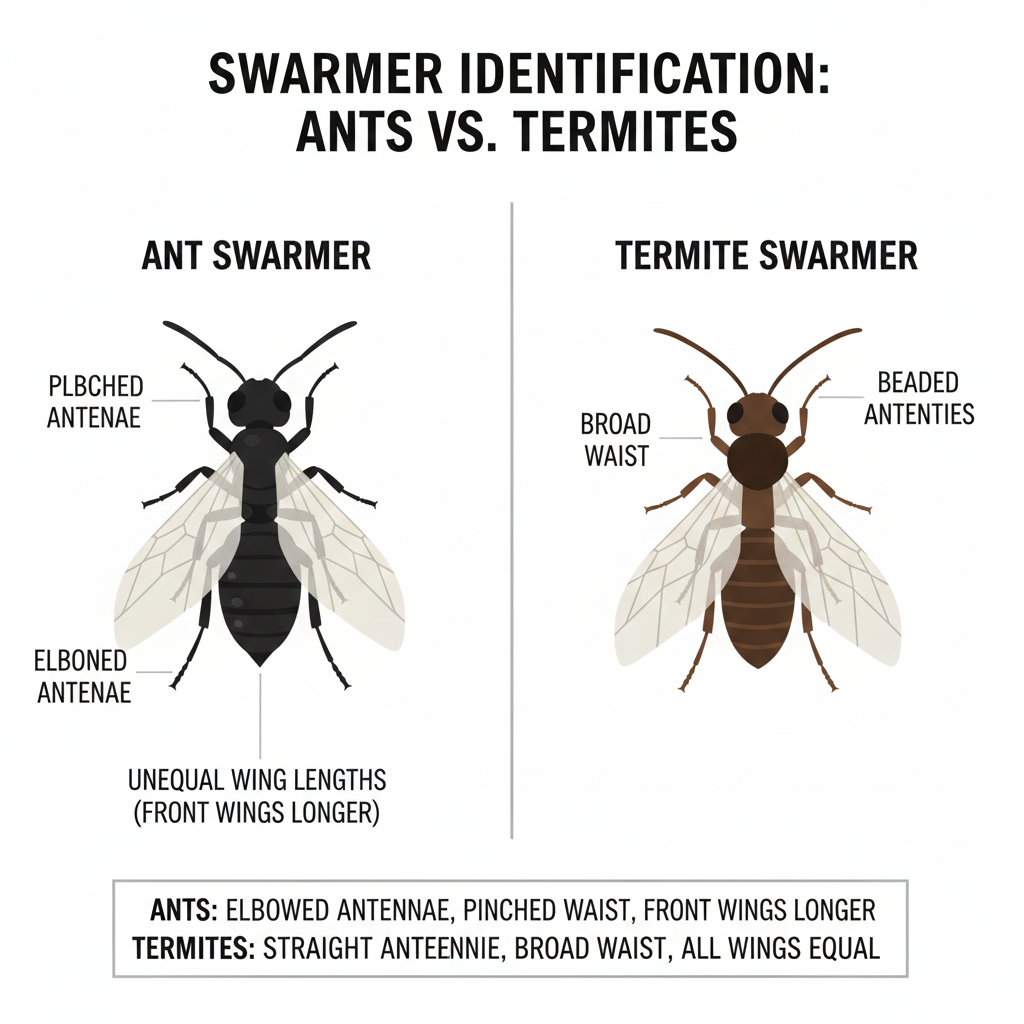
When ants and termites swarm during mating season, they look surprisingly similar—both have wings, swarm in large numbers, and gather near windows or lights. Misidentifying them can lead to critical delays in termite treatment.
Distinguishing Features
- Ants: Segmented bodies with a narrow “waist,” bent or elbowed antennae, and wings of unequal length (front wings longer).
- Termites: Straight, thick bodies without a pinched waist, straight bead-like antennae, and wings of equal length that shed easily.
Typical Habitats
- Ants: Kitchens, patios, walls, soil near foundations, and inside cracks or voids.
- Termites: Crawl spaces, basements, wood beams, wall voids, and moisture-damaged lumber.
High-Quality Photo Examples
Side-by-side comparisons of ant swarmers vs termite swarmers, showing:
- Ant waist vs termite straight body
- Ant bent antennae vs termite straight antennae
- Wing length differences
Spiders vs. Harvestmen / Daddy Longlegs
Description
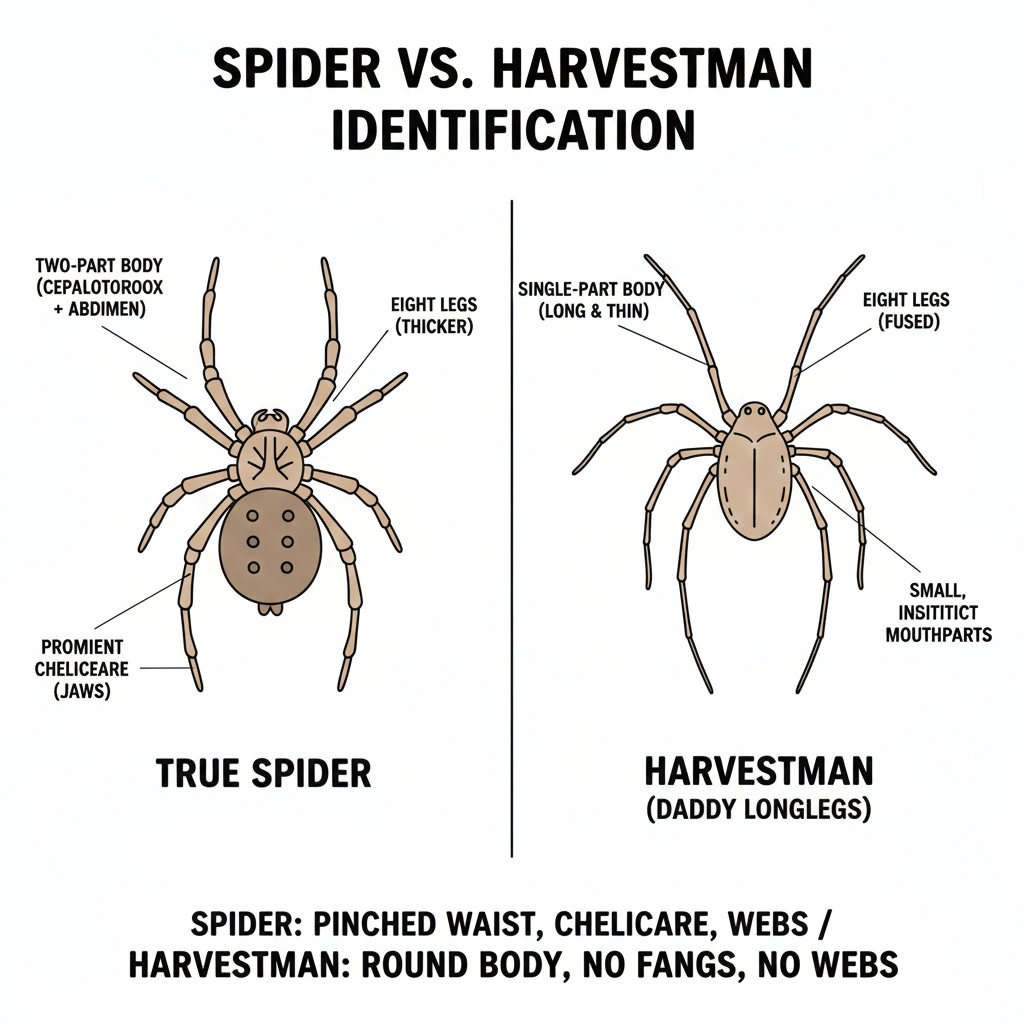
Homeowners often confuse spiders with harvestmen (commonly called daddy longlegs). While both have long, fragile legs, they belong to entirely different groups and pose different risks.
Distinguishing Features
- Spiders: Have two distinct body segments (cephalothorax + abdomen), produce silk, and often build webs. Many have visible fangs.
- Harvestmen (Daddy Longlegs): Have a single fused body segment, do not produce silk or webs, and are harmless scavengers.
Typical Habitats
- Spiders: Corners of rooms, basements, vents, behind furniture, and window frames.
- Harvestmen: Damp basements, garages, gardens, and leaf litter.
High-Quality Photo Examples
Side-by-side photographs showing:
- Spider body with clear segmentation
- Harvestman body with a single, rounded shape
Wasps vs. Bees vs. Hoverflies
Description
Stinging insects cause alarm, but many harmless insects—such as hoverflies—mimic bees and wasps for protection. Accurate identification prevents unnecessary extermination of beneficial pollinators.
Distinguishing Features
- Wasps: Narrow-waisted bodies, smooth exoskeleton, aggressive behavior, and ability to sting multiple times.
- Bees: Fuzzy or hairy bodies, robust shape, and essential pollinators. They can sting only once (honeybees).
- Hoverflies: Harmless flies that mimic bee patterns, have only two wings (instead of four), and lack stingers.
Typical Habitats
- Wasps: Eaves, attics, sheds, tree branches, and ground nests.
- Bees: Flower gardens, hollow trees, wall voids.
- Hoverflies: Around flowers, gardens, and outdoor vegetation.
High-Quality Photo Examples
Include:
- Close-up of bee hair vs smooth wasp
- Hoverfly with large fly eyes and only two wings
Outdoor Insects and Garden Pests
Gardens host a variety of insects—some beneficial, some harmful, and some easily confused. Proper identification is essential to avoid harming helpful species.
Aphids, Leafhoppers, and True Bugs
Description
Aphids, leafhoppers, and true bugs often appear similar because they inhabit plants and have piercing mouthparts. However, their impact on plants and control methods vary significantly.
Distinguishing Features
- Aphids: Tiny, soft-bodied insects that cluster on stems; may have two tube-like “cornicles” at the rear.
- Leafhoppers: Slender, wedge-shaped insects that quickly jump when disturbed.
- True Bugs (Hemiptera): Larger, shield-shaped bodies with well-defined wings, including stink bugs and assassin bugs.
Typical Habitats
- Plants, stems, undersides of leaves, gardens, shrubs, and potted plants.
Caterpillars vs. Sawfly Larvae
Description
Many gardeners mistake sawfly larvae for caterpillars, but their feeding damage and required treatments differ.
Distinguishing Features
- Caterpillars: Have up to five pairs of prolegs with tiny hooks (crochets).
- Sawfly Larvae: Have six or more pairs of prolegs without hooks and often feed in groups.
Typical Habitats
- Leafy shrubs, fruit trees, ornamental plants, and garden beds.
Beetles vs. Ladybugs vs. Japanese Beetles
Description
Beetles come in many forms, and some can be mistaken for one another. Ladybugs are beneficial, while Japanese beetles are destructive pests.
Distinguishing Features
- Beetles: Vary widely but generally have hardened wing covers.
- Ladybugs: Rounded, bright red or orange with spots; beneficial predators.
- Japanese Beetles: Metallic green and copper-colored with distinct white tufts.
Typical Habitats
- Flowers, gardens, lawns, shrubs, and fruit trees.
Tips for Safe Handling and Monitoring
- Wear gloves when examining unknown insects.
- Use a flashlight and magnifying glass for accurate observation.
- Check plants frequently for leaf damage, honeydew, or clusters of insects.
- Avoid crushing insects before identification—take photos instead.
- Handle stinging insects with extreme caution or leave them undisturbed.
When to Take Action
Proper response depends on the insect’s identity, population level, and risk.
Minor Pests
Many insects—such as ground beetles, house centipedes, and sowbugs—do not require chemical treatment. Monitoring, sealing entry points, and improving sanitation are often enough.
Potentially Harmful Pests
Certain insects should prompt immediate attention:
- Cockroaches (health risks)
- Termites (structural damage)
- Bed bugs (bites, spreading)
- Wasps (stings and nesting dangers)
These pests require targeted, species-specific control.
Professional Intervention
Contact a licensed pest control expert when:
- You cannot confidently identify the insect
- The infestation is widespread or recurring
- The pest poses health or property risks
- You suspect termites, bed bugs, or aggressive stinging insects
Experts use inspection tools, monitoring devices, and specialized treatments.
Safe DIY Options
For mild insect issues:
- Clean food spills and eliminate moisture
- Use sticky traps or monitoring stations
- Seal cracks, crevices, and gaps
- Improve ventilation and reduce clutter
- Apply non-toxic barriers such as diatomaceous earth
DIY methods work best when paired with correct identification.
FAQs
1. How do I take a proper photo for insect identification?
To capture an insect clearly, take several photos from different angles—top view, side view, and close-up of the head or antennae. Use natural light or a bright lamp to avoid shadows, and place the insect on a plain background such as white paper to highlight its features. If the insect is moving quickly, gently place a transparent cup over it and take photos through the cup. Make sure the antennae, wings, and body shape are visible, as these are the most important identification features.
2. Can I identify insects without capturing them?
Yes—many insects can be identified visually without capturing them, especially if you observe them closely and take clear photos. Watching how the insect moves, where it hides, and what time of day it’s most active can provide strong clues. However, capturing the insect temporarily (using a cup or jar) may help you inspect harder-to-see features such as wing structure, leg shape, or color patterns. If an insect seems potentially harmful or fast-moving—like a roach—identification by sight alone may be enough.
3. Are all small brown insects dangerous?
Not at all. Many harmless insects—such as ground beetles, pillbugs, booklice, fungus gnats, and certain beetle larvae—are small and brown. However, some household pests like cockroaches or bed bugs also fall into this color range. Size and color alone are not enough to determine whether an insect is a threat. Look at other identifiers such as body shape, antennae, behavior, and habitat. Most brown insects found outdoors or around windows are harmless and simply wandered inside.
4. How do I know if an insect is a threat to my home?
Certain warning signs indicate a pest may pose a risk, such as:
- Multiple sightings in a short period
- Evidence of droppings, shed skins, or grease marks
- Damaged food packaging or chewed materials
- Nesting behavior around wood, insulation, or fabrics
- Musty odors or stains
- Swarming activity (especially termites or ants)
Insects like cockroaches, termites, and some beetles can harm your home or health, while many others are simply nuisance pests.
5. Can outdoor insects invade indoors?
Yes—many outdoor insects accidentally wander into homes when seeking shelter, warmth, or food. Seasonal changes, temperature drops, or heavy rainfall can drive garden pests indoors. However, most outdoor insects (such as beetles, sowbugs, spiders, or earwigs) do not survive long indoors and do not cause infestations. Cockroaches, ants, and certain beetles, however, can migrate from outdoor habitats into kitchens, basements, or crawl spaces and establish lasting populations if conditions are favorable.
6. Do flying insects always indicate an infestation?
Not always. Many flying insects—such as moths, beetles, hoverflies, or stray flies—enter homes through open windows or doors. However, persistent flying insects indoors may signal a problem:
- Swarming termites often appear suddenly and shed wings around windowsills.
- Pantry moths indicate infested food products.
- Fruit flies appear when organic matter or moisture is present.
If flying insects repeatedly appear in the same area, infestation is possible.
7. How long should I monitor before taking action?
Generally, monitor for 3–7 days if you are unsure what insect you are dealing with. During this period:
- Track where the insect appears
- Use sticky traps or glue boards
- Take photos and compare to identification guides
- Look for droppings, damage, or nesting signs
If the insect is potentially harmful (cockroach, termite, bed bug, or stinging insect), take action immediately or contact a professional.
8. Can I use DIY methods before identifying the insect?
It’s safer to identify the insect first. Using the wrong treatment can waste time and money, or even make the problem worse. For example:
- Termite sprays used on ants are ineffective.
- Essential oils may repel some insects but attract others.
- Overusing chemicals can drive pests deeper into hiding.
If you’re unsure, start with non-chemical methods like cleaning, fixing moisture issues, and sealing entry points until proper identification is confirmed.
9. Why do insects keep appearing even after cleaning?
Cleaning helps reduce attractants like food and moisture, but insects may still appear if:
- There are cracks, gaps, or open entry points
- The home has high humidity
- Outdoor populations are high near the foundation
- Structural problems (leaking pipes, damp wood) exist
Cleaning is an important step, but it often must be combined with sealing access points, reducing moisture, and proper pest monitoring.
10. Should I contact a professional even for a single insect sighting?
Not always. A single ground beetle, moth, or spider is usually accidental. However, you should contact a professional if:
- You cannot identify the insect
- You suspect a termite or cockroach
- The insect appears multiple times
- You find droppings, shed skins, or wood damage
- You notice swarming or nesting behavior
Professionals can confirm identification and recommend targeted, safe treatments.
Conclusion
Accurate insect identification is the most important first step before taking any form of action—whether it’s a minor garden pest or a potential home infestation. Many insects look alike, and misidentifying them can lead to wasted effort, unnecessary chemicals, or missed warning signs of a serious pest problem.
By carefully observing physical features, behavior, habitat, and comparing high-quality reference images, you can confidently determine whether the insect is harmless, seasonal, or a sign of a larger issue. Use this guide to methodically inspect, document, and monitor your findings.
To support your identification process even further:
- Use our step-by-step guide to compare features like body shape, antennae, wings, and movement.
- Monitor carefully for 3–7 days to see if the insect reappears or if signs of infestation develop.
- Consult our photo comparisons and charts to eliminate lookalikes and pinpoint the correct species.
If you’re still uncertain—or if the pest seems persistent, harmful, or difficult to eliminate—don’t hesitate to reach out to a licensed professional for confirmation and treatment.