Stop American Cockroaches before they spread
Discover smart ways to identify, prevent, and control one of the largest and fastest-moving household pests.
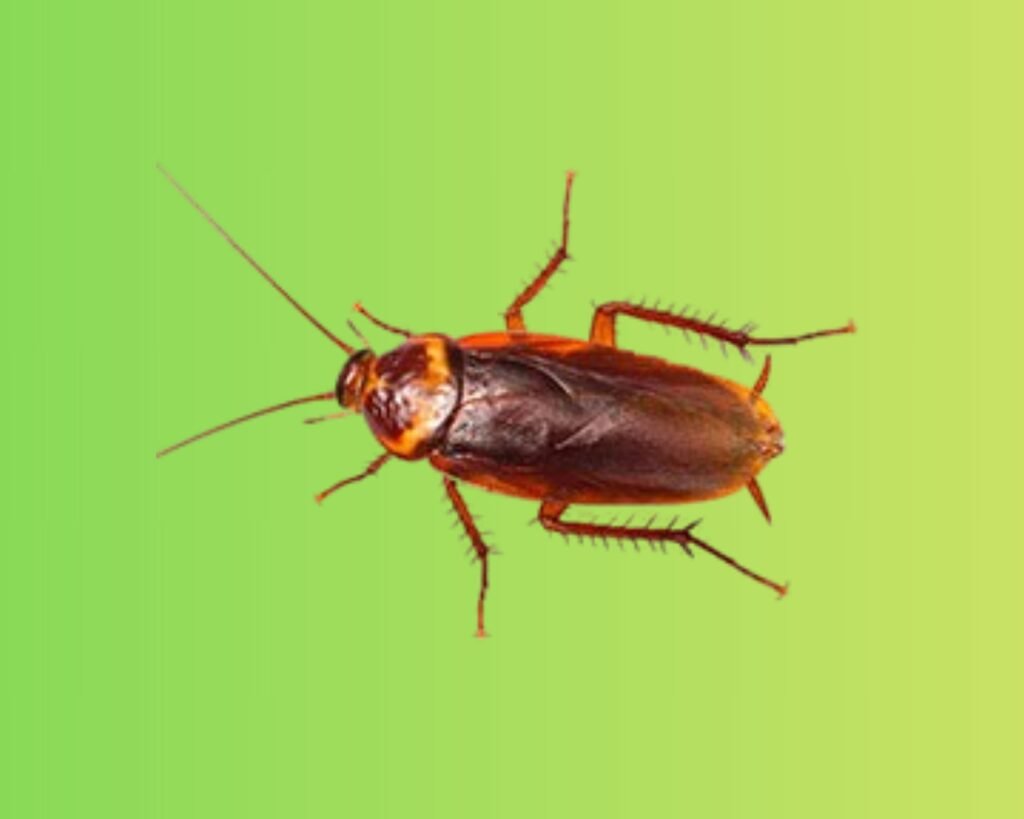
American cockroaches (Periplaneta americana) are among the largest and most recognizable cockroach species, known for their reddish-brown color, long antennae, and robust bodies that can reach up to 2 inches in length. These cockroaches are highly adaptable and resilient, allowing them to thrive in a wide range of environments, from homes and restaurants to sewers and storm drains. Unlike smaller species that prefer indoor living exclusively, American cockroaches can survive both indoors and outdoors, making them a common and persistent pest.
They are particularly attracted to warm, humid areas where food and water are easily accessible. In residential settings, they are often found in kitchens, bathrooms, basements, and laundry rooms, while in commercial environments, they can invade restaurants, warehouses, and food processing facilities. Sewer systems and drainage areas also provide ideal habitats, offering darkness, moisture, and protection from predators. Their ability to hide in tiny cracks and crevices allows populations to grow largely unnoticed until an infestation becomes severe.
American cockroaches pose serious health and hygiene risks. While they do not bite humans, they can contaminate food, utensils, and surfaces with bacteria, viruses, and other pathogens. Their droppings, shed skins, and saliva are known allergens that can trigger asthma attacks and worsen allergy symptoms, particularly in children or sensitive individuals. Additionally, they are capable of spreading disease-causing microorganisms such as Salmonella and E. coli, which can lead to foodborne illnesses.
Because of their size, adaptability, and reproductive capacity, American cockroaches are considered a significant pest problem. Early detection, proper sanitation, and proactive control measures are essential to prevent infestations from escalating and to minimize the risks they pose to health and property.
What Are American Cockroaches?
American cockroaches (Periplaneta americana) are one of the largest and most widespread cockroach species, classified scientifically under the order Blattodea and family Blattidae. They are highly adaptable insects that have successfully colonized a variety of environments, making them a common pest in both urban and suburban areas. Unlike smaller species that prefer indoor habitats exclusively, American cockroaches can live both indoors and outdoors, which allows them to access a wide range of food and shelter options. Understanding their characteristics, behavior, and preferred habitats is crucial for effective identification and control.
Appearance
American cockroaches are noticeably large, with adults typically ranging from 1.5 to 2 inches in length. Their bodies are reddish-brown with a slightly glossy appearance, and they feature a distinct yellowish margin around the pronotum, the shield-like plate behind their head. Both males and females have fully developed wings, allowing them to glide short distances, although they rarely fly for long periods. Nymphs, or juvenile cockroaches, are smaller, darker, wingless, and grow larger through a series of molts. Their size, coloration, and wing structure make them easily distinguishable from other common species such as German or Oriental cockroaches.
Behavior
American cockroaches are nocturnal, meaning they are primarily active at night. They are fast-moving and can quickly scuttle away when disturbed, which makes them difficult to catch or spot during daylight hours. They prefer environments that are warm and humid, which provide both comfort and access to water, and they are capable of surviving on very little food. These cockroaches are scavengers, feeding on a variety of organic matter including crumbs, grease, decaying food, and even paper or cardboard. Their nocturnal activity, combined with their speed and secretive habits, allows infestations to grow unnoticed until the population becomes significant.
Habitat Preferences
American cockroaches are highly versatile in terms of habitat. Outdoors, they are often found in gardens, mulch, leaf litter, and near sewer systems or storm drains. Indoors, they are commonly found in basements, crawl spaces, kitchens, bathrooms, and laundry areas—basically, any location that provides warmth, moisture, and shelter. Sewer lines, drains, and plumbing systems are particularly attractive because they offer dark, humid, and protected spaces where these cockroaches can breed and hide. Their preference for both indoor and outdoor habitats allows them to easily migrate into buildings, especially during wet or cold seasons, further increasing the risk of infestation.
American cockroaches are large, highly adaptable, and resilient insects with distinct physical features and behaviors. Their ability to thrive in both indoor and outdoor environments, combined with their nocturnal activity and rapid reproduction, makes them a challenging pest to manage. Recognizing their appearance, understanding their behavior, and knowing their preferred habitats are essential first steps in effective detection, prevention, and control.
Life Cycle of American Cockroaches
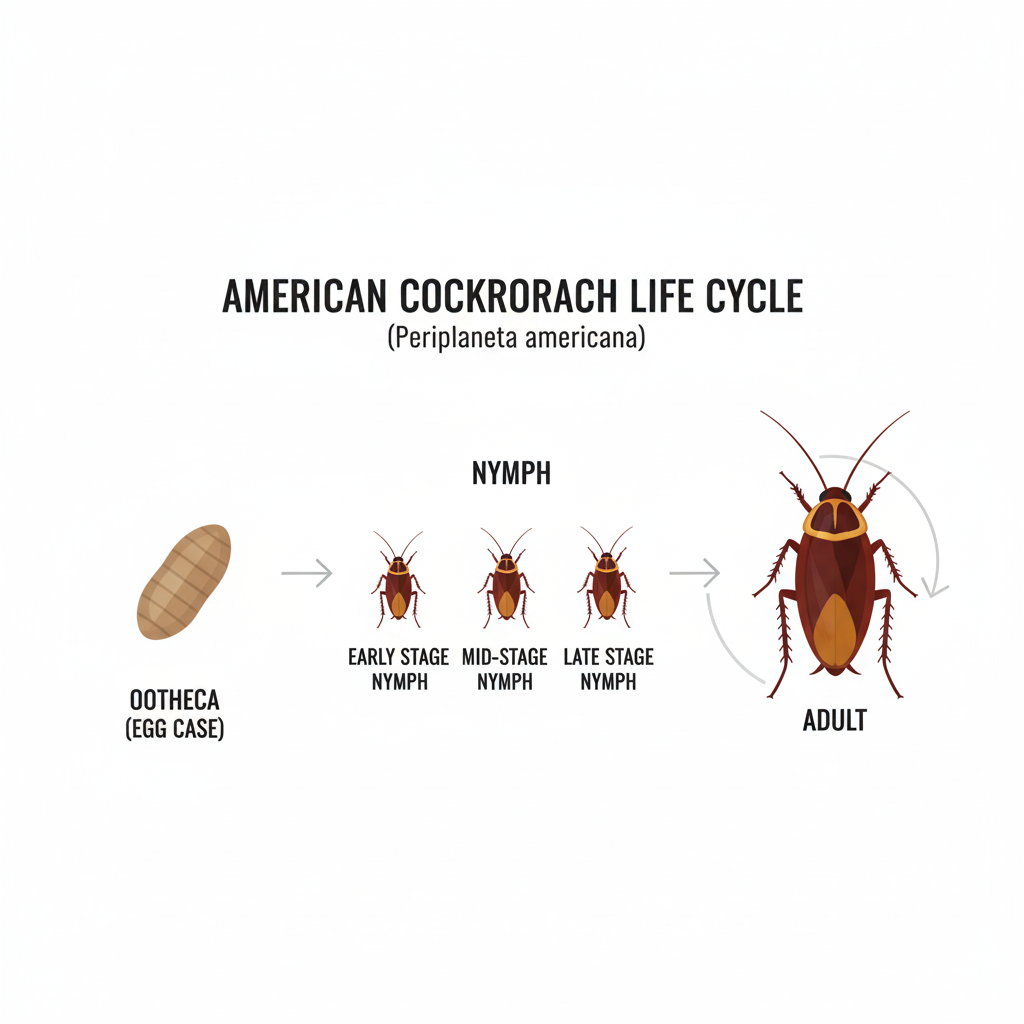
Understanding the life cycle of American cockroaches (Periplaneta americana) is essential for effective control, as their rapid reproduction and resilience make infestations difficult to manage. Their development occurs in three main stages: egg, nymph, and adult.
Egg Stage (Ootheca)
Female American cockroaches produce egg cases known as oothecae, each containing 14–16 eggs. A single female can produce multiple oothecae over her lifetime, which contributes to rapid population growth. These egg cases are typically brown, smooth, and capsule-shaped, and they are often deposited in hidden, protected areas such as:
- Cracks and crevices in walls or floors
- Inside cabinets or behind appliances
- In basements, drains, and sewer openings
Because the eggs are well-protected, they can survive for several weeks in harsh conditions, making early detection challenging.
Nymph Stage (Baby Cockroaches)
When the eggs hatch, baby cockroaches, also known as nymphs, emerge. These nymphs are small, wingless, and darker in color than adults. They undergo a series of molts, gradually developing adult features such as wings and a lighter reddish-brown coloration. Key characteristics of nymphs include:
- Highly active and mobile, seeking food and water immediately after hatching
- Ability to hide in tiny cracks and crevices due to their small size
- Vulnerability to environmental changes, but remarkable resilience when food and moisture are available
The nymph stage can last several months, depending on temperature, humidity, and availability of resources. During this time, baby cockroaches can multiply quickly, contributing to the rapid spread of an infestation.
Adult Stage
Adult American cockroaches are large, winged, and fully capable of reproduction. Adults can live up to one year under favorable conditions, during which they continue to produce eggs and sustain the population. Adults are strong fliers in warm environments and can travel significant distances, further dispersing the infestation. Key traits include:
- Large size (1.5–2 inches), reddish-brown color, and a yellowish margin on the pronotum
- Ability to survive on minimal food and water
- Preference for warm, damp, and dark environments such as basements, sewers, and kitchens
Reproduction Rate and Resilience
The combination of multiple egg cases per female, rapid nymph development, and adult longevity makes American cockroaches highly resilient. A single pair of adults can produce dozens of baby cockroaches within a few months, quickly leading to a significant infestation if left unchecked. Their adaptability, ability to hide, and tolerance to varying conditions make early detection and proactive control essential.
American cockroaches have a highly effective reproductive cycle. From protected eggs to mobile baby cockroaches and long-living adults, their life cycle allows infestations to grow rapidly. Understanding each stage, especially the nymph stage is crucial for targeted treatment and prevention strategies.
Signs of an American Cockroach Infestation
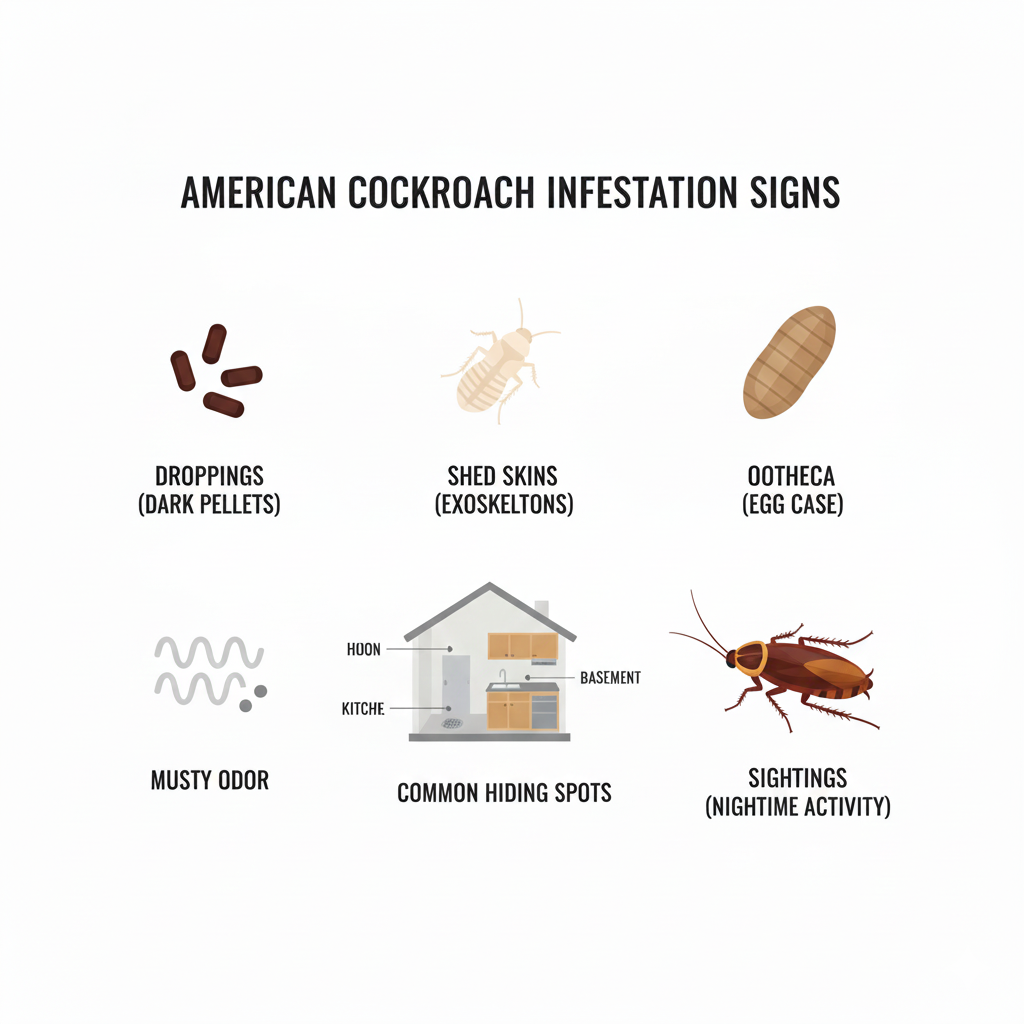
Detecting an American cockroach (Periplaneta americana) infestation early is crucial to prevent it from becoming severe. These cockroaches are nocturnal, fast-moving, and excellent at hiding, which makes infestations difficult to spot until the population has grown. Here are the most common signs to look for:
1. Visible Signs: Droppings, Egg Cases, and Shed Skins
- Droppings: American cockroach droppings are dark, cylindrical, and often resemble ground coffee or black pepper. They can be found in areas where cockroaches travel frequently, such as under sinks, behind appliances, inside cabinets, and along baseboards. Large accumulations indicate a well-established infestation.
- Egg Cases (Oothecae): Female cockroaches deposit oothecae containing 14–16 eggs in hidden areas. These capsule-shaped cases are brown and smooth, often tucked into cracks, behind cabinets, or near drains. Finding oothecae signals active reproduction.
- Shed Skins: As baby cockroaches (nymphs) grow, they molt multiple times, leaving behind translucent exoskeletons. Regularly seeing shed skins in corners, cabinets, or behind appliances is a strong indicator of an active infestation.
2. Distinctive Smell
A large infestation can produce a noticeable, musty, or oily odor. This smell comes from secretions, pheromones, and accumulated droppings. The odor is particularly strong in areas of high activity, such as kitchens, basements, and drains.
3. Sightings
American cockroaches are nocturnal, so they are most active at night. Common sightings include:
- Crawling along floors, walls, and ceilings
- Emerging from drains, basements, or appliance corners
- Flying short distances in warm, humid areas
Seeing even a few adult cockroaches during the day often indicates a significant infestation, as most of the population remains hidden.
4. Common Hiding Spots
American cockroaches prefer warm, dark, and moist environments. Typical hiding spots include:
- Basements and crawl spaces: Damp and dark areas provide ideal shelter
- Kitchens and bathrooms: Behind cabinets, under sinks, and around appliances
- Drains and pipes: Entry points from sewers and plumbing systems
- Walls and ceilings: Cracks, gaps, and electrical conduits offer secure hiding places
5. Other Subtle Indicators
- Smear Marks: In areas of high activity, droppings may be smeared along surfaces.
- Food Contamination: Gnaw marks on food packaging or traces of droppings in pantries
- Allergic Reactions: Cockroach droppings, saliva, and shed skins may trigger asthma or allergies in sensitive individuals
American cockroach infestations can be difficult to detect due to their nocturnal habits and secretive behavior. Early signs such as droppings, egg cases, shed skins, distinctive odors, and sightings at night are critical indicators. Monitoring high-risk areas like kitchens, basements, and drains is essential for timely intervention.
Why American Cockroaches Are Dangerous
American cockroaches (Periplaneta americana) are not only a nuisance but also pose several health and property risks. Their behavior, biology, and adaptability make infestations particularly concerning.
1. Contamination of Food, Utensils, and Surfaces
American cockroaches frequently crawl through unsanitary areas, including drains, garbage bins, and sewers. As they move, they leave droppings, saliva, and body parts on surfaces and food. This contamination can:
- Spoil stored food
- Contaminate kitchen counters, cutting boards, and cooking utensils
- Increase the risk of foodborne illnesses
2. Spread of Pathogens
These cockroaches are known carriers of bacteria, viruses, and parasites. They can transmit pathogens such as:
- Salmonella – causes food poisoning and gastrointestinal illness
- E. coli – can lead to severe digestive issues
- Other bacteria and germs that can contaminate food and surfaces
By moving between sewers, trash, and human environments, American cockroaches act as mechanical vectors, spreading disease-causing microorganisms without directly infecting humans.
3. Allergy Triggers
Cockroach allergens are found in their droppings, saliva, and shed skins. Exposure can lead to:
- Sneezing, runny nose, and itchy eyes
- Skin irritation or rashes
- Worsening asthma attacks, particularly in children and sensitive individuals
Prolonged exposure can have long-term health impacts, making timely control essential.
4. Structural Concerns
While American cockroaches primarily feed on organic matter, they can also damage household items:
- Chewing through cardboard, paper, and packaging
- Damaging stored fabrics or insulation
- Leaving stains or smears on walls, furniture, and flooring
This combination of health risks and potential property damage highlights why infestations should be addressed promptly.
Prevention Tips for American Cockroaches
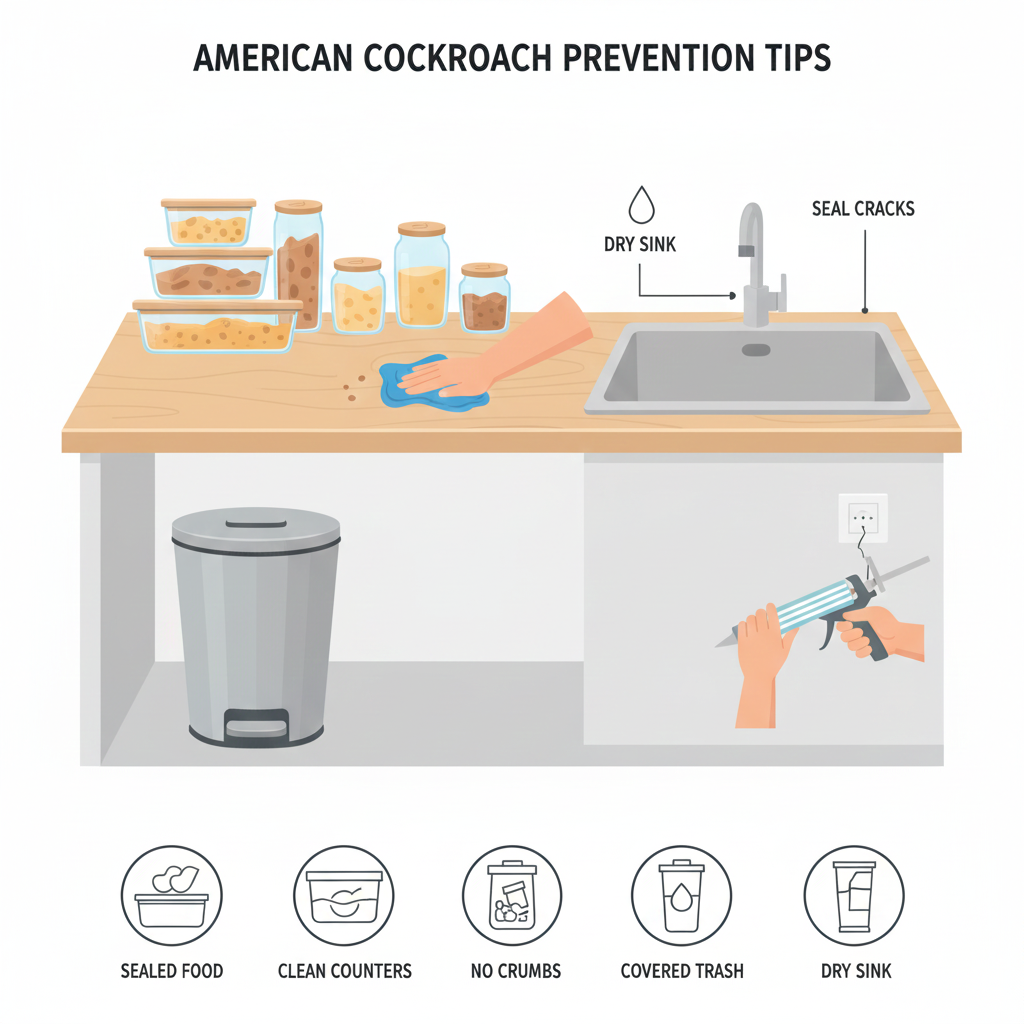
Preventing an American cockroach infestation requires consistent sanitation, home maintenance, and monitoring. These practices reduce access to food, water, and shelter, making your property less attractive to these pests.
1. Sanitation
Keeping your home or business clean is the first line of defense:
- Proper Food Storage: Store all food in sealed containers and refrigerate perishables when possible.
- Clean Spills and Crumbs Promptly: Sweep, mop, and wipe counters regularly.
- Remove Standing Water: Fix leaks and avoid leaving water in sinks, pet bowls, or buckets overnight.
2. Home Maintenance
Reducing hiding spots and entry points is critical:
- Seal cracks and crevices in walls, floors, cabinets, and around doors and windows.
- Repair leaky plumbing and dripping faucets.
- Reduce clutter, especially cardboard, paper, or unused storage boxes that serve as shelter.
3. Monitoring
Early detection can prevent large infestations:
- Use sticky traps in high-risk areas such as kitchens, basements, and bathrooms.
- Conduct regular inspections behind appliances, under sinks, and in dark, damp spaces.
4. Avoiding Attractants
Certain habits can inadvertently encourage cockroach activity:
- Do not leave pet food or water out overnight.
- Take out trash regularly and use tightly sealed bins.
- Avoid leaving food or beverage containers exposed on counters or tables.
American cockroaches pose serious health and structural risks, but infestations can be prevented through proper sanitation, home maintenance, vigilant monitoring, and by avoiding common attractants. Early prevention significantly reduces the likelihood of a large-scale problem.
Treatment & Control of American Cockroaches
Effectively managing American cockroach (Periplaneta americana) infestations requires a combination of proper sanitation, targeted treatments, and sometimes professional intervention. These cockroaches reproduce quickly, hide in hard-to-reach areas, and are highly resilient, so timely action is critical.
1. DIY Methods
For small or early-stage infestations, several do-it-yourself treatments can help reduce cockroach populations:
- Baits: Gel or solid baits attract cockroaches and contain slow-acting insecticides that they carry back to their hiding places, poisoning other members of the colony. Place baits in areas of high activity such as under sinks, behind appliances, along baseboards, and near drains.
- Gels: Cockroach gels are effective for reaching cracks, crevices, and tight spaces where cockroaches hide. Apply thin lines of gel in dark, damp areas where baby cockroaches and adults are likely to travel.
- Traps: Sticky traps can help monitor activity and reduce numbers in minor infestations. They also provide insight into which areas are most heavily affected, guiding further treatment.
DIY methods can help control small infestations, but larger populations often require professional services for complete eradication.
2. Professional Pest Control
Professional extermination is recommended when:
- The infestation is widespread or persistent
- DIY methods fail to significantly reduce the population
- Cockroaches are hiding in inaccessible areas, such as inside walls, ceilings, or plumbing
Pest control professionals use targeted insecticides, specialized baits, and monitoring systems that are more effective than over-the-counter treatments. They also provide advice on preventive measures to reduce the risk of future infestations.
3. Safety Precautions for Families and Pets
Chemical treatments, if not handled properly, can pose risks to children, pets, and sensitive individuals. To ensure safety:
- Always read and follow label instructions for any insecticide, bait, or gel.
- Use bait stations or gels instead of loose powders to prevent accidental ingestion.
- Keep treated areas out of reach of children and pets until the product has dried or been secured.
- Avoid contaminating food, utensils, or food-preparation surfaces.
For households with young children, pets, or individuals with asthma or allergies, professional services may offer safer and more controlled treatment options.
4. Importance of Early Action
American cockroaches reproduce rapidly, and even a small infestation can grow to hundreds of individuals in a few months. Early detection and treatment are critical to:
- Minimize health risks from contamination, allergens, and pathogens
- Reduce property damage from gnawing and smearing
- Prevent the infestation from spreading to other areas of the home or neighboring properties
- Lower the time, effort, and cost required for complete eradication
Controlling American cockroaches requires a combination of DIY treatments, professional intervention, and preventive measures. Acting quickly, safely, and consistently is essential to eliminate infestations, protect health, and prevent further spread.
Frequently Asked Questions About American Cockroaches
1. What do American cockroaches look like?
American cockroaches (Periplaneta americana) are large, reddish-brown insects with a yellowish margin on the pronotum (the shield-like area behind the head). Adults can reach 1.5–2 inches in length and have fully developed wings capable of short flights.
2. How fast do American cockroaches reproduce?
They reproduce quickly. Females produce multiple egg cases (oothecae), each containing 14–16 eggs. These eggs hatch into baby cockroaches, which grow into adults in a few months under favorable conditions.
3. What are baby cockroaches?
Baby cockroaches are the nymph stage of American cockroaches. They are small, wingless, darker in color than adults, and molt several times as they grow. Baby cockroaches are highly mobile and hide in cracks, crevices, and other dark, damp areas.
4. Are American cockroaches dangerous to humans?
Yes, they are. While they do not bite aggressively, they can contaminate food, utensils, and surfaces with bacteria. Droppings, saliva, and shed skins can also trigger allergies and worsen asthma symptoms.
5. Where do American cockroaches hide?
These cockroaches prefer warm, dark, and moist areas. Common hiding spots include: basements, kitchens, bathrooms, drains, behind appliances, inside walls, and near plumbing. Baby cockroaches often remain hidden in cracks and crevices near food and water sources.
6. Can baby cockroaches survive without food or water?
Baby cockroaches are resilient but need moisture and food to grow into adults. They can survive several days without water and a few weeks without food, which allows them to persist in hidden areas until resources are available.
7. Do American cockroaches fly?
Yes, adults have fully developed wings and can glide or fly short distances, especially in warm environments. Baby cockroaches, however, are wingless and cannot fly until they reach adulthood.
8. How can I prevent baby cockroaches in my home?
Prevention focuses on sanitation and maintenance:
Store food in sealed containers and clean up crumbs promptly
Remove standing water and fix leaks
Seal cracks and gaps around walls, cabinets, and doors
Reduce clutter where cockroaches can hide
9. Can DIY methods get rid of baby cockroaches?
Yes, in small infestations, DIY methods such as gel baits, traps, and sticky monitors can help control populations. However, large infestations may require professional pest control to ensure all baby cockroaches and adults are eliminated.
10. Why is early detection of baby cockroaches important?
Baby cockroaches grow into adults quickly and contribute to exponential population growth. Early detection allows for timely treatment, reducing contamination risks, health hazards, and the effort required to eliminate the infestation.
Conclusion
American cockroaches (Periplaneta americana) are large, resilient pests that pose serious health risks and can cause property damage if left unchecked. Their ability to reproduce rapidly, hide in small cracks and crevices, and survive in a variety of environments makes infestations challenging to control. Early detection—through signs like droppings, egg cases, baby cockroaches, and musty odors—is critical to preventing populations from growing out of control.
Maintaining proper sanitation, sealing entry points, and monitoring high-risk areas are essential preventive measures. While DIY treatments such as baits, gels, and traps can be effective for minor infestations, professional pest control is often necessary for larger or persistent problems. Acting promptly not only reduces health risks from contamination and allergens but also minimizes the time, effort, and cost required to eliminate these pests.