
Stop German Cockroaches before they take over
Learn how to identify, prevent, and eliminate one of the most common household pests.
Introduction
German cockroaches are among the most common and troublesome household pests worldwide. Despite their small size, usually just over half an inch long, these tiny insects are incredibly resilient and adaptable. They thrive in warm, humid environments and are often found in kitchens, bathrooms, and other areas where food and moisture are readily available.
What makes German baby cockroaches particularly problematic is their rapid reproduction. A single female can produce hundreds of offspring in just a few months, allowing infestations to grow quickly if left unchecked. Beyond being a nuisance, they pose serious health risks: they can contaminate food, kitchen surfaces, and utensils with bacteria and pathogens, potentially causing foodborne illnesses. Additionally, their shed skins, saliva, and droppings are known to trigger allergies and asthma, particularly in children.
Their small size and secretive habits make them difficult to detect, which is why infestations often go unnoticed until they are already well-established.
Small size, big problem here’s everything you need to know about German cockroaches, from identifying them to preventing and controlling infestations effectively.
What Are German Cockroaches?
German cockroaches are one of the most common and persistent indoor pests worldwide. Their small size and secretive nature make them especially difficult to detect, yet their presence can quickly escalate into a significant infestation. Often found in kitchens, bathrooms, restaurants, and anywhere food, moisture, and warmth are available, these cockroaches have adapted remarkably well to living alongside humans. Unlike some other pests, German cockroaches thrive in indoor environments, preferring areas where they can easily hide during the day and forage at night. Their ability to reproduce rapidly and survive in tight, hidden spaces makes them not only a nuisance but also a health concern for households and businesses alike. Understanding their characteristics, behavior, and life cycle is essential for effective prevention and control.
Scientific Name
German cockroaches are scientifically known as Blattella germanica. They belong to the family Blattellidae and are classified as one of the most successful indoor cockroach species globally. Their adaptability and preference for human habitats have made them a frequent pest problem, particularly in urban areas and food establishments.
Appearance
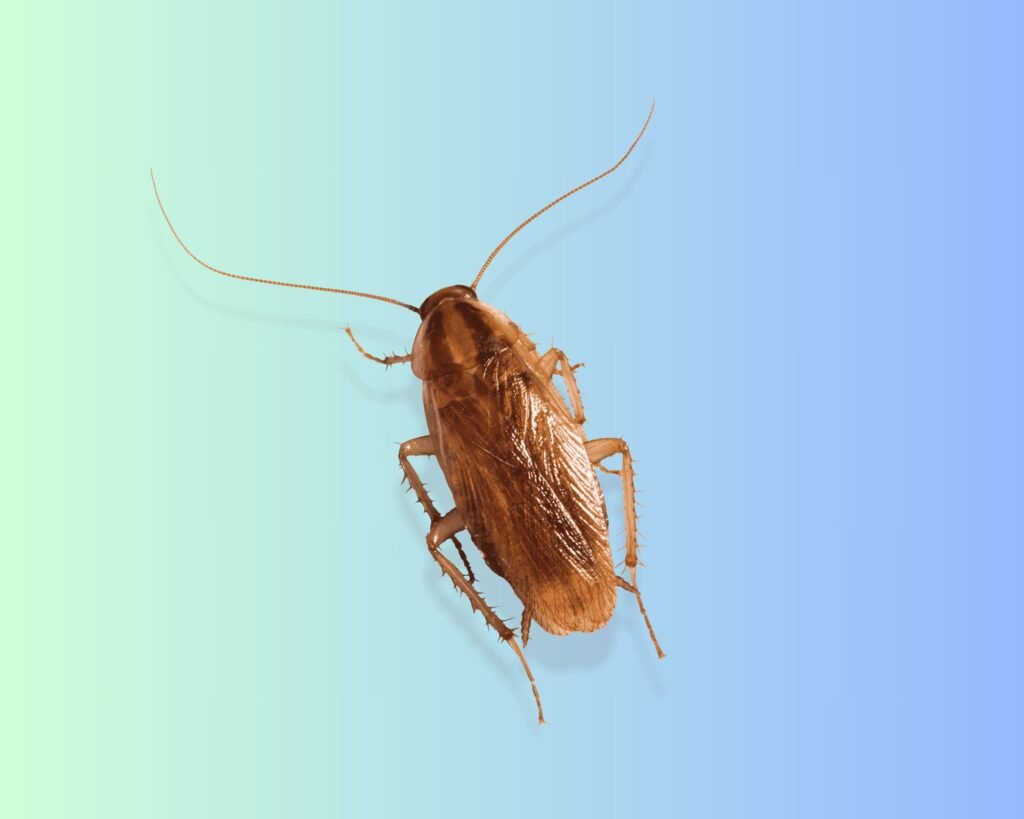
German cockroaches are small, slender, and light brown or tan in color, measuring approximately 1.1–1.6 cm (0.4–0.6 inches) in length. One of their most distinguishing features is the two dark, parallel stripes running lengthwise down the back, just behind the head. Adults have fully developed wings but rarely fly, while nymphs (baby cockroaches) are smaller, darker, wingless, and highly mobile. Their compact size and ability to flatten their bodies allow them to hide in the tiniest cracks, crevices, and gaps, making detection challenging.
In addition, German cockroaches are extremely agile and can quickly move away from light or disturbance. Their nocturnal habits, combined with their small size, often allow them to go unnoticed until the population becomes significant.
Behavior and Habits
German cockroaches are nocturnal, meaning they are most active at night, which helps them avoid detection by humans. They prefer warm, humid environments and are often found near kitchens, sinks, bathrooms, and appliances. They can survive on very little food, including crumbs, grease, soap, or glue, which makes them highly adaptable to human environments.
These cockroaches are social insects, often living in groups, which helps them spread quickly within a home or building. They tend to stay close to food sources and water, which explains why infestations often begin in kitchens. Their ability to hide in tiny cracks, behind cabinets, or under appliances makes early detection difficult, allowing populations to multiply before homeowners even notice a problem.
Life Cycle
Understanding the life cycle of German cockroaches is key to controlling them effectively. Their development consists of three stages:
- Egg (Ootheca): Female German cockroaches carry egg cases called oothecae, which contain 30–40 eggs each. A single female can produce several oothecae in her lifetime, which contributes to their rapid population growth.
- Nymph: After hatching, nymphs are small, dark, and wingless. They undergo multiple molts as they grow, gradually developing adult features. Nymphs are highly active and seek food and shelter, often hiding in hard-to-reach areas.
- Adult: Adults are light brown, have fully developed wings, and are capable of reproduction. Under optimal conditions, the entire life cycle—from egg to reproducing adult—can take just 6–8 weeks, allowing populations to explode quickly.
The combination of fast reproduction, adaptability, and secretive habits makes German cockroaches a particularly challenging pest. Early identification, proper sanitation, and targeted control measures are essential to prevent these pests from taking over your home or business.
Signs of a German Cockroach Infestation
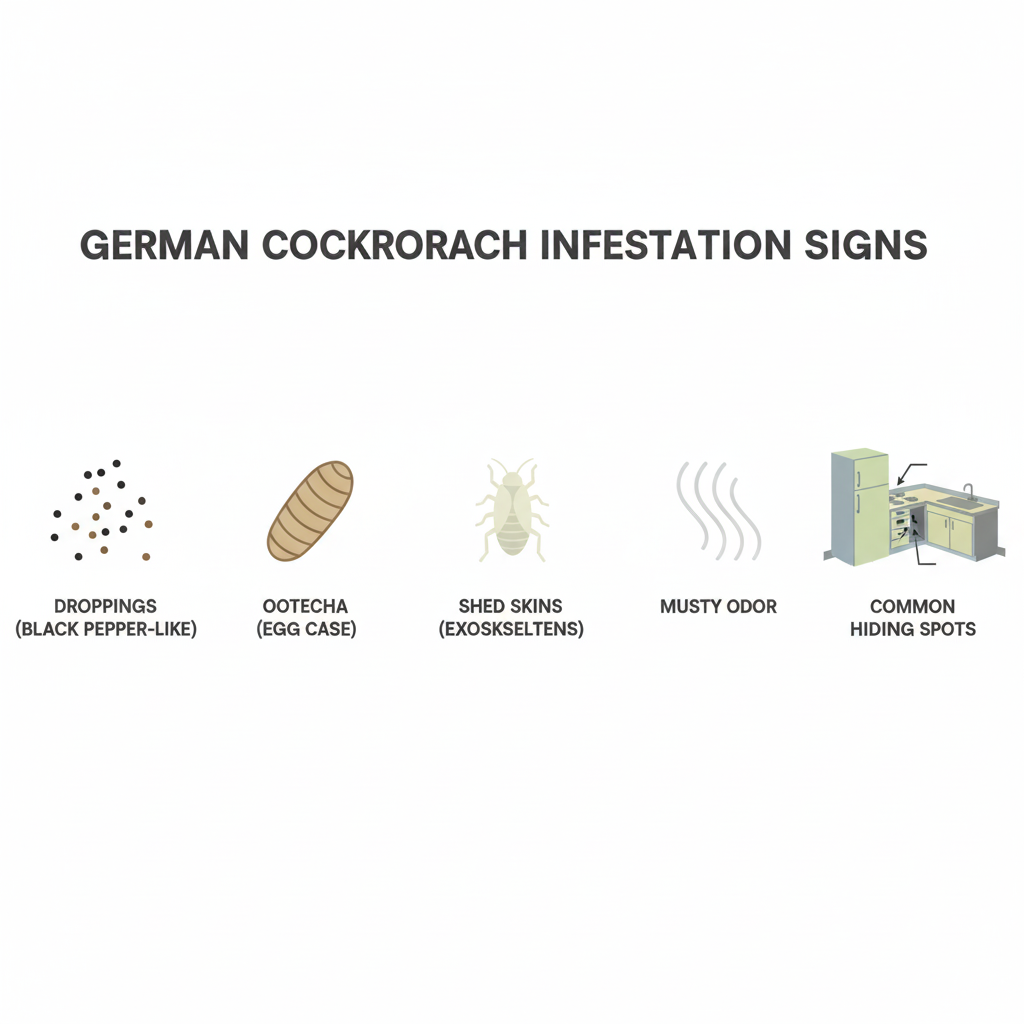
German cockroaches are among the most elusive household pests due to their small size, nocturnal habits, and preference for hidden spaces. Recognizing the signs of an infestation early is essential for preventing population growth and reducing health risks. Below are the key indicators:
1. Cockroach Droppings
One of the most reliable indicators of an infestation is the presence of cockroach droppings. German cockroach feces are small, dark, and cylindrical, often resembling black pepper or coffee grounds. These droppings can accumulate in areas where roaches frequently travel, including:
- Under cabinets, sinks, and appliances
- Along baseboards or wall corners
- Inside pantries or food storage areas
A high concentration of droppings typically indicates a well-established infestation. Over time, droppings may also leave smears on surfaces, particularly in areas of high activity.
2. Egg Cases (Oothecae)
Female German cockroaches produce egg cases, or oothecae, containing 30–40 eggs each. These capsules are usually light brown and may be found in hidden locations, such as:
- Behind or under kitchen and bathroom cabinets
- Near plumbing or appliance corners
- Inside furniture, storage boxes, or wall crevices
The presence of oothecae signals active reproduction and a growing population, highlighting the urgency of control measures.
3. Shed Skins
As German baby cockroaches develop, they molt multiple times, leaving behind translucent exoskeletons. These shed skins are commonly found near hiding spots and indicate juvenile activity. Regular discovery of shed skins suggests the infestation is active and ongoing.
4. Distinctive Odor
A German cockroach infestation can produce a noticeable, musty odor caused by secretions, pheromones, and the accumulation of droppings. This smell is more pronounced in cases of long-standing infestations and can linger in kitchens, bathrooms, and other areas where roaches are concentrated.
5. Preferred Hiding Locations
German baby cockroaches seek warm, humid, and dark spaces. They often remain hidden during the day and emerge at night to forage. Common hiding places include:
Read Our Guide About American Cockroaches:
- Kitchens: under sinks, behind or beneath refrigerators, stoves, and dishwashers
- Bathrooms: under sinks, behind toilets, and near pipes
- Other indoor areas: inside cracks and crevices in walls, baseboards, furniture joints, cardboard boxes, and behind appliances
Thorough inspection of these areas is critical for early detection.
In addition to droppings, egg cases, shed skins, and odor, there are several other subtle signs that can indicate the presence of German cockroaches:
- Smear Marks: In areas where cockroaches frequently travel, droppings may be accidentally smeared along surfaces, leaving dark streaks. These marks are especially common near corners, along baseboards, inside cabinets, or around sinks and appliances. Smear marks are a strong sign of heavy or long-term activity.
- Food Contamination and Damage: German cockroaches are opportunistic feeders and may chew through food packaging, including cardboard, plastic, and foil. Small holes, gnaw marks, or traces of food residue can indicate roach activity. They can also contaminate food with droppings, saliva, or shed skin, posing serious health risks if consumed.
- Allergic Reactions and Health Symptoms: Cockroach waste products—including droppings, shed skins, and saliva—contain allergens that can trigger or worsen asthma, allergies, and respiratory issues. People living in infested homes may experience increased coughing, wheezing, or nasal congestion, particularly in children and individuals with pre-existing respiratory conditions.
Detecting a German cockroach infestation relies on careful observation of droppings, egg cases, shed skins, odors, and preferred hiding spots. Early identification is critical to implementing effective control measures and preventing the population from growing uncontrollably.
Why German Cockroaches Are Dangerous
German cockroaches are more than just an unpleasant nuisance—they pose significant health risks and can cause serious problems in homes, restaurants, and other indoor environments. Their behaviors and biology make them particularly hazardous:
1. Contamination of Food and Surfaces
German cockroaches frequently travel through unsanitary areas such as garbage bins, drains, and sewers before entering kitchens and food storage areas. As they move, they leave droppings, saliva, and shed skin behind, contaminating:
- Food items and packaging
- Countertops and cutting boards
- Cooking utensils and appliances
This contamination can result in spoiled food and increases the risk of foodborne illness.
2. Spread of Bacteria and Pathogens
These baby cockroaches are known carriers of a wide range of bacteria, viruses, and parasites. They can transmit pathogens that cause illnesses such as:
- Salmonella
- E. coli
- Gastroenteritis
- Dysentery
By walking across food preparation areas, utensils, or directly on food, they can inadvertently introduce harmful microorganisms into households or commercial kitchens.
3. Triggering Allergies and Asthma
Cockroach droppings, saliva, shed skins, and body parts contain allergens that can trigger allergic reactions in sensitive individuals. Exposure may lead to:
- Sneezing, runny nose, or itchy eyes
- Skin rashes or irritation
- Worsening asthma symptoms, particularly in children
Prolonged exposure to German cockroaches can significantly impact respiratory health and overall quality of life.
4. Rapid Reproduction and Resilience
One of the most dangerous aspects of German cockroaches is their ability to multiply quickly. A single female can produce hundreds of offspring in a few months, allowing populations to grow exponentially if left unchecked. They are also highly resilient, able to survive on minimal food and water, and can hide in tiny cracks and crevices where they are difficult to reach. This combination of rapid reproduction, adaptability, and elusive behavior makes infestations particularly challenging to eliminate.
German cockroaches are dangerous not only because they spread disease and trigger allergies, but also because their rapid reproduction and survival strategies make them difficult to control. Early detection and proactive prevention are essential to protect both health and property.
Prevention Tips for German Cockroaches
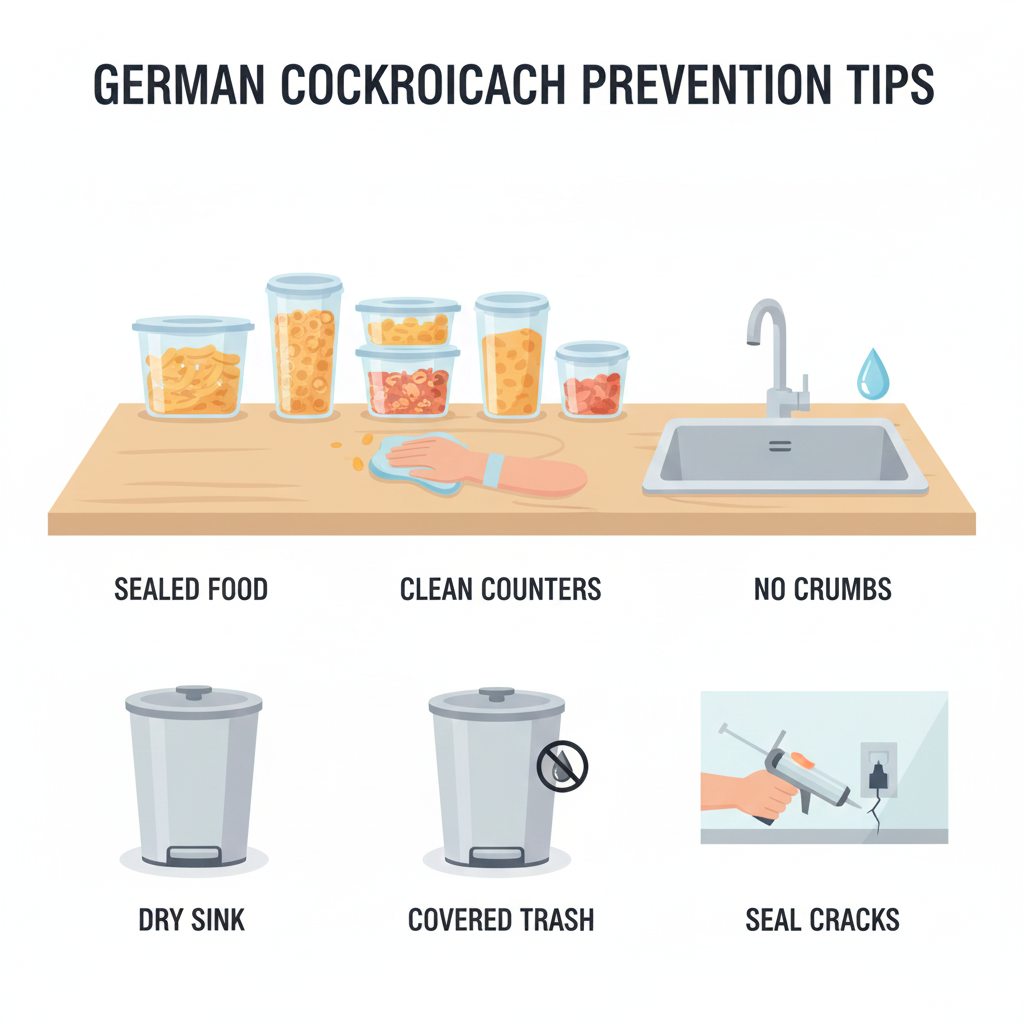
Preventing a German cockroach infestation requires a combination of proper sanitation, home maintenance, and ongoing monitoring. These pests thrive in warm, humid environments with easy access to food and water, so proactive measures are essential.
1. Maintain Strict Sanitation
Keeping your home or business clean is the first line of defense against German cockroaches. Key practices include:
- Proper Food Storage: Store food in sealed containers, avoid leaving pet food out overnight, and refrigerate perishables when possible.
- Regular Cleaning: Wipe down countertops, sweep floors, and clean under appliances to remove crumbs, grease, and food residues that attract cockroaches.
- Remove Standing Water: Cockroaches need water to survive. Fix leaky faucets, pipes, or appliances, and avoid leaving water in sinks or pet bowls overnight.
2. Seal Cracks and Crevices
German cockroaches can enter through extremely small openings and hide in narrow spaces. Reduce hiding spots and entry points by:
- Sealing gaps around baseboards, cabinets, doors, and windows
- Filling cracks in walls, tiles, and flooring
- Ensuring that vents, pipes, and utility lines are properly sealed
3. Monitor Regularly
Early detection is critical for preventing infestations. Implement a regular monitoring routine by:
- Placing sticky traps in kitchens, bathrooms, and other high-risk areas
- Inspecting dark, warm, and humid spaces such as under sinks, behind appliances, and inside cabinets
- Checking for droppings, shed skins, or egg cases during routine cleaning
4. Avoid Habits That Attract Cockroaches
Certain everyday behaviors can inadvertently encourage cockroach activity. Minimize attraction by:
- Avoiding leaving dirty dishes in the sink overnight
- Not leaving food out on countertops or tables
- Reducing clutter where baby cockroaches can hide, including cardboard boxes and paper stacks
- Regularly taking out trash and using sealed garbage bins
Effective prevention combines cleanliness, home maintenance, and vigilant monitoring. By reducing food, water, and shelter opportunities, you can significantly lower the risk of a German cockroach infestation and protect both your health and property.
Treatment & Control of German Cockroaches
Effectively eliminating German cockroaches requires a combination of targeted treatments, preventive measures, and sometimes professional intervention. Because these pests reproduce rapidly and hide in hard-to-reach spaces, early and consistent action is critical.
1. DIY Control Methods
Several do-it-yourself (DIY) treatments can help reduce cockroach populations:
- Baits: Gel or solid baits attract cockroaches and deliver slow-acting insecticides that the roaches carry back to their hiding spots, poisoning other members of the colony. Place baits in areas where cockroaches are active, such as under sinks, behind appliances, and in cabinets.
- Gels: Cockroach gels are effective for targeting specific hiding places. Apply thin lines of gel in cracks, crevices, and along baseboards.
- Traps: Sticky traps help monitor activity and reduce populations in small infestations. They can also help identify the areas with the highest cockroach activity.
DIY methods can be effective for minor infestations, but persistent or large-scale infestations often require professional intervention.
2. Professional Pest Control
Professional pest control services may be necessary when:
- The infestation is extensive or rapidly growing
- DIY methods fail to control the population
- Cockroaches are hiding in inaccessible areas, such as inside walls, ceilings, or appliances
Professional exterminators use specialized insecticides, targeted treatments, and monitoring strategies to eliminate infestations safely and effectively. They also provide guidance on preventive measures to avoid re-infestation.
3. Safety Precautions for Families and Pets
When using chemical treatments, safety is paramount:
- Always read and follow label instructions carefully.
- Keep insecticides, baits, and gels out of reach of children and pets.
- Avoid contaminating food, kitchen utensils, or surfaces with chemicals.
- Consider using bait stations rather than loose powders, which can spread accidentally.
For households with young children, pets, or individuals with respiratory sensitivities, professional services may offer safer and more controlled options.
4. Importance of Early Action
German cockroaches reproduce quickly, with populations potentially growing from a few individuals to hundreds in just a few months. Early detection and immediate treatment are essential to:
- Prevent health risks associated with contamination and allergens
- Minimize damage to food, surfaces, and property
- Reduce the time, cost, and effort required for effective elimination
Combining DIY methods, professional treatments, and preventive measures provides the best chance of eliminating German baby cockroaches. Acting quickly and safely is critical to prevent infestations from spreading and becoming a long-term problem.
Frequently Asked Questions About German Cockroaches
1. What are German cockroaches?
German cockroaches (Blattella germanica) are small, light brown or tan cockroaches with two dark parallel stripes on their backs. They are one of the most common indoor cockroach species and thrive in kitchens, bathrooms, and other warm, humid areas. Unlike other cockroaches, they prefer indoor environments and hide in cracks, crevices, and behind appliances.
2. How do I know if I have a German cockroach infestation?
Signs of infestation include:
- Small, dark droppings resembling black pepper
- Egg cases (oothecae) tucked in hidden areas
- Shed skins from molting
- A musty or unpleasant odor
- Sightings at night or near food and water sources
- Gnawed food packaging or smear marks on surfaces
3. Are German cockroaches dangerous?
Yes. They can:
- Contaminate food, utensils, and surfaces with bacteria
- Spread pathogens that cause foodborne illnesses, such as Salmonella or E. coli
- Trigger allergies and asthma through droppings, shed skins, and saliva
- Multiply rapidly, making infestations difficult to control
4. How do German cockroaches spread?
German cockroaches reproduce quickly and can spread through:
- Hiding in food packaging, bags, or boxes
- Crawling through cracks, gaps, and plumbing lines
- Moving between apartments, restaurants, or other connected buildings
5. How can I prevent German cockroaches?
Prevention focuses on sanitation and maintenance:
- Store food in sealed containers and clean up crumbs and spills promptly
- Remove standing water and fix leaks
- Seal cracks and crevices in walls, cabinets, and floors
- Reduce clutter and regularly inspect high-risk areas
- Use sticky traps to monitor activity
6. Can I get rid of German cockroaches myself?
Yes, for small infestations. Effective DIY methods include:
- Gel or solid baits placed in cracks, corners, and behind appliances
- Sticky traps to monitor populations
- Cleaning thoroughly to remove food and water sources
For larger infestations, professional pest control is recommended.
7. When should I call a professional pest control service?
Call a professional if:
- The infestation is widespread or persistent
- DIY methods fail to reduce the population
- Cockroaches are hiding in walls, ceilings, or inaccessible areas
Professional exterminators use targeted treatments and monitoring strategies that are safer and more effective.
8. Are German cockroaches harmful to children and pets?
Yes, indirectly. Their droppings, shed skins, and saliva can trigger allergies and asthma. Chemical treatments, if not used carefully, can also pose risks. Using sealed bait stations or professional services helps minimize exposure to toxins.
9. How fast do German cockroaches reproduce?
Extremely fast. A single female can produce hundreds of offspring in just a few months. Under optimal conditions, their life cycle—from egg to reproducing adult—can take as little as 6–8 weeks, which allows infestations to grow quickly if untreated.
10. Can German cockroaches survive without food or water?
German baby cockroaches are resilient. They can survive for weeks without food and a few days without water, but they thrive in environments where food, water, and warmth are readily available. This adaptability makes them difficult to eliminate without targeted action.
Conclusion
German cockroaches are more than just a nuisance—they are fast-reproducing, resilient pests that pose serious health risks to your home, family, and business. Early detection and prompt action are essential to prevent infestations from growing out of control. By understanding the signs of infestation, practicing preventive measures, and taking timely control steps, you can protect your property and maintain a safe, healthy environment.
Whether you’re dealing with a small problem or a larger infestation, professional pest control services provide effective, safe, and lasting solutions. Combining expert treatment with proper sanitation and monitoring ensures that German cockroaches are eliminated and prevented from returning.