Unsure whether it's a cockroaches?
Quickly learn how to identify common look-alike insects and find out whether the pest in your home is actually a cockroach.
Many insects are commonly mistaken for cockroaches, especially by homeowners who encounter them in basements, kitchens, bathrooms, or damp outdoor areas. Small brown or dark-colored insects with flattened bodies can easily trigger panic, leading people to assume they have a cockroach infestation. However, not every bug that looks like a cockroach is actually one. Mistaking harmless insects for cockroaches can lead to unnecessary chemical treatments, wasted money, and misplaced concern.
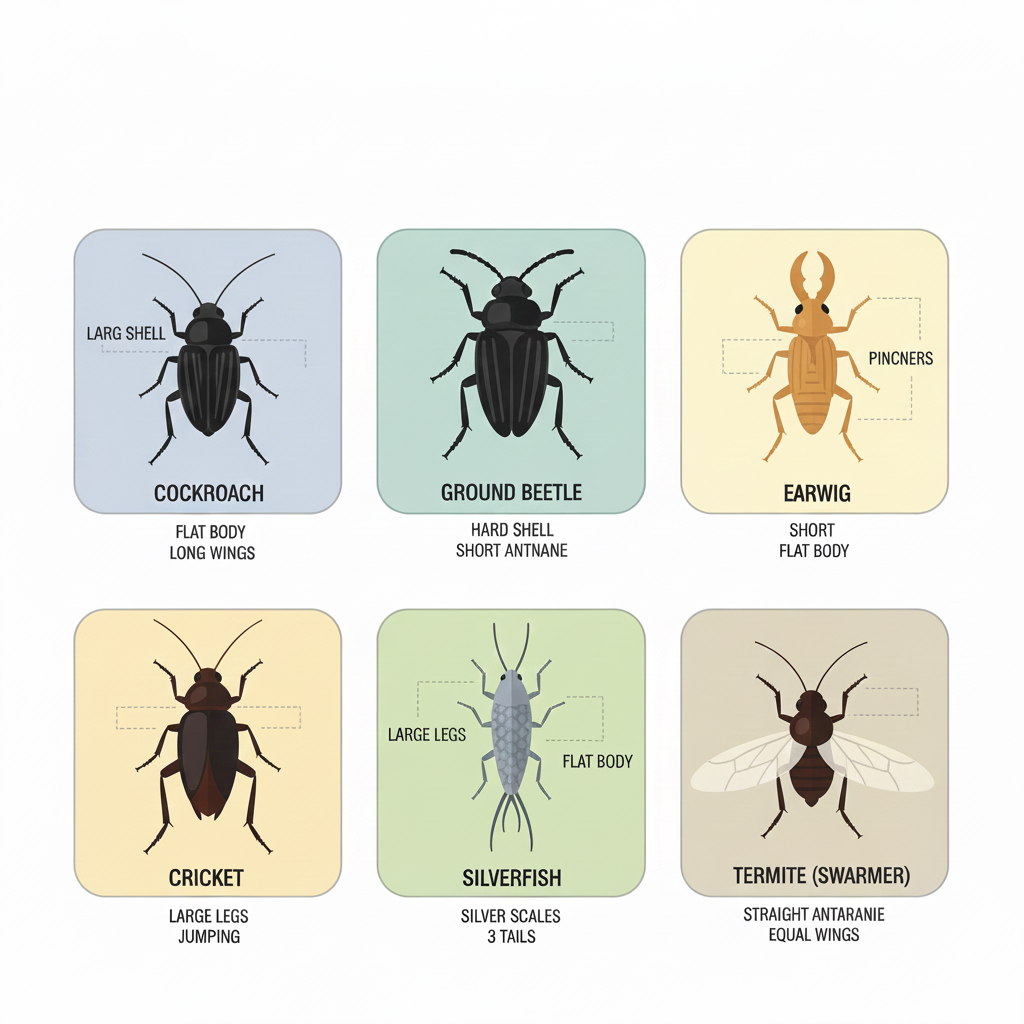
Accurate identification is essential because different species require different control methods and pose varying levels of health risk. While cockroaches can contaminate food, carry bacteria, and trigger allergies, many lookalike insects such as beetles, crickets, or earwigs are largely harmless indoors. Knowing the differences can help homeowners take appropriate and targeted action, avoiding ineffective treatments or unnecessary panic.
This guide will help you distinguish cockroaches from their lookalikes, teaching you to recognize the subtle physical traits and behavioral patterns that set them apart. By the end, you’ll be able to confidently identify whether you’re dealing with a true cockroach or a harmless insect, ensuring effective prevention and control.
Why Accurate Identification Matters
Correctly identifying cockroaches versus lookalike insects is important for several reasons:
- Health and Sanitation: Not all insects carry disease. Cockroaches are known vectors of bacteria like Salmonella and E. coli, while many lookalikes, such as silverfish or sowbugs, pose minimal health risks. Misidentifying insects can cause unnecessary worry about contamination or illness.
- Pest Control: Different species require different strategies. Cockroaches respond to baits, traps, and insecticides, while other insects may not. Treating non-cockroach pests as if they were cockroaches can lead to ineffective results and wasted resources.
- Preventing Unnecessary Chemical Use: Using insecticides indiscriminately can be harmful to humans, pets, and the environment. Accurate identification ensures that treatments are applied only when truly necessary, reducing exposure to harmful chemicals and avoiding DIY mistakes.
In short, proper identification saves time, money, and stress, while promoting safe and effective pest management.
Common Cockroach Imposters
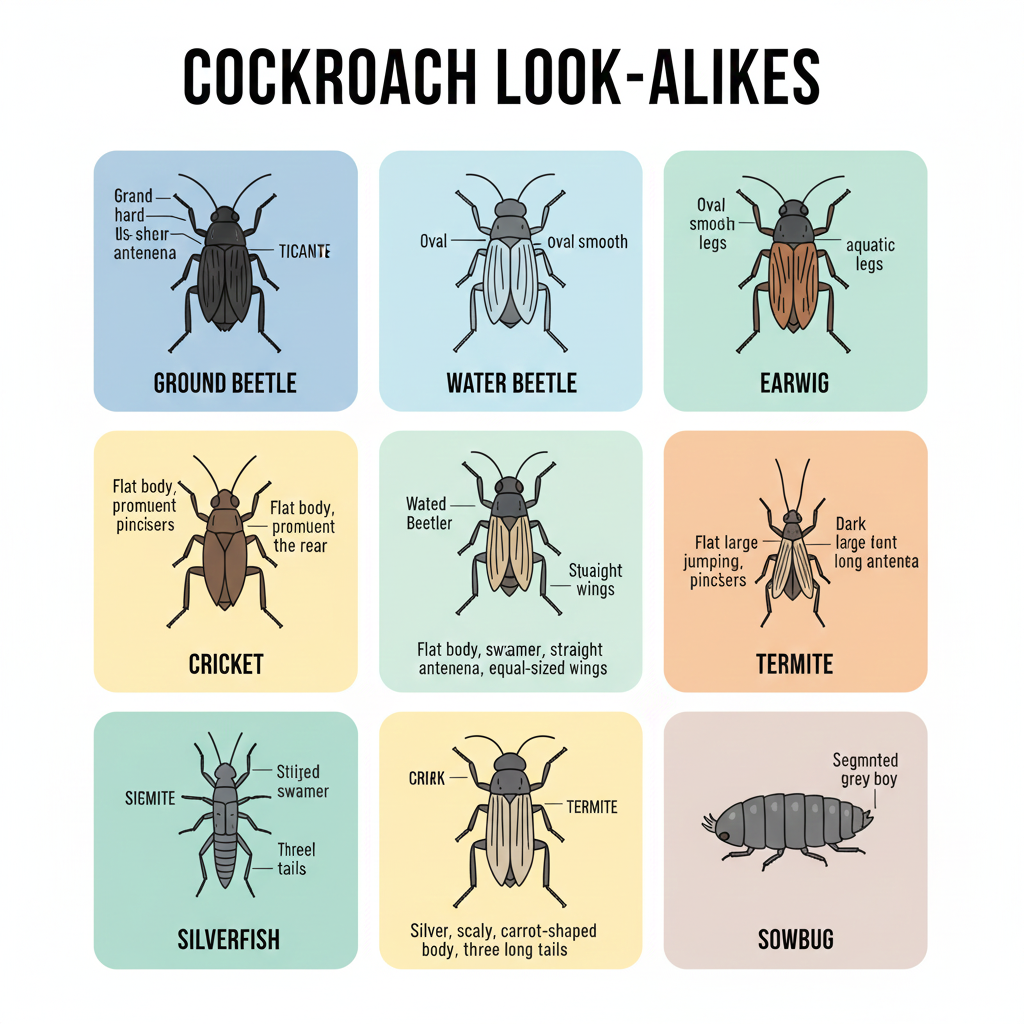
Many insects resemble cockroaches at first glance. Below are some of the most common cockroach lookalikes and tips for distinguishing them:
Beetles
- Ground beetles: Dark, shiny, and similar in size to smaller cockroaches, ground beetles are fast-moving and have hard, protective wing covers. Unlike cockroaches, they do not scuttle into cracks but run quickly across surfaces.
- Water beetles: Often mistaken for Oriental Cockroaches because they are found in moist environments, water beetles have a more rounded body and a smooth, water-adapted shape.
- Key differences: Beetles have hard elytra (wing covers), shorter antennae, and lack the flattened, elongated body typical of cockroaches. Habitat preferences also differ, with beetles favoring soil, plants, or standing water.
Earwigs
- Appearance: Earwigs have a flattened, elongated body and pincer-like cerci at the rear, which cockroaches lack.
- Behavior: They are nocturnal and slow-moving, which can make them appear similar to cockroaches at first glance.
- Differences: The presence of cerci, a segmented abdomen, and smaller or underdeveloped wings distinguish earwigs from cockroaches.
Crickets
- Appearance: Crickets have long antennae and powerful hind legs for jumping, often giving them a unique silhouette compared to cockroaches.
- Common confusion: Their brown coloring and nocturnal habits can make them look like German cockroaches.
- Differences: Crickets jump instead of scuttling, make characteristic chirping sounds, and have a more cylindrical body shape with noticeable hind legs.
Termites
- Appearance: Small, pale-colored insects that may resemble German cockroaches, especially during swarming season when winged termites are present.
- Common confusion: Both may appear in large numbers indoors and have wings during certain times of the year.
- Differences: Termites have straight, bead-like antennae, uniform body width, soft bodies, and are typically found in wood structures, unlike cockroaches that prefer food and moisture-rich areas.
Other Insects
- Silverfish: Flattened, fast-moving insects with silvery scales and long tail-like appendages. Found in bathrooms and basements.
- Sowbugs / Pillbugs: Can resemble baby cockroaches in damp areas, but are crustaceans, not insects, and have segmented, rounded bodies with multiple legs.
- Key identification tips: Look at body shape, movement, habitat, and appendages. Cockroaches have flattened, oval bodies and long antennae, whereas many lookalikes have distinctive tails, legs, or exoskeleton shapes.
How to Differentiate a Cockroach from Lookalikes
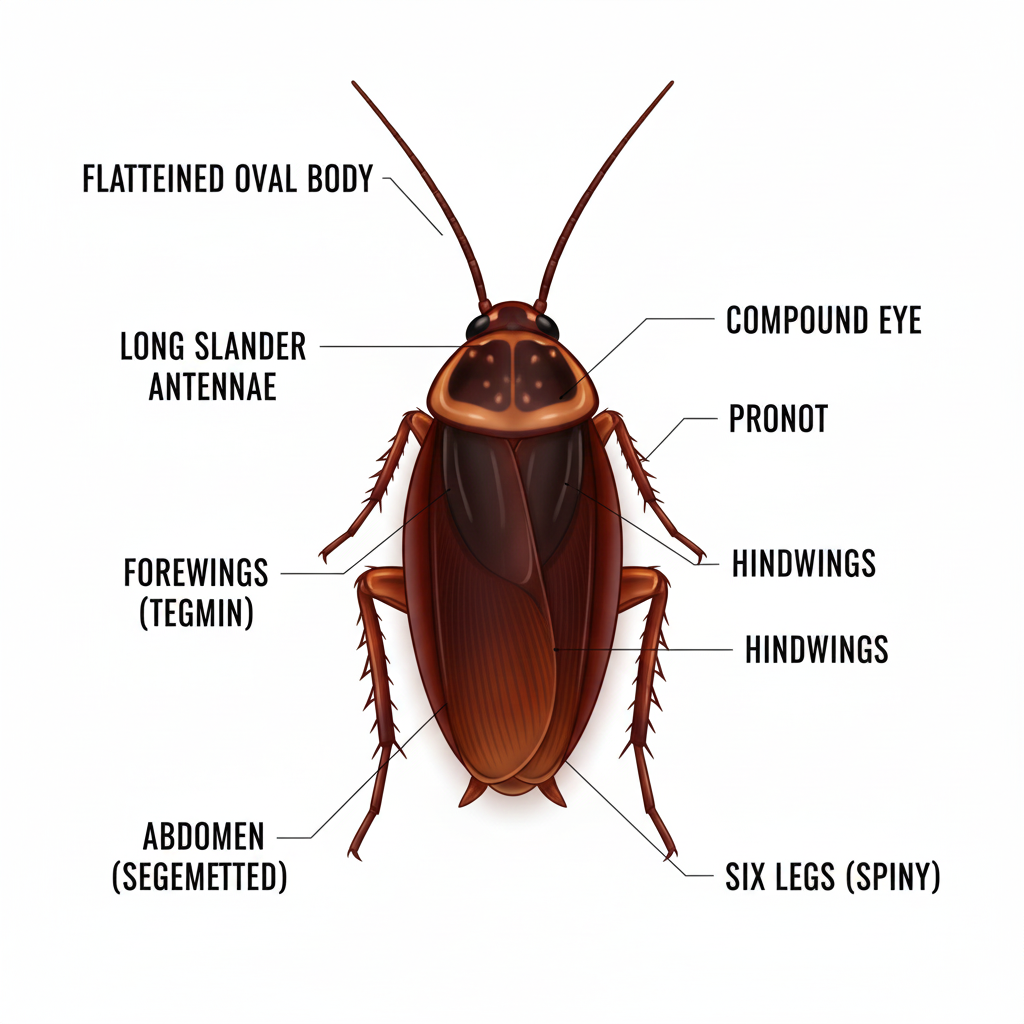
Cockroaches are often misidentified, leading to confusion, unnecessary panic, and sometimes the misuse of insecticides. To ensure you’re taking the right action, it’s critical to understand the physical and behavioral traits that distinguish cockroaches from other similar-looking insects.
1. Body Shape
The flattened, oval shape of a cockroach allows it to fit into narrow cracks and crevices. This is particularly characteristic of German and Oriental cockroaches, which are adept at hiding behind baseboards, under appliances, and in other tight spaces.
- Flattened Profile: Cockroaches can flatten their bodies against surfaces, making them almost two-dimensional when viewed from above.
- Compare to Lookalikes:
- Beetles: Rounded or cylindrical with rigid wing covers (elytra), lacking the ability to flatten.
- Earwigs: Flattened but distinctly segmented, with rear pincers that cockroaches do not have.
- Crickets: Cylindrical, elongated, and often raised slightly off surfaces due to their jumping legs.
- Silverfish: Narrow, elongated, tapering body with three tail-like appendages at the rear.
Paying attention to body shape can often be the first clue that separates cockroaches from non-harmful insects.
2. Antennae
Cockroach antennae are long, slender, and highly flexible, often extending well beyond their body length. These serve as sensory organs, helping the cockroach detect food, moisture, and threats.
- Lookalikes:
- Beetles and crickets generally have shorter, thicker, segmented antennae that are less flexible.
- Earwigs have slightly longer antennae than beetles but still lack the sweeping, sensitive motion of a cockroach’s.
- Observation Tip: Cockroach antennae move constantly, probing surfaces. This behavior is less pronounced in lookalikes.
3. Wings
Cockroach wings vary by species and sex:
- German Cockroach: Fully developed wings capable of gliding short distances.
- Oriental Cockroach: Females are mostly wingless, while males have short, non-functional wings.
- American Cockroach: Fully developed wings capable of limited flight.
- Differences in Lookalikes:
- Beetles have hard, rigid wing covers (elytra) that do not fold flat over the body in the same way as cockroach wings.
- Silverfish and crickets may have reduced or absent wings, but their body posture and shape differ.
Understanding wing structure and texture can help identify whether the insect is truly a cockroach or a harmless mimic.
4. Behavior and Movement
Behavior is a strong differentiator:
- Cockroach Movement: Low, flat, scuttling along walls and corners. Avoids open spaces during the day.
- Activity Time: Predominantly nocturnal; emerges at night to feed.
- Habitat Preference: Cockroaches seek warm, moist areas with food sources, such as kitchens, bathrooms, basements, and drains.
Compare to Imposters:
- Earwigs: Active at night but prefer outdoor plant debris and moist soil.
- Crickets: Nocturnal, but often jump instead of scuttling, and are less likely to hide in kitchen cracks.
- Silverfish: Rapid, erratic movements, often near damp walls, but do not leave droppings like cockroaches.
Behavioral observation can provide strong confirmation, particularly when combined with body and antenna characteristics.
5. Size Comparison
Insect | Size | Key Identification Features |
German Cockroach | 1.1–1.6 cm | Light brown, two dark stripes on pronotum |
Oriental Cockroach | 2.5 cm | Dark brown/black, glossy, flattened, females wingless |
American Cockroach | 3–5 cm | Reddish-brown, long wings, fast-moving |
Ground Beetle | 1–3 cm | Rounded body, hard wing covers, runs fast |
Earwig | 1–2.5 cm | Cerci pincers, segmented body, flattened |
Silverfish | 1–2 cm | Silvery, tapered, tail-like appendages |
A simple visual reference chart helps distinguish species at a glance and guides proper response.
Signs You’re Actually Dealing with Cockroaches
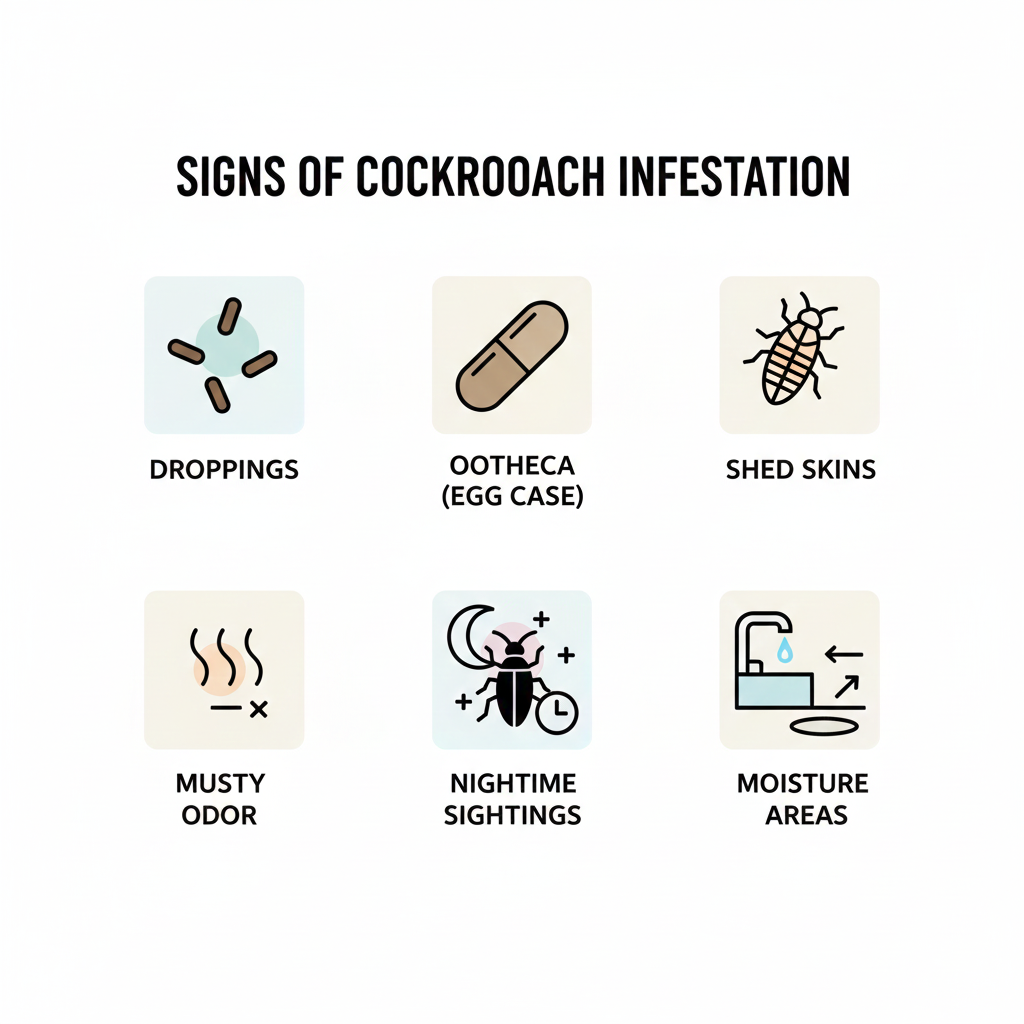
Even with accurate identification, certain physical signs and environmental clues provide confirmation of a cockroach infestation:
Fecal Droppings:
- Small, dark, cylindrical pellets often found along walls, behind appliances, in cabinets, or near water sources.
- Shape and size are unique to cockroaches and differ from droppings of beetles or crickets.
Egg Cases (Oothecae) and Shed Skins:
- Female cockroaches deposit brown, capsule-shaped egg cases in dark, hidden areas.
- Molted skins from nymphs are often found near hiding spots.
Musty or Oily Odor:
- A persistent, oily, or musty smell is a hallmark of significant infestations.
- This odor is caused by pheromones released by cockroaches to communicate with others.
Frequent Sightings:
- Spotting cockroaches in kitchens, bathrooms, basements, or crawl spaces, particularly at night, is a strong indicator.
- Cockroaches are often seen in clusters or along walls, unlike solitary lookalike insects.
Combining these signs with visual identification increases the accuracy of detection and ensures proper intervention.
When to Take Action
Deciding when to act depends on infestation severity, location, and risk factors:
1. Determining Necessity of Treatment
- Occasional sightings: If only one or two cockroaches are seen, start with preventive measures like cleaning and moisture control.
- Multiple sightings or evidence: Droppings, oothecae, shed skins, or strong odors indicate a full infestation, requiring active control.
2. DIY Measures for Actual Cockroaches
- Sanitation: Clean thoroughly, seal food, and remove crumbs or spills immediately.
- Moisture Control: Repair leaks, eliminate standing water, and improve ventilation in basements or bathrooms.
- Traps and Baits: Place gel baits and sticky traps along walls, behind appliances, and near moisture-prone areas.
- Sealing Entry Points: Use caulking and weatherstripping to seal cracks, gaps, and vents.
3. Professional Pest Control
- Persistent infestations: Large populations or repeated sightings require professional intervention.
- Pest control experts employ targeted treatments, including gel baits, residual sprays, and integrated pest management (IPM) strategies that address food, water, and shelter.
- Professionals also ensure safety for humans and pets while achieving long-term control.
4. Avoiding Unnecessary Chemicals for Lookalikes
- Many harmless insects, such as silverfish, sowbugs, or earwigs, do not require insecticides.
- Misidentification can result in unnecessary chemical exposure, environmental harm, and wasted resources.
- Accurate identification ensures that treatment is effective, safe, and species-specific.
FAQs – Common Questions About Cockroach Imposters
1. How can I tell a cockroach from a beetle?
While beetles and cockroaches may appear similar at first glance, there are several key differences:
- Body Shape: Cockroaches are flattened and oval; beetles are usually more rounded or cylindrical.
- Wings: Beetles have hard, protective wing covers (elytra), while cockroach wings are thinner and flexible, or absent in some females.
- Movement: Cockroaches scuttle with a flat posture, often along walls or corners, while beetles run faster and less predictably.
- Antennae: Cockroach antennae are long and slender; beetle antennae are shorter and often club-shaped.
2. Are all brown insects in my basement cockroaches?
No. Many brown insects such as earwigs, silverfish, and sowbugs are harmless lookalikes. True cockroaches tend to have:
- Flattened, oval bodies
- Long antennae
- Nocturnal habits
- Preference for warm, moist areas with food sources
If you’re unsure, check for droppings, egg cases, or shed skins, which are unique to cockroaches.
3. Can earwigs infest my home like cockroaches?
Earwigs are primarily outdoor insects that live in soil, mulch, and leaf litter. While they may occasionally enter homes, they:
- Prefer damp, dark corners
- Do not reproduce indoors in large numbers like cockroaches
- Do not contaminate food or spread disease
In most cases, earwigs are a nuisance rather than a health threat.
4. How do I identify termite swarms vs German cockroaches?
During swarming season, winged termites can be confused with small cockroaches:
- Termites: Straight, bead-like antennae, uniform body width, soft bodies, wings of equal length. Found near wood or soil.
- German Cockroaches: Two dark stripes on the pronotum, long legs, and flattened bodies. Wings shorter than the body in females; males can glide.
Observing body shape, antennae, and habitat can help distinguish between the two.
5. Do silverfish pose the same health risks as cockroaches?
No. Silverfish:
- Do not carry or spread bacteria
- Do not contaminate food
- Are primarily a cosmetic or structural nuisance, feeding on paper, fabric, or starchy materials
Cockroaches, by contrast, are disease vectors and require targeted control measures.
6. How can I tell if I have a real cockroach infestation?
Look for the following signs:
- Droppings: Small, dark, cylindrical pellets
- Egg cases (oothecae) or shed skins
- Musty or oily odor in infested areas
- Frequent sightings at night in kitchens, bathrooms, basements, or crawl spaces
7. What should I do if I’m not sure what insect I’m seeing?
- Take a clear photo of the insect
- Observe its behavior and habitat
- Compare with identification guides or charts
If uncertain, contact a pest control professional for accurate identification to avoid unnecessary treatment.
8. Are small insects like sowbugs or pillbugs dangerous?
No. Sowbugs and pillbugs are crustaceans that live in damp soil and decaying plant matter. They:
- Do not carry disease
- Do not infest food
- Occasionally enter damp basements or crawl spaces but cause no real harm
9. Can crickets be confused with cockroaches?
Yes, especially brown nocturnal crickets, but:
- Crickets have long hind legs for jumping
- Produce chirping sounds
- Prefer open spaces and plants outdoors rather than indoor food sources
- Cockroaches scuttle along surfaces and prefer hiding in tight, damp areas
10. Why is accurate identification so important before using insecticides?
Using chemicals unnecessarily can:
- Expose your family or pets to toxins
- Be ineffective against non-target insects
- Waste money and resources
Accurate identification ensures treatment is safe, effective, and species-specific, reducing risk and improving results.
Conclusion
Proper identification is the first and most important step before taking any action against insects that resemble cockroaches. Misidentifying harmless insects can lead to unnecessary stress, wasted effort, and the use of chemicals that are not needed.
Homeowners should practice inspection and monitoring, noting physical characteristics, behavior, and habitat. Observing droppings, egg cases, and activity patterns helps confirm whether the insect is truly a cockroach.
- If you are unsure, contact a professional pest control service for accurate identification and safe treatment.
- For proactive guidance, download a cockroach vs lookalike identification guide to help distinguish common imposters from true cockroaches.
Taking these steps ensures safe, informed, and effective pest management, preventing unnecessary panic and protecting both your home and your family’s health.