Cockroach control is one of the most important aspects of maintaining a healthy, safe, and comfortable living environment. Cockroaches are among the oldest and most adaptable pests on Earth, capable of surviving in a wide range of climates and environments. Once they invade a home or business, they reproduce rapidly, contaminate food, damage property, and spread bacteria that may affect human health. Whether you have noticed a single cockroach or are dealing with a severe infestation, understanding how these pests behave is the first step toward successful elimination.
Unlike many household pests, cockroaches are highly resilient. They hide in tiny cracks, feed on almost any organic material, and can survive for weeks with minimal resources. This adaptability makes them difficult to eliminate without a comprehensive cockroach control strategy. Quick fixes may kill a few visible insects, but they rarely address hidden nests or breeding populations.
Effective cockroach control involves much more than spraying insecticides. It requires identifying the species, locating hiding places, removing food and water sources, sealing entry points, using targeted treatments, and maintaining long-term prevention practices. Combining these methods creates an Integrated Pest Management (IPM) approach that offers sustainable and environmentally responsible results.
In residential settings, cockroaches commonly invade kitchens, bathrooms, basements, laundry rooms, and storage areas. Commercial properties such as restaurants, hotels, hospitals, warehouses, offices, and schools are equally vulnerable because they often provide abundant food, moisture, and shelter. Even spotless buildings can experience infestations if cockroaches enter through deliveries, plumbing systems, or neighboring units.
Many homeowners underestimate the health risks associated with cockroach infestations. These pests crawl through drains, sewers, garbage containers, and contaminated environments before entering homes. Along the way, they pick up bacteria, viruses, fungi, and parasites on their legs and bodies. As they move across countertops, dishes, food preparation areas, and pantry shelves, they can spread harmful microorganisms. Additionally, cockroach droppings, saliva, and shed skins contain allergens that may trigger asthma attacks and allergic reactions, particularly in children and elderly individuals.
Modern cockroach control has evolved significantly over the years. Instead of relying solely on chemical sprays, pest management professionals now use advanced monitoring tools, gel baits, insect growth regulators, dust formulations, bait stations, exclusion techniques, sanitation improvements, and ongoing inspections. These methods are safer, more effective, and designed to eliminate entire colonies rather than just visible insects.
This comprehensive guide covers every aspect of cockroach control in detail. You’ll learn how to identify different cockroach species, understand their life cycle, recognize early warning signs of infestation, inspect your property effectively, choose the best treatment methods, and prevent future infestations. Whether you prefer DIY solutions or professional extermination services, this guide provides practical recommendations backed by proven pest management principles.
By the end of this article, you’ll have the knowledge needed to protect your home or business from cockroach infestations and maintain a cleaner, healthier environment for years to come.
What Is Cockroach Control?
Cockroach control refers to the systematic process of preventing, monitoring, reducing, and eliminating cockroach populations from homes, commercial buildings, and industrial facilities. It combines sanitation, exclusion, habitat modification, targeted pesticide applications, monitoring systems, and preventive maintenance to ensure cockroaches cannot survive or reproduce.
Many people believe cockroach control simply means spraying insecticides whenever a cockroach appears. However, effective pest management is much more comprehensive. The visible cockroaches represent only a small percentage of the total population. Most remain hidden inside walls, behind appliances, beneath flooring, inside cabinets, and within plumbing systems.
Professional cockroach control focuses on identifying the root cause of infestations rather than treating only the symptoms. This includes understanding why cockroaches entered the property, where they are nesting, what resources they depend on, and how they move throughout the structure.
Successful cockroach control generally includes several essential steps:
- Thorough property inspection
- Identification of cockroach species
- Locating nesting sites
- Eliminating food and water sources
- Sealing cracks and entry points
- Applying appropriate bait products
- Using insect growth regulators
- Monitoring activity with sticky traps
- Regular follow-up inspections
- Long-term prevention strategies
Each cockroach species behaves differently. German cockroaches primarily infest kitchens and reproduce extremely quickly, while American cockroaches often enter through sewer systems and prefer damp basements. Correct species identification allows pest management professionals to select the most effective treatment plan.
Integrated Pest Management (IPM) has become the industry standard because it minimizes unnecessary pesticide use while maximizing long-term results. Instead of repeatedly spraying chemicals, IPM combines environmental improvements with targeted treatments that interrupt the cockroach life cycle.
Another critical aspect of cockroach control is education. Property owners who understand proper sanitation, moisture management, waste disposal, and food storage significantly reduce the likelihood of recurring infestations. Simple habits such as fixing leaking pipes, storing food in airtight containers, cleaning crumbs immediately, and removing clutter can dramatically improve pest control outcomes.
Businesses benefit greatly from professional cockroach control programs because infestations can damage reputations, violate health regulations, contaminate products, and lead to financial losses. Restaurants, food processing facilities, hospitals, hotels, and retail stores often schedule routine inspections to ensure continuous protection against pests.
Ultimately, cockroach control is not a one-time treatment but an ongoing process. Regular inspections, preventive maintenance, and early intervention help stop small problems from becoming large infestations. With the right combination of sanitation, exclusion, monitoring, and targeted treatment, both homeowners and businesses can successfully maintain cockroach-free environments.
H2: Why Cockroach Infestations Are a Serious Problem
Cockroach infestations are far more than a nuisance. While seeing a cockroach scurry across the kitchen floor is unpleasant, the real concern lies in the hidden population living behind walls, beneath appliances, inside cabinets, and around plumbing systems. Cockroaches can reproduce rapidly, contaminate food, spread harmful bacteria, trigger allergies, and damage the reputation of businesses. Ignoring even a small infestation can lead to significant health, sanitation, and financial problems over time.
One of the biggest reasons cockroach infestations become severe is that these pests are nocturnal. During the day, they remain hidden in dark, warm, and humid locations where they are difficult to detect. At night, they emerge to search for food and water. By the time homeowners begin seeing cockroaches during daylight hours, the infestation is often already well established.
Cockroaches reproduce at an alarming rate. A single female German cockroach can produce hundreds of offspring during her lifetime. Because cockroaches mature quickly and begin reproducing soon after reaching adulthood, populations can grow exponentially within a few months. This rapid breeding cycle makes early detection and prompt treatment essential.
Food Contamination
Cockroaches frequently travel through garbage bins, drains, sewer systems, and other unsanitary environments before entering kitchens and food storage areas. As they crawl across countertops, dishes, cutting boards, and pantry shelves, they transfer bacteria and other harmful microorganisms. Even sealed food containers may become contaminated if cockroaches leave droppings or secretions on their surfaces.
Common sources of contamination include:
- Kitchen countertops
- Food preparation areas
- Pantry shelves
- Dining tables
- Pet food bowls
- Children’s feeding areas
- Grocery storage containers
This contamination increases the risk of foodborne illnesses and creates unsanitary living conditions.
Disease Transmission
Although cockroaches do not directly bite humans or inject diseases like mosquitoes, they are mechanical carriers of many harmful pathogens. Their bodies and legs collect bacteria, viruses, fungi, and parasites as they move through contaminated environments.
Studies have identified cockroaches carrying organisms associated with illnesses such as:
- Salmonella
- E. coli
- Staphylococcus
- Streptococcus
- Dysentery-causing bacteria
- Cholera-related bacteria
- Gastroenteritis pathogens
Because cockroaches constantly move between waste materials and food preparation surfaces, they can unintentionally spread these microorganisms throughout homes and businesses.
Allergies and Asthma
Cockroach allergens are a significant health concern, particularly for children, elderly individuals, and people with respiratory conditions. Allergic reactions are caused by proteins found in cockroach saliva, droppings, urine, and shed exoskeletons.
Common symptoms include:
- Sneezing
- Runny nose
- Itchy eyes
- Skin irritation
- Persistent coughing
- Wheezing
- Difficulty breathing
For asthma sufferers, cockroach allergens can trigger severe attacks. In many urban environments, cockroach allergens are among the leading indoor asthma triggers.
Property Damage
Although cockroaches rarely destroy structural components like termites, they can damage many household items.
Examples include:
- Food packaging
- Cardboard boxes
- Paper products
- Books
- Wallpaper
- Fabrics
- Leather goods
- Electronics wiring insulation
Cockroach droppings may also stain surfaces and produce unpleasant odors that become increasingly noticeable as infestations grow.
Unpleasant Odors
Large cockroach infestations often produce a distinctive musty smell. This odor results from pheromones released by cockroaches as well as accumulated droppings and decaying bodies.
The smell may become especially strong in:
- Kitchen cabinets
- Pantries
- Basements
- Crawl spaces
- Storage rooms
Persistent odors often indicate that a significant hidden population exists behind walls or beneath flooring.
Rapid Population Growth
Cockroaches reproduce faster than many homeowners realize.
Typical reproduction cycle:
- Egg capsule contains multiple eggs
- Eggs hatch within weeks
- Nymphs molt several times
- Adults begin reproducing soon after maturity
Because several generations may overlap, populations can increase dramatically if no control measures are implemented.
Business Risks
Commercial properties face even greater consequences from cockroach infestations.
Businesses affected include:
- Restaurants
- Hotels
- Grocery stores
- Bakeries
- Hospitals
- Schools
- Food warehouses
- Apartment complexes
Potential consequences include:
- Failed health inspections
- Customer complaints
- Negative online reviews
- Product contamination
- Temporary closures
- Financial losses
- Damage to brand reputation
For food-related businesses, maintaining effective cockroach control is essential for regulatory compliance and customer trust.
Psychological Impact
Living or working in a cockroach-infested environment can also affect mental well-being. Many people experience anxiety, embarrassment, and stress when dealing with persistent infestations. Fear of contamination or unexpected encounters with cockroaches may even disrupt sleep and reduce overall comfort in the home.
Increased Treatment Costs
Small infestations are generally easier and less expensive to eliminate. As populations grow, treatment becomes more complex, often requiring multiple visits, specialized products, and extensive sanitation efforts. Addressing the problem early helps minimize both inconvenience and cost.
Why Early Cockroach Control Matters
Early intervention offers several benefits:
- Prevents rapid population growth
- Reduces health risks
- Protects food supplies
- Prevents contamination
- Minimizes property damage
- Lowers treatment costs
- Improves indoor air quality
- Maintains a healthier living environment
The sooner a cockroach infestation is identified and treated, the easier it is to eliminate the colony and prevent future outbreaks.
Types of Cockroaches Found in Homes and Businesses
Not all cockroaches are the same. Different species vary in appearance, preferred habitats, breeding habits, and behavior. Correct identification is one of the most important steps in successful cockroach control because treatment methods may differ depending on the species involved.
The following sections explore the most common cockroach species found in residential and commercial properties, helping you recognize each type and understand where they are most likely to hide.
H2: Types of Cockroaches Found in Homes and Businesses
Identifying the species of cockroach is one of the most important steps in developing an effective cockroach control plan. Different species prefer different environments, reproduce at different rates, and respond differently to treatment methods. While all cockroaches require food, water, and shelter to survive, knowing exactly which species has invaded your property allows you to choose the most effective prevention and elimination strategy.
Some cockroaches thrive indoors year-round, while others primarily live outdoors and enter buildings only in search of food or moisture. Understanding these differences helps homeowners and pest management professionals target infestations more efficiently.
Below are the most common cockroach species found in homes, apartments, restaurants, offices, warehouses, hospitals, and commercial buildings.
German Cockroach (Blattella germanica)
The German cockroach is the most common indoor cockroach species worldwide and is responsible for the majority of residential infestations. It is especially common in apartments, restaurants, hotels, hospitals, and food-processing facilities because these environments provide warmth, moisture, and abundant food.
Unlike larger cockroach species, German cockroaches rarely survive outdoors for long periods. They depend heavily on indoor environments where temperatures remain stable throughout the year.
Appearance
German cockroaches are relatively small, measuring about ½ to ⅝ inch (13–16 mm) in length. They are light brown to tan and can be easily recognized by the two dark parallel stripes running down the back of their head.
Preferred Habitat
German cockroaches typically hide in:
- Kitchen cabinets
- Behind refrigerators
- Under sinks
- Inside dishwashers
- Around microwaves
- Behind ovens
- Bathroom cabinets
- Laundry rooms
- Electrical appliances
They prefer locations that are warm, humid, and close to food and water sources.
Reproduction
German cockroaches reproduce faster than almost any other household cockroach.
A single female can:
- Produce multiple egg capsules during her lifetime.
- Carry each egg capsule until shortly before hatching.
- Produce approximately 30–40 nymphs per egg case.
- Generate hundreds of offspring within a year.
This rapid reproductive rate explains why small infestations can quickly become major problems if left untreated.
Signs of German Cockroach Activity
Common indicators include:
- Small dark droppings resembling black pepper.
- Brown smear marks near hiding places.
- Egg capsules.
- Shed skins.
- Musty odor in severe infestations.
- Live cockroaches appearing at night.
Best Control Methods
Effective control usually includes:
- Gel bait applications.
- Insect growth regulators (IGRs).
- Sticky monitoring traps.
- Thorough sanitation.
- Crack and crevice treatments.
- Moisture reduction.
- Regular follow-up inspections.
Because German cockroaches reproduce so quickly, professional treatment is often recommended for moderate to severe infestations.
American Cockroach (Periplaneta americana)
The American cockroach is one of the largest household cockroach species and is often called the “Palmetto Bug” in some regions. Despite its name, this species originated in Africa and spread worldwide through shipping and trade.
American cockroaches are excellent flyers in warm climates and often enter buildings through sewer systems, utility lines, vents, or open doors.
Appearance
Adults measure approximately 1½ to 2 inches (38–50 mm) long.
Characteristics include:
- Reddish-brown body.
- Yellowish figure-eight pattern behind the head.
- Long antennae.
- Fully developed wings.
Preferred Habitat
American cockroaches favor moist, warm environments such as:
- Basements
- Boiler rooms
- Utility tunnels
- Crawl spaces
- Sewer systems
- Commercial kitchens
- Storm drains
- Garbage rooms
Diet
They feed on a wide variety of materials including:
- Food scraps
- Pet food
- Paper
- Glue
- Cardboard
- Decaying organic matter
- Garbage
- Plant material
Behavior
Unlike German cockroaches, American cockroaches often travel longer distances while searching for food.
They are especially active during warm summer months.
Control Methods
Recommended treatments include:
- Exterior perimeter treatments.
- Sewer inspections.
- Drain maintenance.
- Moisture control.
- Professional bait placements.
- Crack sealing.
- Regular sanitation.
Oriental Cockroach (Blatta orientalis)
The Oriental cockroach is often referred to as the “Water Bug” because it prefers cool, damp environments. These cockroaches are less agile than other species but thrive in moist conditions.
Appearance
Adults are about 1 inch (25 mm) long.
Characteristics include:
- Dark brown to black body.
- Shiny appearance.
- Short wings on females.
- Males have longer wings but rarely fly.
Preferred Habitat
Oriental cockroaches commonly live in:
- Basements
- Crawl spaces
- Floor drains
- Utility rooms
- Damp garages
- Leaking pipe areas
- Outdoor mulch beds
- Under leaves and debris
Behavior
These cockroaches tolerate cooler temperatures better than many other species.
They usually enter homes through:
- Floor drains.
- Plumbing openings.
- Foundation cracks.
- Basement windows.
- Sewer connections.
Control Methods
Successful control focuses on:
- Eliminating standing water.
- Repairing plumbing leaks.
- Improving drainage.
- Removing outdoor debris.
- Applying moisture-resistant baits.
- Sealing foundation openings.
Brown-Banded Cockroach (Supella longipalpa)
Brown-banded cockroaches are smaller than American cockroaches but differ significantly from German cockroaches because they prefer warmer, drier areas instead of humid kitchens and bathrooms.
Appearance
Adults measure approximately ½ inch (13 mm) long.
They can be identified by:
- Light brown coloration.
- Two light-colored horizontal bands across the wings.
- Slender body shape.
Preferred Habitat
Brown-banded cockroaches often hide:
- Inside furniture.
- Behind picture frames.
- In closets.
- Near ceilings.
- Inside electronics.
- Bookshelves.
- Bedroom furniture.
- Office equipment.
Unlike German cockroaches, they may infest living rooms and bedrooms.
Reproduction
Females attach egg capsules beneath furniture, inside cabinets, and behind decorative items.
Control Methods
Treatment includes:
- Inspecting furniture thoroughly.
- Treating electronics carefully.
- Applying gel bait.
- Vacuuming hiding areas.
- Monitoring with sticky traps.
- Reducing clutter.
Smokybrown Cockroach (Periplaneta fuliginosa)
The Smokybrown cockroach closely resembles the American cockroach but has a darker, glossy appearance.
Appearance
Characteristics include:
- Uniform dark mahogany color.
- Shiny body.
- Long wings extending beyond the abdomen.
- Excellent flying ability.
Habitat
Common locations include:
- Attics
- Roof areas
- Tree holes
- Gutters
- Wood piles
- Garages
- Outdoor sheds
Control
Effective control focuses on:
Sealing roof openings.
Removing leaf litter.
Cleaning gutters.
Trimming tree branches.
Reducing outdoor moisture.
Exterior bait placements.
H3: Australian Cockroach (Periplaneta australasiae)
Despite its name, the Australian cockroach is found in many tropical and subtropical regions around the world. It closely resembles the American cockroach but can be distinguished by the distinctive yellow markings on its body. This species thrives in warm, humid climates and is commonly found in greenhouses, gardens, landscaping, and occasionally inside homes and commercial buildings.
Australian cockroaches are strong flyers and are often attracted to lights at night. They typically live outdoors but may enter buildings when searching for food, water, or shelter during extreme weather conditions.
Appearance
Australian cockroaches are medium to large insects, measuring approximately 1¼ to 1½ inches (30–35 mm) in length.
Key identifying features include:
- Reddish-brown body
- Bright yellow markings around the thorax
- Yellow streaks along the front edges of the wings
- Long antennae
- Fully developed wings
Preferred Habitat
Australian cockroaches commonly hide in:
- Greenhouses
- Gardens
- Mulch beds
- Compost piles
- Woodpiles
- Outdoor storage sheds
- Attics
- Utility rooms
- Commercial landscapes
Diet
This species feeds on a wide variety of organic materials, including:
- Decaying leaves
- Fruits
- Vegetables
- Plant material
- Pet food
- Food scraps
- Paper products
- Cardboard
Control Methods
Effective Australian cockroach control includes:
- Removing leaf litter
- Keeping mulch away from foundations
- Cleaning gutters regularly
- Trimming shrubs touching the building
- Sealing entry points around doors and windows
- Installing door sweeps
- Using outdoor bait stations
- Applying perimeter insecticide treatments when necessary
Wood Cockroach (Parcoblatta Species)
Wood cockroaches are primarily outdoor insects and are rarely considered serious indoor pests. Unlike German cockroaches, wood cockroaches do not reproduce inside homes and generally cannot survive indoors for extended periods because indoor environments are too dry.
Many homeowners mistake wood cockroaches for infestation-causing species when they accidentally enter through open windows or doors.
Appearance
Wood cockroaches typically measure ¾ to 1 inch (20–25 mm) long.
Characteristics include:
- Light brown body
- Long wings in males
- Shorter wings in females
- Flattened oval shape
- Long antennae
Habitat
Wood cockroaches naturally live in:
- Forests
- Firewood stacks
- Decaying logs
- Tree bark
- Leaf litter
- Compost piles
- Woodland areas
Indoor Activity
If found indoors, they usually entered accidentally through:
- Open doors
- Open windows
- Firewood brought inside
- Gaps around foundations
- Outdoor lighting attractions
Since they rarely breed indoors, finding one or two wood cockroaches generally does not indicate an infestation.
Prevention
Simple prevention includes:
- Store firewood away from the house.
- Seal foundation cracks.
- Replace damaged weather stripping.
- Install window screens.
- Reduce outdoor lighting near entrances.
- Remove decaying wood near the home.
Life Cycle of a Cockroach
Understanding the cockroach life cycle is essential for successful cockroach control. Every stage of development requires different management strategies. Many insecticides kill adult cockroaches but do not affect eggs, making follow-up treatments necessary.
Cockroaches undergo three primary life stages:
- Egg
- Nymph
- Adult
Unlike butterflies, cockroaches do not experience a pupal stage.
Stage 1: Egg (Ootheca)
Female cockroaches produce eggs inside protective capsules called oothecae.
Depending on the species:
- Each egg case may contain 10–50 eggs.
- German cockroaches usually carry the egg capsule until just before hatching.
- American cockroaches often deposit egg capsules in hidden locations.
- Brown-banded cockroaches attach egg cases beneath furniture.
These protective capsules shield developing embryos from environmental hazards and many pesticides.
Common Egg Locations
Cockroach egg cases are frequently found:
- Behind refrigerators
- Under sinks
- Inside cabinets
- Beneath furniture
- In wall voids
- Near plumbing
- Behind baseboards
- Around appliances
Stage 2: Nymph
After hatching, young cockroaches are called nymphs.
Nymphs resemble miniature adults but:
- Lack wings
- Are lighter in color
- Become darker after each molt
As they grow, they shed their outer skin several times in a process known as molting.
Depending on the species, cockroaches may molt 6–13 times before becoming adults.
Nymph Characteristics
Young cockroaches:
- Hide close to nesting areas.
- Require food and moisture.
- Grow rapidly in warm environments.
- Become increasingly resistant to environmental conditions.
Because nymphs remain hidden most of the time, infestations often go unnoticed until populations become large.
Stage 3: Adult
Adult cockroaches have fully developed wings (in most species) and reproductive organs.
Once adulthood is reached:
- Mating begins quickly.
- Females start producing egg capsules.
- Population growth accelerates dramatically.
Depending on species and environmental conditions:
- Adults may live several months.
- Some species survive over one year.
- Continuous breeding can occur indoors where temperatures remain warm.
Factors Affecting Cockroach Development
Several environmental conditions influence how quickly cockroaches mature:
Temperature
Warm temperatures speed up development.
Ideal temperatures range between:
- 75°F–90°F (24°C–32°C)
Cool temperatures slow reproduction.
Moisture
Cockroaches require reliable water sources.
Common moisture sources include:
- Leaking pipes
- Condensation
- Pet water bowls
- Standing water
- Damp basements
Reducing moisture significantly lowers survival rates.
Food Availability
Cockroaches thrive where food is easily accessible.
Common food sources include:
- Crumbs
- Grease
- Garbage
- Pet food
- Cardboard
- Paper
- Glue
- Organic debris
Removing these resources interrupts reproduction.
Why Understanding the Life Cycle Matters
Knowledge of the cockroach life cycle helps explain why infestations often return after a single treatment.
For example:
- Adult cockroaches may die.
- Hidden egg capsules survive.
- Eggs hatch several weeks later.
- New nymphs mature.
- The infestation starts again.
Professional cockroach control programs schedule multiple inspections and treatments to eliminate newly hatched nymphs before they reproduce.
Signs of a Cockroach Infestation
Cockroaches are experts at hiding, so early infestations often go unnoticed. Learning to recognize the warning signs allows homeowners to take action before populations become overwhelming.
1. Live Cockroaches
The most obvious sign is seeing live cockroaches.
Common locations include:
- Kitchen floors
- Bathroom sinks
- Basements
- Laundry rooms
- Cabinets
- Behind appliances
Seeing cockroaches during daylight often indicates a heavy infestation because overcrowding forces them out of hiding.
2. Cockroach Droppings
Droppings vary by species.
Small species leave:
- Tiny black specks resembling coffee grounds or black pepper.
Large species leave:
- Cylindrical droppings with ridges.
Droppings commonly appear:
- Inside cabinets
- Along baseboards
- Behind appliances
- Pantry shelves
- Under sinks
3. Egg Capsules
Finding egg capsules is a strong indication of active breeding.
These brown capsules may be hidden:
- Behind furniture
- Under appliances
- Inside cabinets
- Around plumbing
- Near food storage areas
4. Shed Skins
As nymphs grow, they shed their exoskeletons multiple times.
Finding these light brown skins near cracks, corners, or appliances often indicates an established infestation.
5. Musty Odor
Large infestations produce a persistent oily or musty smell caused by cockroach pheromones and accumulated waste.
This odor becomes more noticeable in enclosed spaces such as cabinets, pantries, basements, and storage rooms.
6. Smear Marks
In humid areas, cockroaches may leave dark smear marks on:
- Walls
- Floors
- Baseboards
- Countertops
- Cabinet interiors
These marks often appear where cockroaches frequently travel.
7. Damage to Food Packaging
Cockroaches chew through:
- Cardboard
- Paper
- Thin plastic packaging
Finding damaged food containers or scattered crumbs inside cabinets can indicate cockroach activity.
H2: Where Cockroaches Hide
Cockroaches are experts at finding hidden spaces where they can remain undisturbed during the day. They naturally seek out dark, warm, humid, and protected environments close to food and water sources. Because they are nocturnal, most cockroaches remain concealed during daylight hours and emerge at night to feed. Identifying these hiding spots is one of the most important steps in successful cockroach control.
Cockroaches can flatten their bodies to squeeze through cracks as small as 1/16 of an inch (about 1.5 mm), allowing them to access areas that are nearly impossible to notice during a casual inspection.
Kitchen Hiding Places
The kitchen is one of the most common locations for cockroach infestations because it provides abundant food, water, and warmth.
Common hiding places include:
- Behind refrigerators
- Under stoves and ovens
- Behind dishwashers
- Inside kitchen cabinets
- Beneath sinks
- Pantry shelves
- Around garbage bins
- Behind microwaves
- Coffee makers
- Toasters
- Inside wall voids
- Around plumbing pipes
Grease buildup, crumbs, leaking pipes, and food spills make kitchens especially attractive to German cockroaches.
Bathroom Hiding Places
Bathrooms provide moisture that cockroaches need for survival.
Look around:
- Bathroom sinks
- Toilets
- Bathtubs
- Shower drains
- Under vanities
- Plumbing penetrations
- Medicine cabinets
- Floor drains
- Water heaters
Even a small plumbing leak can support an entire cockroach colony.
Laundry Rooms
Laundry rooms are often overlooked during inspections.
Common hiding locations include:
- Behind washing machines
- Behind dryers
- Utility sinks
- Floor drains
- Water supply connections
- Laundry cabinets
- Storage shelves
Warm appliances combined with occasional moisture create excellent conditions for cockroach survival.
Basements
Basements frequently experience higher humidity than other areas of a home.
Cockroaches hide in:
- Foundation cracks
- Storage boxes
- Cardboard containers
- Utility rooms
- Water heaters
- Sump pump areas
- Crawl spaces
- Ceiling joists
- Insulation gaps
American and Oriental cockroaches especially favor these damp environments.
Living Rooms
Although less common than kitchens, living rooms may also harbor cockroaches.
Inspect:
- Behind furniture
- Entertainment centers
- Electrical outlets
- Bookshelves
- Curtains
- Wall decorations
- Carpeting edges
Brown-banded cockroaches often prefer these warmer, drier spaces.
Bedrooms
Bedrooms may become infested when cockroach populations become large.
Possible hiding places include:
- Behind headboards
- Under beds
- Nightstands
- Closets
- Dressers
- Behind picture frames
- Electronics
- Alarm clocks
Although uncommon, German cockroaches may spread into bedrooms during severe infestations.
Electronics
Modern electronic devices generate heat, making them attractive hiding places.
Cockroaches frequently infest:
- Computers
- Television sets
- Cable boxes
- Wi-Fi routers
- Gaming consoles
- Printers
- Power strips
Infestations inside electronics may even cause equipment failures due to droppings or physical damage.
Commercial Buildings
Businesses contain many additional hiding locations.
Examples include:
- Restaurant kitchens
- Food storage rooms
- Employee break rooms
- Ceiling voids
- Mechanical rooms
- Elevator shafts
- Utility tunnels
- Warehouses
- Inventory shelves
Routine inspections are essential in commercial environments because infestations can spread quickly through large buildings.
Common Causes of Cockroach Infestations
Understanding what attracts cockroaches is essential for long-term prevention. These pests invade buildings because they find everything they need to survive: food, water, warmth, and shelter.
Removing these resources greatly reduces the likelihood of infestation.
1. Poor Sanitation
Food residue is one of the strongest attractants for cockroaches.
Common sanitation problems include:
- Dirty dishes
- Food crumbs
- Grease buildup
- Overflowing trash
- Pet food left overnight
- Sticky spills
- Dirty stovetops
- Unclean garbage bins
Even tiny food particles hidden beneath appliances can sustain a cockroach population.
2. Water Sources
Cockroaches cannot survive long without water.
Common moisture sources include:
- Leaking pipes
- Dripping faucets
- Standing water
- Condensation
- Clogged drains
- Wet sponges
- Pet water bowls
- Humid basements
Repairing leaks is one of the most effective preventive measures.
3. Easy Entry Points
Cockroaches enter buildings through surprisingly small openings.
Typical entry routes include:
- Foundation cracks
- Gaps around plumbing
- Utility penetrations
- Window gaps
- Door thresholds
- Roof vents
- Damaged weather stripping
- Floor drains
Proper sealing significantly reduces new infestations.
4. Clutter
Clutter provides excellent shelter for cockroaches.
Common examples include:
- Cardboard boxes
- Newspapers
- Paper bags
- Stored clothing
- Unused furniture
- Storage containers
Reducing clutter makes inspections and treatments much more effective.
5. Outdoor Conditions
Outdoor environments often support cockroach populations.
Risk factors include:
- Wood piles
- Compost bins
- Leaf litter
- Dense vegetation
- Standing water
- Poor drainage
- Mulch touching foundations
Proper landscaping helps prevent outdoor cockroaches from entering homes.
6. Neighboring Infestations
In apartment buildings, condominiums, and townhouses, cockroaches frequently move between units through:
- Shared plumbing
- Electrical conduits
- Wall voids
- Ceiling spaces
- Hallways
Treating only one unit may not eliminate the problem if neighboring infestations remain active.
7. Bringing Cockroaches Inside
Cockroaches often hitchhike into buildings.
They may arrive inside:
- Grocery boxes
- Used furniture
- Appliances
- Cardboard shipping cartons
- Secondhand electronics
- Moving boxes
Carefully inspecting items before bringing them indoors can help prevent infestations.
Health Risks Associated with Cockroaches
Cockroach infestations pose significant health concerns beyond the annoyance of seeing insects. As cockroaches move through unsanitary environments such as garbage areas, drains, and sewers, they can carry microorganisms that contaminate food preparation surfaces and household items.
Their droppings, saliva, and shed skins also contribute to indoor allergens, which can trigger respiratory problems.
Food Contamination
Cockroaches may contaminate:
- Kitchen counters
- Cutting boards
- Pantry shelves
- Food containers
- Cooking utensils
- Children’s dishes
- Pet food
Even sealed packages can become contaminated on the outside if cockroaches crawl across them.
Bacteria
Research has found cockroaches carrying bacteria associated with illnesses such as:
- Salmonella
- Escherichia coli (E. coli)
- Staphylococcus
- Streptococcus
These bacteria can contribute to foodborne illnesses if proper hygiene and food safety practices are not maintained.
Allergens
Cockroach allergens originate from:
- Droppings
- Shed exoskeletons
- Saliva
- Body fragments
These particles can become airborne and accumulate in household dust.
High-Risk Individuals
People who are especially vulnerable include:
- Young children
- Older adults
- Individuals with asthma
- Allergy sufferers
- People with weakened immune systems
Maintaining a cockroach-free environment supports healthier indoor air quality.
Diseases Spread by Cockroaches
Cockroaches are considered mechanical vectors, meaning they can carry microorganisms on their bodies after moving through contaminated environments. They do not inject disease through bites, but they can transfer bacteria to food, utensils, and surfaces.
Microorganisms associated with cockroaches have been linked to:
- Food poisoning
- Gastrointestinal infections
- Diarrheal illnesses
- Dysentery
- Certain bacterial infections
Good sanitation, prompt pest control, and safe food handling practices help reduce these risks.
Cockroach Allergies and Asthma
Cockroach allergens are among the most common indoor allergy triggers. Tiny particles from droppings, saliva, and shed skins can remain in dust long after cockroaches are gone.
Common Symptoms
People sensitive to cockroach allergens may experience:
- Sneezing
- Runny nose
- Nasal congestion
- Itchy eyes
- Skin irritation
- Persistent cough
- Wheezing
- Shortness of breath
Asthma
Exposure to cockroach allergens may worsen asthma symptoms in susceptible individuals, particularly children living in heavily infested environments.
Reducing cockroach populations, improving cleaning practices, and controlling indoor moisture can help minimize allergen exposure.
H2: How to Inspect Your Home for Cockroaches
A thorough inspection is the foundation of effective cockroach control. Before using baits, traps, or insecticides, you should determine where cockroaches are hiding, how they are entering your home, and what attracts them. A careful inspection helps you identify the extent of the infestation and select the most appropriate treatment strategy.
Because cockroaches are nocturnal, inspections are often more productive during the evening or early morning when they are most active. However, signs such as droppings, egg cases, shed skins, and smear marks can be found at any time of the day.
Inspection Tools
Gather a few basic tools before starting your inspection:
- Flashlight or headlamp
- Disposable gloves
- Small inspection mirror
- Screwdriver (to remove access panels if needed)
- Sticky monitoring traps
- Notepad or mobile phone for photos
- Vacuum cleaner with hose attachment
These tools make it easier to inspect dark, narrow spaces where cockroaches commonly hide.
Step 1: Inspect the Kitchen
The kitchen is the first place to inspect because it provides food, water, and warmth.
Check carefully:
- Behind the refrigerator
- Under the stove
- Around the dishwasher
- Under the sink
- Inside cabinets
- Pantry shelves
- Behind the microwave
- Coffee maker area
- Garbage can storage
- Pet food stations
Look for:
- Live cockroaches
- Droppings
- Egg capsules
- Shed skins
- Smear marks
- Musty odors
Step 2: Inspect the Bathroom
Bathrooms provide moisture that cockroaches need to survive.
Inspect:
- Sink cabinets
- Around toilet bases
- Bathtub plumbing
- Shower drains
- Floor drains
- Medicine cabinets
- Around water heaters
- Plumbing penetrations
Pay close attention to leaking pipes and damp areas.
Step 3: Inspect Appliances
Many cockroach species hide near warm electrical equipment.
Inspect:
- Refrigerator motor compartment
- Dishwasher
- Oven
- Microwave
- Washing machine
- Dryer
- Television
- Computer
- Gaming console
- Internet router
Use caution and disconnect power before inspecting electrical equipment.
Step 4: Inspect Basements and Utility Rooms
These areas often contain hidden infestations.
Check:
- Water heaters
- Utility sinks
- Foundation cracks
- Crawl spaces
- Floor drains
- Cardboard boxes
- Storage shelves
- Ceiling joists
Step 5: Inspect Exterior Areas
Outdoor inspections help identify entry points.
Walk around your home and inspect:
- Foundation cracks
- Door thresholds
- Window frames
- Utility lines
- Roof vents
- Gutters
- Air conditioning units
- Outdoor storage
- Firewood stacks
- Compost bins
Trim vegetation touching the building and remove debris near the foundation.
Monitoring with Sticky Traps
Sticky monitoring traps help determine where cockroaches are most active.
Place traps:
- Behind refrigerators
- Under sinks
- Beside dishwashers
- Behind toilets
- Along walls
- Near garbage cans
- Inside pantries
Check traps every few days to monitor activity and evaluate treatment success.
Kitchen Cockroach Control
Since kitchens provide food, water, and shelter, they are the most common location for cockroach infestations.
Daily Cleaning
Develop these daily habits:
- Wipe countertops after every meal.
- Sweep and mop floors.
- Clean grease from stovetops.
- Wash dishes immediately.
- Empty trash daily.
- Clean underneath small appliances.
- Store leftovers promptly.
Even tiny food crumbs can sustain cockroach populations.
Proper Food Storage
Store food in airtight containers made of:
- Glass
- Thick plastic
- Metal
Avoid leaving food uncovered overnight.
Items requiring secure storage include:
- Rice
- Flour
- Sugar
- Cereal
- Pasta
- Pet food
- Snacks
Reduce Moisture
Fix:
- Dripping faucets
- Leaking pipes
- Sink overflows
- Dishwasher leaks
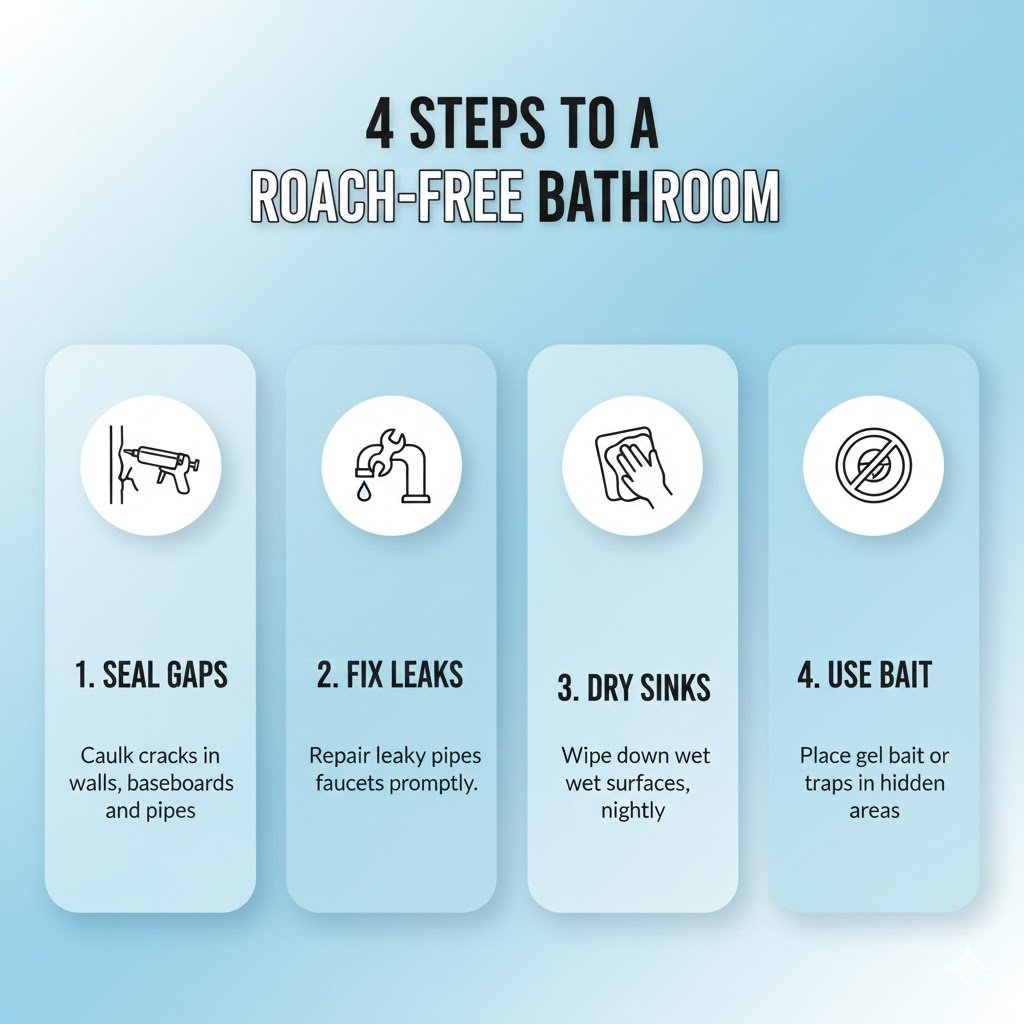
Dry sinks before bedtime whenever possible.
Apply Gel Baits
Gel baits work best when applied in small amounts near hiding places.
Common application sites include:
- Cabinet hinges
- Under sinks
- Behind refrigerators
- Around plumbing
- Inside cabinet corners
Avoid spraying insecticides directly over bait placements because sprays may reduce bait effectiveness.
Eliminate Clutter
Reduce unnecessary storage inside kitchen cabinets.
Remove:
- Empty boxes
- Old newspapers
- Paper bags
- Excess packaging
Fewer hiding places improve treatment success.
Bathroom Cockroach Control
Bathrooms often support cockroach populations because of constant moisture.
Repair Plumbing
Inspect and repair:
- Sink drains
- Toilet supply lines
- Shower plumbing
- Bathtub drains
- Pipe connections
Even slow leaks provide enough water for cockroaches.
Improve Ventilation
Reduce humidity by:
- Using exhaust fans
- Opening windows when possible
- Repairing ventilation systems
- Wiping excess moisture
Lower humidity discourages cockroach survival.
Clean Regularly
Pay special attention to:
- Behind toilets
- Under sinks
- Floor drains
- Shower corners
- Vanity cabinets
Soap residue and hair buildup may attract other pests that indirectly support cockroach populations.
Seal Entry Points
Use quality caulk around:
- Plumbing penetrations
- Baseboards
- Floor cracks
- Wall gaps
Sealing openings helps prevent movement between rooms.
Basement Cockroach Control
Basements commonly attract American and Oriental cockroaches.
Moisture Reduction
Use:
- Dehumidifiers
- Proper drainage systems
- Foundation waterproofing
- Pipe insulation
Maintain humidity below approximately 50% whenever practical.
Storage Improvements
Avoid storing items directly on the floor.
Use:
- Plastic storage bins
- Metal shelving
- Elevated pallets
Replace cardboard boxes with sealed plastic containers whenever possible.
Foundation Maintenance
Inspect regularly for:
- Cracks
- Water intrusion
- Pipe gaps
- Damaged vents
Seal openings promptly.
Drain Maintenance
Floor drains should remain clean and functional.
Periodically:
- Remove debris.
- Flush drains.
- Ensure water traps remain filled.
Dry or unused drains can become entry points for cockroaches.
Garage Cockroach Prevention
Garages often contain clutter, cardboard, moisture, and pet food—all of which attract cockroaches.
Organize Storage
Store items in sealed plastic containers instead of cardboard boxes.
Keep shelves elevated and maintain clear access for inspections.
Remove Food Sources
Avoid storing:
- Pet food in open bags
- Bird seed
- Grass seed
- Animal feed
Transfer products into sealed containers.
Seal Garage Doors
Install:
- Door sweeps
- Weather stripping
- Threshold seals
Repair damaged garage door seals promptly.
Clean Regularly
Remove:
- Oil spills
- Leaves
- Dust
- Food wrappers
- Empty boxes
A clean garage offers fewer hiding places.
Outdoor Cockroach Control
Many infestations begin outside before cockroaches move indoors.
Landscaping Tips
Trim shrubs and tree branches away from exterior walls.
Avoid allowing vegetation to touch the building.
Mulch Management
Keep mulch at least 6–12 inches (15–30 cm) away from the foundation to reduce moisture and hiding places.
Firewood Storage
Store firewood:
- Off the ground
- Away from the house
- Covered from rain
Inspect wood before bringing it indoors.
Garbage Management
Use trash containers with tight-fitting lids.
Clean garbage bins regularly to remove food residue.
Eliminate Standing Water
Inspect your property for:
- Clogged gutters
- Bird baths
- Plant saucers
- Leaking outdoor faucets
- Poor drainage
Removing excess moisture makes your property less attractive to cockroaches.
Exterior Treatments
If necessary, apply targeted exterior treatments around likely entry points according to product directions. For extensive infestations, consider consulting a licensed pest management professional who can recommend an integrated treatment plan tailored to your property.
H2: DIY Cockroach Control Methods
Many homeowners successfully manage small cockroach infestations using do-it-yourself (DIY) techniques. DIY cockroach control can be effective when the infestation is caught early and combined with good sanitation and preventive maintenance. However, severe infestations often require professional pest management because cockroaches hide deep inside wall voids, plumbing systems, and inaccessible areas.
The most successful DIY approach combines multiple strategies rather than relying on a single product. Cleaning alone will not eliminate cockroaches, and insecticides alone may not provide lasting results if food, water, and shelter remain available.
Start with Sanitation
Good sanitation reduces the resources cockroaches need to survive.
Daily habits include:
- Wipe kitchen counters after preparing food.
- Sweep and vacuum floors regularly.
- Wash dishes promptly instead of leaving them overnight.
- Empty indoor trash bins every day.
- Clean grease from stovetops and range hoods.
- Store dry foods in sealed containers.
- Avoid leaving pet food out overnight.
- Clean behind large appliances regularly.
Consistent cleaning makes bait products more attractive because cockroaches have fewer alternative food sources.
Reduce Moisture
Cockroaches depend on water for survival.
Reduce available moisture by:
- Repairing leaking faucets.
- Fixing broken pipes.
- Drying sinks before bedtime.
- Improving bathroom ventilation.
- Using a dehumidifier in damp basements.
- Emptying drip trays beneath appliances.
- Eliminating standing water around the home.
Even small leaks can support an active cockroach population.
Seal Entry Points
Prevent additional cockroaches from entering by sealing gaps around the structure.
Inspect and seal:
- Door frames
- Window frames
- Utility penetrations
- Plumbing openings
- Foundation cracks
- Baseboards
- Electrical penetrations
- Dryer vents
Use high-quality caulk or appropriate sealants to close small openings.
Declutter Your Home
Cockroaches prefer crowded storage areas where they can hide undisturbed.
Reduce clutter by removing:
- Cardboard boxes
- Old newspapers
- Paper bags
- Excess packaging
- Unused clothing
- Broken appliances
Organized storage makes inspections and treatments much easier.
Best Cockroach Baits
Cockroach baits are among the most effective tools for controlling infestations because they target the colony rather than only the visible insects.
Baits contain food that attracts cockroaches along with a slow-acting active ingredient. After feeding, cockroaches return to their hiding places where they may expose other cockroaches to the bait through droppings, regurgitation, or carcasses, helping reduce the overall population.
Advantages of Baits
Benefits include:
- Target hidden cockroaches.
- Require only small amounts.
- Long-lasting when placed correctly.
- Minimal odor.
- Lower exposure compared with broad-area spraying.
- Effective against many indoor species.
Placement Tips
Apply bait in small amounts near:
- Cabinet corners
- Behind refrigerators
- Under sinks
- Around plumbing
- Behind dishwashers
- Inside pantries
- Along wall edges
- Near known hiding places
Avoid placing bait on surfaces that are frequently cleaned or exposed to excessive moisture.
Cockroach Gel Baits
Gel bait is widely regarded as one of the most effective treatment options for indoor cockroach infestations, especially German cockroaches.
The gel remains attractive for extended periods when applied correctly.
Application Guidelines
Place small dots or thin lines of gel:
- Inside cabinet hinges
- Around plumbing penetrations
- Behind appliances
- Along cracks and crevices
- Under countertops
- Near electrical outlets (without placing inside energized components)
Avoid contaminating gel with household cleaners or insecticide sprays, as this can reduce its attractiveness.
Monitor bait placements regularly and replace them when they become dry, dirty, or fully consumed.
Cockroach Traps
Sticky traps are useful for monitoring cockroach activity and reducing small populations.
Although traps alone rarely eliminate an infestation, they help identify:
- High-activity areas
- Species present
- Population trends
- Treatment effectiveness
Best Locations
Place traps:
- Behind refrigerators
- Under sinks
- Along walls
- Inside cabinets
- Near garbage bins
- Beside dishwashers
- Under furniture
- Near plumbing
Inspect traps weekly and replace them as needed.
Cockroach Sprays
Insecticide sprays can quickly kill cockroaches that come into direct contact with the product. However, sprays generally provide limited control because they may not reach hidden nesting sites or egg cases.
Appropriate Uses
Sprays may be useful for:
- Treating cracks and crevices (when labeled for that use)
- Managing outdoor entry points
- Spot-treating visible cockroaches
Avoid routine spraying of countertops, food preparation areas, dishes, or utensils.
For best results, sprays should complement—not replace—sanitation, exclusion, baiting, and monitoring.
Cockroach Dusts
Certain insecticidal dust formulations can be effective when applied to inaccessible voids where cockroaches hide.
Dusts are typically used in:
- Wall voids
- Crawl spaces
- Attics
- Pipe penetrations
- Behind baseboards
- Utility chases
Only a very light application is generally needed. Heavy dust deposits can cause cockroaches to avoid the treated area and may not improve effectiveness.
Always follow the product label and avoid contaminating living spaces or food-contact surfaces.
Boric Acid for Cockroach Control
Boric acid has been used for many years as a cockroach control option. When cockroaches walk through a light layer of boric acid, the powder adheres to their bodies. During grooming, they ingest the material, which can be effective when used according to label directions.
Advantages
- Long-lasting in dry locations
- Low odor
- Effective when applied properly
- Useful in cracks and crevices
Best Application Areas
Apply lightly in:
- Behind appliances
- Under sinks
- Wall voids
- Cabinet corners
- Utility areas
- Beneath refrigerators
Visible piles are generally less effective than thin, nearly invisible applications.
Keep boric acid away from children, pets, and food preparation surfaces, and always follow the manufacturer’s instructions.
Diatomaceous Earth for Cockroach Control
Food-grade diatomaceous earth is a naturally occurring powder made from fossilized algae. It works by damaging the outer protective layer of insects, causing them to lose moisture over time.
Benefits
- Long-lasting when kept dry
- Odorless
- Non-staining
- Suitable for use in dry, inaccessible areas when used according to label directions
Where to Apply
Use a light application in:
- Wall voids
- Under appliances
- Crawl spaces
- Behind cabinets
- Around plumbing penetrations
Avoid applying in damp areas because moisture reduces its effectiveness.
Take care to minimize airborne dust during application.
Natural Cockroach Repellents
Some homeowners use natural approaches as part of an overall cockroach management plan. While these methods may help discourage cockroach activity in certain situations, they are generally not sufficient to eliminate an established infestation on their own.
Examples include:
- Keeping the home clean and dry
- Removing food and water sources
- Sealing cracks and gaps
- Maintaining proper waste management
- Reducing clutter
Natural methods work best as preventive measures alongside proven control techniques such as baiting and monitoring.
Homemade Cockroach Remedies
Many homemade remedies are shared online, but their effectiveness varies widely. While some may help reduce cockroach activity, they should not be relied upon as the sole treatment for moderate or severe infestations.
A practical DIY cockroach management plan includes:
- Thorough cleaning and sanitation.
- Moisture control.
- Sealing entry points.
- Strategic placement of gel baits.
- Sticky monitoring traps.
- Regular inspections.
- Follow-up treatments when necessary.
If cockroach activity continues despite these efforts, it may indicate a hidden or extensive infestation that requires professional evaluation.