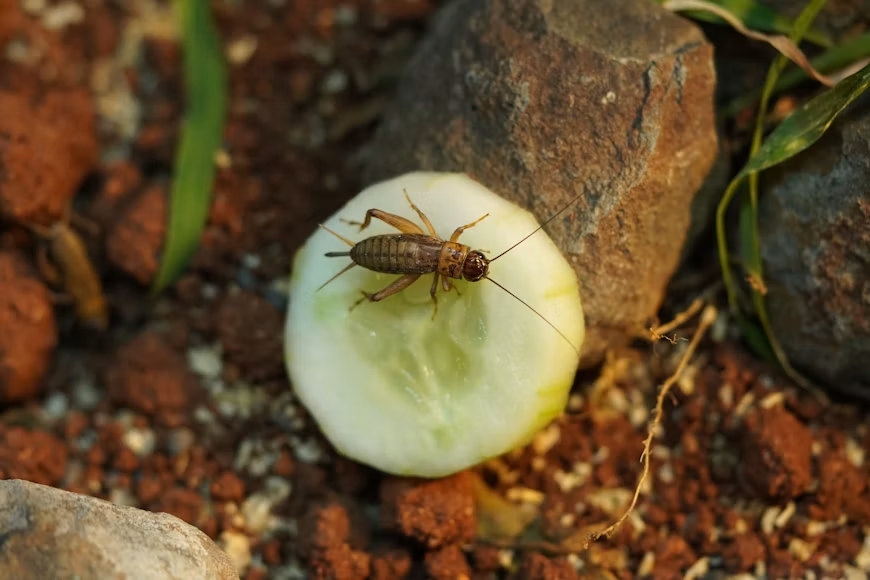
Learn what cockroaches eat indoors and outdoors, why they can digest cardboard and glue, and how to effectively cut off their food sources.
If your pest control plan relies on “starving out” a cockroach infestation, you are in for a difficult battle.
Cockroaches are among the most opportunistic and resilient scavengers on the planet. As omnivores with a virtually limitless appetite, their digestive systems have evolved over hundreds of millions of years to extract usable calories from almost anything organic.
To break their reproductive cycle, you have to look beyond standard food crumbs on the floor and understand the full spectrum of a cockroach’s diet—both standard kitchen fare and bizarre, non-food household items.
The Outdoor Diet: Nature’s Essential Cleanup Crew
Long before they invaded human dwellings, cockroaches established themselves as primary detritivores in forest floors, grasslands, and tropical canopies.
In the wild, cockroaches perform a critical ecological service by recycling decaying organic matter:
- Decaying Plant Material: Fallen leaves, rotting logs, bark, compost, and soft decomposing plant roots.
- Carrion and Faeces: Dead insects, small bird carcasses, and mammalian excrement.
- Fungi and Mould: Rotting forest floor mould, decaying moss, and mushroom spores.
By breaking down this tough, fibrous matter, wild cockroaches return vital nitrogen and carbon to the soil, nourishing plant life and supporting the broader food chain.
What Cockroaches Eat Indoors: The Human Buffet
Once cockroaches cross into human structures, their diet shifts from decomposing leaf litter to energy-dense household staples.
They are naturally drawn to foods high in fats, simple sugars, and animal proteins:
| Food Category | Favourite Items | Why Roaches Target It |
| Fats & Lipids | Cooking oils, bacon grease, butter, fryer residue | Highest caloric density per bite; readily available around stove corners. |
| Sugars & Carbs | Pastries, bread crumbs, cereal, fruit peels, soda syrup | Rapid energy source; easy for nymphs and adults to consume. |
| Proteins | Meat trimmings, cheeses, dry pet kibble, fish flakes | Essential for female egg capsule (ootheca) production. |
| Fermented Goods | Stale beer, wine residue, decaying fruit, vinegar | Strong volatile scents mimic overripe tropical fruits in nature. |
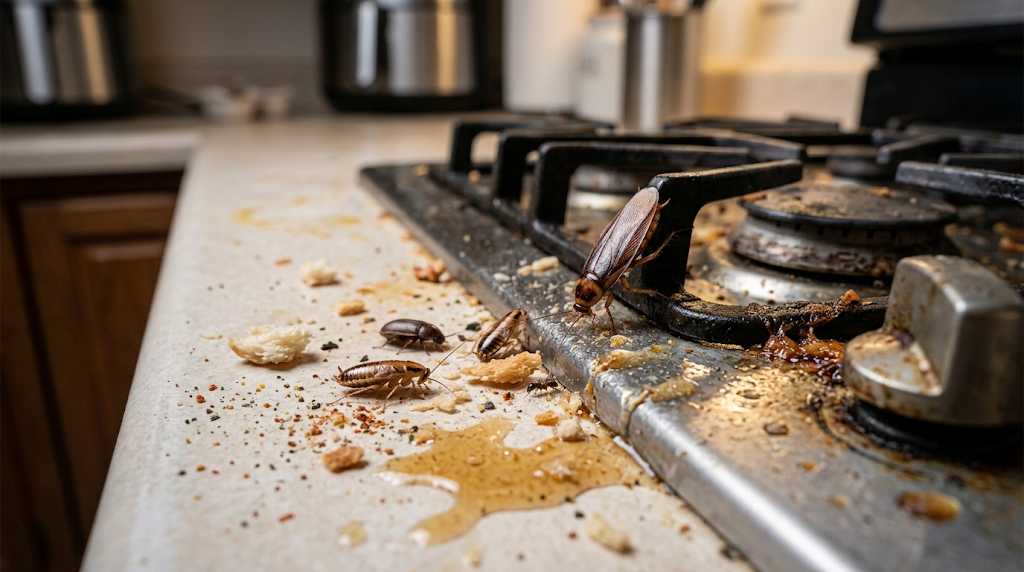
A greasy stovetop drip pan or a single drop of spilt soda under the refrigerator can sustain an adult cockroach for days.
The Extreme Scavenger Diet: How Roaches Digest Non-Food Items
When a kitchen is kept clean and all pantry foods are sealed, cockroaches do not simply pack up and leave. They pivot to their “survival diet”, consuming household materials most animals cannot process.
1. Cellulose, Cardboard, and Paper Bags
Cockroaches harbour specialised symbiotic microorganisms (including endosymbionts like Blattabacterium and specialised gut protozoa) in their digestive systems. These microbes produce enzymes capable of breaking down tough cellulose fibres, allowing roaches to feed on cardboard shipping boxes, paper grocery bags, and newspaper stacks.
2. Adhesives, Books, and Wallpaper Paste
Starches and natural proteins are common binding agents in everyday household adhesives:
- Book Bindings: The glue along book spines and paperbacks provides an easy starch source.
- Wallpaper Paste: Moisture trapped behind wallpaper softens the starch-heavy paste beneath, creating a dark, edible breeding ground.
- Envelopes and Labels: Postal stamps, cardboard box tape, and adhesive seals.
3. Hair, Dander, and Dead Skin Flakes
Cockroaches crave proteins containing keratin. As humans and pets shed thousands of microscopic dead skin cells, stray hairs, and nail clippings every day, these particles settle into carpets, baseboards, and furniture seams—providing an endless source of nutrition.
4. Bar Soaps and Organic Textiles
- Plant- and Tallow-Based Soaps: Leftover soap scum and bar soaps formulated with animal fats or vegetable oils are readily eaten by bathroom-dwelling roaches.
- Natural Fabrics: Cotton, wool, silk, and leather—especially if soiled with body sweat, food oils, or beverage spills.
Cannibalism and Coprophagy: Surviving Extreme Shortages
When populations swell and all other food resources are depleted, cockroaches turn to internal colony recycling:
- Coprophagy (Faeces Consumption): Cockroaches regularly consume each other’s droppings. This is biologically vital for juvenile nymphs, who rely on the gut bacteria present in adult faeces to inoculate their own developing digestive systems.
- Necrophagy (Eating the Dead): Dead roaches, shed cast skins (exuviae), and empty egg capsules are consumed by surviving nestmates.
- Active Cannibalism: In overcrowded environments with zero food, adult cockroaches will actively hunt and feed on weaker nymphs, moulting individuals, or injured adults.
Actionable Strategy: How to Starve Cockroaches
Because cockroaches can survive on virtually anything, passive cleaning is not enough. You need an aggressive, targeted starvation strategy:
Dry-Up Water Sources: A cockroach can live for a month without food but only one week without water. Fix plumbing leaks, wipe kitchen sinks dry before bed, and empty drain pans.
Degrease Behind Appliances: Pull out the stove, range hood, and refrigerator. Scrub away baked-on grease splatters using a heavy-duty degreaser.
Switch to Airtight Food Storage: Store all dry pantry goods—including flour, cereals, crackers, and dry pet food—in thick plastic or glass containers with rubber gasket seals.
Eliminate Paper and Cardboard Clutter: Replace corrugated cardboard storage boxes with smooth plastic storage totes. Recycle old stacks of newspapers and paper grocery bags immediately.
Manage Pet Food Overnight: Never leave pet food bowls full overnight. Pick up kibble after feeding and thoroughly wipe down the surrounding floor.
Conclusion: Cut Off Food to Power Your Pest Control
Cockroaches are the ultimate biological survivors, capable of thriving on everything from pantry crumbs and cooking oils to cardboard adhesives and skin flakes. Expecting an infestation to disappear simply by sweeping the kitchen floor will not work.
A truly effective cockroach management plan combines deep sanitation—eliminating hidden grease, water leaks, and paper clutter—with slow-acting gel baits and insect growth regulators. By removing their primary food sources, you force hungry roaches to consume your toxic baits, leading to complete and lasting colony elimination.
Frequently Asked Questions (FAQ)
1. How long can a cockroach live without food?
A healthy adult cockroach can survive for up to 30 to 40 days without food, depending on ambient temperature and species. Because they are cold-blooded ectotherms with slow metabolisms, they do not expend high amounts of energy maintaining body heat. However, they can only survive for about 7 days without water.
2. Do cockroaches eat each other?
Yes. Cockroaches practise both necrophagy (consuming dead colony members) and active cannibalism. When an infestation becomes heavily overcrowded or conventional food sources are stripped away, stronger adults will attack and eat moulting nymphs, weaker roaches, and unviable egg capsules.
3. Why are cockroaches so attracted to beer and alcohol?
Cockroaches are heavily drawn to the fermentation sugars, hops, and yeast found in beer and wine. In nature, these sweet, volatile odours indicate overripe, fermenting fruit, which provides an easy, high-calorie meal.
4. Can cockroaches eat through plastic bags and food packaging?
Yes. Cockroaches have powerful chewing mouthparts (mandibles) capable of chewing through thin plastic bags, cellophane wrappers, wax paper, and cardboard cereal boxes. Heavy plastic storage containers and glass jars with airtight lids are required to keep them out.
5. Will roaches eat coffee grounds?
While some online myths claim coffee grounds repel roaches, cockroaches are actually attracted to damp, used coffee grounds and the organic oils left inside coffee makers. However, coffee grounds do not provide adequate complete nutrition for colony development on their own.
6. Do cockroaches bite humans for food?
Cockroaches do not actively hunt or feed on living humans. However, in severe, out-of-control infestations where all other food sources are exhausted, foraging roaches have been known to nibble on human eyelashes, fingernails, calluses, and dead skin flakes around the mouth and hands while people sleep.
7. Why is keeping a clean kitchen not enough to get rid of roaches?
While a clean kitchen removes high-calorie food scraps, roaches can still survive on non-traditional food items like cardboard glue, book bindings, shed hair, dander, and bathroom soap scum. Deep kitchen sanitation must be paired with moisture control, clutter removal, and targeted baiting to achieve complete eradication.


