When most people hear the word “cockroach”, they envision midnight kitchen panic, dirty pipes, and frantic calls to the exterminator.
In the world of entomology and exotic terrarium keeping, however, one insect completely flips that reputation on its head: the Madagascar Hissing Cockroach (Gromphadorhina portentosa).
Docile, clean, completely wingless, and capable of producing an audible acoustic hiss, this gentle giant has earned a dedicated following among hobbyists, classrooms, and zoos worldwide.
Species Profile: The Hissing Cockroach at a Glance
| Feature | Characteristic |
| Scientific Name | Gromphadorhina portentosa |
| Origin | Tropical rainforest floor of Madagascar |
| Adult Size | 2 to 3 inches (5 to 7.5 cm) |
| Lifespan | 2 to 5 years in captivity |
| Wings / Flight | Completely wingless; cannot fly |
| Dietary Class | Herbivorous/detritivorous scavenger |
| Temperament | Docile, calm, non-aggressive, easy to handle |
A Wingless Giant of the Forest Floor
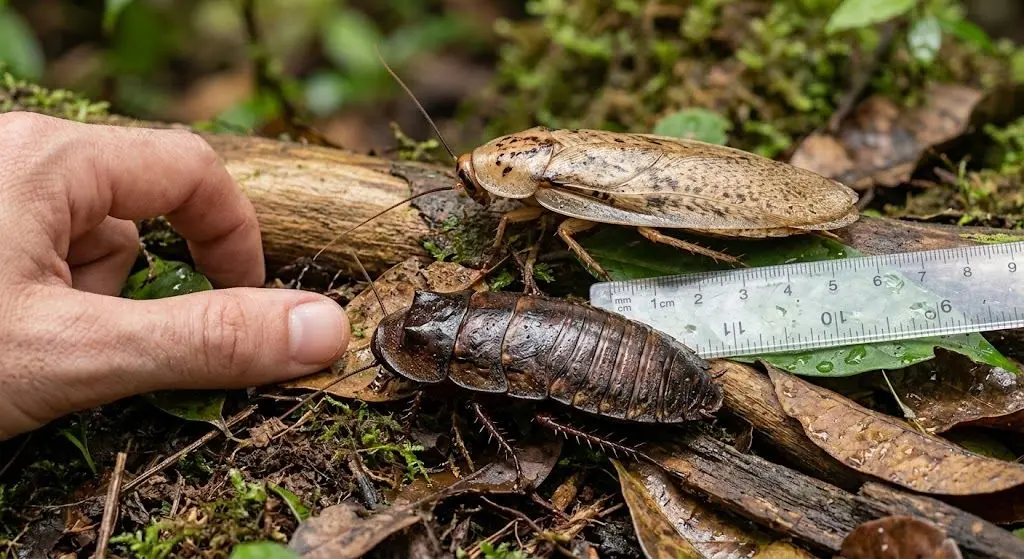
Native exclusively to the island of Madagascar off the coast of East Africa, hissers dwell beneath rotting logs and leaf litter on the tropical forest floor.
Unlike the fast, jittery pests found in urban centres, hissing cockroaches are slow, deliberate crawlers:
Territorial Jousting: Males use their pronotal horns like miniature rams, bumping heads and pushing rival males off favoured branches during dominance matches.
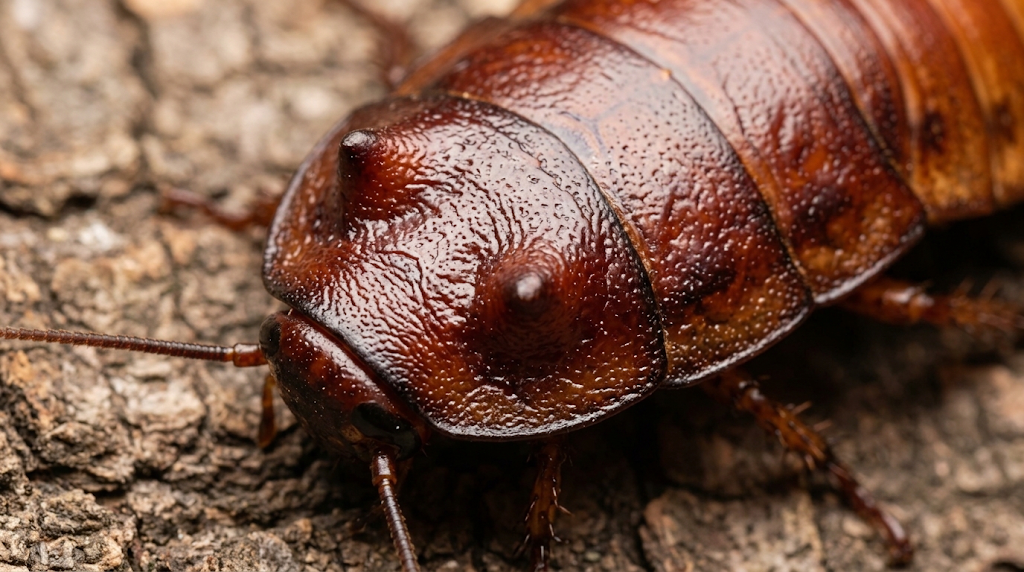
Armoured Exoskeleton: They sport a heavy, glossy carapace in rich shades of mahogany, chocolate brown, and amber.
Pronotal “Horns”: It is remarkably easy to tell males from females. Adult males possess two prominent, raised bumps or “horns” on their pronotum (the shield directly behind the head). Females have a smooth, flat shield.
The Science Behind the Famous Hiss
Most noise-making insects—such as crickets, cicadas, and grasshoppers—create sound through stridulation (rubbing modified wings, legs, or body segments together).
The Madagascar hissing cockroach produces sound through an entirely unique biological mechanism: modified respiratory spiracles.
On the lateral edges of their abdomen are specialised breathing pores (spiracles). By forcefully contracting their abdominal muscles, they expel pressurised air through their fourth pair of spiracles, generating a loud, snake-like hiss that can be heard across a room.
Scientists have categorised three distinct types of hisses:
- The Disturbance Hiss: A sudden, sharp hiss used to startle potential predators (or human handlers).
- The Combat Hiss: Aggressive, rhythmic hissing used by males during territorial sparring.
- The Courtship Hiss: A softer, specialised acoustic signal produced by males to attract receptive females.
Why They Make Outstanding Exotic Pets
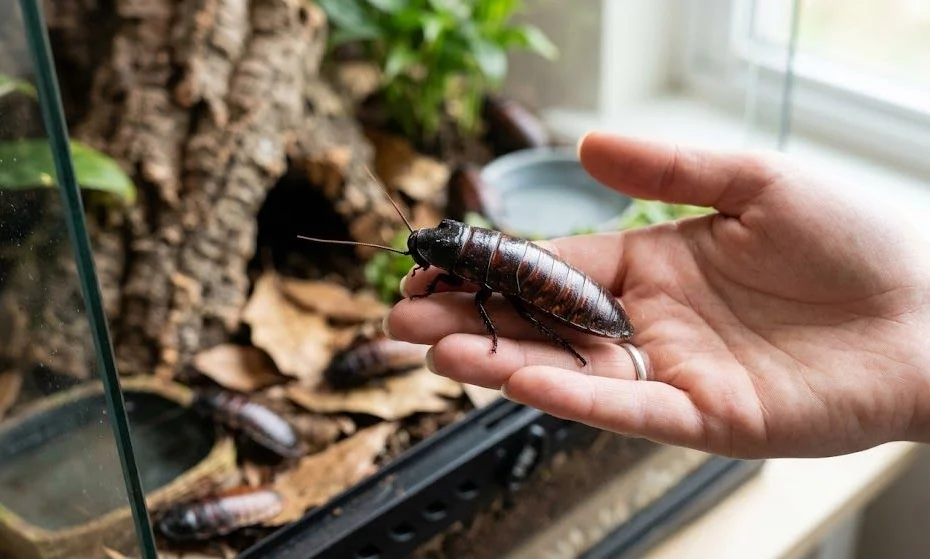
Bringing a cockroach into your home on purpose might sound unusual, but hissers are among the easiest, cleanest, and safest exotic pets available:
- They Do Not Bite or Sting: Hissers lack venom glands, pinchers, or sharp mouthparts. Their defensive strategy consists entirely of flattening against wood and hissing.
- They Are Odourless and Quiet: Unlike many small caged rodents or feeder insects (like noisy, foul-smelling crickets), hissers are virtually odourless when kept on clean substrate.
- Simple Housing Needs: A small group of hissers can comfortably live in a standard 5-to-10-gallon glass terrarium fitted with a secure, fine-mesh screen lid and a heating mat set to 75°F–85°F (24°C–29°C).
- Nutritional Scavengers: Their diet is inexpensive and simple: fresh carrots, apples, leafy greens, and dry dog or cat kibble for protein, supplemented with occasional calcium powder.
Why Madagascar Hissers Will Not Infest Your Home
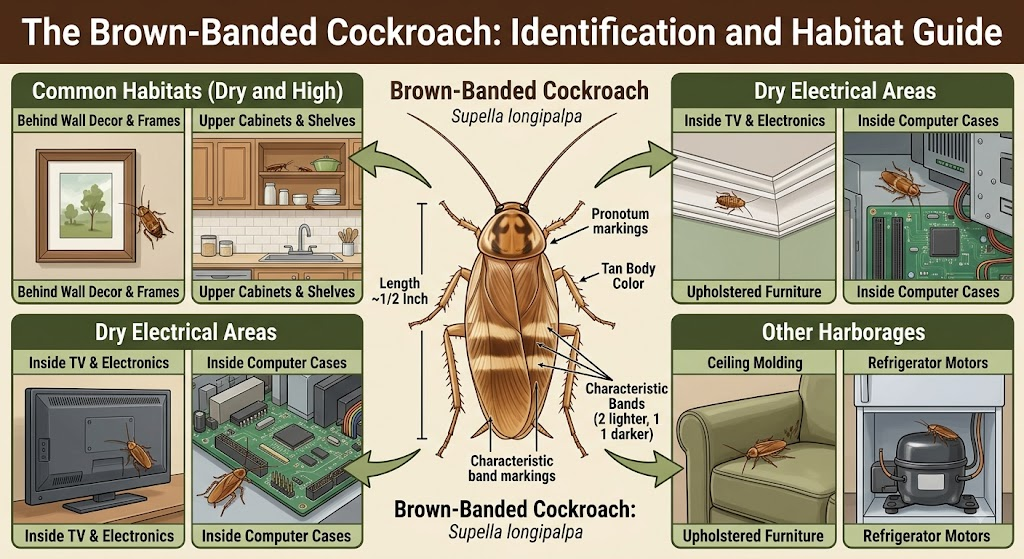
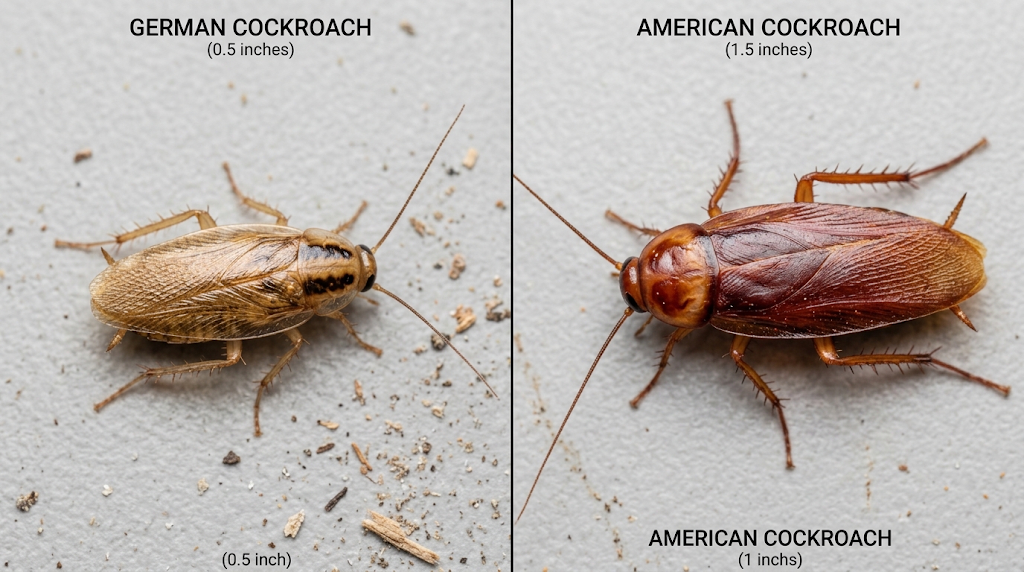
The number one fear new hobbyists express is whether an escaped hisser could start a breeding infestation in their walls or pantry. The answer is an absolute no.
- Strict Tropical Requirements: Hissers require sustained high ambient temperatures (above 75°F) and moderate humidity to thrive and reproduce. The dry, air-conditioned environment of a modern home quickly leads to fatal dehydration.
- No Pest Instincts: Hissers feed on whole fruits, fresh vegetable matter, and clean plant detritus. They have no attraction to wall voids, grease traps, kitchen baseboards, or human plumbing.
- Live Birth Biology: Hissers are ovoviviparous—females carry eggs inside an internal brood pouch and give birth to live nymphs. They do not drop sticky egg cases behind your appliances.
Simple Care Tips for Keepers
- Escape Prevention (The Vaseline Barrier): Hissing cockroaches have specialised pads on their feet (pulvilli) that allow them to climb smooth glass and plastic. Apply a 2-inch band of petroleum jelly around the top inner rim of their terrarium to prevent escapes during maintenance.
- Provide Vertical Hiding Space: Stack cardboard egg crates, cork bark flats, or hollow driftwoods inside the enclosure so they can climb and feel sheltered during daylight hours.
- Moisture Without Drowning: Mist the enclosure lightly 2–3 times a week, or provide hydration via fresh fruit slices or saturated water crystals. Never leave open water dishes in the tank, as small nymphs can easily drown.
Conclusion: The Gentle Giants of the Insect World
The Madagascar hissing cockroach challenges every negative stereotype associated with roaches. They are clean, wingless, fascinating to observe, and completely harmless to humans and homes.
Whether kept as an interactive educational ambassador for biology classrooms, an alternative exotic pet for apartment dwellers, or a fascinating addition to a home vivarium, these gentle giants showcase the diverse and misunderstood wonder of the insect kingdom.
Frequently Asked Questions (FAQ)
1. How long do Madagascar hissing cockroaches live?
In captivity, Madagascar hissing cockroaches typically live for 2 to 5 years when provided with proper temperatures, consistent humidity, and a balanced diet.
2. Can Madagascar hissing cockroaches bite or sting?
No. Hissing cockroaches cannot bite, sting, or inject venom. Their mouthparts are designed strictly for chewing soft plant matter and fruits. When handled, their tiny leg spines can feel slightly prickly against your fingers, but they cause no harm or pain.
3. What happens if a pet hissing cockroach escapes my house?
If an escaped hisser gets loose, it will not infest your house, multiply, or damage your furniture. Modern home air is far too dry and cold for them to survive long-term. An escapee will simply search for a dark, warm spot (like under the refrigerator) where it can be gently picked up and returned to its terrarium.
4. How do you tell male and female hissers apart?
Look directly behind the insect’s head on its dorsal shield (pronotum):
- Males have two large, prominent raised bumps (horns) used for fighting and territorial dominance.
- Females have a smooth, rounded shield without raised horns and possess a slightly broader abdomen.
5. What should I feed my hissing cockroaches?
Feed them a varied diet of:
- Fresh Produce: Carrots, sliced apples, sweet potatoes, romaine lettuce, bananas, and squash.
- Protein: Dry high-quality dog kibble, cat food, or fish flakes offered once or twice a week.
- Calcium: A piece of cuttlebone or a light dusting of reptile calcium powder to support strong exoskeleton moulting.
6. Can hissing cockroaches climb out of smooth glass tanks?
Yes. Madagascar hissers possess specialised adhesive pads on their tarsi that allow them to easily scale smooth glass, acrylic, and plastic surfaces. Always secure enclosures with a tight-fitting mesh lid and apply a thin layer of petroleum jelly (Vaseline) around the upper 2 inches of the interior glass walls.
7. Do I need a special permit to keep Madagascar hissing cockroaches?
In most parts of the world and most US states, keeping hissers as pets is completely legal without a permit. However, certain states with sensitive agricultural ecosystems (such as Florida and Hawaii) strictly regulate or prohibit them to prevent non-native species introduction. Always verify your local wildlife regulations before ordering them.