When dealing with a household pest problem, most homeowners immediately check the moisture-heavy areas: beneath the kitchen sink, behind the dishwasher, or around the bathroom plumbing.
However, if you spot small roaches scurrying across bedroom nightstands, hiding behind framed art, or living inside living room electronics, you are likely dealing with the Brown-Banded Cockroach (Supella longipalpa).
Unlike moisture-loving German or Oriental roaches, these stealthy pests thrive in warm, dry, high-altitude locations throughout the home, making them uniquely challenging to detect and eradicate.
Spotting and Identifying the Brown-Banded Cockroach
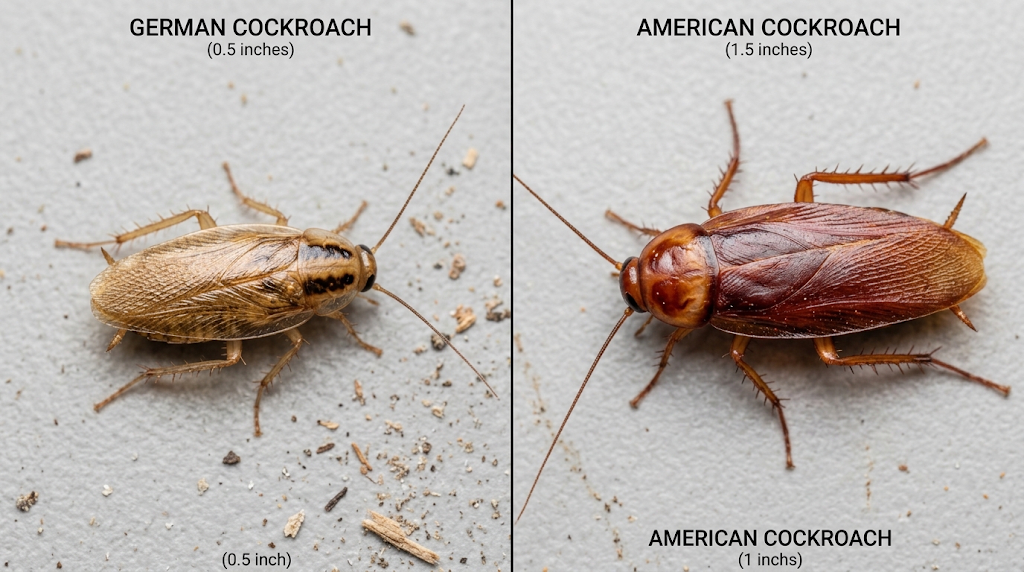
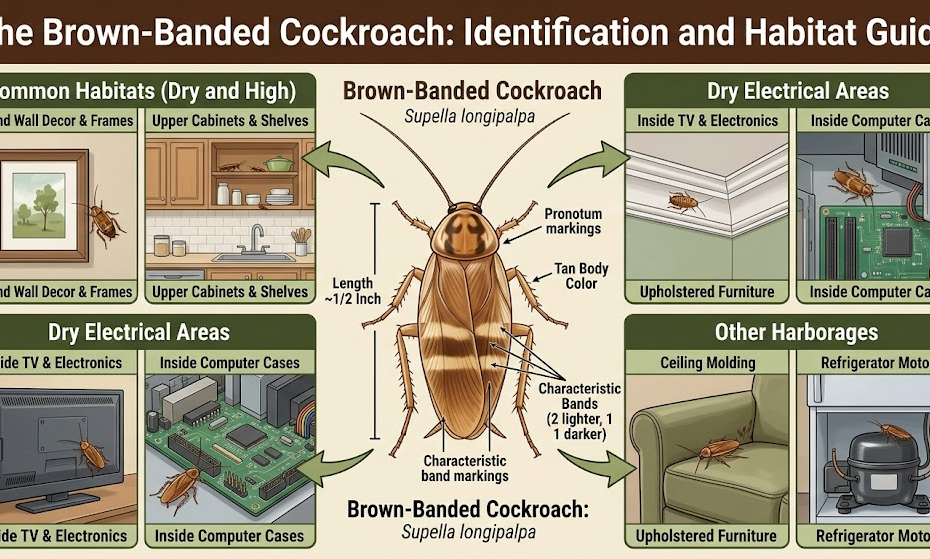
The brown-banded cockroach is one of the smallest domestic pest species, measuring roughly 0.5 inches (11 to 14.5 mm) in length—nearly identical in size to the notorious German cockroach. However, several distinct physical traits set them apart:
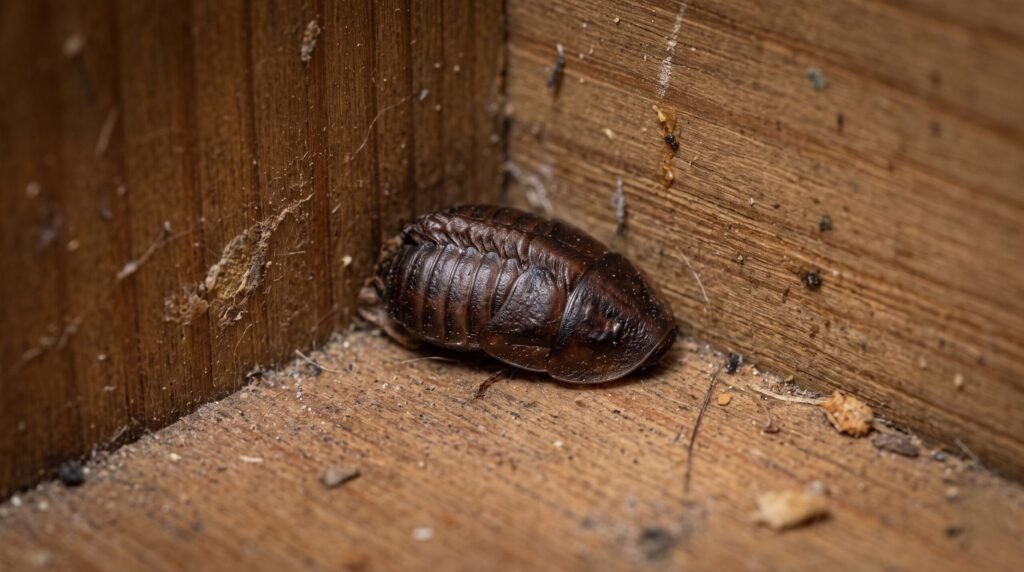
Adult Females: Broader, darker reddish-brown bodies with shorter, teardrop-shaped wings that do not fully cover the abdomen. Females cannot fly. Another key identifier is their behaviour: adult males are capable flyers and will often take to the air if disturbed, while females cannot fly.
Two Distinct Bands: The easiest way to identify this species is by the two light-tan or yellowish-brown horizontal bands running across the base of the wings and abdomen. These bands are prominent on nymphs and visible through the wings of adults.
Pronotum Colouration: Unlike German roaches (which have two distinct dark vertical stripes running down their neck shield), brown-banded roaches have a dark brown, bell-shaped shield with a pale, translucent border.
Sexual Dimorphism & Flight:
Adult Males: Slender with golden-brown wings that extend past the tip of the abdomen. Males are capable flyers and will readily take to the air when startled or attracted to lights.
Brown-Banded vs. German Cockroach: Key Differences
Because treatment strategies differ significantly between species, accurate identification is critical:
| Feature | Brown-Banded Cockroach (Supella longipalpa) | German Cockroach (Blattella germanica) |
| Size | ~0.5 inches (11–14.5 mm) | ~0.5 to 0.6 inches (13–16 mm) |
| Pattern | 2 light horizontal bands across wings/body | 2 dark parallel vertical stripes on the head shield |
| Flight Ability | Males fly readily when disturbed. | Glides rarely; does not fly |
| Preferred Environment | Warm (>80°F), dry, elevated rooms | Humid, warm, close to standing water |
| Primary Rooms | Bedrooms, living rooms, closets, upper walls | Kitchens and bathrooms |
| Egg Placement | Glued to dry furniture, walls, or ceilings | Carried by a female until hours before hatching |
Masters of the High Ground: Unique Hiding Spots
Brown-banded cockroaches require significantly less moisture than other common species, freeing them from the confines of kitchens and bathrooms. They prefer ambient temperatures above 80°F (27°C) and naturally seek out high, dry perches:
- Upper Room Perimeters: Look inside crown moulding seams, behind light fixtures, along ceiling corners, and behind curtain rods.
- Wall-Mounted Electronics: Heat-emitting devices like flat-screen televisions, digital clocks, cable boxes, and stereo receivers provide ideal microclimates.
- Furniture Voids: They readily nest in hollow furniture legs, beneath upholstered chairs, behind bed headboards, and inside nightstand drawer glides.
- Hanging Wall Items: Picture frames, wall mirrors, decorative clocks, and peeling wallpaper are notorious daytime gathering spots.
- High Storage: Upper closet shelves, pantry top tiers, and stored cardboard boxes provide quiet harbourage away from foot traffic.
Feeding Habits: Why They Love Living Rooms and Closets
Because brown-banded cockroaches are not tied to kitchen grease, their diet leans heavily toward starches and dry organic goods:
- Starch & Glues: Wallpaper adhesive, book bindings, envelope glue, stamps, and cardboard cartons.
- Textiles & Fabrics: Rayon, nylon stockings, soiled clothing with skin oils, and drapery sizing.
- Pantry Staples: Dry dog food, cereal boxes, and flour containers stored on high shelves.
The Egg Case (Ootheca) Factor
A female brown-banded roach produces a tiny, reddish-brown egg capsule (about 5 mm long) holding 14 to 18 embryos.
Unlike the German roach, which carries her egg capsule until just before it hatches, the female brown-banded roach carries it for only 24 to 36 hours before cementing it to a secure surface with oral secretions.
She typically glues these egg cases to the undersides of shelves, behind hanging wall art, or in the seams of upholstered furniture. Because these capsules are glued in scattered, elevated locations, locating and removing them requires a thorough top-to-bottom inspection.
Strategic Elimination: Taking the Fight Up High
Because brown-banded roaches scatter throughout dry living spaces, conventional treatment—such as spraying baseboards or placing bait traps under the sink—will fail. You must adjust your strategy to target their elevated behaviour:
1. Elevated Bait Placement
Apply professional roach gel baits in tiny, pea-sized placements high up in affected rooms:
- Along the top interior corners of kitchen and closet cabinetry.
- Behind wall hangings, mirrors, and wall-mounted televisions.
- Along upper door frames, closet tracks, and beneath high shelves.
2. Utilise Insect Growth Regulators (IGRs)
Because brown-banded populations can disperse widely throughout multiple rooms, applying an IGR (such as hydroprene or pyriproxyfen) prevents developing nymphs from reaching reproductive maturity, breaking the generational cycle across broad living spaces.
3. Systematic Vacuuming & Physical Removal
Use a vacuum cleaner equipped with a crevice tool and HEPA filter to physically remove adult roaches, nymphs, and glued egg capsules from behind wall hangings, under furniture cushions, and along high shelf seams. Immediately dispose of the vacuum bag in an outdoor trash bin.
4. Remove Starch Food Sources
Store books, documents, and paper clutter in sealed plastic bins rather than open cardboard boxes. Fix loose wallpaper edges and ensure dry food items on upper pantry shelves are secured in airtight glass or plastic containers.
Conclusion: Look Up to Eradicate Brown-Banded Roaches
The brown-banded cockroach breaks all the standard rules of pest control. If you only look for them near baseboards and leaky pipes, you will miss the real source of the problem.
Successfully eliminating a brown-banded infestation requires shifting your focus upward. By identifying their distinct horizontal markings, recognising their preference for dry, elevated warmth, and applying targeted gel baits and growth regulators in high-altitude harbours, you can systematically remove these elusive pests from every corner of your home.
Frequently Asked Questions (FAQ)
1. Can brown-banded cockroaches fly?
Yes, but only adult males. Adult male brown-banded roaches have full wings extending past their bodies and will readily fly across a room if disturbed or attracted to light sources. Females possess shorter, underdeveloped wings and are incapable of flight.
2. Why am I seeing roaches in my bedroom and living room instead of the kitchen?
If you are seeing roaches primarily in dry areas like bedrooms, living rooms, and closets, you are likely dealing with brown-banded roaches rather than German roaches. Brown-banded roaches need far less water and actively seek out warm, dry spaces like furniture voids, behind TVs, and behind picture frames.
3. How do brown-banded cockroaches get inside a home?
Brown-banded cockroaches are rarely outdoor invaders; they are almost always hitchhikers. They are commonly introduced inside infested second-hand furniture, electronics, luggage from travel, moving boxes, or grocery bags.
4. Are brown-banded roach egg cases hard to spot?
Yes. The egg capsule (ootheca) is only about 5 mm long, light reddish-brown, and securely glued to protected surfaces like the undersides of table tops, behind picture frames, or inside closet joints. They blend in easily with dark wood and shadows.
5. How long does it take for brown-banded roach eggs to hatch?
Brown-banded egg capsules have a relatively long incubation period, typically taking 50 to 90 days to hatch, depending on the ambient room temperature. This extended incubation period means you must keep bait and IGR treatments active for several months to intercept newly emerging nymphs.
6. Do DIY roach baits work against brown-banded cockroaches?
DIY baits (like boric acid and sugar dough) can work if placed in their specific territory. However, because brown-banded roaches harbour high up on walls, ceilings, and inside furniture, placing bait powder on the floor will be ineffective. Placements must be made up high where they travel.
7. Do brown-banded cockroaches bite or carry diseases?
Brown-banded cockroaches do not actively bite humans. However, like all indoor roaches, they walk across contaminated surfaces and shed allergens, faeces, and cast skins that can trigger asthma and allergic reactions and transmit food-borne bacteria like E. coli and Salmonella.