Master the use of boric acid, the most effective DIY pest control powder on the market, with this comprehensive, step-by-step application guide.
When dealing with a stubborn cockroach problem, off-the-shelf aerosol sprays often provide nothing more than a temporary fix. They kill on contact, but they do nothing to address the hidden nest—and worse, their strong chemical repellents scatter the pests deeper into your walls.
If you want a reliable, cost-effective, and long-lasting DIY solution, boric acid remains the undisputed gold standard. When applied correctly, this unassuming white powder can systematically dismantle an entire infestation from the inside out.
Why Boric Acid is a Roach’s Worst Enemy
Boric acid is a naturally occurring compound derived from boron and water. While it features relatively low mammalian toxicity compared to synthetic insecticides, it is lethal to insects.
The secret to its effectiveness lies in a dual-action elimination process:
- Electrostatic Cling & Grooming: Boric acid powder carries an electrostatic charge. When a cockroach crawls across a treated area, the micro-particles cling tightly to its legs and antennae. Cockroaches are compulsive groomers; when they clean themselves, they ingest the powder.
- Internal Destruction: Once ingested, boric acid acts as an aggressive stomach toxicant and disrupts the insect’s metabolic and central nervous systems.
- Exoskeleton Abrasion: On an external level, the sharp crystalline structure of the powder abrades the insect’s protective waxy outer layer, causing dehydration over time.
- The “Cascade Effect”: Roaches that die inside wall voids are often eaten by other roaches (a behavior known as necrophagy). The surviving roaches ingest the boric acid present in the dead roach’s carcass, creating a lethal chain reaction that wipes out unseen nymphs and brooding females.
Essential Tools Before You Begin
To apply boric acid like a professional exterminator, avoid dumping it straight from the bottle. Gather these simple tools first:
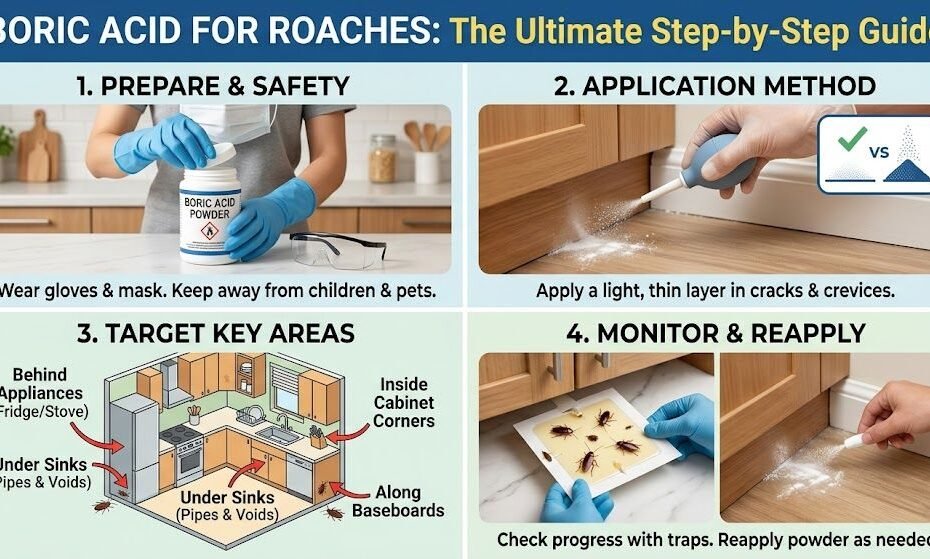
- Pure Boric Acid Powder: Look for 99% pure technical/pharmaceutical grade powder labeled for pest control.
- A Precision Bulb Duster: A handheld bellows or bulb duster is essential for creating a fine, uniform cloud rather than heavy piles.
- Protective Gear: A simple dust mask (N95) and safety glasses to prevent inhaling airborne dust during application.
- Clean Rag or Microfiber Cloth: For wiping away excess powder.
Step 1: Prep and Clean the Area
Boric acid cannot compete against open food sources, grease splatters, or standing water. Roaches will always choose an easy midnight snack over crawling through treated zones.
- Degrease Kitchen Surfaces: Wipe down stovetops, exhaust hoods, backsplashes, and the sides of appliances where grease accumulates.
- Eliminate Competing Food: Store all pantry dry goods, cereals, and pet foods in airtight plastic or glass containers. Sweep and vacuum crumbs from under cabinets and behind appliances.
- Cut Off Moisture: Fix dripping under-sink pipes, dry out sinks before bed, and empty pet water bowls overnight. Cockroaches can survive weeks without food, but only days without water.
Step 2: Master the Art of the “Micro-Dusting”
The single biggest mistake homeowners make is pouring thick white lines or mounds of boric acid along baseboards.
Cockroaches are perceptive and cautious. If they encounter a giant drift of white powder, they simply walk around it.
How to Apply It Correctly:
- Fill your bulb duster no more than one-third to halfway full with boric acid. Leave enough air space inside the duster to allow the powder to swirl.
- Add a small coin or small pebble inside the duster to break up clumps when shaken.
- Squeeze gently to produce a barely visible cloud of dust.
- When applied correctly, the treated surface should look like a fine layer of settled household dust—almost invisible to the naked eye.
Step 3: Target High-Traffic Harborages & Voids
Never apply boric acid openly on food prep counters, cutting boards, or open dining tables. Focus your application strictly on dark, undisturbed harborage zones where cockroaches travel, rest, and breed:
- Under and Behind Major Appliances: Puff dust behind and beneath the refrigerator, stove, dishwasher, and washing machine.
- Cabinet Kickplates & Voids: Puff powder into the hollow, dead space beneath bottom kitchen cabinets (often accessible by removing the false kickplate or puffing through small gaps).
- Plumbing Wall Penetrations: Dust around pipe cutouts under kitchen and bathroom sinks where pipes enter the drywall.
- Electrical Outlets & Switch Plates: Remove the faceplates (with power safely turned off) and puff dust directly into the wall voids.
- Hinges and Drawer Tracks: Dust the rear underside of drawers and inside upper cabinet corner hinges.
Step 4: Monitor, Be Patient, and Reapply
Boric acid is not an instant-kill contact neurotoxin like synthetic bug sprays. It requires a few days to circulate through the colony’s grooming and feeding routines.
- Timeline: Expect to see dead or disoriented roaches within 72 hours, with significant population collapse occurring over 7 to 14 days.
- Moisture Check: Boric acid only works when it remains dry. If the powder gets wet from a leak or humid condensation, it will cake up, lose its electrostatic charge, and become completely ineffective. Clean it up and reapply once the area is thoroughly dry.
- Reapplication Cycle: Reapply a fresh micro-layer every 2 to 3 weeks to catch newly emerged nymphs hatching from protective egg cases (oothecae).
Safety Precautions Around Children and Pets
While boric acid has a much safer toxicity profile than organophosphates or standard aerosol foggers, safety rules still apply:
- Do not apply in areas accessible to curious pets or crawling toddlers.
- Always keep powder well away from food preparation areas, dishes, cutlery, and pet bowls.
- Store the container securely in a locked cabinet out of reach of children.
- In the event of accidental ingestion or eye contact, rinse thoroughly and consult a healthcare professional or pet poison hotline.
Conclusion: Strategy and Consistency Win the War
Boric acid remains one of the most lethal tools against cockroach infestations, but its success depends entirely on technique. Heavy piles of powder will be actively avoided, while an ultra-fine, strategic dusting placed directly in hidden nesting voids will quietly wipe out generations of pests.
By combining meticulous kitchen sanitation, proper dust application, and steady patience, you can eliminate an active infestation at the root without relying on expensive exterminators or noxious aerosol sprays.
Frequently Asked Questions (FAQ)
1. How long does boric acid take to kill a cockroach?
Once a cockroach grooms itself and ingests the powder, death typically occurs within 24 to 72 hours. Full colony elimination usually takes between 1 to 2 weeks, as the poison spreads through the nest via coprophagy and necrophagy.
2. Is boric acid the same thing as Borax laundry booster?
No. While both contain the element boron, Borax (sodium tetraborate) is a raw, processed mineral salt commonly used for laundry and cleaning. Boric acid (hydrogen borate) is refined, acidified, and formulated specifically as an active insecticidal agent. Boric acid is far more effective and potent against pests than regular laundry Borax.
3. Can I mix boric acid with sugar, flour, or peanut butter?
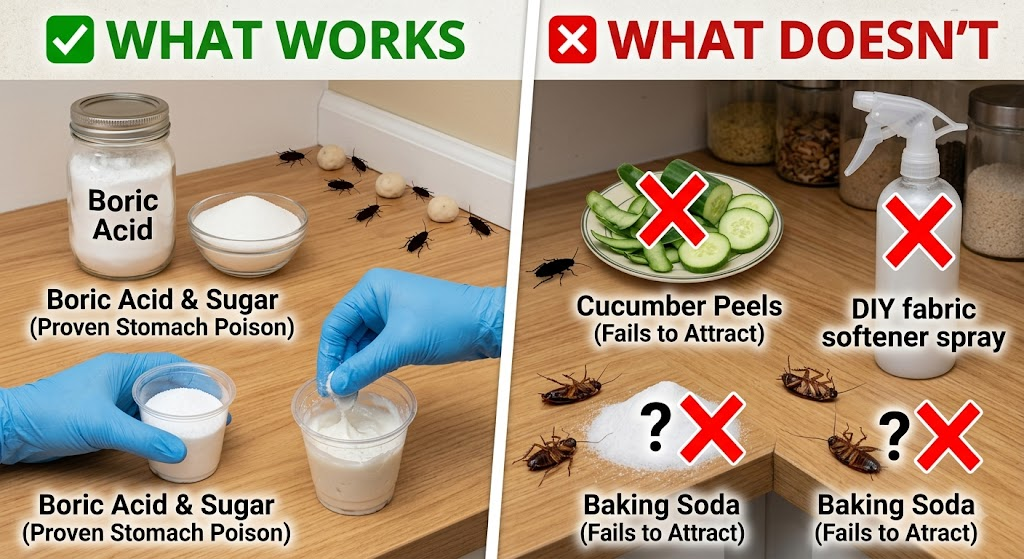
Yes. Creating DIY baits by mixing equal parts boric acid, flour, and powdered sugar (or a small dab of peanut butter) can be effective. However, the dry powder application method remains superior because it does not spoil, turn rancid, or attract secondary pests like ants and mice.
4. What should I do if my boric acid gets wet?
If boric acid gets wet, it clumps together, hardens, and loses its electrostatic charge. Cockroaches will no longer pick up the particles on their legs. Thoroughly wipe away the caked powder, allow the surface to dry completely, and reapply a fresh, light dusting.
5. Can cockroaches develop an immunity or resistance to boric acid?
No. Unlike chemical sprays (such as synthetic pyrethroids) which target specific neurological receptors that pests can evolve resistance against, boric acid works mechanically and destructively inside the digestive and metabolic system. Cockroaches cannot build biological immunity to it.
6. Is boric acid safe to use in homes with cats and dogs?
When applied correctly inside hidden crevices, wall voids, and under heavy appliances, boric acid poses minimal risk to pets. However, it should never be left in open areas where pets can step in it, lick it off their paws, or ingest it. High doses can cause nausea, vomiting, and digestive distress in animals.
7. How long does dry boric acid stay effective after application?
As long as it stays completely dry and undisturbed by heavy layers of household dirt, boric acid remains potent indefinitely. Unlike liquid sprays that break down over weeks, inorganic mineral dusts do not degrade over time.