Discover the truth about total-release foggers (bug bombs) and find out why these dramatic, chemical-heavy solutions often make pest infestations worse.
When homeowners reach their breaking point with a pest infestation, they often turn to the most dramatic solution available on retail shelves: the cockroach fogger, commonly known as a bug bomb.
The premise sounds irresistible: set off an aerosol canister, leave the house for a few hours, and let a thick cloud of toxic mist kill every creepy-crawly in sight. Unfortunately, the reality of total-release foggers is far less effective—and significantly more hazardous—than the flashy packaging suggests.
The Illusion of the Bug Bomb
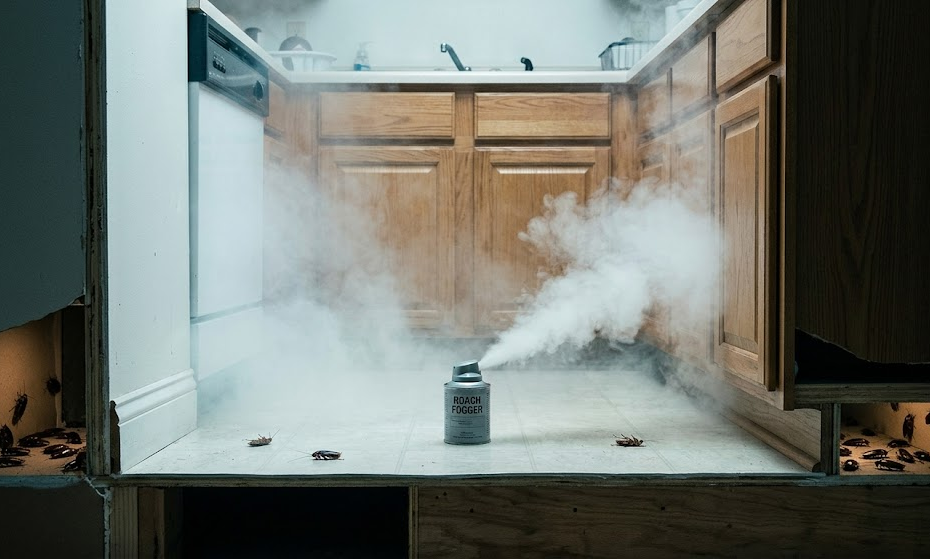
Bug bombs provide an immediate psychological reward. You press a tab, hear a loud hiss, see a dense plume of smoke-like aerosol fill the air, and later return to sweep up a handful of dead bugs on the floor. It feels like a total victory.
However, that visible knockdown is purely cosmetic. Foggers only eliminate the few unfortunate insects caught out in the open during the initial discharge. The vast majority of the colony remains completely untouched, thriving in the hidden spaces where the chemical fog never reaches.
Why Foggers Fail Against Cockroaches
To understand why bug bombs fail, you have to understand cockroach biology and physics:
- Roaches Don’t Live in the Open: Cockroaches are thigmotactic, meaning they seek the comfort of tight, narrow spaces where their bodies touch surfaces on all sides. They spend over 80% of their lives deep inside wall voids, behind electrical outlets, under heavy appliances, and wedged inside cabinet hinges.
- Aerosols Don’t Penetrate Cracks: When a fogger discharges, the propellant forces the liquid upward into the air. Gravity then takes over, causing micro-droplets to settle straight down onto exposed horizontal surfaces like floors, tables, and countertops. The mist simply cannot turn corners or penetrate deep wall cavities.
- Immunity and Resistance: Many over-the-counter foggers rely on standard pyrethroids. Widespread residential use has led many German cockroach populations to develop high levels of physiological resistance to these compounds.
The “Scattering” Effect: Making Infestations Worse
One of the most counterproductive outcomes of setting off a bug bomb is population displacement.
Most fogger formulations include chemicals that act as repellents or irritants. When the toxic cloud drifts near the outer perimeter of a nesting harbour, it doesn’t deliver a lethal dose—it merely alarms the colony.
In response, surviving roaches scatter into panic mode:
- They retreat deeper into wall voids and subflooring.
- They migrate to previously uninfested areas, such as bedrooms, closets, and living rooms.
- In multi-family dwellings, they are pushed through shared plumbing and electrical lines directly into neighbouring units.
What began as an isolated kitchen issue can rapidly transform into a whole-home infestation within 48 hours of bombing.
Serious Health, Property, and Safety Risks
Total-release foggers present substantial risks that far outweigh their limited effectiveness:
- Extensive Chemical Residue: Foggers blanket your living space in a sticky film of pesticide. Post-treatment, every exposed surface—countertops, pet bowls, children’s toys, cookware, and toothbrushes—must be thoroughly sanitised to prevent accidental chemical ingestion.
- Respiratory Irritants: The fine aerosol stays suspended in the air and settles into fabrics, carpets, and upholstery, posing prolonged respiratory risks to children, elderly individuals, and pets (especially cats and birds).
- Explosion and Fire Hazards: Fogger propellants are extremely flammable. If the aerosol cloud comes into contact with an active ignition source—such as a gas stove pilot light, water heater, furnace, or even an appliance cycling on—it can trigger a violent house fire or explosion.
Proven Alternatives That Actually Work
Professional pest managers rarely, if ever, use foggers for cockroach control. Instead, they rely on targeted, low-toxicity strategies that eliminate the entire colony at the source:
1. Roach Gel Baits
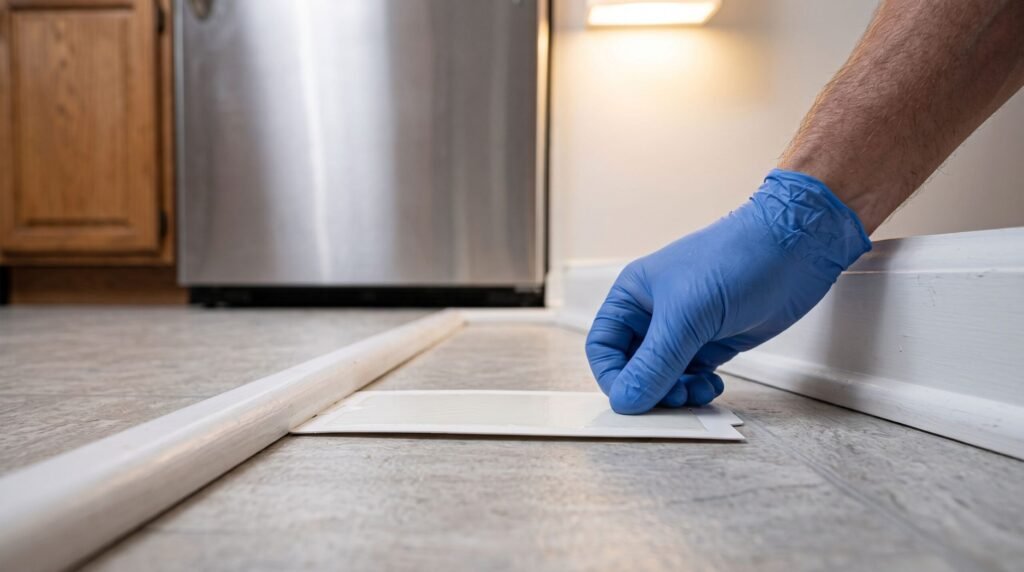
Formulated with slow-acting active ingredients (such as Indoxacarb, Fipronil, or Dinotefuran), gel baits take advantage of cockroach feeding habits. Roaches consume the bait, return to their harbours, and die. Because cockroaches practise coprophagy (eating faeces) and necrophagy (eating dead colony members), the poison cascades through the nest, wiping out nymphs and egg-carrying females you never see.
2. Insect Growth Regulators (IGRs)
IGRs (like pyriproxyfen or hydroprene) act as birth control for bugs. They disrupt the hormonal cycle of juvenile roaches, preventing them from moulting into reproductive adults and causing sterile deformities.
3. Non-Repellent Desiccant Dusts
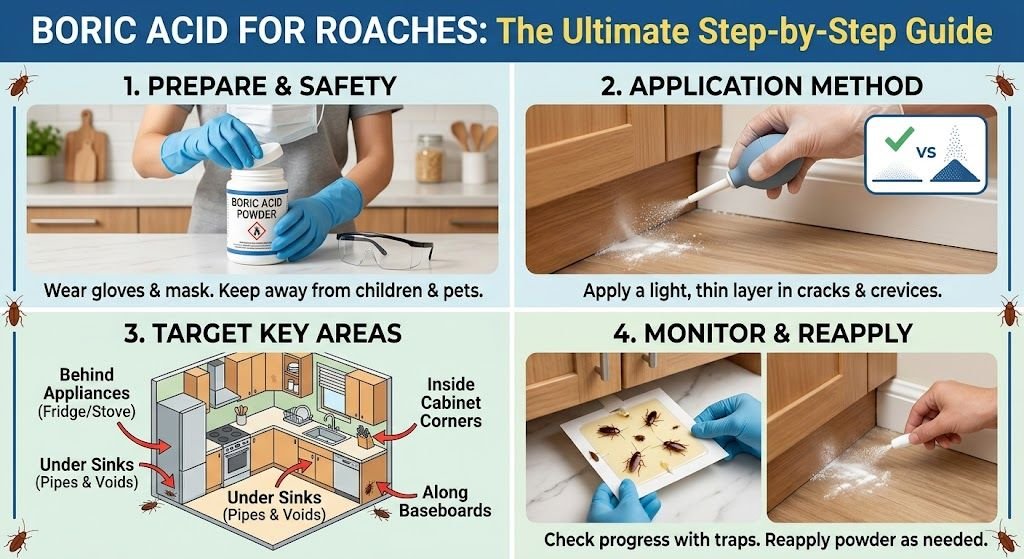
Applied lightly inside wall voids, switch plates, and under appliances, dusts like pharmaceutical-grade boric acid or diatomaceous earth cling to the roach’s exoskeleton, destroying their protective waxy layer and dehydrating them from the outside in.
Discover the truth about cockroach foggers (bug bombs) and find out why these dramatic, chemical-heavy solutions often make pest infestations worse.
The Illusion of the Bug Bomb:
When homeowners reach their breaking point with a pest infestation, they often turn to the most dramatic solution available: the cockroach fogger, commonly known as a bug bomb. The premise sounds great—set off an aerosol canister that fills the room with poison, killing everything inside. Unfortunately, the reality of foggers is far less effective and significantly more dangerous than the packaging suggests.
Why Foggers Fail:
Cockroaches do not live in the middle of your kitchen floor. They live deep inside wall voids, under heavy appliances, and tightly wedged into cabinet hinges. When a bug bomb goes off, the aerosolised pesticide goes straight up and rains back down on exposed surfaces like tables and countertops. The chemicals rarely penetrate the deep, dark crevices where the roaches are actually hiding.
The “Scattering” Effect:
One of the worst side effects of using a fogger is that it can actually make your infestation worse. When the toxic fog hits the edges of a cockroach nest, it acts as an irritant. The surviving roaches will flee the area, retreating deeper into your walls or scattering into adjacent, previously uninfested rooms to escape the chemical cloud.
Health and Safety Risks:
Foggers cover every surface in your home with pesticide residue. After bombing a kitchen, you must meticulously wash every plate, utensil, and countertop to avoid ingesting the chemicals yourself. Furthermore, the propellants in foggers are highly flammable. If a pilot light on a stove or water heater is not extinguished before use, a fogger can literally blow the windows out of a house.
Better Alternatives:
Skip the dramatic foggers and use targeted treatments instead. Gel baits, Insect Growth Regulators (IGRs), and strategically placed boric acid are infinitely more effective, much safer for your family, and target the bugs exactly where they sleep.
Conclusion: Skip the Drama, Target the Nest
Cockroach foggers offer high drama and low results. While setting off a bug bomb feels like an aggressive, decisive blow against pests, it primarily coats your clean surfaces in toxins while scattering the real infestation deeper into hiding.
To truly eliminate a cockroach problem, abandon the broad-spectrum aerosols. Invest in high-quality gel baits, pair them with insect growth regulators, seal entry cracks, and address moisture issues. Targeted, strategic control takes a few extra days, but it solves the problem permanently without turning your home into a toxic hazard zone.
Frequently Asked Questions (FAQ)
1. Do cockroach foggers kill roach eggs?
No. Cockroach eggs are protected inside a thick, protein-rich capsule called an ootheca. This protective casing is virtually impermeable to aerosolised bug sprays. Even if a fogger kills a few exposed adult roaches, the eggs safely hidden in dark crevices will hatch uninterrupted a few weeks later, restarting the infestation cycle.
2. Why do I see more roaches after setting off a bug bomb?
Seeing an increase in roach activity after fogging is common and indicates the scattering effect. The chemical irritants in the fogger disrupt the colony’s nests, driving roaches out of their hidden harbours in search of clean air. This causes them to wander into open living spaces during daylight hours where they normally would not venture.
3. How long should you stay out of the house after using a bug bomb?
Most manufacturers recommend vacating the property for at least 2 to 4 hours, followed by opening all windows and doors for at least 30 minutes to 1 hour of aggressive airing out. However, if anyone in your household has asthma or chemical sensitivities, or if you have infants or pets, staying away for a longer duration is strongly advised.
4. Can bug bombs cause explosions in a home?
Yes. The aerosol propellants used in total-release foggers are highly flammable hydrocarbons (like propane and butane). If the concentrated gas reaches an open flame—such as a water heater pilot light, oven pilot, or a sparking refrigerator compressor—it can cause a sudden and catastrophic structure fire or explosion.
5. What do I need to clean after using a cockroach fogger?
Because foggers distribute pesticides uniformly over the room, you must thoroughly wash:
- Food preparation surfaces (countertops, cutting boards, tables)
- Dishes, cookware, and eating utensils left exposed
- Children’s toys, baby cribs, and pet dishes/bedding
- Hard floors where bare feet or crawling infants make contact
6. Are foggers effective for German cockroach infestations?
No. German cockroaches are notoriously difficult to control with foggers due to their exceptional reproductive rate, resistance to pyrethroids, and tendency to harbour in micro-crevices. Using a fogger against German roaches almost guarantees they will spread across the home or into adjacent apartments.
7. What is the single most effective product for eliminating roaches?
For indoor infestations, professional-grade roach gel bait placed in small, targeted pea-sized drops near harbours (hinges, under sinks, and behind the fridge) is considered the gold standard. When paired with an Insect Growth Regulator (IGR), it eliminates both the active population and the next generation.