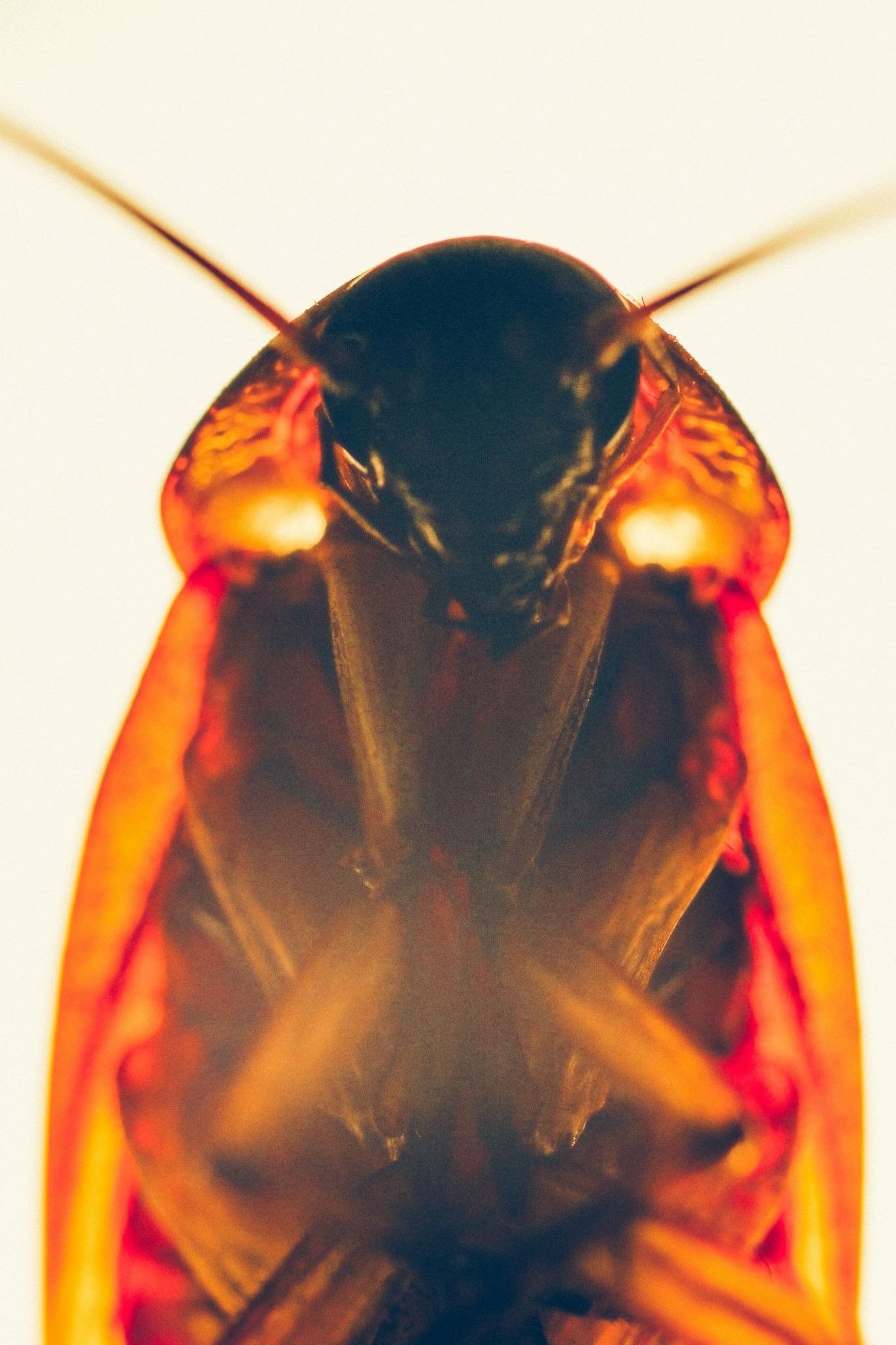
Spotted a white cockroach in your kitchen? Learn what an “albino roach” really is, the biology behind molting, and why seeing one signals a growing infestation.
Albino Cockroach: Myth vs. Reality (And Why White Roaches Mean Trouble)
Flipping on the kitchen light to see a ghostly, stark-white insect scurrying across the floor is an unnerving sight. Homeowners often assume they have discovered a rare genetic mutation, a toxic albino variant, or an entirely new species of super-pest.
The biological reality is far simpler: there is no such thing as a true “albino cockroach” species.
What you are looking at is an ordinary cockroach caught in the middle of a natural, vulnerable growth process known as ecdysis (molting). While the insect itself is completely harmless and non-toxic, spotting one out in the open is one of the clearest warning signs that an active, reproducing colony is nesting inside your walls.
The Science of the “Albino” Roach: Why Are They White?
Cockroaches are arthropods. Unlike mammals with internal skeletons, cockroaches wear their skeleton on the outside in the form of a rigid, protective cuticle made of chitin and proteins.
While this armor protects them from predators and physical trauma, it has one major limitation: it cannot stretch or grow.

To increase in size, a developing nymph must shed its old exoskeleton. This molting process unfolds in distinct physiological steps:
- Apolysis & Digestion: The insect produces enzymes that separate its living epidermal cells from the old, hard outer shell.
- Shedding the Hull: The cockroach pumps blood (hemolymph) and air into its upper body, swelling until the old exoskeleton splits down the back. The roach wriggles out through the split seam, leaving behind a hollow, translucent shell (exuviae).
- The “Albino” Phase: When the roach emerges, its brand-new exoskeleton is completely unpigmented, milky-white, and extremely soft.
- Sclerotization (Tanning): Over the next 2 to 8 hours, exposure to oxygen triggers a chemical reaction within the cuticle. Compounds called phenols oxidize into quinones, cross-linking the chitin protein chains. This process hardens the soft skin into rigid armor and darkens its color back to tan, reddish-brown, or glossy black.
The Molting Cycle at a Glance
| Stage | Time Elapsed | Physical Appearance | Armor State | Threat Level |
|---|---|---|---|---|
| Freshly Emerged | 0 – 30 minutes | Stark white, translucent, soft limbs | Completely soft; fragile cuticle | Defenseless; hides immediately |
| Initial Tanning | 1 – 2 hours | Off-white, pale cream, slight yellowing | Soft-shell; beginning to firm | Highly vulnerable to desiccant dusts |
| Intermediate Hardening | 3 – 5 hours | Light caramel to pale reddish-brown | Semi-rigid; pigment darkening | Resuming normal foraging movement |
| Fully Sclerotized | 6 – 12 hours | Normal dark brown/tan species color | Rock-hard armor; waxy water-barrier | Full pest capabilities restored |
Why Finding a White Cockroach is a Serious Red Flag
Seeing an ordinary brown cockroach is bad news, but seeing a white one reveals two critical details about your home’s infestation:
1. It Proves an Active Breeding Colony is Established
Cockroaches only molt while they are growing nymphs (babies). Once a roach reaches its final adult stage and develops fully functional wings, it never molts again. A German cockroach nymph molts between 5 to 7 times before reaching adulthood. Finding a white roach confirms you are not dealing with a solitary outdoor stray; you have active, growing nymphs developing inside your living space.
2. Harborage Sites Are Overcrowded
During the hours following a molt, a cockroach is defenseless. Its jaws are too soft to bite, its legs lack rigid leverage to run at top speed, and its body is prone to dehydration and predation from other insects.
Because of this vulnerability, instinct drives newly molted roaches to remain hidden deep within tight harborages—behind baseboards, under motor housings, or deep inside wall voids. If you spot a white roach wandering across open countertops or floors, it strongly indicates that the nesting area is overcrowded, forcing vulnerable juveniles out into the open to find space.

Are Albino Cockroaches Dangerous or Poisonous?
White cockroaches do not possess venom, toxic skin, or aggressive tendencies. They are subject to the same health risks as any other household cockroach:
- Bacterial Contamination: Once their shells harden, they drag pathogens such as Salmonella and E. coli from drains and garbage onto food preparation surfaces.
- Asthma and Allergens: The hollow skins (exuviae) left behind after molting dry out, crumble into microscopic dust, and become airborne, serving as a primary trigger for childhood asthma and respiratory allergies.
How to Eliminate White Roaches: Target the Molt
The molting phase represents the cockroach’s single greatest biological weakness. You can exploit this vulnerability using three targeted strategies:
- Deploy Insect Growth Regulators (IGRs): IGRs (such as hydroprene or pyriproxyfen) mimic natural juvenile hormones. When a nymph encounters an IGR and attempts its next molt, the chemical prevents its cuticle from developing properly. The insect either dies trapped inside its old shell or emerges sterile with crippled wings, permanently breaking the reproductive chain.
- Apply Fresh Gel Baits: After molting, a nymph expends massive amounts of energy and water. Fresh, moisture-rich gel baits placed near cabinet hinges and plumbing voids provide an irresistible food source that kills the nymph and spreads poison to the nest.
- Use Desiccant Dusts: Freshly molted roaches lack their protective waxy outer barrier, making them susceptible to dehydration. A light dusting of amorphous silica gel or boric acid in dark wall voids rapidly dries out soft-bodied nymphs before their new armor can harden.
Final Verdict: A Window of Opportunity
An “albino cockroach” is not an indestructible mutant or an exotic anomaly—it is an ordinary cockroach at its most fragile moment. The white coloration is a temporary phase in the insect’s life cycle that signals a thriving nursery of nymphs hidden behind your cabinets.
Because molting bugs require heavy hydration and are chemically vulnerable, seeing one provides the ideal opportunity to attack the infestation. Pair moisture-rich gel baits with Insect Growth Regulators (IGRs) to disrupt future molts, eliminate hidden nymphs, and eliminate the colony before the next generation matures.
Frequently Asked Questions (FAQs)
1. Is an albino cockroach a rare species?
No. There is no such thing as an albino cockroach species. Any species of cockroach—including German, American, and Oriental roaches—turns chalk-white when it sheds its exoskeleton (molts) to grow.
2. How long does a cockroach stay white?
A newly molted cockroach remains pure white for only a brief period, typically between 2 to 8 hours. As oxygen and biological enzymes harden its new shell (a process called sclerotization), the cuticle darkens into its normal brown, tan, or black color.
3. Are white cockroaches poisonous or more dangerous than brown ones?
No. White cockroaches carry no venom, cannot sting, and do not possess higher levels of toxicity. In fact, their mouthparts and claws are extremely soft during this phase, making them physically weaker than usual. However, they carry the same bacteria and indoor allergens associated with standard cockroaches.
4. Why did I see a white cockroach during the day?
Because a freshly molted roach is soft and defenseless, its instinct is to stay hidden deep inside dark crevices. If you spot one out in the open, it typically means your home has a heavy infestation where nesting spots are so overcrowded that weaker insects are pushed out of safe harborages.
5. Can an adult cockroach turn white?
No. Adult cockroaches do not turn white. Cockroaches only molt during their juvenile nymph stages. Once a nymph completes its final molt into a fully winged adult, it stops growing and will never shed its exoskeleton again. If you see a white roach, it is always a developing nymph.
6. What should I do if I find a white cockroach in my house?
Do not treat it as an isolated bug. Finding a white roach proves that eggs have hatched and young insects are actively maturing in your home. Inspect behind appliances and under sinks, apply gel baits in cabinet corners, and use an Insect Growth Regulator (IGR) to stop other nymphs from successfully completing their molts.
7. Can an albino cockroach fly?
No. Because white cockroaches are developing nymphs, they do not possess functional wings. Even during the final molt into adulthood, the freshly emerged wings are soft, damp, and crumpled, making flight completely impossible until the cuticle fully dries and hardens hours later.