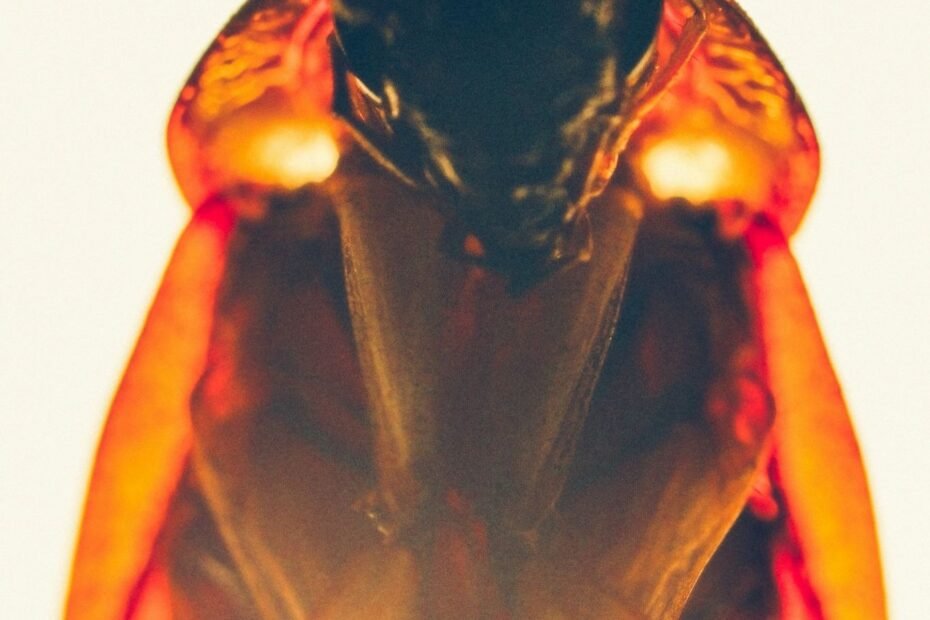
Discover how cockroaches can survive without a head for over a week, how spiracles and low-pressure blood flow work, and what ultimately causes their demise.
It sounds like a plot pulled straight from a science fiction movie: an organism loses its entire head, yet continues to stand, walk, react to physical touch, and survive for days on end.
For humans and other vertebrates, decapitation means instantaneous death due to catastrophic blood loss, sudden collapse of blood pressure, and immediate cessation of breathing. For a cockroach, however, losing a head is merely an inconvenience that delays the inevitable.
A headless cockroach can easily survive for a week to ten days—and sometimes even longer—under ideal humidity conditions. Understanding how this is biologically possible requires diving into the fascinating, alien mechanics of insect anatomy.
1. Respiration: Breathing Without a Mouth or Nose
Mammals rely on an intake system centred entirely in the head. We breathe through our nose and mouth, funnelling oxygen down a single trachea into our lungs, which then distribute oxygen into the bloodstream. If the head is removed, oxygen intake ceases instantly.
Cockroaches do not possess lungs, nor do they breathe through their mouths:
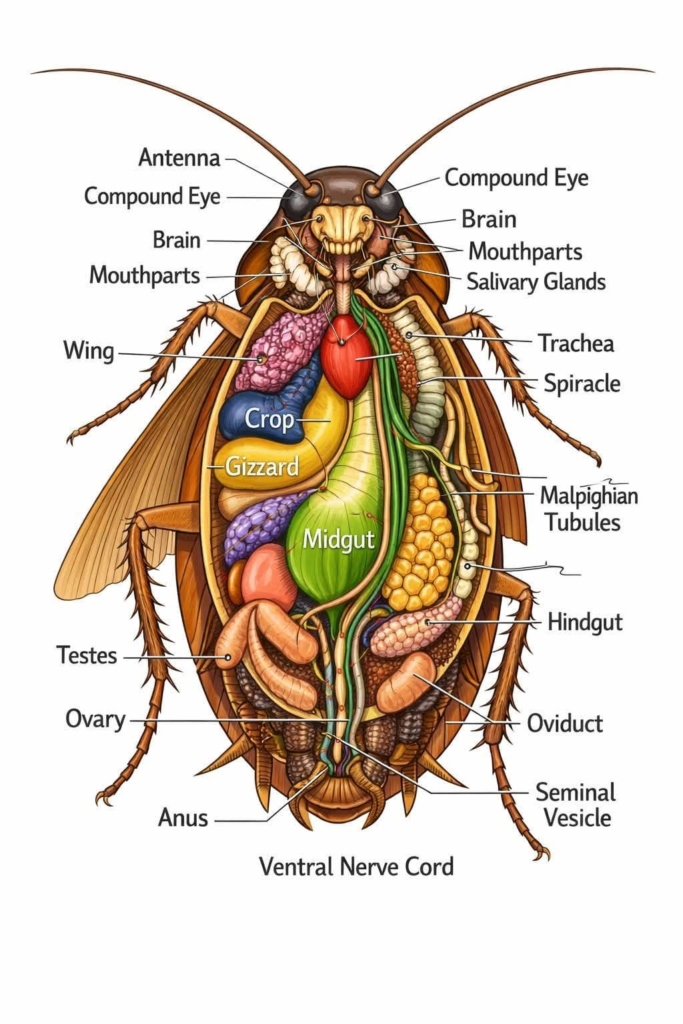
- The Spiracle System: Cockroaches take in oxygen through a network of tiny valve-like openings located along the sides of each body segment, known as spiracles.
- Direct Tracheal Delivery: Attached to each spiracle is an intricate system of branching tubes called tracheae that deliver oxygen directly to tissues and cells throughout the body via passive diffusion.
- Autonomous Respiration: Because every body segment has its own independent air intake valves, decapitation has zero impact on the insect’s ability to breathe. The body continues to take in oxygen and expel carbon dioxide completely uninterrupted.
2. Low-Pressure Circulation: Why They Don’t Bleed Out
In mammals, the heart operates a high-pressure, closed network of arteries, veins, and capillaries. Severing a major artery causes catastrophic haemorrhaging and an immediate drop in blood pressure, starving the brain and vital organs of oxygen within seconds.
Cockroaches possess an open circulatory system:
- Haemolymph, Not Blood: Insect blood (called haemolymph) does not carry oxygen and is not pumped under intense hydraulic pressure. Instead, a simple, tube-like dorsal vessel running along their back gently bathes internal organs directly in fluid.
- Instant Clotting: Because the internal pressure is extremely low, a decapitation wound does not spray or bleed out. The neck seals itself almost immediately through rapid clotting and wound drying, preserving bodily fluids.
3. A Decentralised Nervous System: The Distributed “Mini-Brains”
In humans, the brain in the cranium is the central command station. It manages everything from voluntary limb movements to automatic functions like heartbeats and breathing.
Cockroaches feature a decentralised nervous system:
- Nerve Ganglia Clusters: Along the insect’s ventral nerve cord are localised clusters of nerve tissue called ganglia. Each thoracic and abdominal body segment has its own dedicated ganglion that functions as an independent “mini-brain”.
- Autonomous Reflexes: The thoracic ganglia handle the complex motor coordination required to walk, run, and balance. The abdominal ganglia manage basic sensory reflexes.
- Retained Senses: Specialised sensory hairs on their legs and rear cerci can detect vibrations and air currents. If you poke a headless roach, its body will sense the disturbance, fire a motor reflex, and scamper away into a dark corner.
4. What Ultimately Kills a Headless Cockroach?
If a headless cockroach can breathe, retain its blood, and walk around, why does it eventually die?
The insect’s ultimate downfall comes down to basic physics and biochemistry: hydration.
- No Way to Drink Water (Dehydration): Without mouthparts, the roach cannot ingest fluids. While insects are remarkably efficient at conserving moisture, they constantly lose small amounts of water through their spiracles and cuticles. Within 7 to 14 days, the headless body succumbs to severe dehydration.
- Secondary Threat (Infection & Mould): In humid environments where dehydration slows down, a headless roach is defenceless against opportunistic fungal spores, bacteria, or predators like ants and spiders.
- Slowed Metabolism: Because cold-blooded insects can survive for weeks on a single meal, starvation is rarely the immediate cause of death—dehydration always claims them first.
5. Can the Severed Head Survive on Its Own?
In an even stranger twist of entomological science, the severed head can also survive independently for several hours to a few days.
Research conducted by insect physiologists has shown that if a severed cockroach head is kept cool and supplied with nutrients, the antennae will continue to twitch, react to chemical scents, and respond to physical stimuli. Without a body to provide ongoing circulation and resources, however, the head eventually runs out of cellular energy and dries out.
Conclusion: The Ultimate Biological Survivalist
The ability of a cockroach to survive decapitation highlights just how fundamentally different arthropod biology is from our own. Armed with an open circulatory system, segmented breathing pores, and decentralised nerve centres, their bodies are modular survival machines designed to withstand extreme trauma.
While a headless cockroach will inevitably succumb to dehydration after a week or two, this biological superpower serves as a clear reminder of why roaches are among the most resilient and difficult-to-eradicate pests on the planet.
Frequently Asked Questions (FAQ)
1. How long can a cockroach actually live without its head?
A cockroach can typically live between 7 and 10 days without its head, with some surviving up to two weeks in high-humidity conditions. The limit is determined entirely by how long it takes for the insect to dehydrate.
2. Can a headless cockroach still walk, climb, and run?
Yes. Because the motor neurones and nerve clusters (ganglia) that control leg coordination are located in the thorax rather than the head, a headless cockroach can stand upright, walk, climb rough surfaces, and sprint away when touched.
3. Does a cockroach feel pain when its head is removed?
Insects do not possess the complex neurological architecture (such as a neocortex or pain-specific nociceptive pathways) required to experience emotional pain or suffering in the way humans and mammals do. They experience nociception—a purely reflexive physiological response to tissue damage.
4. Can a cockroach regrow or regenerate its severed head?
No. While juvenile cockroach nymphs can regenerate lost limbs, antennae, and cerci during their regular moulting cycles, they cannot regenerate complex body structures like the head, main cephalic brain, or mouthparts.
5. Why doesn’t a decapitated cockroach bleed to death?
Cockroaches have an open circulatory system operating under very low fluid pressure. Unlike mammals, whose hearts pump pressurised blood through closed veins and arteries, a roach’s blood (hemolymph) circulates freely within body cavities. When decapitated, the neck opening clots rapidly, preventing lethal blood loss.
6. Can other insects survive without their heads?
Yes. Many insects with decentralised nervous systems and spiracle-based respiratory systems—such as praying mantises, crickets, and certain beetles—can survive for several hours or days without their heads until dehydration or starvation sets in.
7. Does stepping on or squishing a roach’s head kill it immediately?
Crushing only the head will incapacitate its main sensory organs and mouth, but the body can continue to twitch and move for days. To ensure an immediate kill, the thorax and abdominal core must be crushed to destroy the vital organs, dorsal vessels, and primary nerve ganglia.


