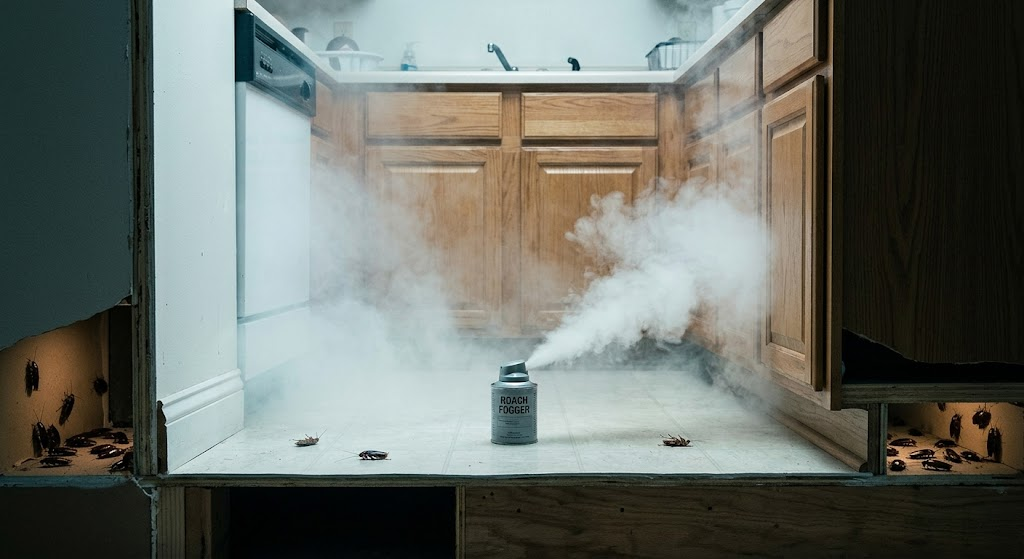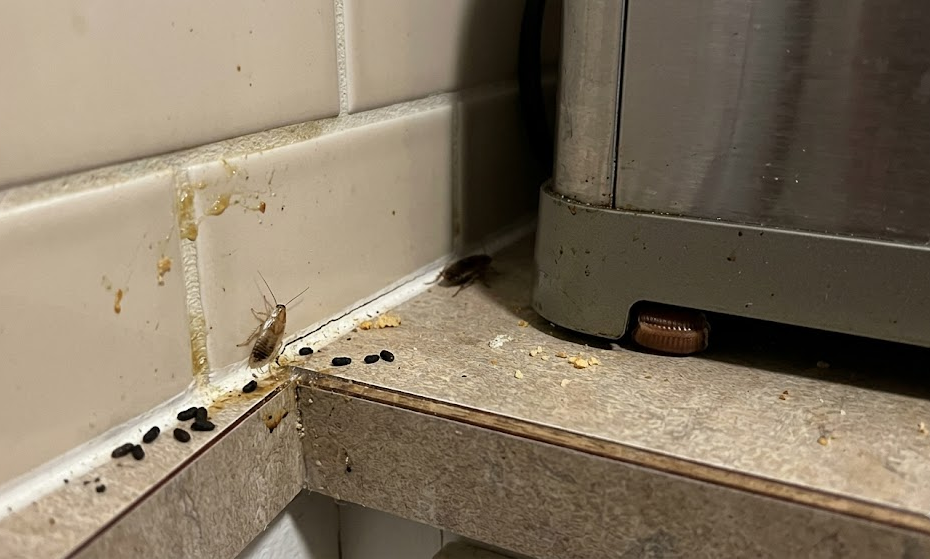
Spot the subtle, early warning signs of cockroaches before an infestation takes over. Learn to identify droppings, smear marks, shed skins, and odours.
The Importance of Early Detection:
Early Signs of a Cockroach Infestation in Your Home
Spot the subtle, early warning signs of cockroaches before an infestation takes over. Learn to identify droppings, smear marks, shed skins, and odours.
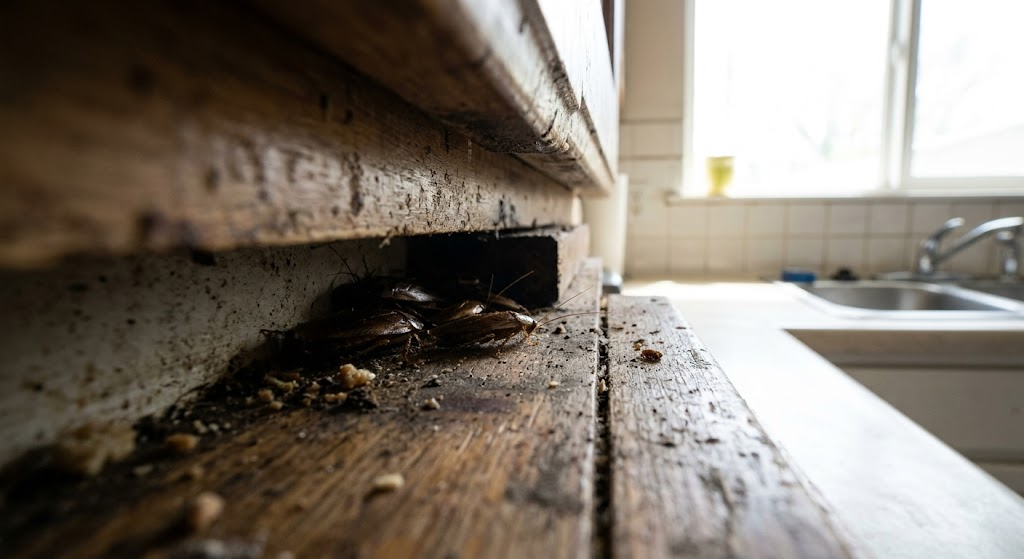
Cockroaches are master survivalists with millions of years of evolutionary experience in staying hidden. Because they are strictly nocturnal and instinctively avoid light, an active colony can live, feed, and reproduce inside your walls for months before you ever catch a glimpse of a live bug.
By the time a roach casually walks across your kitchen counter in broad daylight, you are rarely dealing with a new visitor—you are dealing with an established, overcrowded population.
Early detection is your greatest advantage. Catching a pest problem in its initial stages saves hundreds of dollars in extermination costs and prevents widespread contamination. Here is how to identify the subtle warning signs of a hidden infestation before it takes over your living space.
Early Warning Signs at a Glance
| Warning Sign | Primary Appearance / Characteristics | Most Common Locations |
| Faecal Droppings (Frass) | Coarse black pepper, coffee grounds, or ridged pellets | Cabinet hinges, behind fridge, drawer corners |
| Smear Marks | Dark, irregular, oily brown streaks | Wet baseboards, sink pipes, wall-floor joints |
| Shed Skins (Exuviae) | Translucent, hollow, amber-coloured shell replicas | Inside dark crevices, appliance cavities |
| Egg Cases (Oothecae) | Pill-shaped, ridged capsules (light tan to dark brown) | Under furniture, cabinet undersides, pantry corners |
| Musty Pheromone Odour | Heavy, oily, sweet, or mildew-like scent | Enclosed pantries, under sinks, laundry rooms |
| Chewed Materials | Irregular holes in cardboard, books, and food packaging | Attics, closets, dry food storage shelves |
| Daytime Activity | Bold, disoriented roaches wandering in the light | Open floors, countertops, near doorways |
1. Distinctive Faecal Droppings (Frass)
One of the most reliable indicators of cockroach activity is the waste they leave behind. Because roaches feed continuously, their droppings accumulate rapidly near their daytime harbours.
- Small Species (German Cockroaches): Their droppings look remarkably like coarse ground black pepper or dark coffee grounds. In heavily trafficked areas, these specks form dark clusters or granular piles along cabinet hinges, behind microwaves, and beneath sink rims.
- Large Species (American & Oriental Cockroaches): Larger species produce solid, cylindrical pellets roughly the size of a grain of rice. These droppings feature blunt ends and distinct longitudinal ridges running down the sides—a key trait that distinguishes them from smooth, tapered mouse droppings.
2. Dark Smear Marks and Grease Trails
In damp, high-humidity environments (such as under-sink cabinets, basements, or behind dishwashers), cockroach droppings do not always dry into solid granules.
Instead, they dissolve into liquid waste that combines with the natural oils and cuticular waxes on the insect’s body. As roaches travel repeatedly along the same pathways, they leave behind dark, irregular smear marks and oily brown trails.
Look for these horizontal streaks along:
- The lower baseboards where walls meet the floor.
- The cutouts where plumbing lines enter drywall.
- The rubber door gaskets of refrigerators and dishwashers.
3. Discarded Shed Skins (Exuviae)
Cockroaches possess a rigid outer skeleton (exoskeleton) made of chitin. Because this shell cannot expand as the insect grows, developing nymphs must shed their skins periodically through a process called ecdysis.
- A single cockroach sheds its skin between 5 and 13 times before reaching reproductive adulthood.
- These cast skins look like hollow, translucent, papery replicas of the roach’s body, complete with leg segments and antennae.
- Finding small shed skins indicates that nymphs are actively feeding, maturing, and expanding within your home.
4. Empty Egg Capsules (Oothecae)
Cockroach eggs are not laid loose; they are encased inside a durable, protein-rich capsule called an ootheca.
- Appearance: Oothecae are purse- or pill-shaped capsules ranging from light tan to dark mahogany brown, measuring roughly 5 to 10 mm in length.
- Viable vs. Hatched: A viable egg case appears plump and fully sealed. An empty, hatched egg case has a visible slit running down the top ridge where dozens of nymphs have already emerged.
- Where to Look: While German roaches carry their egg capsules until hours before hatching, other species (like brown-banded and American roaches) glue or drop their capsules in protected spots: behind wall art, inside furniture joints, under pantry shelves, and inside corrugated cardboard flutes.
5. A Lingering Musty, Oily Odour
Cockroaches communicate with each other through airborne chemical signals called aggregation pheromones. These pheromones tell other roaches that a harbourage is safe, warm, and close to food.
As a population grows, these secretions—combined with decomposing carcasses, faeces, and oleic acid—produce a distinct, pungent odour:
- Described as oily, musty, damp, or slightly sweet/sickly.
- The scent lingers in enclosed, poorly ventilated spaces such as under-sink cabinets, utility closets, and pantries.
- If you can smell a roach problem the moment you open a cabinet door, an established colony is nesting within inches of that spot.
6. Unexplained Physical Damage to Paper and Fabrics
When traditional kitchen crumbs are scarce, cockroaches rely on their internal gut bacteria to digest non-food household items containing cellulose and starch adhesives.
Watch for subtle damage across your home:
- Cardboard Boxes & Paper Bags: Ragged, chewed edges and small holes in pantry packaging and corrugated storage boxes.
- Book Bindings & Wallpaper: Chewed spines of older books and peeling wallpaper seams where roaches have eaten the starch-based glue.
- Textiles: Irregular holes chewed into synthetic fabrics, cotton garments, or upholstery soiled with body sweat or food grease.
7. Daytime Sightings: The Tipping Point
Cockroaches exhibit strong negative phototaxis—an instinctive biological drive to avoid light and remain in dark, secure crevices.
If you see a cockroach crawling across your floor, wall, or countertop during the middle of the day, it is almost never an isolated incident. Daytime sightings indicate extreme harbour overcrowding:
When safe daytime hiding spots reach maximum capacity, younger, weaker, or subordinate roaches are forced out into the light to search for food and water.
Conclusion: Early Action Prevents Colony Takeover
Cockroaches do not vanish on their own, and minor warning signs should never be ignored. A few scattered pepper-like specks or a single shed skin can quickly turn into a full-scale structural infestation within a few weeks.
If you notice any combination of these seven warning signs:
- Conduct a deep inspection using a bright LED flashlight in dark harbours.
- Deploy sticky monitor traps along baseboards to pinpoint travel corridors.
- Apply targeted, slow-acting gel baits and Insect Growth Regulators (IGRs) rather than repellent aerosol sprays.
By responding decisively to the earliest clues, you eliminate the colony before its reproductive cycle spirals out of control.
Frequently Asked Questions (FAQ)
1. How do I tell the difference between cockroach droppings and mouse droppings?
While small German cockroach droppings look like fine black pepper, large American cockroach droppings can look similar to mouse faeces. However, cockroach droppings have blunt ends and distinct longitudinal ridges running down the sides. In contrast, mouse droppings are smooth, slightly larger (4–7 mm), and have tapered, pointed ends.
2. What should I do if I find a cockroach egg case (ootheca)?
If you find an egg capsule, inspect it immediately:
- If it is intact and plump, it contains viable embryos. Crush it thoroughly with a paper towel or submerge it in soapy water/rubbing alcohol before disposing of it in an outdoor trash can.
- Inspect the immediate area with a flashlight; female roaches often deposit multiple egg capsules in the same dark, protected crevice.
3. Can the smell of a cockroach infestation cause health issues?
Yes. The pheromones, shed skins, and airborne proteins found in cockroach faeces and decomposing bodies are potent allergens. Prolonged inhalation can trigger severe allergic reactions, chronic sinus congestion, and dangerous asthma attacks, particularly in young children and elderly individuals.
4. Does seeing a single baby roach mean there is an active nest?
Almost always, yes. Adult roaches can occasionally hitchhike into a home inside a cardboard delivery box or luggage. However, baby roaches (nymphs) cannot fly and rarely travel far from their hatching site. Finding a nymph means an egg capsule has hatched inside or immediately adjacent to your home.
5. Why do roaches leave dark smear marks on walls?
In warm, damp environments, cockroaches drag their bodies through moisture, liquefied faeces, and leftover food residue. As they crawl along their preferred travel routes along baseboards and pipes, this mixture leaves behind oily, dark brown or black smudge marks.
6. Where are the most common places to find shed skins?
Shed skins (exuviae) are typically found in dark, undisturbed areas where nymphs hide while moulting:
- Inside the false bottoms (kickplates) of kitchen cabinets.
- In the motor compartment behind the refrigerator.
- Behind bathroom mirrors and loose wall tiles.
- Wedged inside the corrugated fluting of cardboard storage boxes.
7. How fast does a minor cockroach problem become a severe infestation?
Under standard room temperatures (around 75°F / 24°C) with accessible food and moisture, a single female German cockroach carrying 40 eggs can spark a population of several thousand roaches within 3 to 6 months. Because nymphs mature into breeding adults in under 60 days, population growth accelerates exponentially if left untreated.