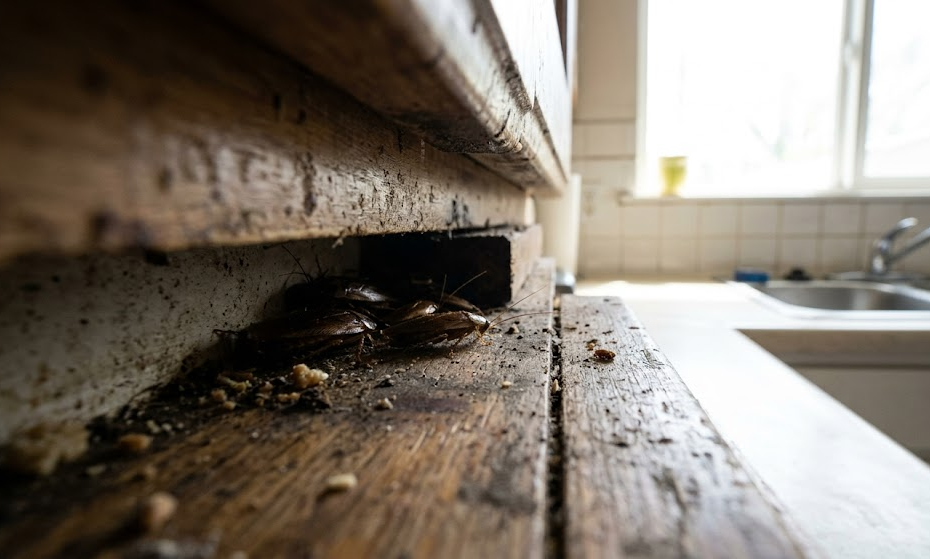
Uncover the secret daytime hiding spots of cockroaches in your home. We explore the dark, warm, and hidden crevices where these pests sleep while you are awake.
If you walk into your kitchen at noon, everything probably looks completely normal. The countertops are clean, the floors are clear, and there is not a pest in sight.
Turn the lights on at 2:00 AM, however, and you might catch a nightmare scurrying across the floorboards.
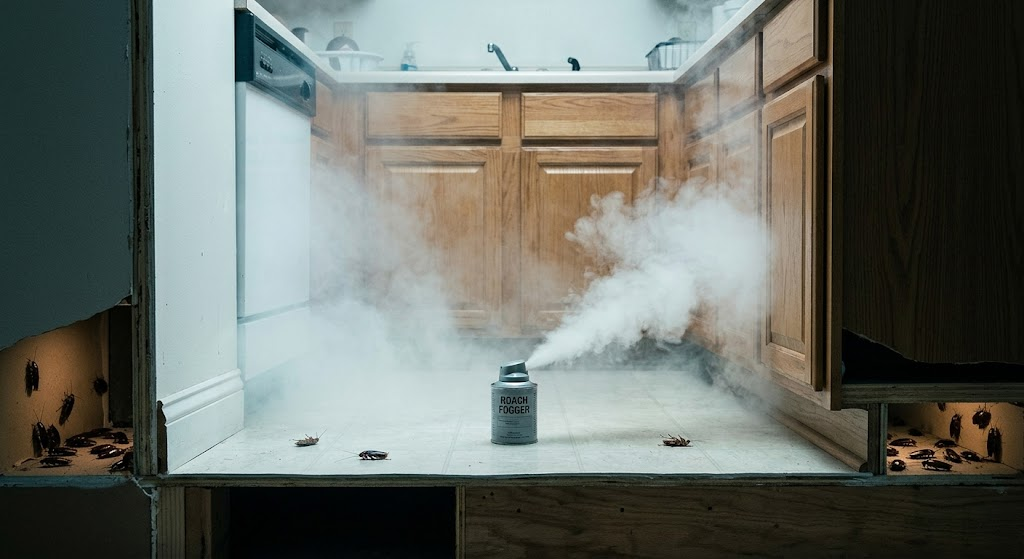
Cockroaches are master survivalists with millions of years of evolutionary training. If you want to eliminate an active infestation, spraying the open floor where you saw a single bug will get you nowhere. You have to take the fight directly into their hidden daytime harbours.
The Biology of Concealment: Why Roaches Hide
To locate a cockroach nest, you first need to understand the biological instincts driving their daytime behaviour:
- Thigmotaxis (The Craving for Tight Spaces): Cockroaches are intensely thigmotactic. They seek out narrow crevices where both their back and belly make direct contact with surrounding surfaces. This physical pressure gives them a biological sense of security against predators.
- Negative Phototaxis (Light Aversion): Cockroaches have specialised photoreceptors that make them instinctively flee from ambient and direct light sources.
- Aggregation Pheromones: Roaches emit chemical scent markers in their faeces and cuticular secretions. These pheromones signal to other roaches that a specific crack or crevice is a safe, optimal harbour, causing dozens—or hundreds—to cluster together in the same micro-crevice.
1. The Warmth of Major Kitchen Appliances
Your kitchen is the primary hub of cockroach activity not just because of stray crumbs, but because modern appliances generate constant, gentle heat.
- Refrigerators: The motor and compressor compartment beneath or behind the fridge provides warm, dark housing with easy access to condensation drain pans for water.
- Dishwashers: Dishwashers offer the ultimate combination of warmth, residual moisture, food particles, and thick insulating blankets where roaches can nest undisturbed.
- Stoves and Ovens: Cockroaches frequently harbour behind the rear access panel, inside the hollow clock/timer console, and in the greasy insulation surrounding the oven cavity.
- Small Countertop Appliances: Microwaves, coffee makers, toasters, and air fryers frequently harbour German cockroaches seeking warmth and food grease.
2. Plumbing and High-Moisture Zones
Water is the single most critical survival resource for a cockroach. While a roach can survive a month without food, it will perish within a week without hydration.
- Under-Sink Cabinets: The dark void beneath kitchen and bathroom sinks is consistently humid. Roaches gather around P-traps, shutoff valves, and pipes that collect condensation.
- Drywall Pipe Penetrations: The rough, unsealed drywall cutouts where water supply and drainage pipes enter the wall serve as both daytime nesting chambers and transit highways between rooms.
- Behind Toilets and Bathtubs: The secluded space behind toilet tanks, loose baseboards near showers, and hollow tub access panels offer damp, rarely disturbed hiding spots.
3. Electronics and Electrical Outlets
Because German cockroaches are small, flat, and attracted to low-voltage electromagnetic heat, modern consumer electronics have become prime daytime real estate:
- Wi-Fi Routers and Modems: Routers stay warm 24/7, making the interior circuit boards a classic hotspot for juvenile nymphs.
- Gaming Consoles and Desktop PCs: The internal power supplies and cooling vents of consoles (like PlayStations and Xboxes) and desktop computers provide sheltered, heated cavities.
- Wall Outlets and Switch Plates: Roaches slip through the tiny gaps around plastic switch plates, living directly inside junction boxes and utilising hollow wall studs to move through the home.
4. Cabinets, Furniture Crevices, and Cardboard
Cockroaches don’t need inches of space to hide; an adult German cockroach can squeeze into a gap as thin as a standard credit card (roughly 1.6 mm), and nymphs need even less.
| Harbourage Area | Why Roaches Choose It | What to Inspect |
| Cabinet Hinges & Tracks | Tight metal-on-wood joints provide full body contact. | Upper and lower door hinges; drawer slide wheels. |
| Cabinet False Bottoms | Dead, hollow space beneath the bottom shelf (kickplate). | Remove the bottom kickplate board to expose the void. |
| Behind Baseboards & Trim | Gaps caused by warped wood or missing caulk. | Baseboard seams, door trim, and crown moulding corners. |
| Corrugated Cardboard | Fluted cardboard mimics natural tree bark; glue contains starch. | Storage boxes, pantry packaging, cardboard beverage cartons. |
| Upholstered Furniture | Undersides of couches and recliners close to snacking areas. | Stapled dust covers underneath sofas and between cushions. |
How to Inspect and Flush Out Daytime Harbours
To confirm where roaches are hiding without tearing your home apart, use these targeted inspection tactics:
- The Flashlight & Inspection Mirror Method: Turn off room lights, wait until dark, and use a bright LED flashlight paired with an angled dental or mechanic’s mirror to look upward into cabinet lips, behind fridge coils, and under sinks.
- Sticky Monitoring Traps (Glue Boards): Place glue boards flush against walls, directly behind appliances, and inside sink cabinets. Checking where the highest concentration of trapped bugs appears will pinpoint the exact nesting cluster.
- Look for “Cockroach Pepper”: Daytime harbours leave distinct physical evidence. Look for dark, pepper-like droppings, shed exoskeletons, and amber-coloured egg cases (oothecae) gathered in corner joints.
Conclusion: Expose the Nest to Win the War
Cockroaches rarely wander through your home by accident. If you see a roach crossing the floor at night, there is a dedicated cluster resting inches away inside a wall void, appliance housing, or cabinet seam.
Surface sprays and swatting individual bugs will never solve an infestation. By identifying these daytime harbourages, amber-coloured, clearing out cardboard clutter, sealing structural gaps, and placing targeted gel baits directly at nesting entry points, you cut off their safe zones and eradicate the colony at its core.
Frequently Asked Questions (FAQ)
1. What does it mean if I see cockroaches crawling around during the daytime?
Seeing cockroaches out in the open during daylight hours is usually a sign of a severe, overcrowded infestation. Cockroaches are strictly nocturnal; they only leave their secure harbours during the day when the population inside the hiding spots is too dense, forcing weaker or younger roaches out to compete for food and space.
2. Why are cockroaches so attracted to cardboard boxes?
Corrugated cardboard provides the ideal environment for roaches. The inner fluted layers create tiny, dark tunnels that satisfy their need for tight body contact (thigmotaxis). Furthermore, the organic plant fibres, paper material, and starch-based adhesives used to construct cardboard boxes serve as an edible food source and readily absorb aggregation pheromones.
3. How small of a crack can a cockroach fit into?
Adult German cockroaches can squeeze through gaps as narrow as 1.6 mm (1/16th of an inch)—roughly the thickness of a credit card. Immature nymphs can flatten their bodies to slip through hairline openings under 0.5 mm.
4. Can cockroaches live and lay eggs inside my bed or couch?
Yes. While roaches prefer kitchens and bathrooms due to nearby water, heavy infestations can spill into living rooms and bedrooms. They commonly nest in the dark crevices of wooden bed frames, behind headboards, inside nightstand drawer slides, and underneath the dust covers of sofas—especially if food is consumed in bed or on the couch.
5. How can I safely get cockroaches out of my electronics?
Do not spray liquid pesticides or water into electronics. Instead:
- Place the affected device (such as a gaming console or router) into an airtight plastic storage bin with an adhesive insect monitor trap or a non-toxic desiccant pack for several days.
- Alternatively, place the bagged device in a deep freezer (below -10°C / 14°F) for at least 72 hours to kill all life stages safely.
6. Will keeping my kitchen lights on at night keep roaches away?
No. While light initially repels them, cockroaches driven by hunger, thirst, or pheromones will eventually override their light aversion to search for sustenance. Leaving lights on simply trains them to adapt and forage in low-light shadows or under appliances.
7. What is the most effective way to treat deep harbourages that I can’t reach?
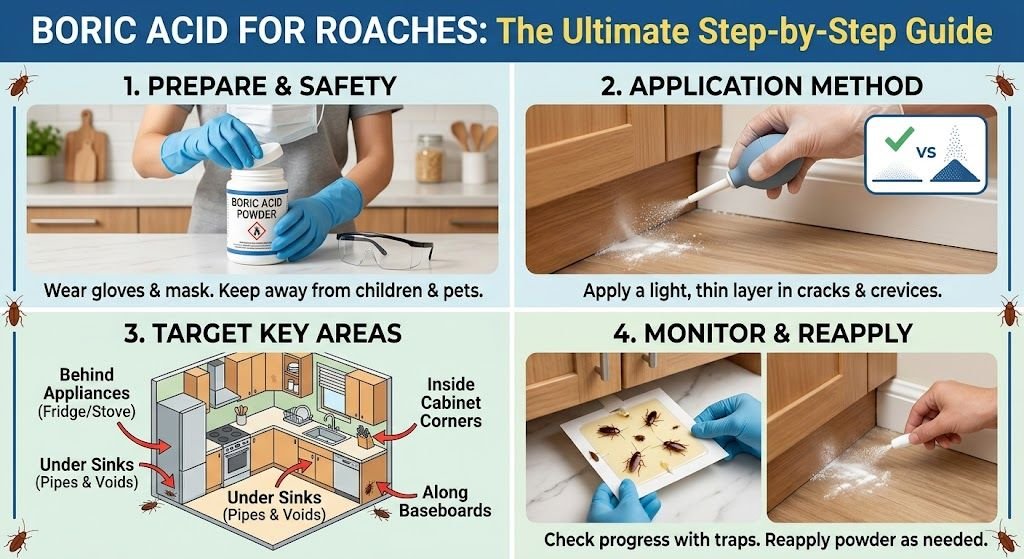
Use a combination of non-repellent dusts (such as pharmaceutical-grade boric acid or diatomaceous earth) applied with a bulb duster directly into wall voids, behind switch plates, and under kickplates. Pair this with small placements of cockroach gel bait near harbourage openings so foraging roaches can carry the slow-acting poison back inside to the rest of the colony.