Finding a baby water roach in your home is often a moment of immediate concern. Whether you spotted a small, dark insect scurrying near your kitchen sink or found one near the bathroom drain, the presence of a nymph—the scientific name for a baby roach—is usually a sign that a larger colony is nesting nearby. While many people use the term “water roach” to describe various species, understanding exactly what you are looking at is the first step toward reclaiming your home from these resilient pests.
What Exactly is a Baby Water Roach?
In many parts of the world, “water roach” is a colloquial term for the Oriental cockroach or, occasionally, the American cockroach. Unlike the smaller German cockroaches that prefer dry cabinets, these species are highly attracted to moisture and damp environments.
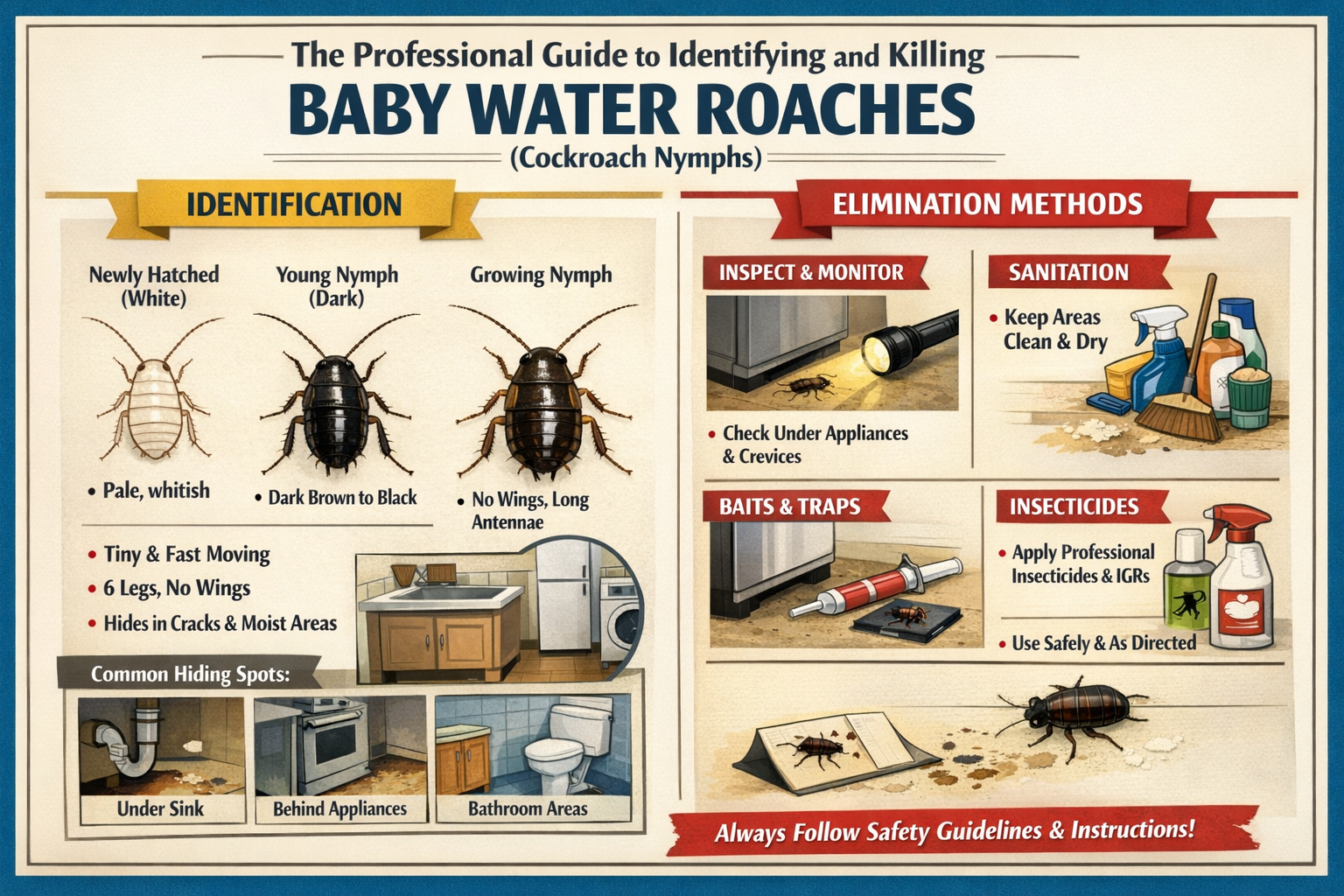
A baby water roach is simply an immature nymph of these species. They lack fully developed wings and are significantly smaller than adults, but they are just as capable of spreading bacteria and triggering allergies. If you see one, it means an egg case (ootheca) has recently hatched, and the infestation is likely in its early to mid-stages.

A baby water roach nymph lacks wings and is often darker than its adult counterpart.
Identifying Different Types of Baby Roaches
Not all small insects are the same. Correct Identification is crucial because different roaches require different baiting and extermination strategies. Here are the most common types of baby roaches you might encounter:
1. The Oriental Cockroach (The True Water Roach)
As nymphs, these are dark brown to black and have a distinct, glossy appearance. They are most commonly found in sewers, basements, and damp crawl spaces. They move slower than other species but are highly dependent on water.
2. The American Cockroach
These nymphs are reddish-brown. As they grow, they develop a yellow “halo” pattern behind their heads. They are the largest of the common species and prefer very humid areas like boiler rooms or laundry rooms.
3. The German Cockroach
While not technically a “water roach,” these are often confused with them. They are much smaller, light brown, and have two distinct dark stripes running down their backs. They prefer kitchens and bathrooms where food is readily available.
Why You Are Seeing Baby Roaches in Your Home
Roaches do not enter homes by accident; they are seeking three things: water, warmth, and shelter.
- Excessive Moisture: Leaky pipes under the sink or condensation in the walls are “water roach” magnets.
- Structural Entry Points: They often enter through gaps in siding, floor drains, or around utility pipes.
- Clutter: Piles of cardboard or paper provide the perfect hiding spots for nymphs to grow undisturbed.
The Hidden Dangers of a Water Roach Infestation
Seeing a baby water roach isn’t just a nuisance; it’s a health risk. These pests spend their time in sewers and decaying organic matter. When they enter your living space, they carry pathogens like Salmonella, E. coli, and parasitic worms on their legs and bodies. Furthermore, the discarded skins and droppings of nymphs are known triggers for asthma and respiratory allergies, particularly in children.
Step-by-Step Guide: How to Get Rid of Baby Water Roaches
Step 1: Eliminate the Water Source
Since water roaches are moisture-dependent, your first task is to dehumidify your home.
- Fix any leaking faucets or sweating pipes.
- Use a dehumidifier in damp basements.
- Ensure that floor drains have liquid in the traps to prevent roaches from crawling up from the sewers.
Step 2: Seal Entry Points
Examine the exterior of your home. Use high-quality caulk to seal cracks in the foundation and gaps around window frames. Pay special attention to where plumbing enters the home, as this is the primary “highway” for the baby water roach.
Step 3: Targeted Baiting and Traps
Professional-grade gel baits are highly effective. Place them in dark, moist corners where you have seen activity. The nymphs will feed on the bait and return to the nest, eliminating the colony at the source.
![Caption: Targeted baiting in moisture-rich areas is the key to eliminating water roach nymphs.]](https://babyroach.com/wp-content/uploads/2026/01/unnamed-29.jpg)
When to Call a Professional
If you are seeing multiple types of baby roaches during the day, you likely have a severe infestation. Roaches are nocturnal; seeing them in the daylight suggests that their hiding spots are overcrowded. In such cases, DIY methods may not be enough to reach the deep-seated nests within your walls.
Read More Guides: How Small Are Baby Roaches? A Complete Guide to Identification
Conclusion
A baby water roach is more than just a small bug; it is a biological indicator of moisture issues and a potential health hazard within your home. By identifying the specific types of baby roaches you are dealing with and taking immediate steps to eliminate water sources and seal entry points, you can stop an infestation before it spirals out of control.
Next Steps:
- Inspect your kitchen and bathroom for leaks today.
- Clear out any damp cardboard boxes from your garage or basement.
- Monitor the area for 48 hours to see if more nymphs appear.
Maintaining a dry, sealed home is your best defense against these resilient invaders. Stay vigilant, and don’t hesitate to seek professional help if the problem persists.
FAQ: Frequently Asked Questions
1. Does one baby water roach mean an infestation?
Yes, usually. Roaches hatch from egg cases that contain between 16 and 50 nymphs. If you see one baby, it is almost certain that its siblings are nearby.
2. Can baby water roaches fly?
No. Nymphs do not have developed wings. Even adult Oriental cockroaches (the most common “water roach”) are generally flightless, though adult American cockroaches can glide.
3. What do baby water roaches eat?
They are scavengers. They eat almost anything organic, including food crumbs, glue, book bindings, and even decaying leaves or sewage.
4. Are water roaches the same as cockroaches?
“Water roach” is a common nickname for larger species like the Oriental cockroach. While they are a type of cockroach, they behave differently than the smaller German cockroaches found in kitchens.
5. How long does it take for a baby roach to become an adult?
Depending on the species and the temperature, it can take anywhere from a few months to a year for a nymph to reach full maturity and begin reproducing.
6. Will pouring bleach down the drain kill them?
Bleach can kill roaches on contact, but it is not an effective way to clear an infestation. They usually live in the gaps around pipes or deep in the sewer system where bleach won’t reach the nest.