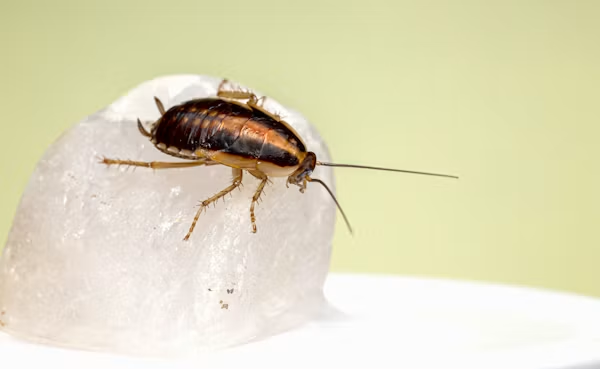
Do baby cockroaches bite humans in their sleep? Separate myth from fact, understand roach mouthparts, and learn about real health risks like allergies and bacteria.
The Short Answer: Do Baby Cockroaches Actually Bite?
Mandibles – The jaw-like mouthparts of an insect, used for grasping, crushing, or cutting food.
The thought of a bug crawling on you in your sleep is terrifying enough, but the fear of being bitten takes it to another level. Fortunately, you can rest easy: baby cockroaches (and even adults) generally do not bite humans. While they do possess mandibles for chewing solid food, their jaws are remarkably weak and are designed for breaking down decaying organic matter, not piercing living human skin.
Understanding Cockroach Mouthparts and Scavenging Habits
Omnivore – An animal or insect that has the ability to eat and survive on both plant and animal matter.
Cockroaches are the ultimate omnivorous scavengers. Their preferred diet consists of sugars, starches, greases, and decaying organic matter. They are inherently cowardly creatures that actively avoid living predators (including humans). They have absolutely no biological reason to seek out humans for blood meals like mosquitoes, bed bugs, or fleas do.
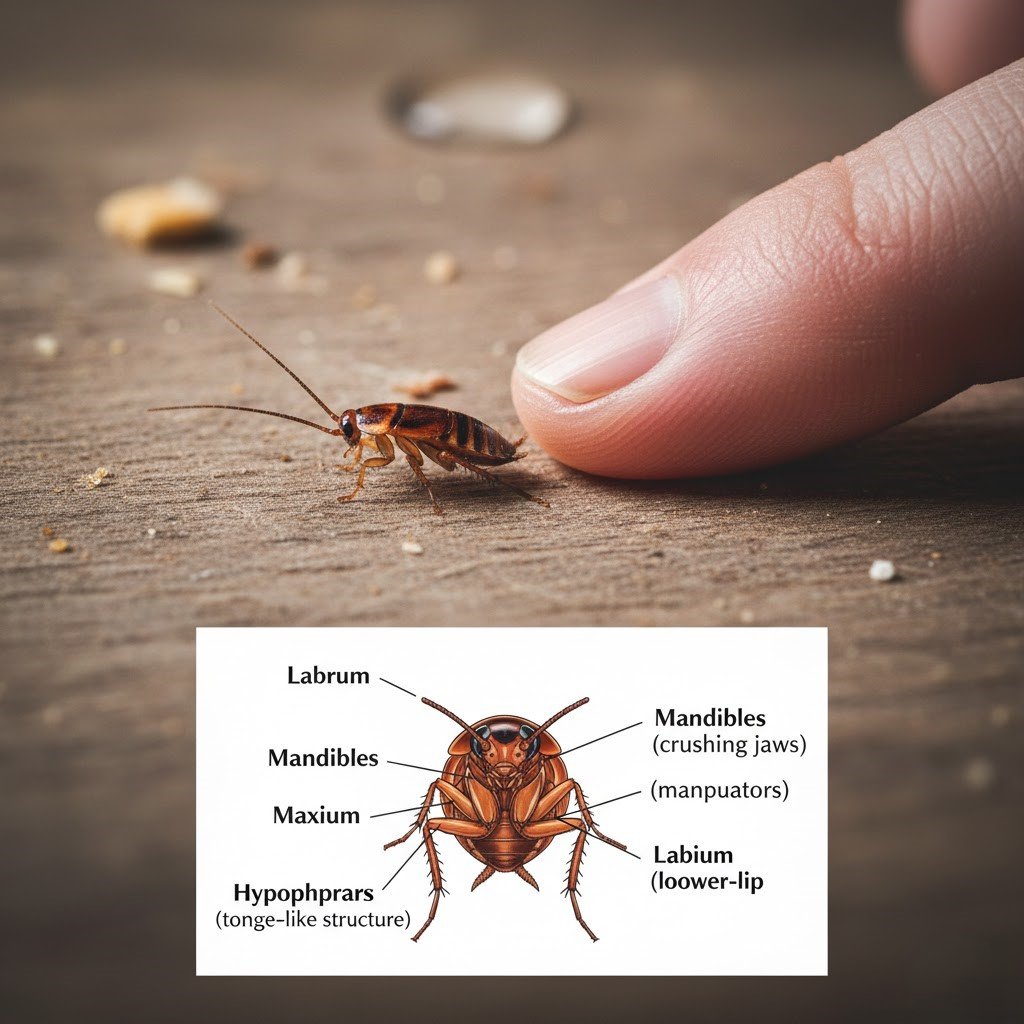
Desperate Times: Why a Cockroach Might Try to Nibble on You
While true bites are extraordinarily rare, there are documented cases of roaches “nibbling” on humans. This only occurs in situations of extreme, out-of-control infestations where the food supply has completely run dry. In these desperate scenarios, a roach might nibble on dead skin cells, eyelash follicles, or food residue left on a sleeping person’s face or hands. Even then, it rarely breaks the skin.
The Real Danger: Asthma, Allergies, and Bacteria (Not Bites)
Allergen – A substance that causes an allergic reaction, triggering the immune system to overreact.
Homeowners worry about bites, but the real medical threat is entirely invisible. Cockroaches drag their bodies through sewage, garbage, and decaying matter, picking up dangerous bacteria like E. coli and Salmonella. As they walk across your kitchen counters, they leave these pathogens behind. Furthermore, their shed skins, droppings, and saliva break down into airborne allergens that are a leading cause of severe asthma in young children.
How to Protect Your Bed and Sleeping Areas from Nighttime Pests
To ensure peaceful sleep, keep food out of the bedroom entirely. Roaches have no reason to be in your bed unless there are crumbs in your sheets. Pull your bed frame a few inches away from the wall, ensure your blankets do not touch the floor, and avoid storing cardboard boxes under your bed.
How to Properly Treat and Sanitize a Suspected Bug Bite
If you wake up with itchy, red welts, you are almost certainly dealing with bed bugs, spiders, or fleas—not cockroaches. However, if you suspect any insect bite, wash the area thoroughly with antibacterial soap and warm water, apply a cold compress to reduce swelling, and use an over-the-counter hydrocortisone cream to stop the itching.
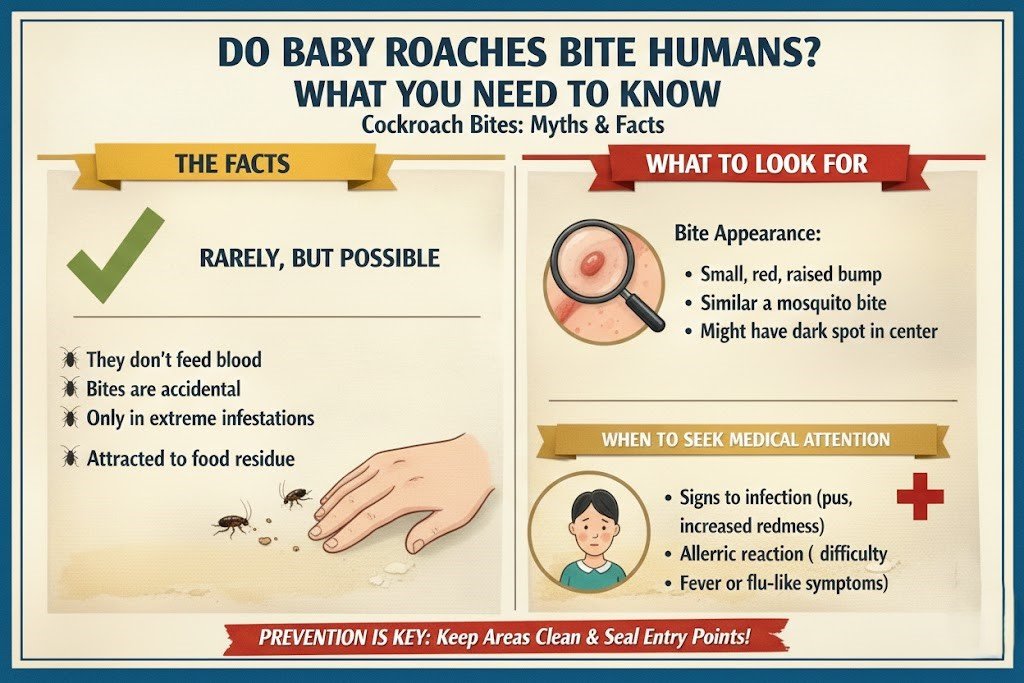
While baby cockroaches have mouthparts capable of chewing, they are significantly smaller than common biting insects.
Why Seeing Baby Cockroaches in House Areas is a “Red Flag”
While the risk of being bitten is low, seeing baby cockroaches in house structures is a major warning sign. It indicates that your home is not just a pitstop for a wandering adult; it is a breeding ground.
The Breeding Cycle
A single female German cockroach can produce an egg capsule (ootheca) containing up to 48 eggs. When these hatch, you are left with dozens of nymphs. If you see babies of different sizes, it means there are multiple generations living in your walls.
Health Risks Beyond Bites
Even if they never bite you, baby roaches are dangerous.
- Allergens: Nymphs shed their skins (molt) multiple times as they grow. These shed skins and their droppings contain proteins that trigger asthma and allergies, especially in children.
- Pathogens: Roaches crawl through sewers and trash. They carry bacteria like Salmonella and E. coli on their legs and bodies, which they then transfer to your kitchen counters and food.
- Odor: A large population of baby roaches produces a distinct, “musty” pheromone smell that can permeate a home.
Where Baby Roaches Hide (And Where They Might Bite)
If you are worried about “do baby roaches bite,” you need to know where they are most active at night. Baby roaches prefer tight, warm, and humid spaces.
- The Kitchen: Under the sink, behind the refrigerator, and inside the folds of dishwasher gaskets.
- The Bathroom: Inside medicine cabinets and around the base of the toilet.
- The Bedroom: This is where the concern for bites arises. Roaches may hide in bedside tables or headboards if you frequently eat in bed.
How to Prevent Baby Roach Bites and Infestations
Prevention is the most effective way to address the fear of “do baby roaches bite.” By making your home unattractive to them, you remove the possibility of an encounter.
1. The “Clean Bed” Rule
Never eat food in the bedroom. Even the smallest crumbs can attract a baby roach to your sleeping area. If you must eat in bed, change the sheets immediately after.
2. Seal the Cracks
Baby roaches are incredibly thin. They can enter your home through cracks in the baseboards or gaps around plumbing pipes. Use silicone caulk to seal these entry points, particularly in the kitchen and bathroom.
3. Eliminate Moisture
According to the National Center for Healthy Housing, moisture control is the #1 way to deter cockroaches. Fix leaky faucets and use a dehumidifier in damp basements. Without water, a baby roach will die within days.
4. Strategic Baiting
If you have already seen baby cockroaches in house areas, skip the “bug bombs.” These often just scatter the colony. Instead, use gel baits. The baby roaches eat the bait, return to the nest, and die, often being consumed by other roaches, which spreads the poison through the colony.
5. Use Insect Growth Regulators (IGR)
This is vital for baby roaches. An IGR is a chemical that prevents the nymph from molting and reaching adulthood. If they can’t become adults, they can’t reproduce, and the infestation naturally dies out.
Conclusion
The fear of “do baby roaches bite” is usually greater than the actual risk, but it shouldn’t be ignored. While a baby roach is unlikely to seek you out as a meal, their presence in your home is a clear indicator of a sanitary and structural vulnerability. Finding baby cockroaches in house crevices means you are dealing with an active breeding colony that requires immediate attention.
By focusing on deep sanitation, sealing entry points, and using professional-grade baits and growth regulators, you can protect your family from the allergens and bacteria these pests carry. Don’t let the fear of bites keep you up at night—take control of your environment today.
- Roaches bite humans only in rare, extreme cases of food scarcity.
- The primary danger of baby roaches is the spread of bacteria and allergens.
- Seeing baby roaches confirms a nesting colony is present.
- Sanitation and moisture control are the best defenses against infestation.
A pest-free home is essential for your physical and mental well-being. If you’ve spotted the signs, now is the time to act before the next generation hatches.
FAQ Section
1. Do baby roaches bite while you are sleeping?
It is possible but very rare. They might crawl on you if they detect food residue or skin oils. If they “bite,” they are usually just tasting the salt or oils on your skin.
2. Are baby roach bites poisonous?
No, baby roaches do not have venom. However, because they carry bacteria, a bite can easily become infected. If you suspect a bite, wash it with soap and water immediately and apply an antiseptic.
3. What do baby roaches look like?
They look like smaller, wingless versions of adult roaches. Depending on the species, they may be dark brown or black, often with a lighter stripe or “band” on their backs.
4. Why am I seeing baby roaches but no adults?
Adult roaches are much better at hiding and are more cautious. Baby roaches are less “street smart” and often have to venture out further to find food if the adult roaches are hogging the best spots.
5. Can baby roach bites cause a rash?
Yes. The saliva or proteins on the roach’s body can cause an allergic skin reaction in some people, resulting in a localized rash or swelling around the bite area.
6. Will sleeping with the lights on prevent bites?
While roaches are nocturnal and dislike light, they will eventually adapt if they are hungry enough. Keeping the lights on is not a long-term solution for preventing bites or infestations.


