Finding a white baby roach scurrying across your kitchen counter or bathroom floor can be a jarring experience. Most of us are used to seeing cockroaches in shades of oily brown or deep black. When a translucent or ghostly white insect appears, it often leads to a frantic Google search: Is this a new species? Is it an albino roach? Or am I dealing with a completely different pest?
The truth is both simpler and more concerning than you might think. A white baby roach is not a rare mutation; it is a common baby cockroaches‘ in a vulnerable stage of its life cycle. Seeing one is a definitive “red flag” that your home is currently hosting a breeding population.
In this comprehensive guide, we will break down why these pests appear white, how to identify them using a baby roach picture guide, and the exact steps you need to take to reclaim your home.
Why Are Some Baby Roaches White?
The most important thing to understand is that albino cockroaches do not exist in any significant capacity. If you see a white roach, you are witnessing a biological process called molting.
The Molting Process Explained
Cockroaches are invertebrates with a hard exoskeleton. As a baby cockroach (nymph) grows, its hard outer shell does not expand. To get bigger, the roach must shed its old skin and grow a new one. This process happens several times before they reach adulthood.
When the roach first emerges from its old casing, its new skin is soft and lacks pigmentation. During this brief window of 2 to 8 hours, the cockroach appears stark white or creamy. Eventually, as the new shell comes into contact with oxygen, it hardens and darkens into the familiar brown or black color.
Why Seeing One is a Warning Sign
Because a “white” roach is soft and defenseless, they typically stay hidden in the darkest, deepest crevices of your home while their shell hardens. If you are seeing one out in the open, it often means:
- The infestation is so large that hiding spots are overcrowded.
- You have discovered a nesting site or “nursery” nearby.
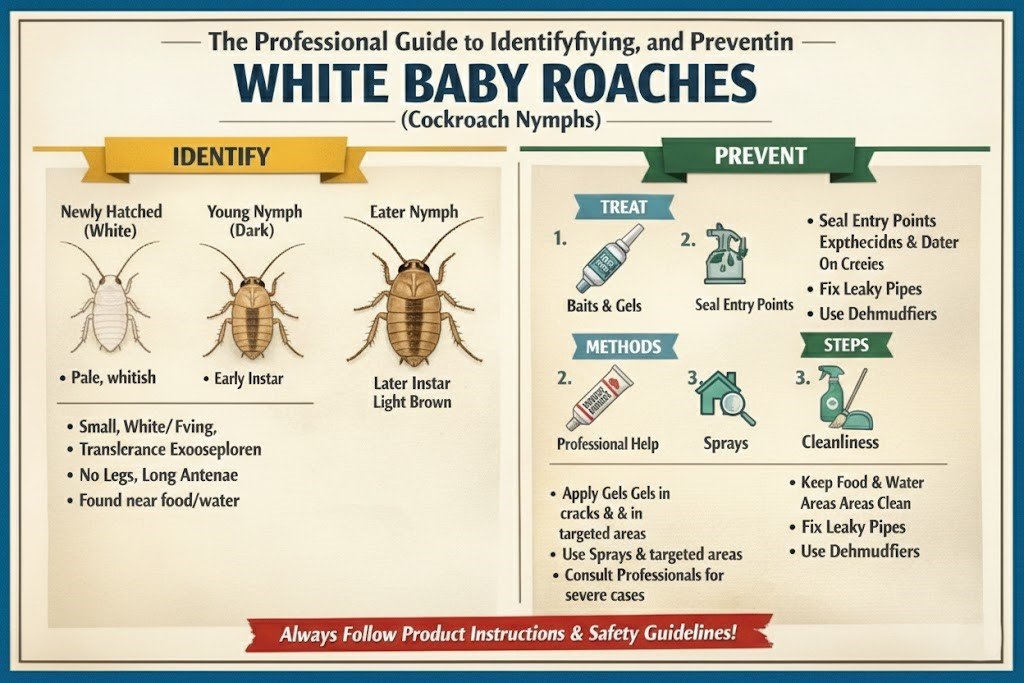
How to Identify a White Baby Roach
Identification is the first step toward eradication. While they are white, their body shape remains consistent with their specific species.
Using a Baby Roach Picture for Comparison
- Size: Most white baby roaches are between 1/8 to 1/2 inch long.
- Shape: Look for a flat, oval-shaped body with long antennae.
- Behavior: They are extremely fast. If it moves slowly, it might be a different insect entirely.

A white baby roach immediately after molting. Notice the discarded exoskeleton (exuviae) nearby.
Commonly Confused Pests
Before you treat your home for roaches, ensure you aren’t actually looking at:
- Bed Bugs: These are rounder, slower, and do not have long antennae.
- Termites: These have a more “segmented” look and different wing structures.
- Albino Woodlice: Usually found in soil and have a “roly-poly” segmented appearance.
The Lifecycle: From Egg to “White” Nymph
To understand why white baby roaches are such a problem, you have to look at their reproductive speed.
| Stage | Duration | Characteristics |
| Egg (Ootheca) | 14–30 Days | A small, brown, purse-shaped capsule containing up to 48 eggs. |
| Nymph (White Phase) | 2–8 Hours | Immediately after molting; the insect is soft and white. |
| Nymph (Dark Phase) | 1–3 Months | The shell hardens; the roach is active and foraging. |
| Adult | 6–12 Months | Fully developed wings and reproductive capabilities. |
A single female German cockroach can produce hundreds of offspring in a year. If you see nymphs of various sizes, it indicates multiple generations are living in your walls.
Where Do White Baby Roaches Hide?
Because they are vulnerable during the white phase, they seek out high-humidity, high-heat environments. Common hotspots include:
- Behind Reperators: The compressor provides constant warmth.
- Under Sinks: Leaky pipes provide the moisture they crave.
- Inside Electronics: Gaming consoles and microwave clocks are frequent nesting sites.
- Wall Voids: They travel through electrical wiring and plumbing gaps.
Step-by-Step Guide: How to Get Rid of White Baby Roaches
If you’ve spotted a baby roach picture online that matches what you see in your home, it’s time to take action.
1. Sanitation and Food Source Elimination
Roaches can live for a month without food but only a week without water.
- Dry your sinks every night before bed.
- Seal all dry goods (cereal, flour, pet food) in airtight plastic containers.
- Degrease your stove; roaches can feed on tiny splatters of oil for weeks.
2. Strategic Baiting
Do not use “bug bombs” or foggers. These often scatter the colony deeper into the walls.
- Place small dots of bait in corners where you have seen the white nymphs.
- The nymphs eat the bait and take it back to the nest, killing the hidden population through a “domino effect.”
3. Use an Insect Growth Regulator (IGR)
This is the “secret weapon” for baby roaches. An IGR is a chemical that acts like birth control for insects. It prevents the white baby roach from ever reaching adulthood or successfully molting again, effectively breaking the life cycle.
4. Seal Entry Points
Use silicone caulk to seal gaps around baseboards, pipes, and electrical outlets. This prevents “hitchhiker” roaches from neighboring apartments or outdoor areas from entering.
When to Call the Professionals
While DIY methods can manage small sightings, a “white” roach often indicates a hidden, thriving colony that requires professional-grade equipment. If you see more than two white roaches in a week, the breeding site is likely inside your structure.
Dealing with a persistent pest problem can be overwhelming, and sometimes the best move is to consult with an expert who can identify the specific species and nesting locations. Whether you need a one-time treatment or an ongoing prevention plan, professional help ensures your home remains a safe, hygienic environment.
Read More Guides: Do Baby Cockroaches Fly? Facts About Roach Wings and Growth
Conclusion
Seeing white baby roaches is a clear signal from nature that your home has become a breeding ground for cockroaches. While the white color is just a temporary phase of the molting process, its presence suggests that a nest is nearby and the population is expanding rapidly. By identifying the pests early—using a baby roach picture as a reference—and implementing a combination of sanitation, baiting, and growth regulators, you can stop the infestation before it becomes a full-blown crisis.
- White roaches are not a special species; they are simply molting.
- They are highly vulnerable and usually stay hidden.
- Their presence suggests an overcrowded or nearby nest.
- Breaking the life cycle with IGRs is the most effective long-term solution.
Don’t wait for the problem to grow. Take action today to protect your kitchen, your health, and your peace of mind.
Frequently Asked Questions (FAQ)
1. Are white baby roaches poisonous?
No, they are not poisonous to the touch, and they do not have venom. However, like all cockroaches, they carry bacteria such as Salmonella and E. coli, which can contaminate your food and surfaces.
2. How long do they stay white?
A baby roach usually stays white for only 2 to 8 hours. If you see one, it has very recently molted. This is why seeing them is relatively rare—the window of time is very small.
3. Can white roaches fly?
Most baby roaches (nymphs) do not have fully developed wings, so they cannot fly. Even when they become adults, most common household species (like the German cockroach) rarely fly, preferring to run.
4. Does seeing one white roach mean an infestation?
Almost always, yes. Because roaches are social insects and white nymphs are so vulnerable, they don’t wander far from the nest. Seeing one means there are likely dozens or hundreds more hidden nearby.
5. Why did I find a white roach in my bed?
While rare, finding one in bed usually means there is a food or moisture source nearby, or the infestation in the walls is significant enough that they are exploring new areas. Check nearby nightstands or electrical outlets.
6. Will bleach kill white baby roaches?
Bleach will kill a roach on contact, but it is not an effective treatment. It does not reach the nest and doesn’t provide a residual effect to kill the roaches you don’t see.