Found tiny baby roaches in your apartment? Learn how to identify nymphs, locate their hiding spots, and stop them from coming through shared walls.
Why Finding a Baby Roach is a Major Red Flag
Nymph – The juvenile, immature stage of an insect that undergoes incomplete metamorphosis, resembling a smaller version of the adult but lacking fully developed wings and reproductive organs.
Finding a massive, adult cockroach is terrifying, but finding a tiny baby roach should actually cause more alarm. Adult roaches can occasionally wander indoors from outside by mistake. Baby roaches, however, do not travel far from their nest. If you see a nymph in your apartment, it is an absolute guarantee that eggs are actively hatching inside your living space or immediately behind your walls.
What Do Baby Cockroaches (Nymphs) Actually Look Like?
Incomplete Metamorphosis – A life cycle in which an insect passes through three distinct stages: egg, nymph, and adult, without a pupal (cocoon) stage.
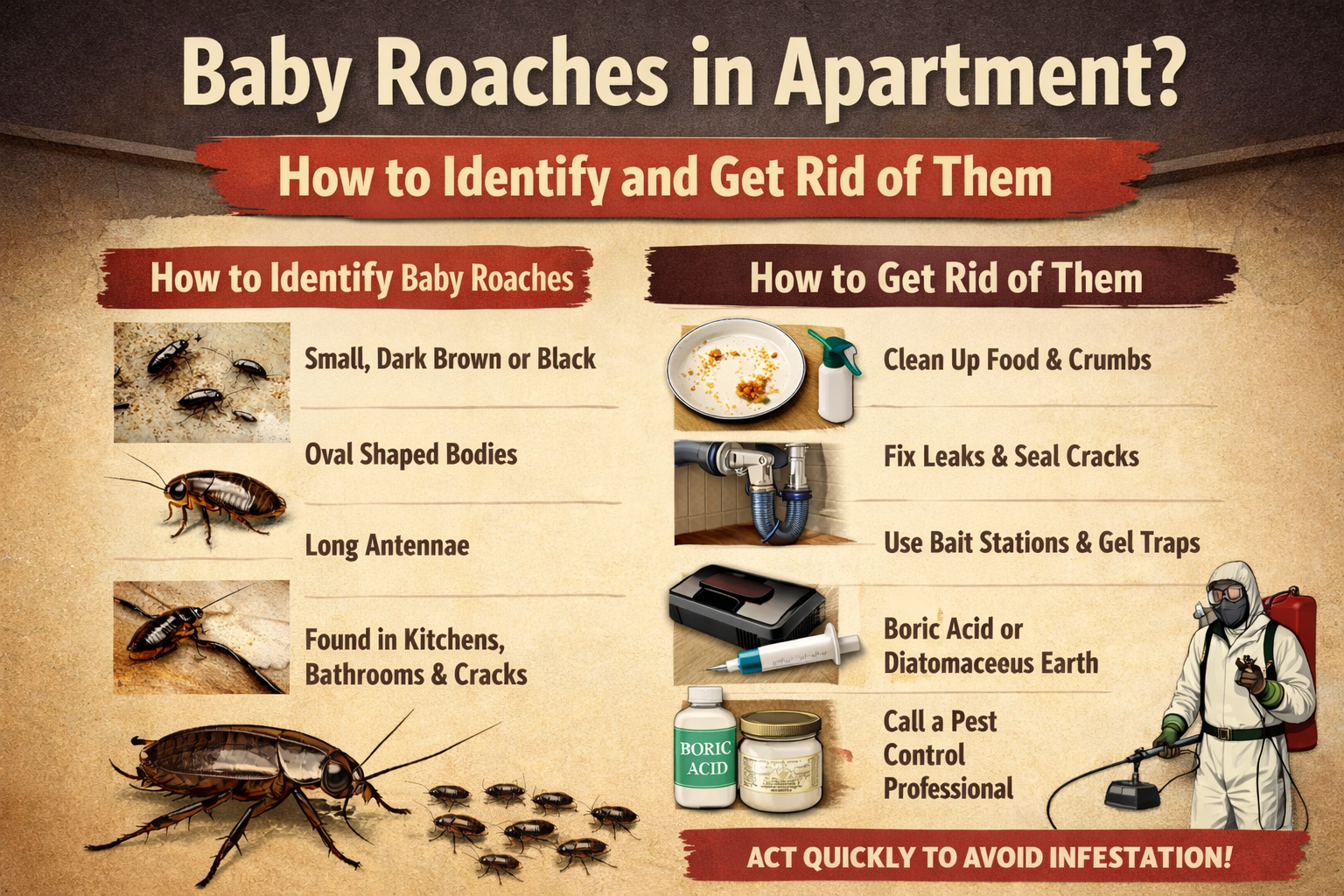
Cockroach nymphs look very similar to adult cockroaches, just miniaturized. They range in size from a grain of rice to about a quarter of an inch long. They are completely wingless and often have a softer, slightly translucent appearance right after they molt.
German Nymphs vs. American Nymphs: Spotting the Difference
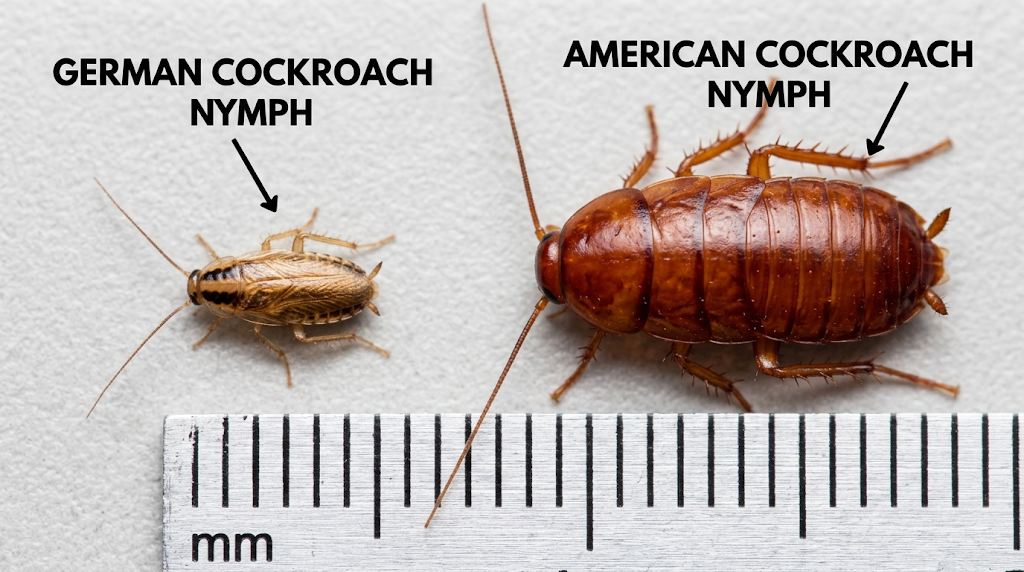
You must identify the species to treat it properly.
German cockroach nymphs are tiny, dark brown, and have a distinct light-tan stripe running down the center of their backs. American cockroach nymphs are slightly larger, reddish-brown, and have a more uniform color.
If you are dealing with German nymphs, the nest is likely in your kitchen; if American, the nest is likely near a basement drain or shared plumbing wall.
Top Hiding Spots for Baby Roaches in Small Apartment Spaces
Thigmotaxis – A biological response in which an organism actively seeks physical contact with solid surfaces, prompting cockroaches to wedge themselves into extremely tight crevices.
Because they are so incredibly small, nymphs can hide in places adults cannot fit. Check the rubber seals of your refrigerator door, the tight hinges of your kitchen cabinets, the gaps behind your electrical outlet covers, and inside corrugated cardboard boxes.
How to Eradicate Nymphs Without Fumigating Your Unit
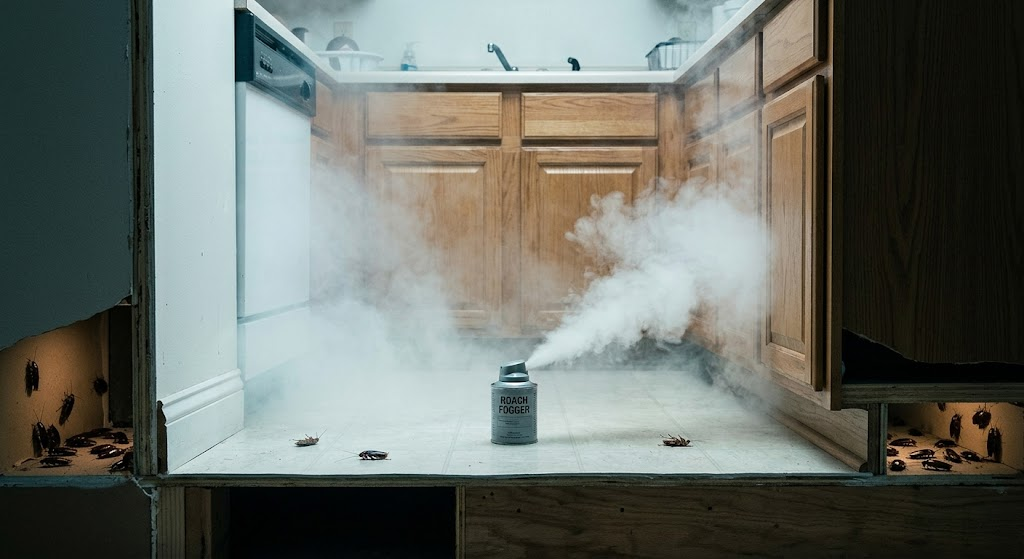
Do not use foggers, as they will push the roaches into your neighbor’s apartment, only for them to return later. Instead, use high-quality gel baits. Because nymphs are growing rapidly, they are ravenous. A well-placed gel bait under the sink and behind the fridge will be quickly consumed by nymphs, who will then return to the nest and spread the poison.
Defensive Barriers: How to Block Roaches Coming from Neighboring Apartments
Weatherstripping – Narrow pieces of material used to seal the edges of doors and windows, preventing drafts and blocking the entry of insects.
In an apartment, you share walls, plumbing, and ventilation with other renters. You must physically block the roaches from entering. Install tight door sweeps under your front door. Caulk any holes in the drywall where plumbing pipes connect to your sinks and toilets. Place fine mesh screens over your air vents to stop them from crawling through the ductwork.
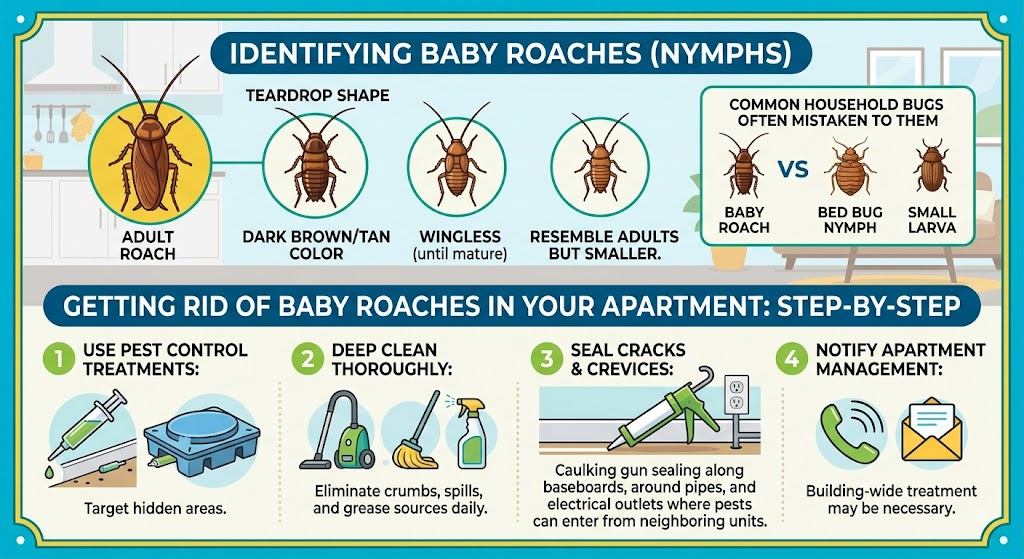
Read Our More Guide: How To Stop Baby Cockroaches In House Before They Multiply
Conclusion
Finding baby roaches in apartment units is an urgent matter that requires a strategic response. Because these pests are highly mobile and rely on shared infrastructure, the “best” approach is a mix of high-quality gel baits, IGRs to stop the maturation process, and open communication with your building management.
By sealing entry points and maintaining a dry, crumb-free environment, you can make your unit the least attractive option on the floor. Don’t wait for a few babies to turn into a massive colony—take action today to protect your health and your home.
FAQ: Baby Roaches in Apartment Living
Does seeing one baby roach mean my apartment is dirty?
Not at all. Roaches are attracted to moisture and shelter. You can have a spotless home and still get baby cockroaches in apartment units if they are migrating from a neighboring unit or were brought in via grocery bags or delivery boxes.
Can I use “bug bombs” in an apartment?
Professional exterminators generally advise against “foggers” or “bombs” in apartments. They often fail to reach the cracks where roaches hide and can actually drive the pests deeper into the walls or into your neighbors’ units.
Should I tell my neighbors?
It is often helpful to talk to your neighbors. If they are also seeing baby roaches in apartment areas, you can approach the landlord together, which usually results in a more comprehensive, building-wide treatment.
Why am I seeing them in the bathroom but not the kitchen?
Nymphs are extremely sensitive to dehydration. If your kitchen is dry but your bathroom has a leaky faucet or high humidity, they will congregate near the bathroom’s water source.
How long does it take to get rid of them?
With consistent baiting and sanitation, you should see a significant reduction in 2 weeks. However, in an apartment, it may take 4 to 6 weeks to fully break the breeding cycle.