If you have spotted tiny, fast-moving insects scurrying across your kitchen counter or bathroom floor, you are likely facing a significant household challenge. Finding baby cockroaches in house environments is often more concerning than seeing a single adult. While an adult roach might be a “loner” that wandered in through a gap in the door, the presence of babies—technically known as nymphs—is a definitive indicator of a breeding population established within your walls.
This guide provides a comprehensive look at how to identify these pests, why they are there, and how to eliminate them before they become a full-scale health hazard. We will also answer common questions, such as do baby cockroaches bite, and provide actionable steps to sanitize your home effectively.
What Do Baby Cockroaches Look Like?
Identification is the first step in any successful pest management strategy. If you misidentify a roach nymph as a beetle or a cricket, your treatment plan will likely fail.
Key Characteristics
- Size: Nymphs can be as small as a grain of rice (about 1/8 of an inch) or grow up to half an inch depending on their age.
- Shape: Like adults, they are oval-shaped and flat, allowing them to hide in impossibly thin cracks.
- Wings: Most baby cockroaches in house sightings involve wingless insects. Roaches do not develop wings until they reach full maturity.
- Color: Depending on the species, they range from light tan to dark reddish-brown or even midnight black.
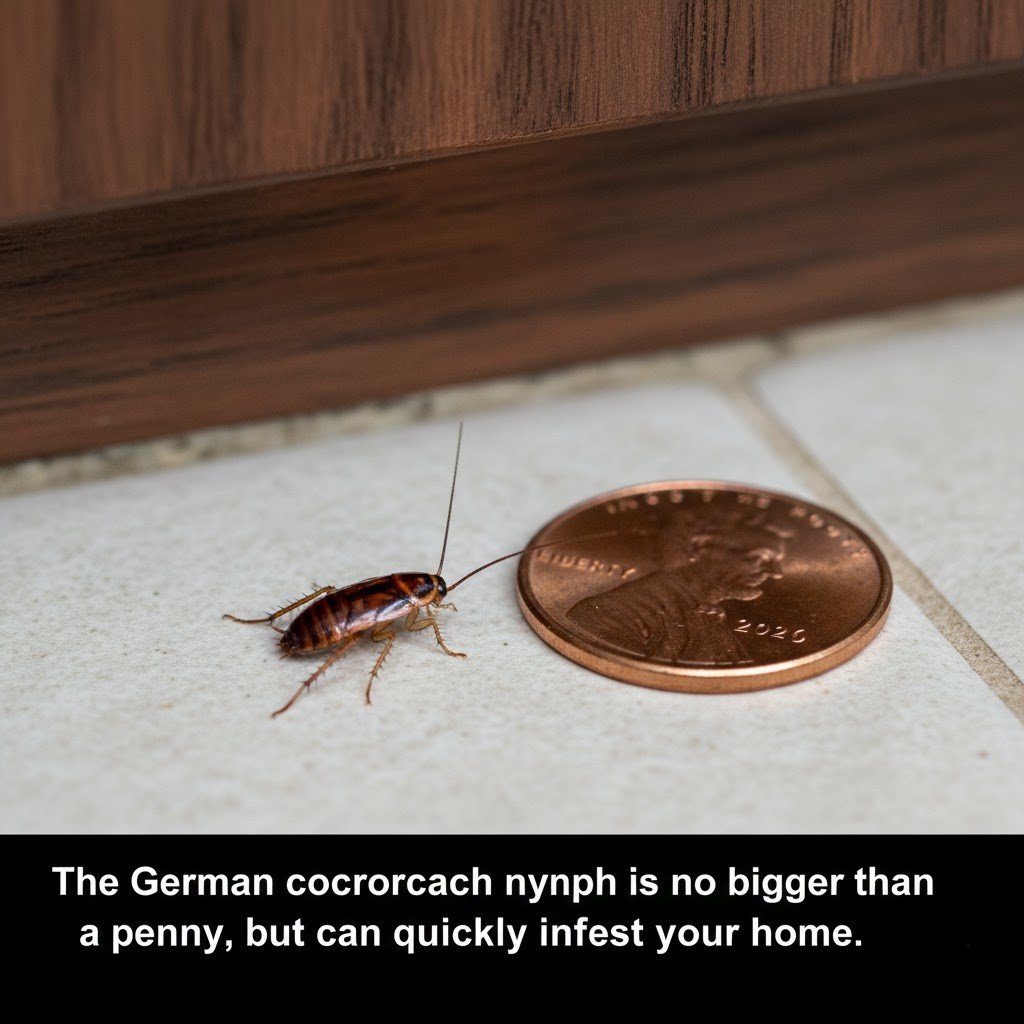
A German cockroach nymph is distinguished by two dark parallel stripes running down its back
Why You Have Baby Cockroaches in Your House
Understanding the “why” is essential for prevention. Roaches are not necessarily a sign of a “dirty” home; they are opportunistic survivors looking for three things: warmth, moisture, and food.
1. High Humidity and Moisture
Baby roaches have a higher surface-area-to-volume ratio than adults, meaning they dehydrate much faster. This is why you frequently find them in bathrooms, under sinks, or near leaky pipes.
2. Available Food Sources
Even a single crumb or a smudge of grease behind the stove is a feast for a nymph. They are also known to eat cardboard glue, book bindings, and even wallpaper paste if traditional food is scarce.
3. Recent Egg Hatching
If you see multiple babies at once, an ootheca (egg case) has likely hatched nearby. A single German cockroach egg case can contain up to 40 to 50 nymphs, which explains why an infestation seems to appear “overnight.”
Common Species Found Indoors
| Species | Appearance of Nymph | Typical Location |
| German Cockroach | Light brown with two dark stripes on the head. | Kitchens and bathrooms; near heat sources. |
| American Cockroach | Reddish-brown; more “teardrop” shaped. | Basements, sewers, and laundry rooms. |
| Oriental Cockroach | Dark brown or black; very shiny. | Damp, cool areas like floor drains or crawl spaces. |
| Brown-Banded Cockroach | Two light-colored bands across the abdomen. | High areas like ceilings or behind wall hangings. |
Health Risks: Do Baby Cockroaches Bite?
One of the most common questions homeowners ask is: do baby cockroaches bite?
The short answer is: Rarely, and almost never under normal circumstances. Cockroaches are not like bed bugs or mosquitoes; they do not feed on human blood. A baby roach might nibble on a human only in cases of extreme infestation where their food sources have been completely exhausted.
However, the lack of a bite does not mean they are harmless. The real danger of baby cockroaches in house settings lies in their role as “mechanical vectors” for disease.
- Contamination: They crawl through filth and then walk over your food, spreading E. coli and Salmonella.
- Allergies and Asthma: Roaches shed their skins (molt) as they grow. These discarded skins and their droppings contain proteins that are powerful allergens, often triggering severe asthma attacks in children.
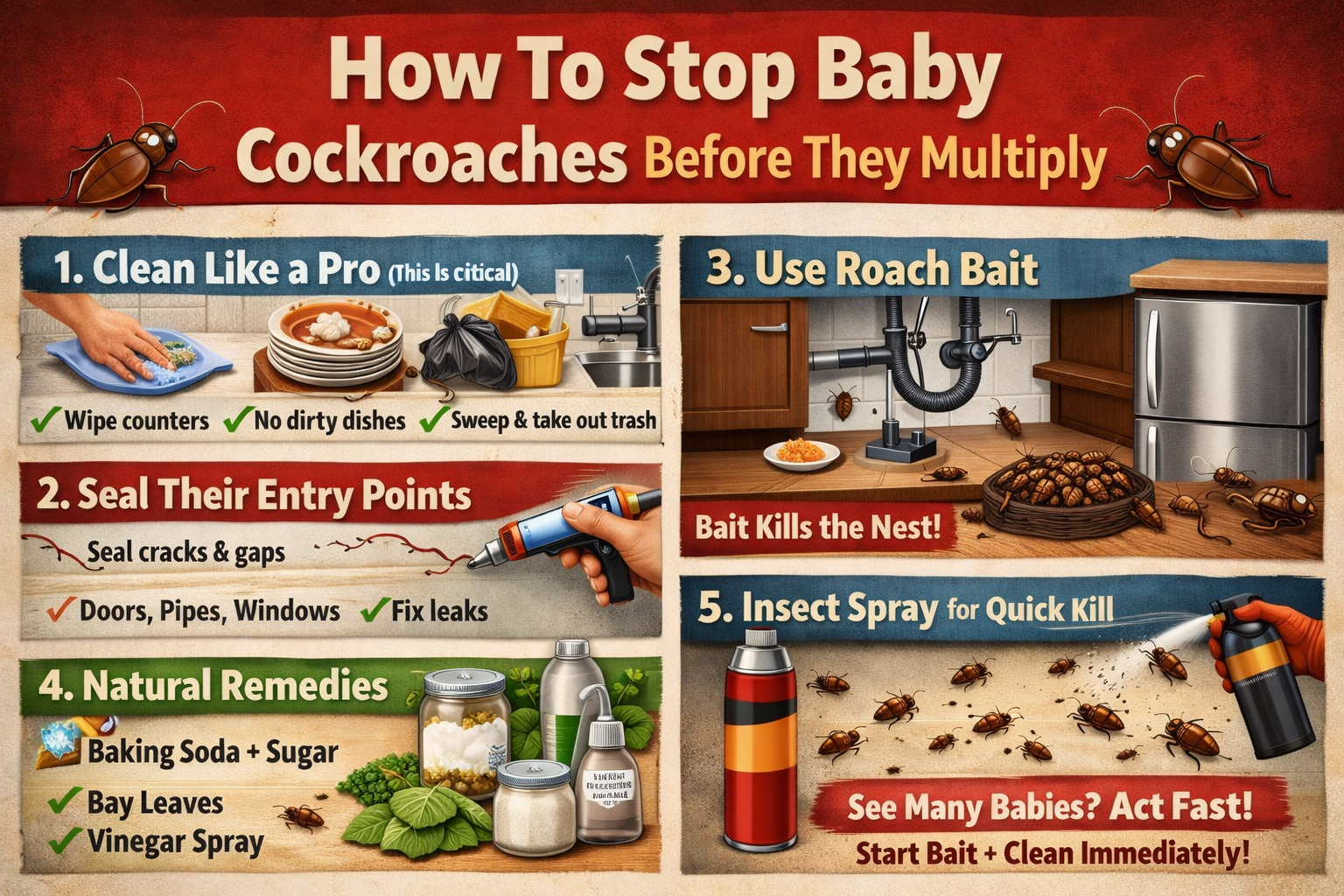
The Step-by-Step Eradication Plan
If you have confirmed that you have baby cockroaches in house, you must act systematically. Randomly spraying “bug spray” often makes the problem worse by scattering the colony.
Step 1: Sanitation and Starvation
Remove the “reward” for being in your home.
- Deep Clean: Move the fridge and stove. Vacuum up the crumbs and mop up the grease.
- Manage Trash: Use a trash can with a tight-sealing lid and empty it every evening.
- Pet Food: Never leave pet food bowls out overnight.
Step 2: Seal the Entry Points
Use silicone caulk to seal gaps around baseboards, windows, and where pipes enter the wall. If they cannot hide, they cannot survive.
Step 3: Use Gel Baits (The Pro Choice)

Gel baits are highly effective for nymphs. The babies eat the bait and return to the nest. When they die, other roaches consume the carcass and the poison, creating a domino effect that can wipe out the entire colony.
Step 4: Insect Growth Regulators (IGRs)
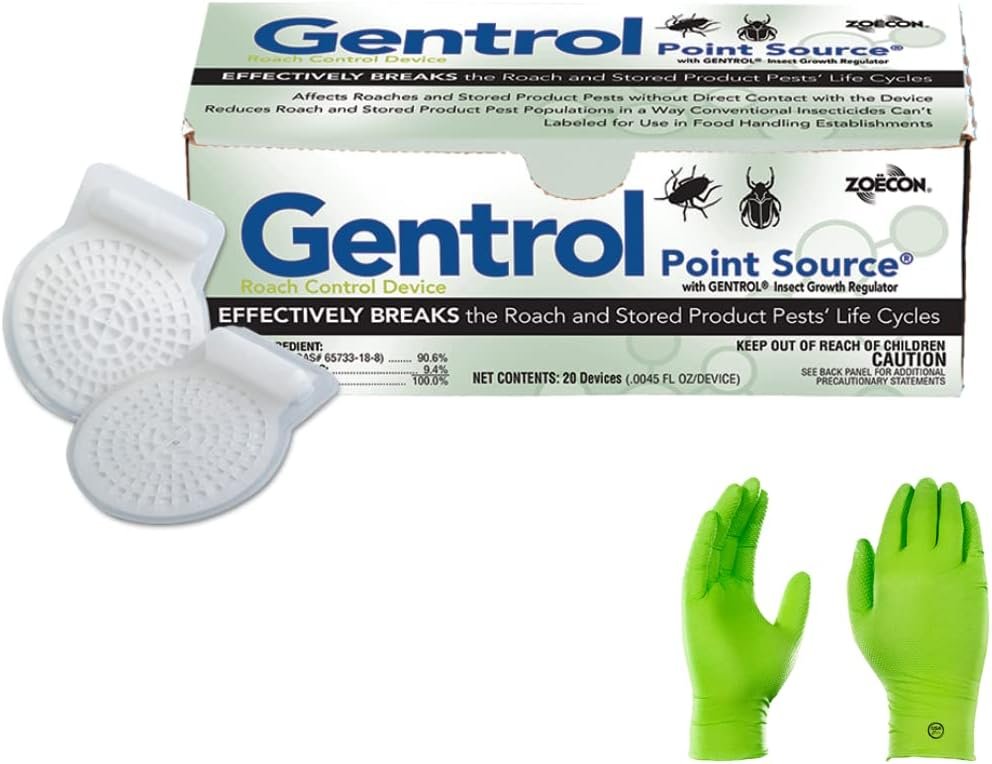
Since you are dealing with babies, IGRs are your best friend. These chemicals mimic juvenile hormones, preventing the nymphs from ever reaching sexual maturity. They can’t breed, and the cycle of infestation is broken.
When to Seek Professional Help
DIY methods work well for minor incursions, but certain species—particularly the German Cockroach—are notoriously difficult to eliminate. According to the Environmental Protection Agency (EPA), Integrated Pest Management (IPM) is the most sustainable way to handle infestations, often requiring professional-grade tools.
If you are seeing babies in multiple rooms, or if you have tried baiting for more than two weeks with no reduction in sightings, it is time to call in the experts. Professionals have access to non-repellent residuals and specialized equipment to reach deep into wall voids.
Prevent pests, see our guide on: How to Identify a Black Baby Roach & How to Kill Them Fast
FAQ: Managing Baby Roaches
How long does it take for a baby cockroach to become an adult?
It depends on the species and temperature. A German cockroach can reach maturity in as little as 50 to 60 days in a warm kitchen. Other species, like the American roach, may take six months to a year.
Can I use essential oils to get rid of them?
While peppermint or eucalyptus oils can act as mild repellents, they will not kill a breeding colony. If you have baby cockroaches in house, you need more robust solutions like baits or IGRs.
Are baby roaches more dangerous than adults?
In terms of disease, they are equally dangerous. However, they are a “greater” threat because their presence proves that the roaches are successfully breeding in your environment.
Where do baby roaches hide?
They prefer dark, tight spaces. Common hiding spots include behind picture frames, inside electronics (like clocks or microwaves), under the lip of the countertop, and inside the folds of grocery bags.
Do I need to throw away my food?
Any open dry goods (cereal, flour, sugar) that show signs of roach activity or are in unsealed cardboard boxes should be discarded. Switch to airtight plastic or glass containers to protect your pantry.
Conclusion
Finding baby cockroaches in house is a stressful discovery, but it is a problem that can be solved with a disciplined approach. Remember that these pests are a symptom of environmental factors—moisture, heat, and food. By addressing these root causes and using targeted treatments like gel baits and IGRs, you can stop the lifecycle of the infestation.
Key Takeaways:
- Identify the species to choose the right treatment.
- Eliminate all moisture and food sources immediately.
- Use IGRs to prevent nymphs from becoming breeding adults.
- Don’t wait; a small group of babies can become hundreds of adults in just a few months.
Be proactive, stay consistent with your cleaning, and don’t hesitate to reach out for professional assistance if the situation scales beyond your control.