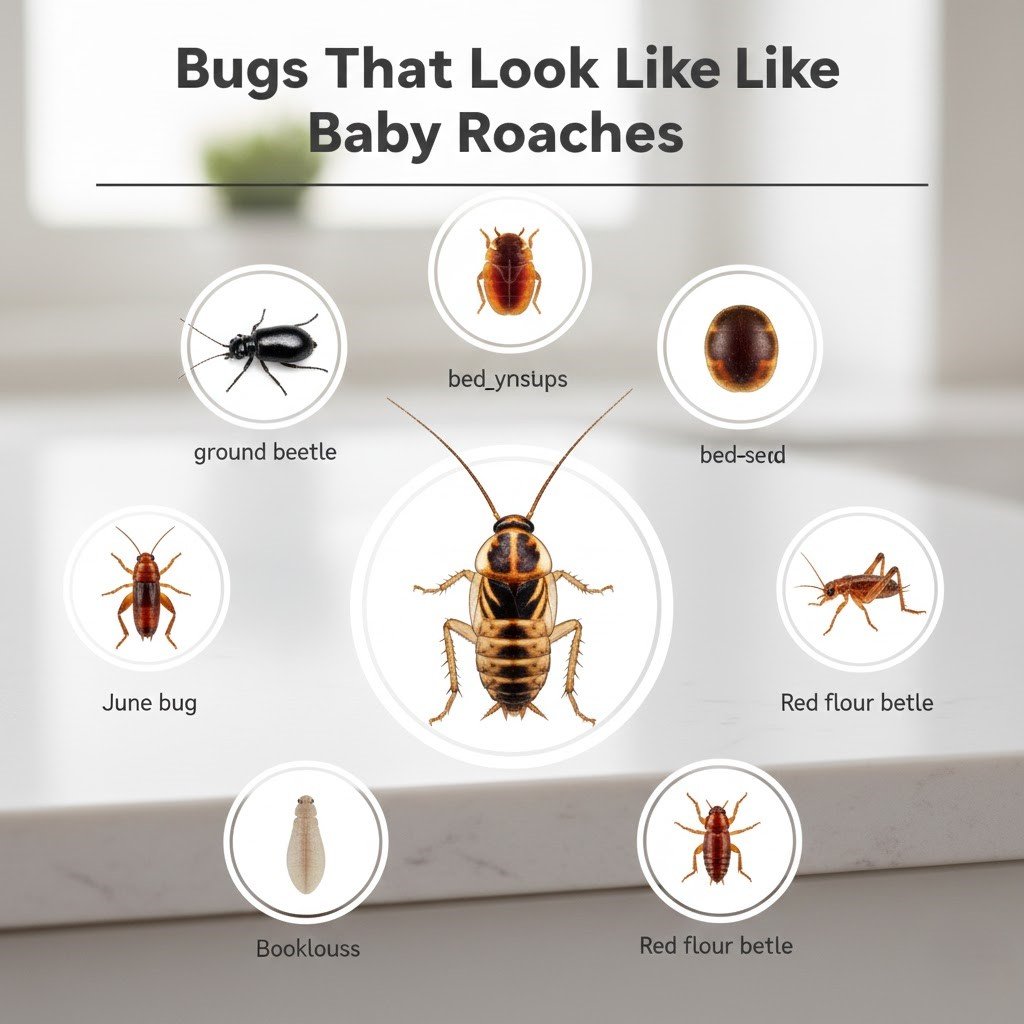
Finding a small, scurrying brown insect in your kitchen or bathroom is enough to make anyone’s heart sink. The immediate thought is usually a cockroach infestation. However, many homeowners are surprised to learn that there are several bugs that look like baby roaches but are actually harmless—or at least require a completely different treatment plan.
Mistaking a ground beetle or a cricket for a roach can lead to unnecessary stress and expensive, ineffective DIY treatments. To protect your home and your peace of mind, you need to understand the nuances of pest identification. In this comprehensive guide, we will analyze the physical traits of common mimics and explain the crucial differences in the baby roach vs cockroach development cycle.
The Anatomy of a Suspect: What Does a Real Baby Roach Look Like?
Before we look at the imposters, we must define the “suspect.” A baby cockroach, known as a nymph, typically has a flat, oval-shaped body and very long, whip-like antennae.
Unlike many other insects, roaches go through incomplete metamorphosis. This means the baby roach vs cockroach adult comparison is mostly a matter of size and wings. Nymphs are smaller, usually darker, and lack fully developed wings. If you see a tiny bug with a “segmented” look and two small spikes (cerci) protruding from its rear, you are likely looking at a genuine German or American cockroach nymph.

Caption: While they share a similar color, notice the longer antennae and flatter body of the roach nymph on the left compared to the beetle.
1. German Cockroach Nymphs (The Baseline)
If you are searching for bugs that look like baby roaches, the German Cockroach nymph is usually the “gold standard” of pests you want to avoid.
- Appearance: Dark brown to black with a distinctive light-colored stripe running down the middle of their back.
- Behavior: They are nocturnal and incredibly fast. If you turn on a light and they disappear into a crack, it’s a bad sign.
2. Ground Beetles
Ground beetles are perhaps the most common insects mistaken for cockroaches. Because they are dark, shiny, and fast, they frequently trigger false alarms.
- The Difference: Beetles have hard, shell-like wing covers (elytra) that meet in a straight line down the center of their back. Roaches have softer, leathery wings or no wings at all as babies.
- Habitat: Beetles are usually “accidental invaders” that wander in from the garden. They don’t want to be in your kitchen and won’t thrive there like a roach would.
3. Bed Bugs
At a very young stage, bed bugs are often categorized as bugs that look like baby roaches. However, their habits are vastly different.
- Appearance: Bed bugs are rounder and flatter, resembling an apple seed. They lack the long, dual antennae of a roach.
- The “Tell”: If you find these bugs in your kitchen, they are likely roaches. If you find them in the seams of your mattress or on your headboard, they are bed bugs.
4. Crickets (Specifically Field or Camel Crickets)
Crickets share the long antennae and jumping legs that can confuse a frantic homeowner.
- The Difference: Look at the hind legs. Crickets have large, powerful thighs designed for jumping. Roaches have six legs of relatively similar thickness designed for sprinting.
- Sound: If the “baby roaches” in your home are chirping, you can breathe a sigh of relief—they are crickets.
5. Booklice (Psocids)
If you see tiny, almost translucent bugs that look like baby roaches near your bookshelves or in damp pantries, you might be looking at Booklice.
- Size: These are much smaller than even the youngest roach nymph, usually only 1-2mm long.
- Diet: They feed on mold and fungi found on old paper or damp cardboard, whereas roaches seek out food scraps and grease.
6. Wood Cockroaches
This is a tricky one. Wood roaches are technically cockroaches, but they are not the “pest” variety.
- Behavior: They live outdoors in woodpiles and mulch. Unlike the German cockroach, they are attracted to light.
- Identification: If you see a roach-like bug flying toward your porch light or crawling on an outdoor screen, it’s likely a wood roach, which cannot survive or breed effectively inside your home.
7. June Bugs and June Beetles
In the early summer months, these clumsy fliers often end up inside homes.
- Appearance: They are much more “round” and bulbous than the flat, sleek roach.
- Movement: June bugs are notoriously bad at navigating. If the bug is bumping into walls and landing on its back, it is likely a beetle, not a highly agile cockroach.
Comparison Table: Is It a Roach?
| Feature | Baby Cockroach | Ground Beetle | Cricket |
| Antennae | Long, hair-like | Short to Medium | Long, thin |
| Body Shape | Flat, oval | Hard-shelled, oval | Cylindrical/Humped |
| Movement | Rapid scuttle | Fast crawl | Jumps/Hops |
| Wings | None (Nymphs) | Hard covers | Folded on back |
| Light | Hates light | Neutral | Neutral |
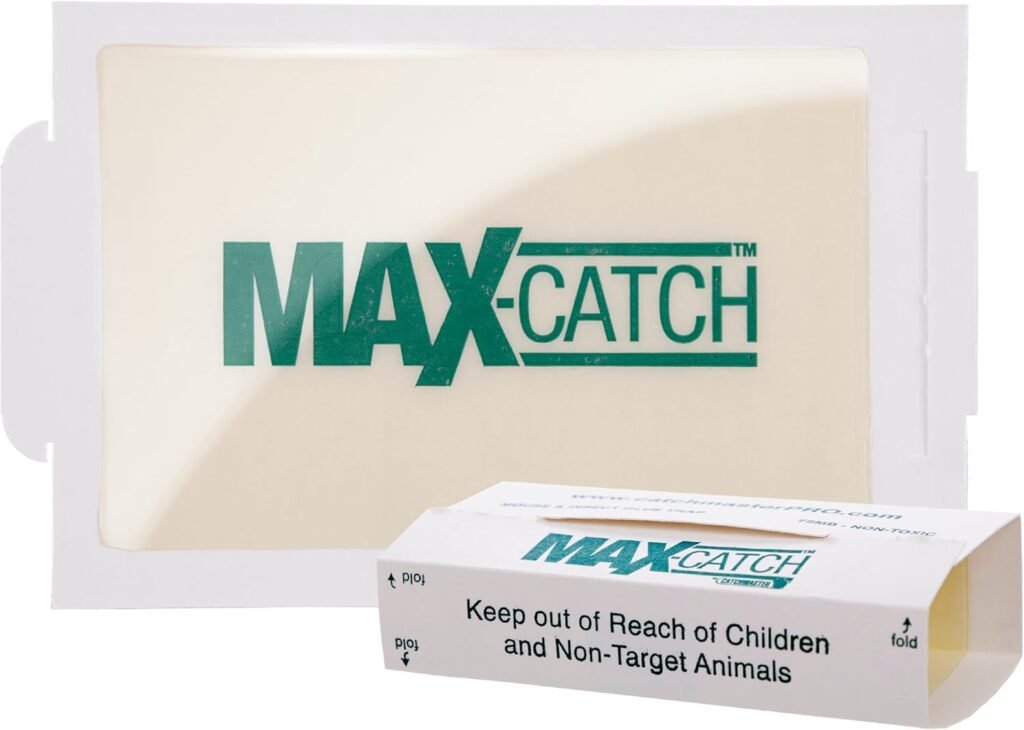
Product: Catchmaster Cricket & Roach Glue Traps
READY TO USE: Insect and Mouse glue traps are intended for use without mouse bait. For best use, leave the mouse trap with paper on so pests can acclimate to the trap, then place the sticky traps along known or suspected rodent pathways.
Why Identification Matters for Your Health
According to the Environmental Protection Agency (EPA), cockroaches are significant contributors to indoor asthma triggers and can carry salmonella. Identifying whether you have bugs that look like baby roaches or actual nymphs is the first step in protecting your family’s health.
If the pest is a beetle, you can simply seal a gap under your door. If the pest is a German roach nymph, you need a comprehensive baiting and sanitation plan to prevent a population explosion.
Identifying the Nest: Where to Look
If you suspect you have found actual baby cockroaches, you need to look for where they live. They prefer “warm, dark, and damp” environments.
- Behind the Refrigerator: The motor provides constant warmth.
- Inside Cabinet Hinges: A favorite spot for German roaches to hide their egg cases (oothecae).
- Under Sinks: Constant access to moisture from pipes.

Caption: Droppings that look like coffee grounds are a definitive sign that those tiny bugs are roaches, not beetles.
Professional Assistance and Next Steps
Misidentifying a pest can lead to weeks of wasted effort. Many people spray “bug bombs” for what they think are roaches, only to find the problem persists because the insects were actually wood-boring beetles or moisture-seeking crickets. Conversely, ignoring a “few small beetles” that are actually German roach nymphs can lead to a full-scale infestation in under a month.
If you aren’t 100% certain what you’re dealing with, getting an expert opinion is the fastest and most cost-effective way to resolve the issue. You can identify baby cockroaches to avoid unnecessary treatments and wasted time.
FAQ Section
How can I tell the difference between a baby roach vs cockroach adult?
The main difference is size and reproductive capability. Adults have fully developed wings and are capable of laying eggs. Baby roaches (nymphs) are smaller, wingless, and often have darker coloration to help them hide in small cracks.
Why do I keep finding bugs that look like baby roaches in my bathroom?
Bathrooms provide the moisture that many roach-lookalikes crave. If the bugs are very small and jumping, they may be springtails. If they are fast and flat, they are likely roach nymphs attracted to the humidity.
Do baby roaches bite?
While cockroaches are physically capable of biting, it is extremely rare. They are far more likely to run away from you. The danger of roaches comes from the bacteria they carry, not their bite.
Can I use vinegar to kill baby roaches?
Vinegar is a great cleaning agent, but it is not an effective pesticide for an infestation. It may kill a single bug on contact by drowning it, but it will not destroy the nest or deter other roaches.
What is the most common bug mistaken for a roach?
The Ground Beetle is the most frequent culprit. Because they are similar in size and color, and both are active at night, many people assume the worst when they see a beetle on their floor.
Conclusion
Distinguishing between real pests and bugs that look like baby roaches is essential for maintaining a clean and stress-free home. While many insects share the brown, oval-shaped characteristics of a nymph, the details—such as antennae length, leg structure, and wing covers—tell the true story.
If you have confirmed a baby roach vs cockroach presence in your home, remember that time is of the essence. Cockroaches reproduce exponentially, and early intervention is the key to a quick resolution. Take a clear photo of the insect if possible, clean up any standing water or food debris, and consult with a professional to ensure your home remains a pest-free sanctuary.