There are few things as unsettling as a cockroach scurrying across your floor, but the idea of one taking flight adds an entirely new level of panic to a homeowner’s day. If you have spotted a small, dark insect in your home, your first instinctual question is likely: Do baby cockroaches fly?
The short answer is a definitive no. However, understanding why they don’t fly—and what you might be seeing instead—is crucial for effective pest management. If you see a small flying insect, it is either a different species entirely or an adult roach of a smaller variety. Mistaking a baby roach for a flying pest can lead to the wrong treatment plan, allowing a real infestation to grow unchecked. In this guide, we will break down the biology of roach wings, how to identify nymphs, and why “can baby roaches fly” is one of the most misunderstood questions in pest control.
The Biology of Flight: Why Nymphs Are Grounded
In the world of entomology, baby cockroaches are known as nymphs. Unlike mammals, which are born as miniature versions of adults, cockroaches undergo an incomplete metamorphosis.
The Development of Wings
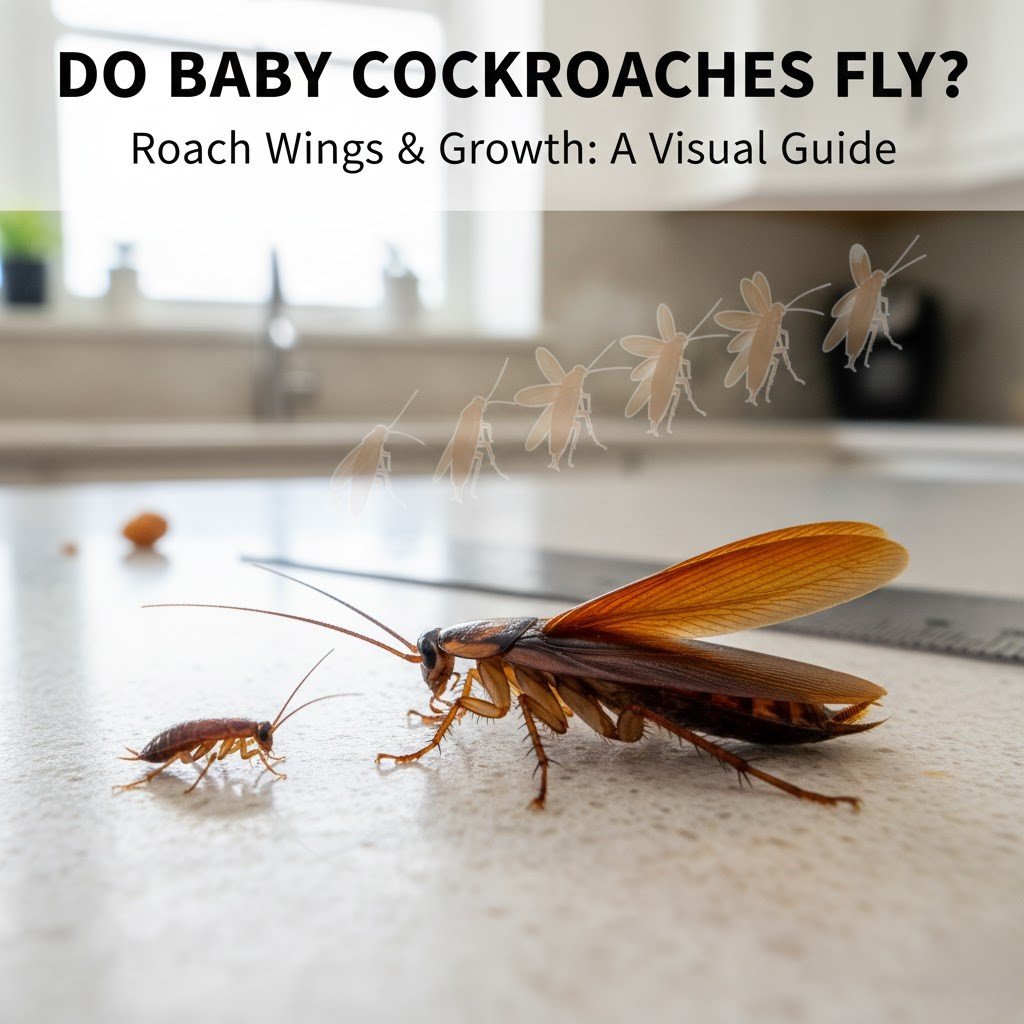
When a cockroach hatches from its egg case (ootheca), it emerges as a tiny, pale nymph. At this stage, they lack the one anatomical feature required for flight: functional wings.
- Wing Pads: As nymphs grow and molt (shed their skin), they begin to develop small “wing pads.” These are visible as slightly thickened areas on the back of the thorax, but they are not wings and cannot be used for any form of lift.
- Final Molt: It is only during the final molt into adulthood that a cockroach develops fully functional wings.
- Species Variation: Even among adults, not all species use their wings. For example, the common German cockroach has wings but almost never flies, whereas the American cockroach uses its wings to glide from high places.
Physical Identification
If you see an insect that looks like a roach and is currently in the air, you are not looking at a nymph. Baby cockroaches in the kitchen or bathroom will always be grounded. If the insect is flying, it is likely an adult or a lookalike such as a moth, a beetle, or a winged termite.
Can Baby Roaches Fly? Common Misidentifications
The reason many people ask can baby roaches fly is that they frequently encounter other small, winged insects that share the same brown, oval-shaped characteristics.
1. The Wood Roach
As discussed in our wood roach identification guide, adult wood roaches are often mistaken for nymphs of larger species because of their size. Adult male wood roaches are strong fliers and are highly attracted to lights. If a small brown bug flies toward your porch light, it’s likely an adult wood roach, not a baby version of a house roach.
2. Winged Termites (Swarmers)
During certain times of the year, termites grow wings to find new nesting sites. Because they are small and dark, they are often confused with baby cockroaches. However, termites have straight antennae and equal-length wings, while roaches have long, whip-like antennae.
3. Flying Beetles
Many small beetles, such as the June bug or cigarette beetle, are brown and roughly the size of a roach nymph. These beetles are capable of flight and often end up indoors by accident.

Cockroach nymphs (babies) possess wing pads that are physically incapable of flight; only adults develop the necessary musculature and wing surface area.
Why You Should Worry If You See “Non-Flying” Babies
While it might be a relief to know that the babies won’t fly at your face, seeing a baby cockroach is actually a more significant warning sign than seeing a single flying adult.
An adult roach (especially a flying species like the Smokybrown or American roach) might have simply flown in through an open window. However, a baby roach signifies an active breeding population.
The Proximity of the Nest
Nymphs are not as mobile as adults. They tend to stay very close to the location where they hatched. If you find nymphs in your kitchen, the nest—complete with a female and dozens of other eggs—is likely within a few feet of that spot.
| Roach Species | Do Adults Fly? | Adult Size | Identification Tip |
| German | Rarely/Never | 1/2 inch | Two dark stripes on the head. |
| American | Yes (Gliding) | 2 inches | Large, reddish-brown. |
| Brown-Banded | Yes (Males only) | 1/2 inch | Two light bands across wings/back. |
| Oriental | No | 1 inch | Very dark, “greasy” appearance. |
Understanding the Molting Process
To understand why the question do baby cockroaches fly is so central to identification, we have to look at how they grow. A cockroach will molt between 6 and 14 times before becoming an adult.
- Instar 1-3: The roach is tiny, often dark, and has no visible wing structures.
- Middle Instars: Small wing pads begin to appear. The roach grows larger but remains a “crawler.”
- Final Stage: The roach sheds its exoskeleton one last time. It emerges white (this is often called an “albino roach,” though it is just a temporary state) and its wings expand and harden.
This biological timeline is why you will never see a “baby” in flight. If the wings are functional, the roach is biologically an adult and capable of reproduction.
Habitat and Behavior of Nymphs
Since they cannot fly, baby roaches rely on their incredible speed and ability to squeeze into microscopic cracks.
- Hiding Spots: They prefer the undersides of tables, the interior of cabinet hinges, and the spaces behind baseboards.
- Diet: Nymphs eat the same things as adults but are more prone to scavenging the “fecal smears” left by adult roaches, which contain essential bacteria for their development.
- Moisture: Because they are smaller, nymphs dehydrate faster than adults. They are almost always found near a water source, such as a leaky pipe or a pet’s water bowl.
For more information on where these pests hide, see our guide on eliminating roaches in kitchen cabinets.
Managing a Non-Flying Infestation
If you’ve confirmed that you have crawling nymphs in your home, your strategy should focus on bottom-up elimination.
Step 1: Baiting the “Crawlers”
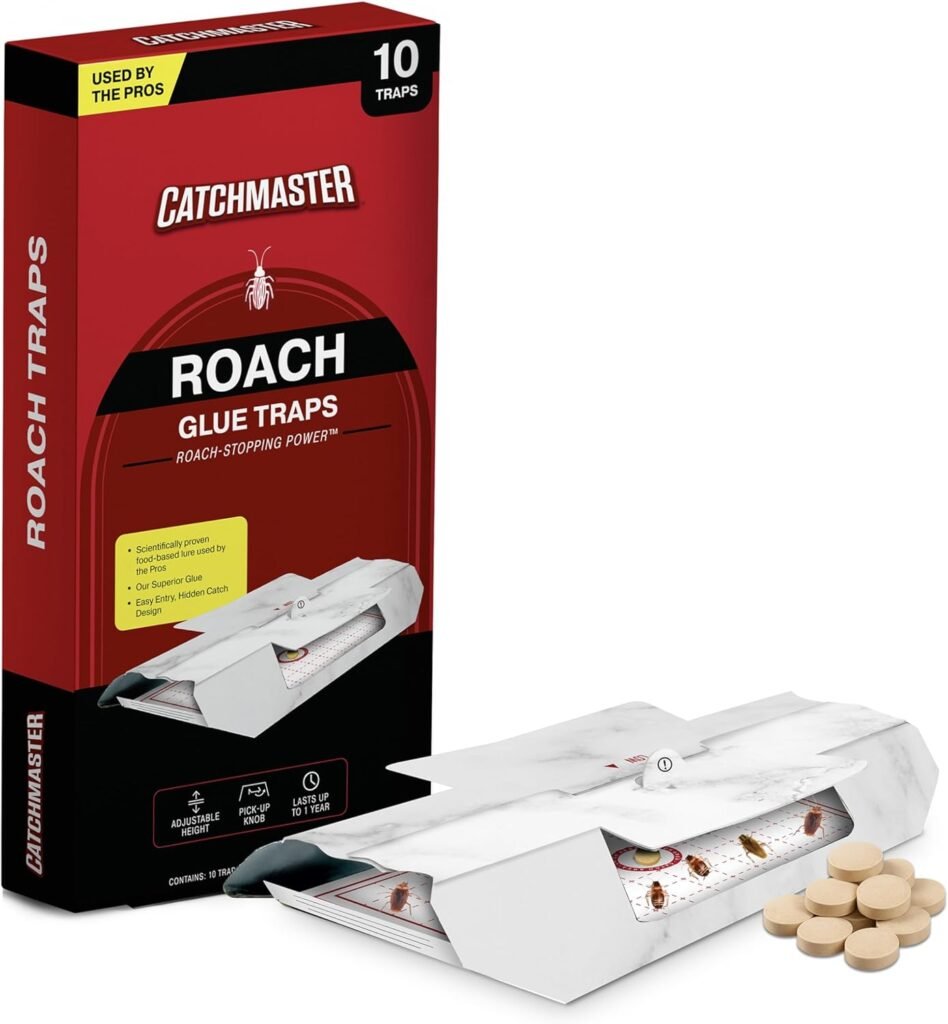
Since nymphs don’t fly, they spend all their time on surfaces. This makes them highly susceptible to gel baits. Place bait in areas where you see activity. The nymphs will ingest the bait and carry it back to the hidden crevices where the rest of the colony hides.
Step 2: Growth Regulation
The most effective way to stop baby roaches is to use an Insect Growth Regulator (IGR). These chemicals mimic the roach’s natural hormones. When a nymph is exposed to an IGR, it cannot complete its final molt. This means it will never develop wings, never fly, and—most importantly—never be able to reproduce.
When to Call the Professionals
Mistaking a flying beetle for a baby roach can lead to unnecessary panic. Conversely, assuming a crawling nymph is “just a bug” can lead to a massive infestation. If you find yourself constantly searching for the answer to do baby cockroaches fly because you keep seeing small insects in your home, it’s time for a professional assessment.
Roaches are experts at hiding. For every one nymph you see scuttling across the counter, there could be dozens more behind your walls. Professional pest control can identify the exact species and lifecycle stage, ensuring the treatment is targeted and effective.
FAQS: Flight & Wings
Based on common search intent and homeowner concerns, here are the answers to the most frequent questions regarding roach flight.
Do baby cockroaches have wings?
No, baby cockroaches (nymphs) do not have functional wings. They have small “wing pads” that grow larger with each molt, but they only develop full wings once they reach adulthood.
If a small roach flies at me, what is it?
It is likely an adult of a smaller species, such as a German cockroach (though they rarely fly) or a Brown-banded cockroach. It could also be a Wood roach, which is an outdoor species frequently attracted to indoor lights.
Can baby roaches jump?
While they don’t jump like crickets or fleas, cockroaches can “scurry” so quickly that it appears like a jump. They use their powerful legs to launch themselves into cracks or off surfaces if they feel threatened.
Why do some cockroaches fly and others don’t?
Flight is energy-intensive. Most indoor roaches, like the German roach, find everything they need on the ground and have evolved to be incredible runners. Outdoor species use flight to find mates or escape predators.
How can I tell a baby roach from a bed bug?
Both are small and brown, but baby roaches are more oval and have two small “spikes” (cerci) on their rear end. Bed bugs are flatter, rounder, and move much slower than the lightning-fast roach nymph.
Do flying cockroaches bite?
Cockroaches in general rarely bite humans. If they do, it is usually a result of an extreme infestation where food sources are scarce. Their flight is a defensive mechanism to escape, not an offensive one to attack.
Conclusion
To summarize the answer to the age-old question: do baby cockroaches fly? No, they do not. Flight is a privilege reserved for adult cockroaches who have completed their final molt. If you are seeing small, winged insects in your home that are taking flight, you are likely dealing with an adult of a smaller species or a different type of insect altogether.
However, the presence of wingless nymphs is a clear signal that your home has become a breeding ground. Because these babies are forced to stay on the ground, they are easier to target with baits and IGRs, but they also indicate that a nest is nearby.
Next Steps for Homeowners:
- Identify: Use the lack of wings to confirm you are looking at a nymph.
- Locate: Search for nests within 3-5 feet of where the nymph was found.
- Treat: Use IGRs to ensure those babies never reach the flying, breeding adult stage.
- Seal: Close up cracks and crevices to prevent new adults from flying in and starting the cycle over again.
By understanding the lifecycle and physical limitations of the cockroach, you can take control of your environment and ensure your home remains a pest-free zone.