
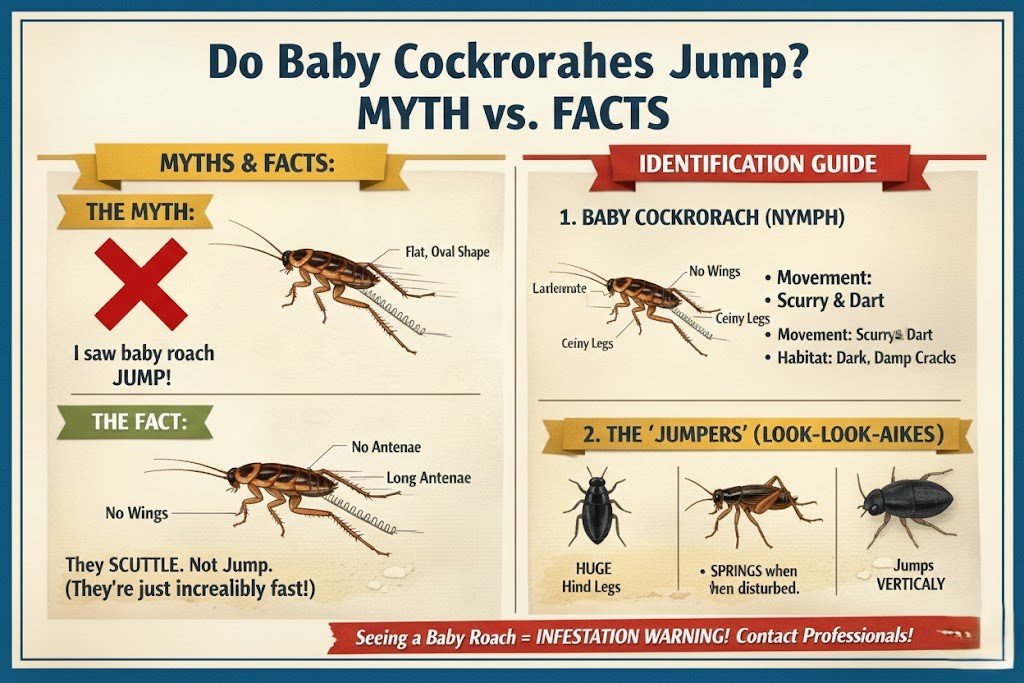
If you’ve ever turned on a kitchen light only to see a tiny insect vanish in the blink of an eye, you know the feeling of immediate concern. In that split second, it may have looked like the insect leaped or sprang off the counter. This leads many homeowners to ask the startling question: Do baby cockroaches jump?
The answer to this question is vital because misidentifying a pest can lead to using the wrong treatment methods. If you are dealing with a jumping insect, you might have crickets or fleas; however, if it’s a cockroach, your strategy needs to shift toward colony eradication. In this guide, we will explore the movement mechanics of roaches, how small are baby cockroaches, and how to distinguish them from other jumping household pests.
The Short Answer: Do Baby Cockroaches Jump?
Technically, no, baby cockroaches do not jump in the way that fleas, crickets, or grasshoppers do. They do not possess the specialized, powerful hind legs (saltatorial legs) required to propel themselves into the air for height or distance.
However, many people think they see baby cockroaches jumping. This confusion usually stems from two things:
- Extreme Speed: Cockroaches are some of the fastest-moving insects on earth. Their ability to dart from a standstill can look like a “leap” to the human eye.
- Falling with Style: If a baby cockroach is on a vertical surface or a ceiling and feels threatened, it will simply release its grip. This “controlled fall” often looks like a jump as they disappear into a crack or behind a cabinet.
Why the Myth Persists
When you wonder do baby cockroaches jump, you are likely witnessing a “startle response.” Cockroaches are highly sensitive to air currents and vibrations. When they detect a threat, their nervous system triggers a rapid-fire escape. Because they can change direction up to 25 times per second, their movement can appear erratic and “jumpy.”
How Small Are Baby Cockroaches?
To identify if the insect you saw was a roach, you need to understand their physical scale. So, how small are baby cockroaches exactly?
When they first hatch from their egg case (ootheca), baby cockroaches, or nymphs, are incredibly tiny. A German cockroach nymph can be as small as 3 millimeters (about 1/8 of an inch). This is roughly the size of a grain of coarse black pepper.
Size by Life Stage
Cockroaches undergo “incomplete metamorphosis,” meaning the babies look like miniature, wingless versions of the adults.
- First Instar (Newborn): 3mm. Often translucent or dark brown.
- Middle Stages: 5mm to 10mm. They begin to darken and develop more defined features.
- Final Stage Nymph: 12mm+. They look like small adults but lack fully functional wings.
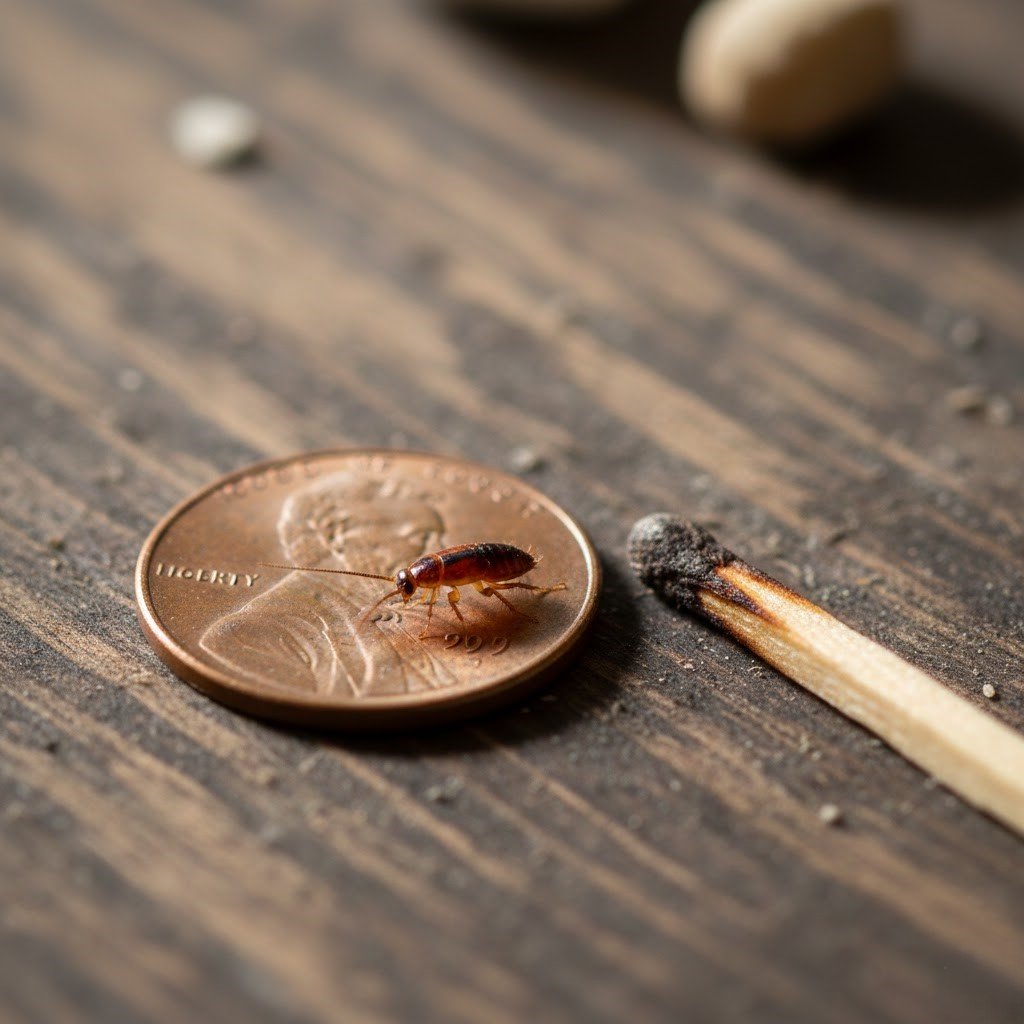
To understand how small baby cockroaches are, compare them to a penny; they are often smaller than the “Y” in “LIBERTY.”
If It Jumps, What Is It? (Identifying the Imposters)
If you are certain the insect you saw actually leaped into the air, you are likely dealing with one of the following “imposter” pests. Each of these requires a different treatment plan than a cockroach infestation.
1. Crickets
Crickets are the most common insects mistaken for jumping roaches. They have similar brown or black coloring.
- The Difference: Crickets have large, bent hind legs and long, prominent antennae. They will jump several inches high when disturbed.
2. Springtails
These are tiny, moisture-loving insects often found in bathrooms or near damp soil.
- The Difference: They are much smaller than even the smallest baby roach. They have a specialized appendage called a furcula that acts like a spring, launching them into the air when they are startled.
3. Fleas
If you see something “jumping” on your carpet or near your pets, it isn’t a roach.
- The Difference: Fleas are laterally flattened (side-to-side) and are designed for vertical jumping. Baby roaches are dorsoventrally flattened (top-to-bottom), designed for squeezing into thin cracks.
4. Click Beetles
These beetles have a unique mechanism that allows them to “snap” their bodies, creating a clicking sound and launching themselves into the air.
- The Difference: Click beetles have a much harder shell and an elongated, pill-like body shape compared to the oval shape of a roach.
The Mechanics of Cockroach Movement
While we’ve answered “do baby cockroaches jump” with a no, their actual movement is far more impressive—and frustrating for homeowners.
Scurrying vs. Jumping
Cockroaches use a tripod gait. They move three legs at a time in a triangular pattern, which provides incredible stability and speed. This allows them to traverse uneven surfaces, climb walls, and even run across ceilings with ease. According to research from Harvard University, cockroaches can move at speeds equivalent to a human running at 200 miles per hour. This “blur” of motion is what often tricks the brain into thinking the insect jumped.
The Role of Wings
While baby roaches (nymphs) do not have wings, some species of adult roaches do. The Asian Cockroach and the Smokybrown Cockroach are capable of flight. If an adult roach “jumps” off a wall and begins to flutter, it is actually a clumsy form of flight, not a leap.
Why Baby Roaches are a Major Concern
Finding baby roaches—regardless of whether they jump or run—is a serious red flag. Because they are so small, they represent a hidden population.
Signs of a Growing Nest
- Pepper-like Specks: Small black droppings found in the corners of drawers.
- Shed Skins: As baby roaches grow, they molt. Finding translucent, roach-shaped “shells” means they are actively maturing in your home.
- Oothecae: Empty egg cases (which look like tiny dried beans) indicate that dozens of nymphs have already hatched.
The “Nursery” Effect
Baby roaches do not travel far from their food source. If you see a nymph, the nest is likely within 10 to 15 feet. Common “nurseries” include the back of refrigerators, under sinks near leaky pipes, or inside the motor of a microwave.
How to Treat a Baby Roach Infestation
Since baby roaches don’t jump, they are reliant on crawling through predictable paths. You can use this against them.
1. Identify the Entry Points
Use a flashlight to inspect the gaps behind your cabinets. Because we know how small are baby cockroaches, you must look for even the tiniest cracks. Seal these with silicone-based caulk.
2. Use Growth Regulators (IGRs)
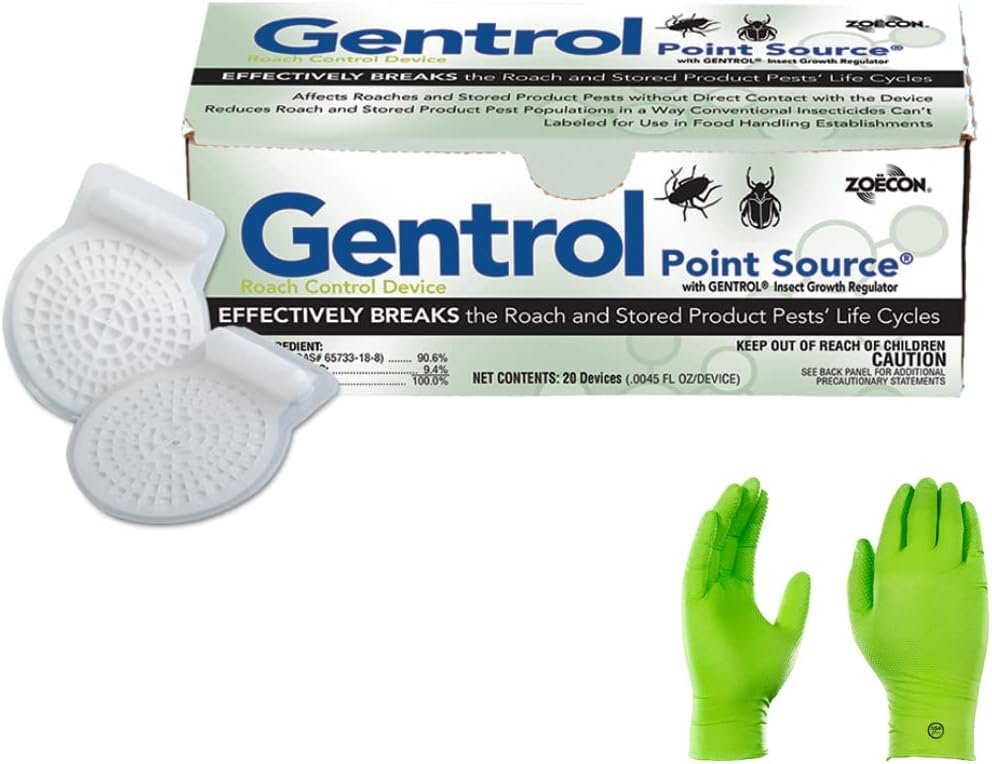
Traditional pesticides kill on contact, but they might miss the hidden babies. An Insect Growth Regulator is a chemical that prevents baby roaches from molting correctly. If they cannot molt, they cannot become breeding adults, effectively “sterilizing” the population.
3. Baiting Strategy
Place gel baits in areas where you have seen movement. Baby roaches are foragers. They will consume the bait and return to the nest, sharing the poison with others through a process called “horizontal transfer.”
4. Humidity Control
Baby roaches have thinner exoskeletons than adults and dry out easily. Using a dehumidifier in basements and fixing leaky faucets can make your home a hostile environment for nymphs.
Professional Insights: When DIY Isn’t Enough
Many homeowners spend hundreds of dollars on “bug bombs” and sprays only to find that the baby roaches return within weeks. This is because DIY foggers often fail to penetrate the deep crevices where nymphs hide. Furthermore, the “jumping” sensation people report often indicates the roaches are living in high-up places like ceiling crown molding or attic spaces, which are difficult to treat without professional equipment.
Managing a pest problem requires a tactical approach that considers the biology and behavior of the specific species in your home. If you are struggling to identify the pests in your kitchen or are worried about a recurring infestation, it is time to consult with an expert who can provide a targeted, long-term solution.
FAQ Section
1. Do baby cockroaches jump when you try to hit them?
No, they don’t jump. They use a rapid “scurry” maneuver. Their escape reflex is incredibly fast, and they can move in a new direction in milliseconds, which can look like a hop or a jump if they are moving from a surface to the floor.
2. Are there any roach species that actually jump?
There is only one known species, the Leaproach (Saltablattella montistabularis), discovered in South Africa, which has legs modified for jumping. However, this species is not a household pest and is not found in North America or Europe. Household roaches like the German, American, or Oriental varieties cannot jump.
3. How small are baby cockroaches when they first hatch?
They are roughly the size of a pinhead or a grain of pepper (about 3mm). Because of their size and dark color, they are often mistaken for dirt or small beetles.
4. Can baby roaches climb smooth surfaces?
Yes. Most common baby roaches have specialized pads on their feet (arolia) that allow them to climb smooth glass, plastic, and polished metal. This is why you may find them inside “sealed” Tupperware or climbing up mirrors.
5. Why do I see baby roaches but no adults?
Adult roaches are much more cautious and stay deeper in the walls. Nymphs are less experienced and often have to venture out further or at “wrong” times to find food if the adult population has already claimed the best spots.
6. If an insect jumps on me, is it a cockroach?
It is highly unlikely. If an insect jumps onto you, it is much more likely to be a cricket, a grasshopper, or a flea. Cockroaches generally try to move away from humans as fast as possible.
Read More Guide: How Big Are Baby Cockroaches? Identification and Prevention Guide
Conclusion
To summarize, do baby cockroaches jump? No, they lack the biological “spring” legs required for jumping. What you are seeing is a combination of lightning-fast running and gravity-defying climbing skills. Knowing how small are baby cockroaches—often no larger than a peppercorn—helps you realize just how easily they can hide in your home.
If you see a tiny, dark insect that runs rather than jumps, you are likely looking at a cockroach nymph. This discovery should be met with immediate action. By sealing cracks, using IGRs, and maintaining a dry, clean environment, you can stop the infestation before these tiny nymphs grow into a massive problem.
Next Steps for Homeowners:
- Check under your sink for moisture or leaks.
- Seal dry food in airtight containers to remove the nymphs’ food source.
- If you see more than two nymphs in a week, contact a professional to locate the nest.
Identifying the problem is half the battle. Now that you know what you’re looking at, you can take the necessary steps to protect your home.