Waking up with a mysterious red, itchy bump on your arm is enough to make anyone’s skin crawl. If you have recently spotted baby cockroaches in house areas like the kitchen or bathroom, your mind immediately goes to the worst-case scenario: do baby roaches bite?
The idea of a tiny, scavenging insect nibbling on you while you sleep is the stuff of nightmares. However, the reality of cockroach behavior is often misunderstood. While they aren’t predatory like bed bugs or mosquitoes, their presence still poses significant risks to your health and home environment.
In this exhaustive guide, we will answer the question “do baby roaches bite” with scientific accuracy, help you identify the signs of a nymph infestation, and provide actionable steps to ensure your family stays safe and bite-free.
The Scientific Answer: Do Baby Roaches Bite?
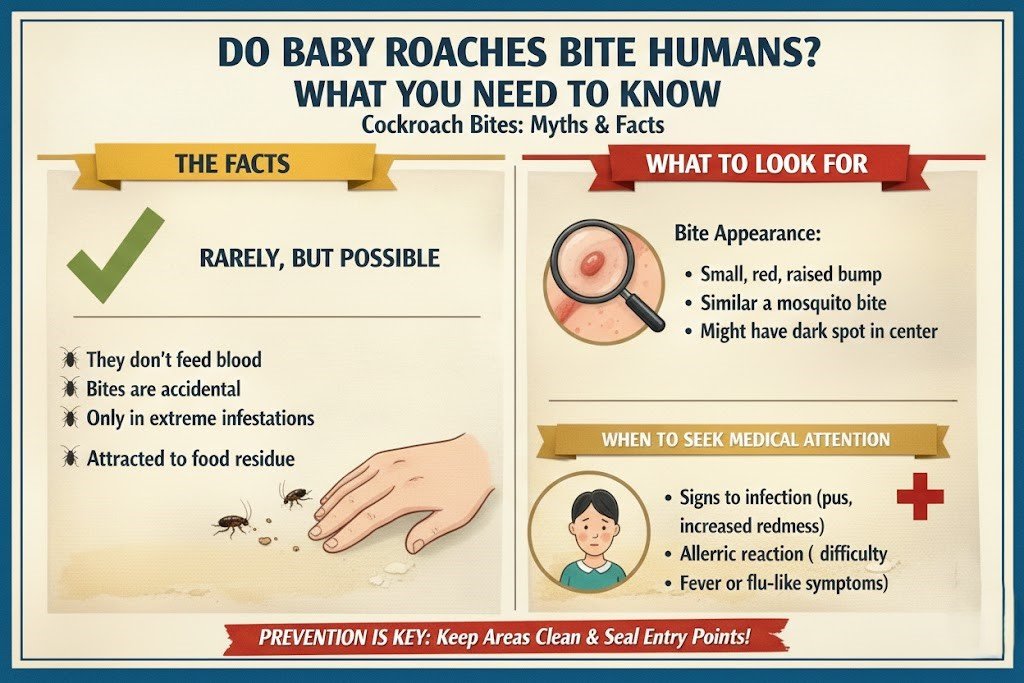
The short answer is: Yes, baby cockroaches can bite, but it is extremely rare. Unlike bed bugs, which require a blood meal to survive and grow, cockroaches are omnivorous scavengers. They do not view humans as a food source. Their diet consists primarily of starches, sweets, grease, and decaying organic matter.
Why and When They Bite
If a baby roach bites a human, it is usually a case of mistaken identity or extreme desperation.
- Food Residue: If you have crumbs or food oils on your skin or around your mouth while you sleep, a baby roach might accidentally nip you while trying to eat the residue.
- Overpopulation: In cases of severe infestations where the food supply is low, roaches may resort to nibbling on human skin, eyelashes, or fingernails to find moisture or nutrients.
- Self-Defense: If a roach is accidentally crushed or trapped against your skin, it may bite as a reflex.
The Anatomy of a Bite
Cockroaches have mandibles (mouthparts) designed for chewing, not piercing. Because a baby roach is significantly smaller and weaker than an adult, its bite is rarely powerful enough to break the skin deeply, but it can cause localized irritation.
Identifying a Baby Roach Bite vs. Other Pests
Because baby roach bites are so uncommon, many people mistake other pest issues for roach bites. If you have baby cockroaches in house vents or cabinets, don’t automatically assume they are the culprits for your skin irritation.
Appearance of a Roach Bite
- Shape: Usually a small, red, raised bump.
- Itchiness: They are often very itchy, similar to a mosquito bite.
- Clustering: Unlike bed bug bites, which often appear in a straight line or “row,” roach bites are usually singular and random.
- Size: Slightly larger than a bed bug bite but without the distinct “bullseye” often seen in tick bites.
Comparison Table: Is it a Roach Bite?
| Feature | Baby Roach Bite | Bed Bug Bite | Mosquito Bite |
| Primary Goal | Scavenging (Accidental) | Blood Meal (Mandatory) | Blood Meal (Mandatory) |
| Pattern | Singular/Random | Lines or Clusters of 3 | Random/Exposed Skin |
| Pain Level | Mild Pinch | Painless at first | Immediate itch |
| Location | Hands, feet, face | Anywhere on the body | Exposed limbs |
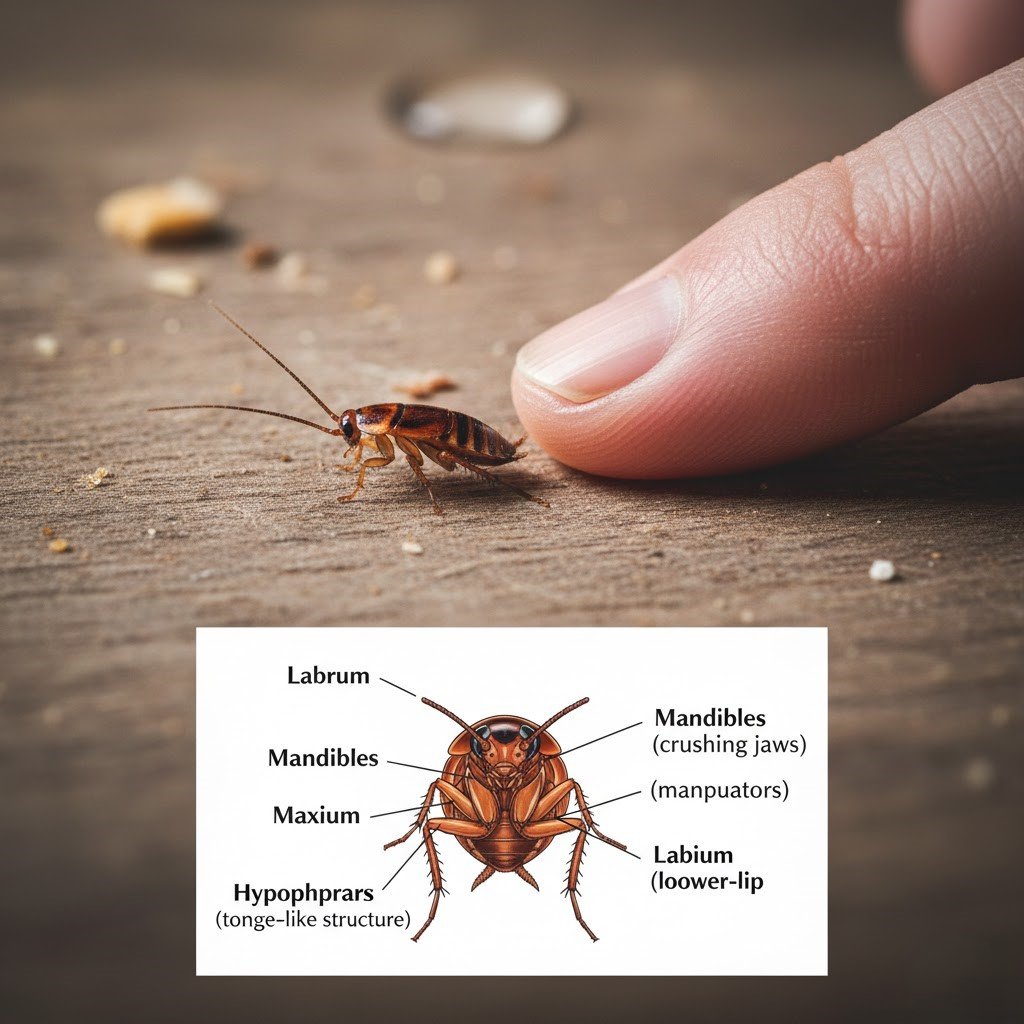
While baby cockroaches have mouthparts capable of chewing, they are significantly smaller than common biting insects.
Why Seeing Baby Cockroaches in House Areas is a “Red Flag”
While the risk of being bitten is low, seeing baby cockroaches in house structures is a major warning sign. It indicates that your home is not just a pitstop for a wandering adult; it is a breeding ground.
The Breeding Cycle
A single female German cockroach can produce an egg capsule (ootheca) containing up to 48 eggs. When these hatch, you are left with dozens of nymphs. If you see babies of different sizes, it means there are multiple generations living in your walls.
Health Risks Beyond Bites
Even if they never bite you, baby roaches are dangerous.
- Allergens: Nymphs shed their skins (molt) multiple times as they grow. These shed skins and their droppings contain proteins that trigger asthma and allergies, especially in children.
- Pathogens: Roaches crawl through sewers and trash. They carry bacteria like Salmonella and E. coli on their legs and bodies, which they then transfer to your kitchen counters and food.
- Odor: A large population of baby roaches produces a distinct, “musty” pheromone smell that can permeate a home.
Read More Guides: Why Am I Seeing Baby Roaches After Extermination?
Where Baby Roaches Hide (And Where They Might Bite)
If you are worried about “do baby roaches bite,” you need to know where they are most active at night. Baby roaches prefer tight, warm, and humid spaces.
- The Kitchen: Under the sink, behind the refrigerator, and inside the folds of dishwasher gaskets.
- The Bathroom: Inside medicine cabinets and around the base of the toilet.
- The Bedroom: This is where the concern for bites arises. Roaches may hide in bedside tables or headboards if you frequently eat in bed.
How to Prevent Baby Roach Bites and Infestations
Prevention is the most effective way to address the fear of “do baby roaches bite.” By making your home unattractive to them, you remove the possibility of an encounter.
1. The “Clean Bed” Rule
Never eat food in the bedroom. Even the smallest crumbs can attract a baby roach to your sleeping area. If you must eat in bed, change the sheets immediately after.
2. Seal the Cracks
Baby roaches are incredibly thin. They can enter your home through cracks in the baseboards or gaps around plumbing pipes. Use silicone caulk to seal these entry points, particularly in the kitchen and bathroom.
3. Eliminate Moisture
According to the National Center for Healthy Housing, moisture control is the #1 way to deter cockroaches. Fix leaky faucets and use a dehumidifier in damp basements. Without water, a baby roach will die within days.
4. Strategic Baiting
If you have already seen baby cockroaches in house areas, skip the “bug bombs.” These often just scatter the colony. Instead, use gel baits. The baby roaches eat the bait, return to the nest, and die, often being consumed by other roaches, which spreads the poison through the colony.
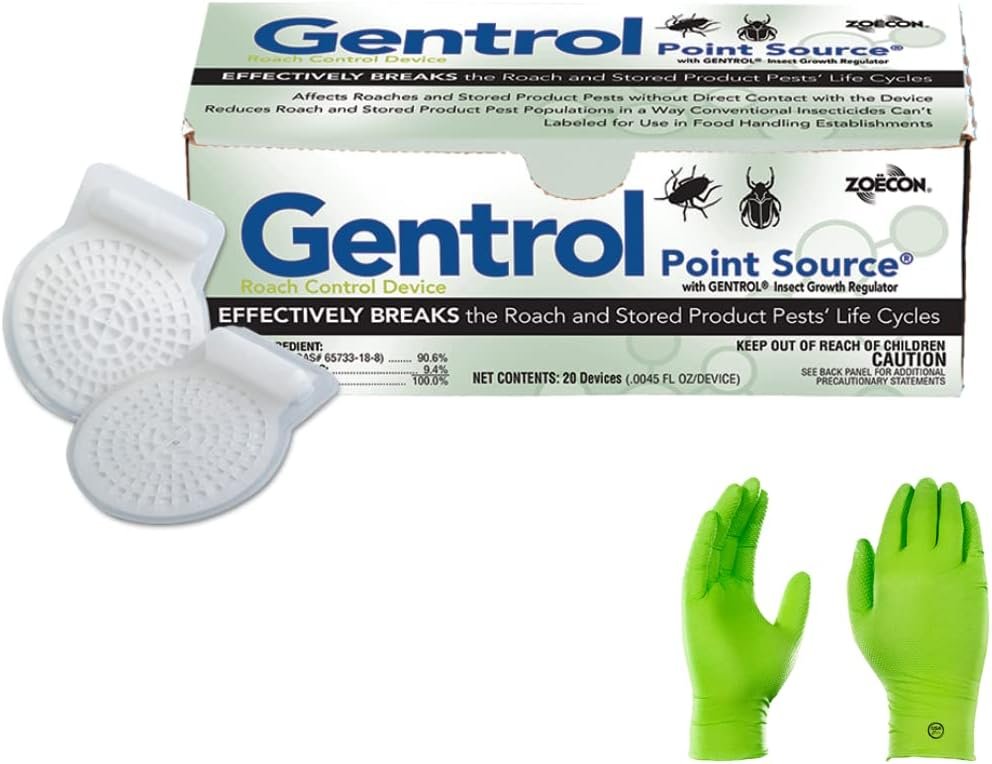
5. Use Insect Growth Regulators (IGR)
This is vital for baby roaches. An IGR is a chemical that prevents the nymph from molting and reaching adulthood. If they can’t become adults, they can’t reproduce, and the infestation naturally dies out.
Dealing with the Mental Stress of Pests
The psychological toll of a pest infestation is real. The “itchy” feeling you get just thinking about roaches can lead to insomnia and anxiety. It is important to remember that roaches are a common biological issue and not a reflection of your personal character or cleanliness.
Modern pest control has come a long way from the heavy, smelly sprays of the past. Today, integrated pest management focuses on biology and behavior to solve the problem at the source. If you find that your DIY efforts aren’t stopping the sightings of baby roaches, it may be time to consult with a professional who can provide a comprehensive plan tailored to your home’s layout.
FAQ Section
1. Do baby roaches bite while you are sleeping?
It is possible but very rare. They might crawl on you if they detect food residue or skin oils. If they “bite,” they are usually just tasting the salt or oils on your skin.
2. Are baby roach bites poisonous?
No, baby roaches do not have venom. However, because they carry bacteria, a bite can easily become infected. If you suspect a bite, wash it with soap and water immediately and apply an antiseptic.
3. What do baby roaches look like?
They look like smaller, wingless versions of adult roaches. Depending on the species, they may be dark brown or black, often with a lighter stripe or “band” on their backs.
4. Why am I seeing baby roaches but no adults?
Adult roaches are much better at hiding and are more cautious. Baby roaches are less “street smart” and often have to venture out further to find food if the adult roaches are hogging the best spots.
5. Can baby roach bites cause a rash?
Yes. The saliva or proteins on the roach’s body can cause an allergic skin reaction in some people, resulting in a localized rash or swelling around the bite area.
6. Will sleeping with the lights on prevent bites?
While roaches are nocturnal and dislike light, they will eventually adapt if they are hungry enough. Keeping the lights on is not a long-term solution for preventing bites or infestations.
Conclusion
The fear of “do baby roaches bite” is usually greater than the actual risk, but it shouldn’t be ignored. While a baby roach is unlikely to seek you out as a meal, their presence in your home is a clear indicator of a sanitary and structural vulnerability. Finding baby cockroaches in house crevices means you are dealing with an active breeding colony that requires immediate attention.
By focusing on deep sanitation, sealing entry points, and using professional-grade baits and growth regulators, you can protect your family from the allergens and bacteria these pests carry. Don’t let the fear of bites keep you up at night—take control of your environment today.
- Roaches bite humans only in rare, extreme cases of food scarcity.
- The primary danger of baby roaches is the spread of bacteria and allergens.
- Seeing baby roaches confirms a nesting colony is present.
- Sanitation and moisture control are the best defenses against infestation.
A pest-free home is essential for your physical and mental well-being. If you’ve spotted the signs, now is the time to act before the next generation hatches.