Discovering a tiny, scurrying insect in your silverware drawer is more than just a nuisance—it’s a biological alarm bell. If you are searching for how to get rid of baby roaches, you have already realized the most critical fact of pest control: where there is one nymph, there are hundreds more hiding in the shadows.
A baby cockroach is a sign of an active, breeding population.1 Unlike adult roaches that might occasionally wander in from outdoors, “babies” (nymphs) are born on-site. To reclaim your home, you cannot simply squash the ones you see. You must implement a strategy that breaks the reproductive cycle. This guide provides a professional-grade roadmap on how to get rid of baby cockroaches by targeting the heart of the infestation.
Why Baby Roaches are Harder to Kill
Before diving into the “how,” it is vital to understand the “why.” Many homeowners fail at learning how to get rid of baby cockroaches because they treat them like ants or beetles.
- Rapid Growth: A German cockroach nymph can reach maturity in as little as 60 days.
- Master Hiders: Because of their tiny size, baby roaches can live inside the hinges of your cabinets, behind electrical faceplates, and even inside the motor of your microwave.2
- Chemical Resistance: Roaches are famous for their ability to survive common store-bought sprays, which often only kill the “scouts” while the rest of the colony retreats deeper into the walls.3
Step 1: Deep Sanitation (Starve the Nymphs)
The first step in how to get rid of baby roaches isn’t a chemical—it’s a sponge. Roaches need three things: food, water, and shelter.4 If you remove the first two, the colony will struggle to survive.
- Eliminate Standing Water: Wipe out sinks every night. Ensure there are no leaks under the cabinets. For a baby roach, a single drop of water is a week’s supply.
- The “Toaster” Rule: Shake out the crumbs from your toaster and move appliances to clean the grease film that builds up on the sides of the stove.
- Pet Food Management: Never leave pet food out overnight. Store it in airtight plastic containers.
Step 2: Use Professional Gel Baits (The Trojan Horse)
If you want to know how to get rid of baby cockroaches effectively, you must stop spraying. Contact sprays only kill the bugs you see. Gel baits work by being carried back to the nest.
- How it Works: Nymphs are scavengers. They eat the bait and return to their hiding spot. Because roaches are cannibalistic and eat the droppings of their peers, the poison spreads through the colony like a virus.
- Placement: Place small, pea-sized dots of bait in “corners and edges”—behind the fridge, under the sink, and near cabinet hinges.5

Small, strategic placements of gel bait are more effective than large globs or messy sprays.
Step 3: Utilize Insect Growth Regulators (IGRs)
This is the “secret weapon” used by professionals. An IGR is essentially “birth control” for cockroaches.6
- The Mechanism: IGRs don’t kill the roach immediately. Instead, they prevent the baby roach vs cockroach transition. They stop the nymphs from molting correctly, making them unable to reach adulthood or reproduce.
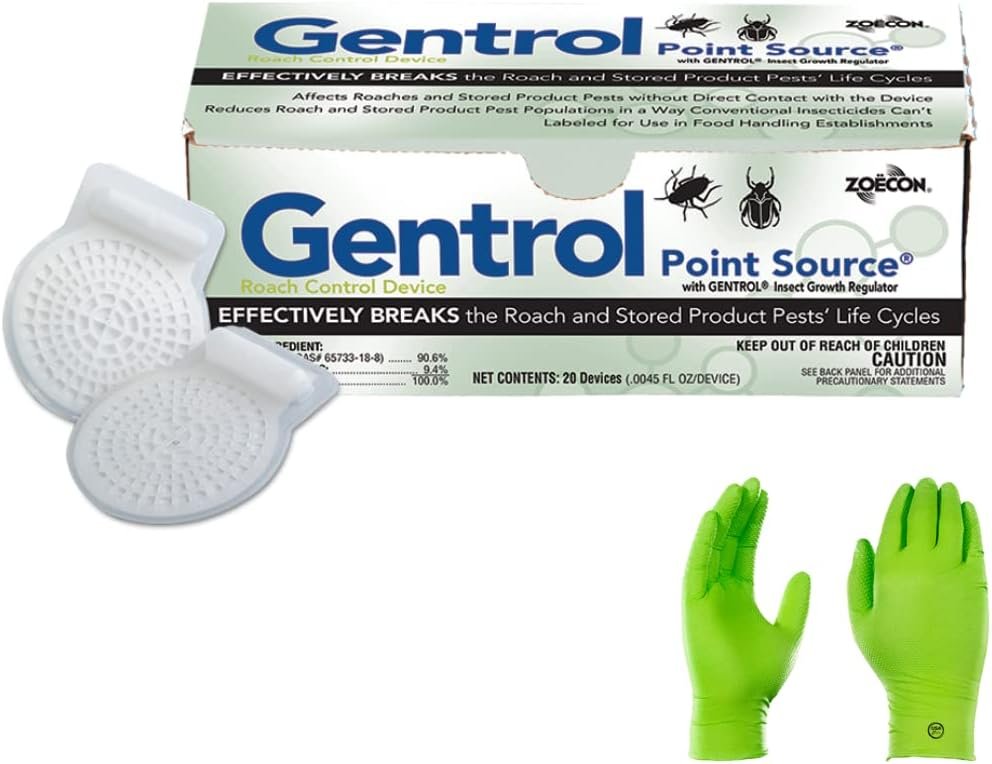
- Why You Need It: Even if some roaches survive the bait, an IGR ensures they are the last generation in your home.7
Step 4: Dusting the Crevices
For areas where gel bait might dry out or be inaccessible, such as behind wall outlets or inside wall voids, use Boric Acid or Diatomaceous Earth.
- The Technique: Use a bellows duster to apply a “barely visible” layer of dust. If you can see the pile of dust, the roach will simply walk around it.
- Safety: While these are lower-toxicity options, always follow label instructions to keep them away from pets and children.
Step 5: Seal the Entry Points
Learning how to get rid of baby roaches involves preventing them from moving between rooms or apartments.
- Caulk and Seal: Use silicone caulk to seal gaps around plumbing pipes under the sink and holes in the baseboards.8
- Weather Stripping: If you live in an apartment, add a door sweep to your front door to prevent roaches from “traveling” from the hallway into your unit.
Step 6: Monitor Your Progress
You cannot manage what you do not measure. Use sticky traps (glue boards) to track where the roaches are most active.9
- Placement: Place them under the sink and behind the toilet.
- Analysis: If you are catching mostly baby cockroaches, your baiting and IGR program is working by forcing the younger generation out into the open. If you stop catching bugs for 14 straight days, you are winning the battle.
Step 7: The Professional Pivot
Sometimes, despite your best efforts, the infestation is buried too deep in the building’s infrastructure. This is common in multi-family housing or older homes with many voids.
Knowing when to call for backup is part of being a smart homeowner. Professionals have access to high-concentration actives and specialized equipment that can reach the “heart” of a colony that DIY methods simply cannot touch.
FAQs:
How long does it take to get rid of baby roaches?
A typical infestation takes 3 to 4 weeks to fully stabilize, and up to 60 days to completely eliminate. This is because you must wait for all the current egg cases to hatch and for the nymphs to interact with the bait or IGR.
Does bleach kill baby roaches?
Bleach can kill a roach on contact, but it is not an effective treatment.10 It does not have a residual effect, and the strong smell can actually cause roaches to scatter into new areas of your home, making the problem harder to solve.
Why do I see more baby roaches after baiting?
This is actually a good sign! It means the bait is working. The poison often makes roaches thirsty or disoriented, causing them to wander out of their hiding spots during the day. This “increased activity” is usually the final stage before the colony collapses.
Can baby roaches survive without their mother?
Yes. Unlike many other insects, cockroach nymphs are fully independent from the moment they hatch. They do not need a “mother” to feed them, which is why they spread so quickly through a house.
Where is the most common place to find a baby roach nest?
They don’t have “nests” in the traditional sense, but they congregate in aggregations. The most common spot is the back of the refrigerator, where the compressor provides constant heat and the kitchen provides nearby food and water.
Conclusion
Knowing how to get rid of baby roaches requires a shift in mindset from “killing bugs” to “managing an ecosystem.” By combining deep sanitation with the strategic use of gel baits and Insect Growth Regulators (IGRs), you can effectively break the cycle of infestation.The appearance of baby cockroaches is a serious matter, but it is one that can be solved with persistence and the right tools. Start by cleaning your “moisture zones,” apply your baits in small, frequent intervals, and don’t be afraid to seek professional help if the colony proves too resilient. Your home belongs to you, not the roaches—take the first step today to claim it back.