Finding a tiny, dark insect scurrying across your bathroom tile at 2:00 AM is enough to make anyone’s skin crawl. If you’ve spotted a black baby roach, your first instinct is likely panic—and for good reason. Unlike adult cockroaches, which are easier to identify by their size and wings, “nymphs” (baby roaches) are elusive, fast, and a clear sign that a breeding colony is established somewhere in your walls.
Understanding how to identify a black baby roach is the critical first step in protecting your home. If you misidentify them as beetles or crickets, you might use the wrong treatment, allowing the infestation to spiral out of control. In this guide, we will break down exactly what these pests look like, why they are in your home, and the best way to kill roaches before they take over your living space.
What Does a Black Baby Roach Look Like?
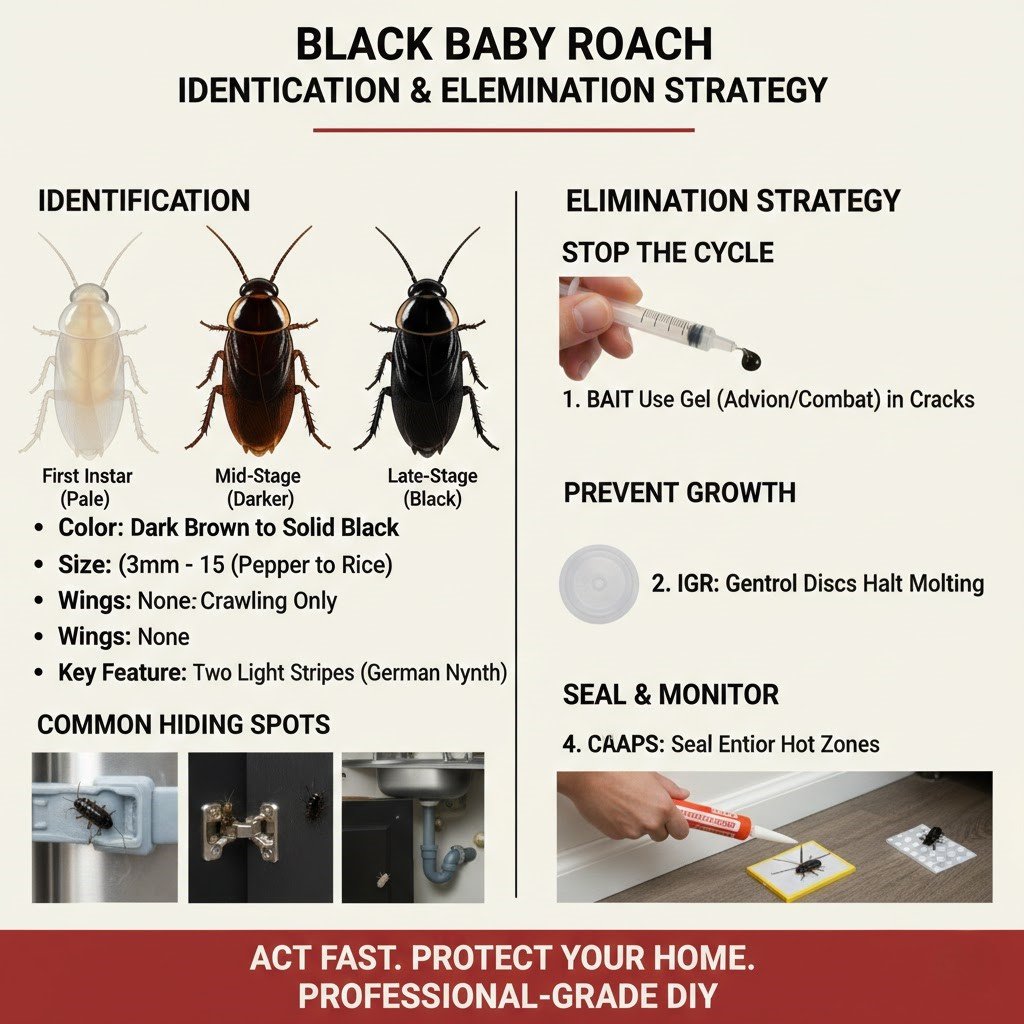
To the untrained eye, many small insects look alike. However, baby roaches have specific anatomical features. A black baby roach is typically between 1/8 to 1/2 inch long. Unlike their parents, they lack fully developed wings and are often much darker—ranging from a deep mahogany to a soot-black color.
Key Identification Features
- Shape: They have flat, oval-shaped bodies that allow them to squeeze into paper-thin crevices.
- Antennae: Long, thin, and constantly moving. The antennae are often as long as the body itself.
- Cerci: If you look closely at their rear end, you’ll see two small appendages called cerci, which they use to detect vibrations in the air.
- Movement: They don’t fly, but they are incredibly fast runners.
![A black baby roach (Oriental nymph) lacks wings and features a dark, segmented body.]](https://babyroach.com/wp-content/uploads/2026/01/unnamed-48.jpg)
A black baby roach (Oriental nymph) lacks wings and features a dark, segmented body.
Common Look-Alikes
It is easy to mistake a roach for other common household bugs. Here is a quick comparison:
- Beetles: Beetles have hard, shell-like wing covers (elytra) and move much slower than roaches.
- Crickets: Crickets have powerful hind legs designed for jumping, whereas a roach remains low to the ground.
- Bed Bugs: These are much smaller (about the size of an apple seed), flatter, and reddish-brown rather than black.
Which Species Are You Dealing With?
Not all cockroaches are the same. In the world of “black” baby roaches, you are likely dealing with one of two main culprits: the Oriental Cockroach or the Smokybrown Cockroach.
1. The Oriental Cockroach (The “Water Bug”)
This is the most common “black” roach found in cooler, damp environments.
- Habitat: Basements, crawl spaces, floor drains, and under sinks.
- Appearance: They are incredibly dark, almost midnight black, and have a greasy sheen to their bodies.
2. The Smokybrown Cockroach
These are more common in warmer climates and are slightly more mobile than the Oriental variety.
- Habitat: Attics, gutters, and tree holes.
- Appearance: While adults are dark brown, the nymphs are often black with a distinct white horizontal stripe across their backs near their heads.
Why Are Baby Roaches a Major Red Flag?
Seeing a single adult roach might mean an intruder wandered in from outside. However, seeing a black baby roach is a definitive sign of an active infestation.
Roaches undergo “incomplete metamorphosis.” This means they hatch from egg cases (oothecae) as miniatures of the adults. If babies are present, it means an egg case has recently hatched nearby. Since a single egg case can contain between 16 and 50 nymphs depending on the species, you are never dealing with just “one” baby roach.
The Best Way to Kill Roaches: A Professional Approach
When homeowners see a pest, they often reach for a can of “raid” or a bug spray. While this might kill the insect on contact, it is rarely the best way to kill roaches at the colony level. In fact, many over-the-counter sprays act as repellents, simply driving the roaches deeper into your walls.
1. Use Gel Baits (The Gold Standard)
Gel baits are arguably the most effective tool in a homeowner’s arsenal. You apply small, pea-sized drops in corners, under appliances, and near entry points.
- How it works: The roaches eat the bait and return to their hiding spot.
- The “Domino Effect”: Roaches are cannibalistic. When the poisoned roach dies in the nest, others eat its remains and also perish, effectively wiping out the hidden colony.

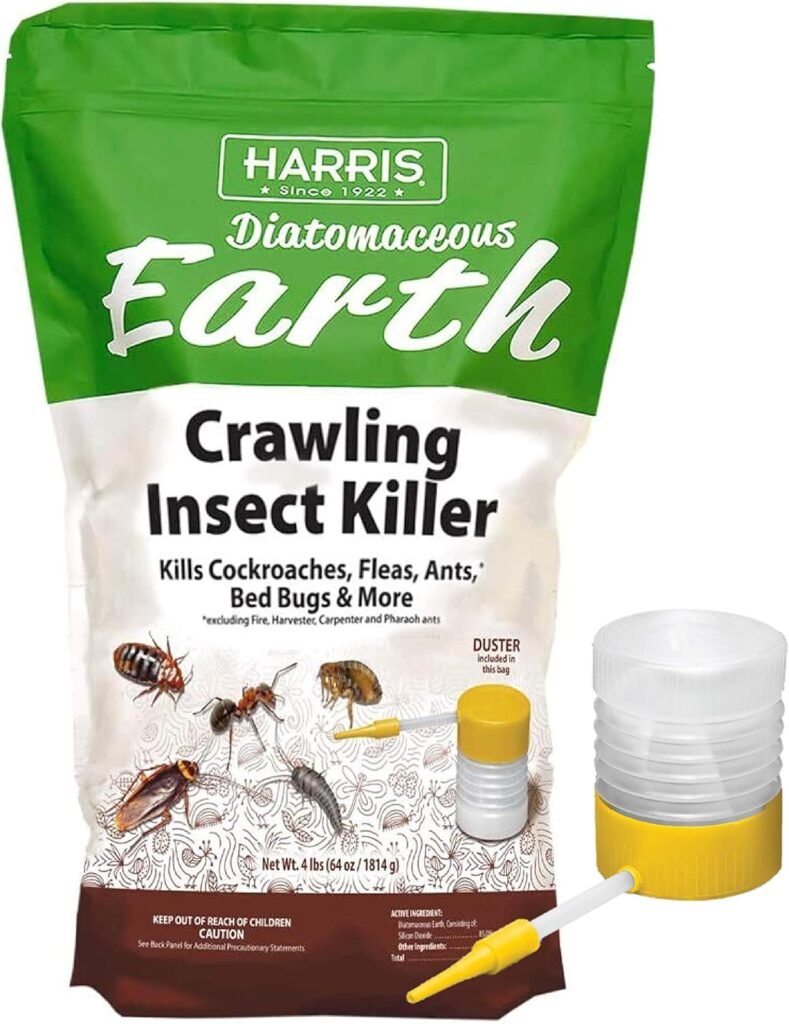
2. Boric Acid and Diatomaceous Earth
For a more “natural” approach, these powders act as desiccants or internal poisons.
- Application: Lightly dust behind baseboards and under the fridge.
- Pro Tip: Do not heap the powder in piles. Roaches will simply walk around it. It should be an almost invisible fine layer.
3. Insect Growth Regulators (IGRs)
Since you are dealing with black baby roaches, IGRs are essential. These are essentially “birth control” for bugs. They prevent the nymphs from shedding their skin and maturing into breeding adults.
4. Comparison Table: Roach Control Methods
| Method | Speed | Effectiveness | Best For |
| Contact Sprays | Instant | Low | Killing a single visible bug. |
| Gel Baits | 1–3 Days | Very High | Eradicating the entire nest. |
| Bait Stations | 3–7 Days | High | Hard-to-reach areas or cabinets. |
| Ultrasonic Plugins | N/A | Low/None | Not recommended by pros. |
Preventing a Re-Infestation
Eliminating the current generation of roaches is only half the battle. You must make your home an inhospitable environment for them.
Eliminate Moisture Sources
Oriental roaches, specifically, are heavily dependent on water.
- Fix leaky pipes under the sink.
- Use a dehumidifier in damp basements.
- Ensure floor drains are cleaned and used regularly so the traps don’t dry out.
Seal Entry Points
According to theNational Pest Management Association, roaches can squeeze through gaps as thin as a credit card. Use silicone caulk to seal gaps around windows, doors, and where utility pipes enter the home.
Sanitize and Declutter
Roaches feed on organic matter, including cardboard glue and crumbs.
- Switch from cardboard boxes to plastic bins for storage.
- Wipe down kitchen counters every night.
- Avoid leaving pet food out overnight.
When to Call a Professional
If you have applied baits and are still seeing a black baby roach after two weeks, the infestation may be too deep for DIY methods. Professional exterminators have access to high-grade non-repellent insecticides and specialized equipment to reach the heart of the colony.
Furthermore, some species like the Oriental roach often live in the sewer systems. If they are entering through your plumbing, a professional may be needed to coordinate with local utilities or apply specialized foam treatments to your drainage system.
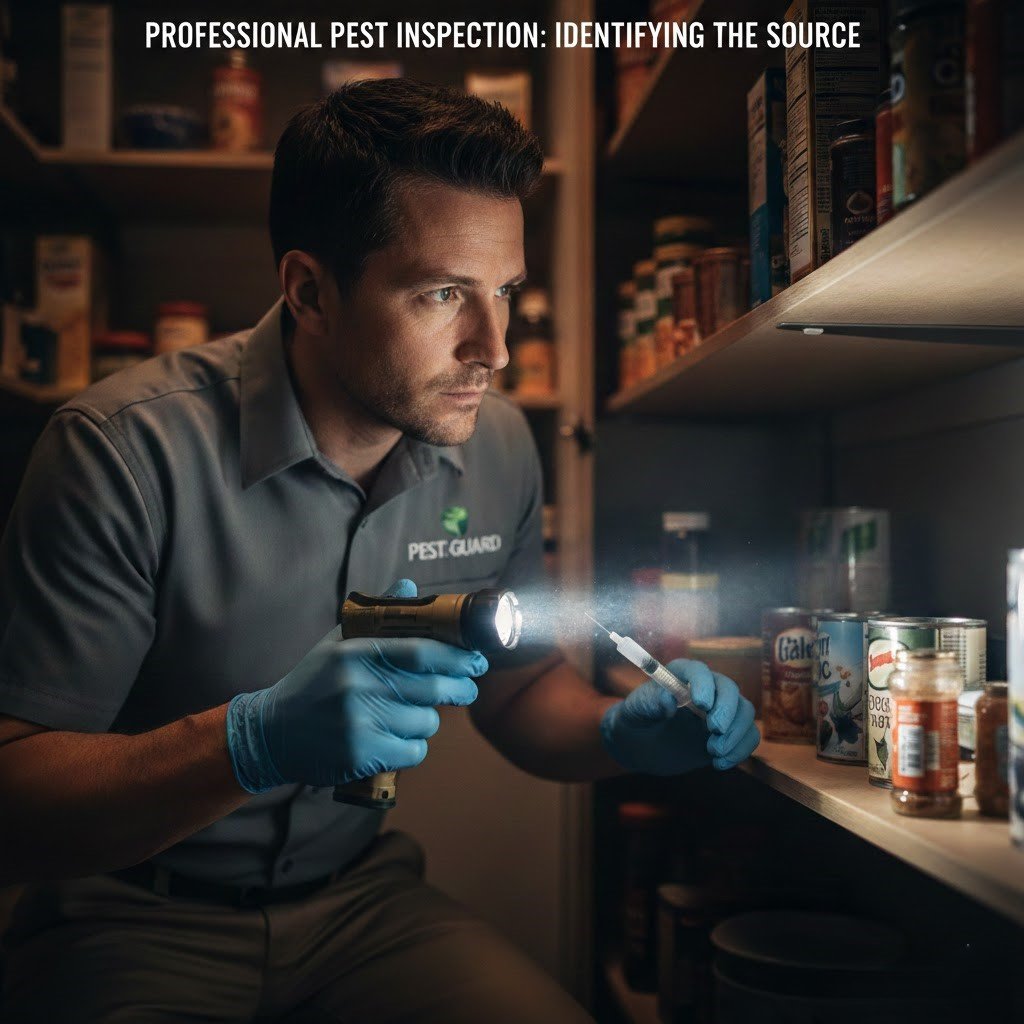
Professional inspection is often necessary to locate the “nest” or harborage areas of black baby roaches.
Read More Guides: How Big Are Baby Cockroaches? Identification and Prevention Guide
FAQ: Frequently Asked Questions About Black Baby Roaches
Are black baby roaches dangerous?
While they don’t bite or sting, they are significant health risks. They carry bacteria like Salmonella and E. coli on their bodies, which they spread over your food and surfaces. Their droppings and shed skins can also trigger asthma and allergies, especially in children.
Why do I only see them at night?
Roaches are nocturnal and highly photophobic (fearful of light). If you see a black baby roach during the day, it often means the hiding spots are so overcrowded that the weaker roaches are being pushed out into the open.
Does seeing one baby roach mean an infestation?
In almost every case, yes. Roaches are social insects that live in large groups. Because nymphs do not travel far from where they hatched, seeing a baby indicates a nest is very close by.
How long does it take for a baby roach to become an adult?
It varies by species and temperature. For the Oriental roach, it can take anywhere from 6 months to a year. However, they are persistent survivors even in the nymph stage.
Can I use vinegar to kill roaches?
No. While vinegar is a great cleaning agent, it does not kill roaches. It may temporarily clean the pheromone trails they leave behind, but it will not stop an infestation.
Conclusion
Finding a black baby roach is a clear signal from nature that your home has a vulnerability—be it excess moisture, easy access to food, or unsealed entry points. By focusing on identification first, you can choose the best way to kill roaches specifically suited for that species.
Remember to prioritize gel baits over sprays, eliminate standing water, and act quickly. The faster you respond to the sight of a nymph, the easier it is to stop a colony before it grows into a multi-generational problem. Stay diligent with your sanitation, seal those cracks, and you will reclaim your home from these unwanted guests.