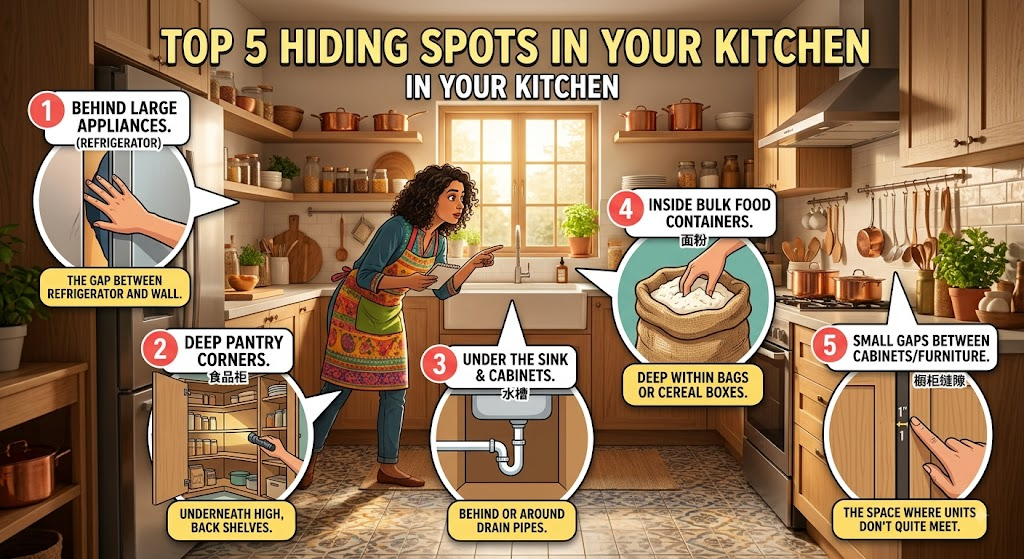
Top 5 Cockroach Hiding Spots in Your Kitchen
A rapid-response emergency checklist to help you locate a cockroach nest by targeting the five most vulnerable and hidden areas in your kitchen.
If you spot a cockroach scurrying across your floorboards, there is a 90% chance the core nesting harborage is inside your kitchen.
Cockroaches don’t invade random spaces by accident; they require a specific biological trifecta to survive: continuous warmth, easy access to high-calorie fats or starches, and consistent moisture. Your kitchen is the ultimate multi-course buffet and shelter rolled into one.
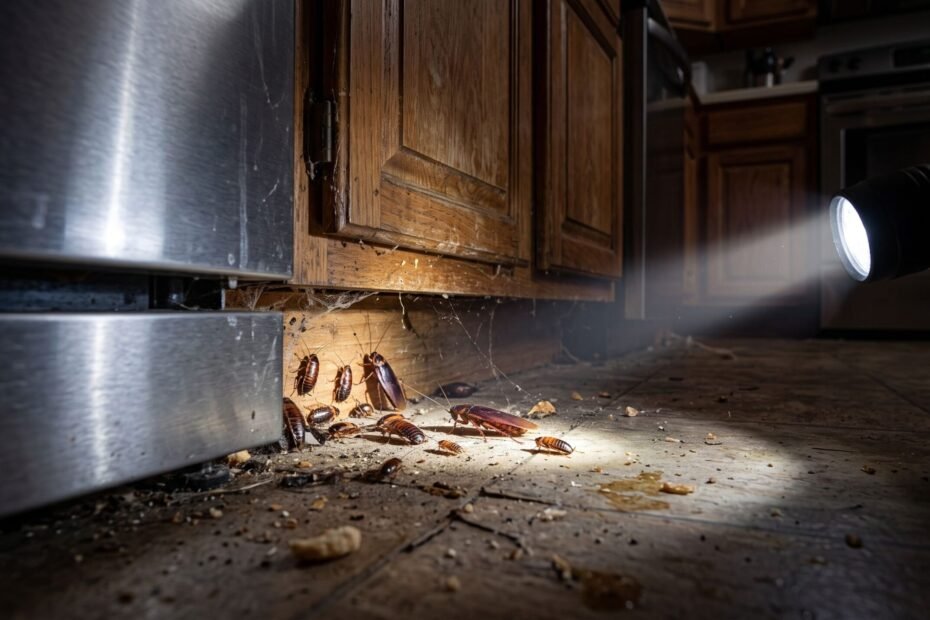
When taking immediate action against an infestation, wandering around spraying baseboards is a waste of time and chemicals. You need to target where the bugs sleep during the day. Grab a bright LED flashlight, put on rubber gloves, and inspect these five critical kitchen hotspots right now.
The Rapid-Response Kitchen Inspection Checklist
| Hotspot Area | Why Roaches Target It | What You Need to Inspect |
| 1. Refrigerator Motor | 24/7 ambient motor heat + condensation drip pan | Compressor coils, bottom drip pan, rear wire harness |
| 2. Under-Sink Plumbing | Moisture bottleneck, condensation, wall openings | Drain P-traps, supply valve cutouts, cabinet base seams |
| 3. Upper & Lower Cabinets | Tight hinges, darkness, dry food starches | Door hinges, shelf corner seams, hollow kickplates |
| 4. Small Counter Appliances | Low-voltage warmth, grease traps, coffee grounds | Coffee maker water bases, microwave vents, toaster trays |
| 5. Stove-to-Counter Gap | Inaccessible grease splatters and food crumbs | Side panels of range, floor beneath stove, warming drawer |
1. The Motor Cavity of the Refrigerator
The rear compressor compartment of a standard kitchen refrigerator is prime real estate for German cockroaches.
- 24/7 Heat Source: Refrigerators continuously exhaust warm air through the rear compressor motor, creating the 75°F to 85°F (24°C to 29°C) microclimate roaches crave.
- Built-in Watering Hole: The condensation drain line from inside the fridge feeds directly into a shallow drip pan near the warm compressor to evaporate. This provides an endless, protected source of fresh water.
- What to Do: Pull the refrigerator out from the wall. Shine your flashlight directly through the lower rear access grate and along the rubber door gaskets. Look for live clusters, discarded brown egg capsules (oothecae), and dark spotting around electrical connections.
2. Beneath the Sink and Around Plumbing Penetrations
Cockroaches can live for a month without a bite of food, but they will succumb to dehydration within seven to ten days without water. This makes under-sink cabinetry a primary harbor.
- Drips and Sweating Pipes: Metal water supply lines regularly collect condensation, and slight drips around the P-trap or disposal provide all the water a colony needs to thrive.
- Drywall Gaps as Highways: Plumbers rarely seal the rough drywall cutouts where copper or PVC pipes enter the wall. Roaches use these unsealed gaps as express corridors between wall studs and your kitchen cabinets.
- What to Do: Clear out all cleaning supplies. Inspect the corners where the cabinet base meets the wall, feel for dampness along pipes, and check the pipe cutouts in the drywall for dark feces streaks.
3. The Deep Corners and Hinges of Pantry Cabinets
Cockroaches are intensely thigmotactic, meaning their biology compels them to seek tight crevices where both their belly and back make physical contact with solid surfaces.
- Cabinet Hinges: The narrow gaps within metal euro-style cabinet hinges offer the exact millimeter spacing adult German roaches and nymphs seek for daytime resting.
- The False Bottom (Kickplate): Most kitchen base cabinets sit on top of a 3- to 4-inch recessed wooden frame called a kickplate (or toe-kick). The empty, dark void beneath your lower cabinet floor is one of the most common, undisturbed nesting sites in modern homes.
- Undersides of Shelving: Check where shelf pegs enter drilled bracket holes and along the rear seams where the cabinet backboard meets the wall.
4. Inside Warm Small Appliances (Coffee Makers, Microwaves, Toasters)
Because German cockroach nymphs are tiny—measuring no larger than a grain of rice—they routinely crawl into the cooling vents and internal housing of small kitchen electronics.
- Coffee Makers: Automatic drip machines and espresso units combine low-voltage resting heat with damp internal water reservoirs and organic coffee grounds.
- Microwaves: The digital clock console, rear cooling vents, and the dead space behind the internal light bulb collect food splatters, steam, and residual warmth.
- Toasters & Air Fryers: Crumb catchers and grease collection pans supply high-calorie lipids in quiet, undisturbed housings.
- What to Do: Unplug small appliances, lift them up, and inspect their undersides and ventilation slots. If you see tiny black specks resembling ground pepper, roaches are living inside the internal casing.
5. The Narrow Gap Between the Stove and Countertop
The 1/8-inch gap between a free-standing range and the adjacent countertop is a notorious collection zone for dropped crumbs, bubbling sauce splatters, and cooking oils.
- A Hidden Food Trough: Because this narrow crevice is difficult to wipe down during routine kitchen cleanups, it forms a thick layer of nutrient-dense grease along the vertical side panels of the stove.
- Oven Insulation: Older stoves contain thick fiberglass insulation surrounding the oven cavity. In severe infestations, roaches will burrow straight into this insulation to nest in warm, pitch-black security.
- What to Do: Pull the stove forward a few inches. Check the floor beneath, the side panels of the range, and the rear electrical connection. Slide out the bottom warming/storage drawer and inspect the rear tracking wheels.
What Evidence to Look for During Your Search
When inspecting these five hotspots, you are looking for more than just live bugs. Watch for the classic warning signs of an active aggregation:
Musty, Oily Odor: A distinct, sweet, musky pheromone smell that intensifies near large nesting clusters.
Roach Frass (Fecal Droppings): Looks like ground black pepper, dark coffee grounds, or small dark brown ink streaks along corners.
Discarded Egg Cases (Oothecae): Small, ridged, pill-shaped capsules ranging from light tan to dark reddish-brown, roughly 8 mm long.
Cast Exoskeletons: Translucent, amber-colored molted skins left behind as nymphs grow into adults.
Conclusion: Find the Harborages, Win the War
Treating a cockroach problem with random surface sprays or bug bombs will only irritate the colony and cause pests to scatter into previously clean rooms.
Real eradication requires surgical precision. By locating the nest within these five key kitchen harborages—the refrigerator motor, under-sink plumbing, cabinet joints, small appliances, and the stove gap—you can focus your efforts where they matter most.
Pairing targeted inspections with non-repellent gel baits placed directly along these travel routes will deliver lethal toxins directly to the heart of the colony, collapsing the infestation at its source.
Frequently Asked Questions (FAQ)
1. What should I do immediately after finding a roach nest in my kitchen?
Do not grab a standard aerosol bug spray; spraying chemicals will trigger the colony to panic and scatter deeper into your walls. Instead:
- Use a vacuum cleaner equipped with a crevice tool and a HEPA filter to physically suck up live roaches, nymphs, and egg cases.
- Immediately tie off the vacuum bag and dispose of it in an outdoor garbage bin.
- Clean the area with hot soapy water or a disinfectant to remove aggregation pheromones.
- Apply small, pea-sized dots of professional cockroach gel bait (Indoxacarb or Fipronil) near the harborage entrance.
2. How can I safely eliminate cockroaches from inside my coffee maker or microwave?
Do not spray liquid pesticides or cleaning chemicals into electronic circuits.
- For Coffee Makers: Place the dry, unplugged machine inside a large, airtight plastic storage bag or bin. Add a sticky insect monitor trap inside the bin and seal it for 7 to 10 days, or place the sealed bag into a deep freezer (below 14°F / -10°C) for at least 72 hours to kill all life stages.
- For Microwaves: Keep the countertop surrounding the microwave impeccably clean and place small gel bait placements underneath and behind the unit so roaches ingest the bait as they exit to forage.
3. Why are cockroaches so drawn to the back of the refrigerator?
Refrigerators operate around the clock, with compressor motors generating a continuous pocket of warm air (typically between 75°F and 85°F). Combined with the shallow condensation drain pan directly beneath the motor, the area provides a fully climate-controlled environment with unlimited hydration.
4. What does cockroach frass (droppings) look like in kitchen cabinets?
Cockroach droppings look like coarse ground black pepper or dark brown coffee grounds. In areas with high traffic, such as cabinet hinge corners or along shelf edges, frass often appears as dark, raised, smear-like stains left behind from liquid fecal secretions.
5. Can cockroaches live beneath kitchen baseboards and kickplates?
Yes. The hollow, dead space beneath bottom kitchen cabinets (behind the kickplate or toe-kick) is one of the most protected nesting zones in a home. Cockroaches easily slip beneath baseboards through tiny gaps as narrow as 1.6 mm (1/16th of an inch) to nest inside the subfloor voids.
6. Will spraying bleach directly into the sink drain kill a roach nest?
While pouring bleach down a drain can sanitize the pipe and eliminate foul organic odors that attract pests, it will not wipe out an infestation. Cockroaches resting deep in plumbing vent stacks or hiding behind drywall pipe cutouts remain completely untouched by liquids poured down the sink bowl.
7. Why should I avoid using aerosol sprays when treating kitchen hiding spots?
Over-the-counter aerosol sprays contain synthetic pyrethroids that act as strong chemical repellents. When sprayed into a cabinet or behind a stove, the mist irritates the roaches without killing the entire hidden colony. Surviving roaches will scatter through wall voids into bedrooms, living room furniture, and adjoining apartments, turning an isolated kitchen issue into a whole-home problem.