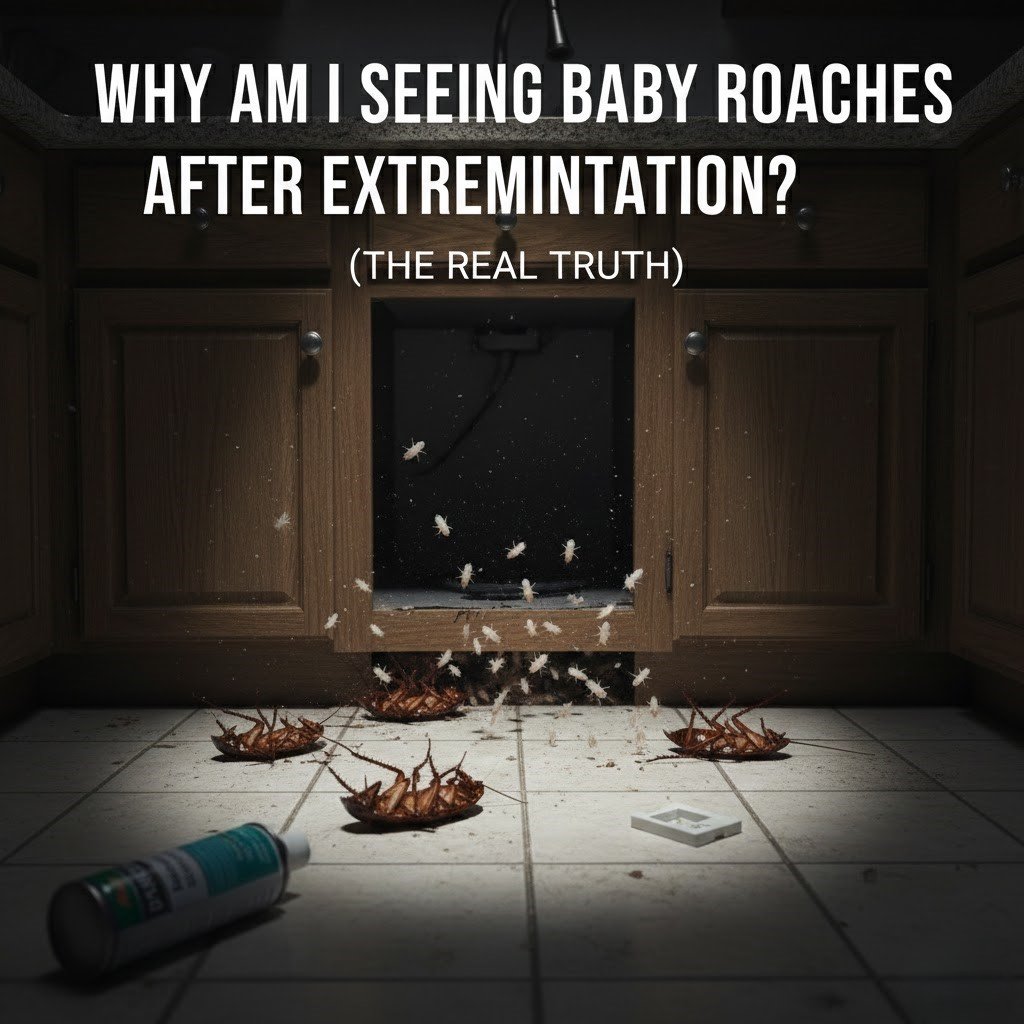
You’ve spent the money, prepped your home, and had the professionals come through to spray. You expected a roach-free life immediately. Yet, a few days later, you spot a tiny, scurrying shadow in the kitchen. Now the panic sets in: why am I seeing baby roaches after extermination?
It is incredibly frustrating to invest in professional pest control only to find that the problem seems to be persisting—or even worsening. However, seeing baby roaches (also known as nymphs) after a treatment doesn’t necessarily mean the exterminator failed. In many cases, it is actually a sign that the treatment is working exactly as intended.
In this comprehensive guide, we will break down the biology of a roach infestation, how modern pesticides interact with the roach lifecycle, and exactly when you should worry versus when you should wait.
The Science of the “Flush-Out” Effect
When an exterminator applies a residual insecticide or a flushing agent, they are essentially disrupting the roach’s “safe zones.” Cockroaches are photophobic—they hate light and prefer to stay tucked away in cracks, crevices, and the dark voids behind your cabinetry.
Why They Come Out into the Open
The chemicals used by professionals are often designed to irritate the roach’s nervous system. As the pesticide takes hold, the roaches become disoriented and lose their natural instinct to hide. This is why you might seeing baby roaches in the middle of your kitchen floor during the day, which is highly unusual behavior for a healthy roach.
Key Insight: If you see roaches that appear “drunk,” moving slowly, or out in the open during the day shortly after a treatment, the chemicals are doing their job.
The Ootheca Problem: Why Eggs Are Immune to Spray
One of the primary reasons homeowners continue seeing baby cockroaches after a professional visit involves the ootheca, or the roach egg case.
Most professional-grade liquid insecticides are highly effective at killing adult and juvenile roaches upon contact or through residual transfer. However, these chemicals cannot penetrate the hard, protective shell of a roach egg.
The Hatching Timeline
A single German Cockroach egg capsule can contain up to 40 embryos. Even if the mother roach is killed by the exterminator, she may have dropped her egg case in a protected area just before dying.
- Incubation: It takes about 28 days for these eggs to hatch.
- The Result: You might have a perfectly “clean” house for two weeks, only for a new generation of nymphs to emerge suddenly.
Because these babies were protected inside the egg during the initial spray, they appear “new.” The goal of a professional treatment is to ensure that when these nymphs hatch, they crawl over the residual pesticide left on the surfaces, killing them before they reach reproductive maturity.
The Role of Insect Growth Regulators (IGRs)
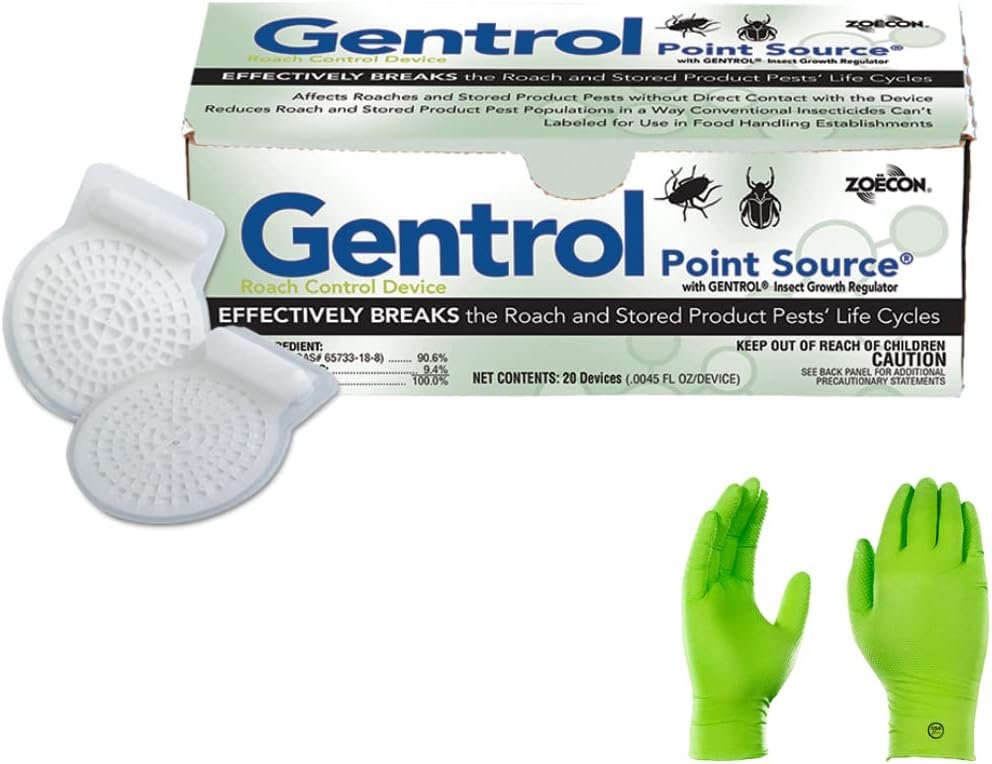
A high-quality extermination service doesn’t just use “killing” agents; they use Insect Growth Regulators (IGRs). If you are seeing baby roaches with slightly deformed wings or strange coloring, this is a massive win for your pest control strategy.
How IGRs work:
- Birth Control for Bugs: IGRs act as a synthetic hormone that prevents baby roaches from molting correctly.
- Sterilization: If a nymph cannot molt, it cannot become an adult. If it cannot become an adult, it cannot reproduce.
- Breaking the Cycle: This effectively “shuts off” the population’s ability to replace itself.
| Feature | Knockdown Spray | Insect Growth Regulator (IGR) |
| Primary Goal | Immediate death of adults | Breaking the lifecycle |
| Speed | Fast (hours to days) | Slow (weeks) |
| Visibility | You see dead roaches | You see “weird” looking babies |
| Long-term | Population can return | Population is eradicated |
Sanitation and Competing Food Sources
If you are still seeing baby roaches after three weeks, it may be time to look at the environment. Professionals often use gel baits, which are designed to be eaten by the roaches and shared with the colony.
If your home has competing food sources—crumbs under the toaster, grease behind the stove, or unsealed pet food—the baby roaches may choose those over the toxic bait. For a deep dive on proper home preparation, refer to the EPA’s guide on Integrated Pest Management.

Eliminating competing food sources ensures that baby roaches are forced to consume the professional bait.
Potential Re-infestation Points
Sometimes, you are seeing baby roaches because they are being “re-imported” into the home. Common culprits include:
- Cardboard Boxes: Roaches love the glue in cardboard. If you’ve had recent deliveries, you may have brought in a “hitchhiker.”
- Shared Walls: If you live in an apartment or condo, your neighbor’s infestation may be leaking into your unit through plumbing gaps or electrical outlets.
- Used Appliances: Bringing in a second-hand microwave or toaster is a common way to restart a cycle.
When Should You Call the Exterminator Back?
Patience is required, but there is a limit. Professional treatments typically require 14 to 21 days to show full results.
Call for a follow-up if:
- You see a high volume of active, healthy-moving adults after 14 days.
- The number of baby roaches is increasing rather than decreasing after the three-week mark.
- You find new egg cases in areas that were previously treated.
Most reputable companies offer a “guarantee” window. It is standard practice to require a second “clean-out” service about 30 days after the first to catch the nymphs that hatched from the protected eggs we discussed earlier.
What to Do Now: Your Post-Treatment Checklist
- Do NOT deep clean with bleach: Avoid mopping away the residual spray the exterminator applied. You want the baby cockroaches to walk over those chemicals.
- Dry everything: Roaches can live for weeks without food but only days without water. Fix leaky faucets and dry your sinks at night.
- Seal the gaps: Use caulk to seal cracks around baseboards and where pipes enter the walls.
- Monitor: Use “sticky traps” or monitors to track where you are seeing the most activity. This data is invaluable for your exterminator.
FAQ: Seeing Baby Roaches After Treatment
1. Does seeing baby cockroaches mean the spray didn’t work?
No. Usually, it means the spray worked on the adults, but the eggs (which are protected from chemicals) have recently hatched. These new nymphs will die once they come into contact with the dried residual treatment.
2. How long does it take for baby roaches to die after professional treatment?
Typically, you will see a significant decline within 7 to 14 days. However, because of the hatching cycle, it can take up to 30 days to break the entire population chain.
3. Should I spray store-bought Raid if I see a baby roach?
No. Using over-the-counter sprays can actually interfere with professional-grade residuals or baits. Most “bug bombs” or cheap sprays act as repellents, which may scatter the roaches further into the walls, making the professional’s job harder.
4. Why am I seeing more roaches now than before the treatment?
This is the “flush-out” effect. The chemicals are irritating the roaches and driving them out of their hiding spots. Seeing more roaches immediately after treatment is often a sign of success, not failure.
5. Can baby roaches live in my electronic devices?
Yes. Roaches are attracted to the warmth of motor housings in refrigerators, microwaves, and even gaming consoles. If you see nymphs near electronics, inform your exterminator so they can use specialized baits in those areas.
Conclusion
Seeing baby roaches after an extermination is a standard part of the pest control timeline. Between the flush-out effect, the resilience of egg cases, and the slow-but-steady work of Insect Growth Regulators, your home is currently a battlefield.
The key takeaways are simple: stay consistent with sanitation, avoid using DIY sprays that interfere with professional products, and keep a close eye on the “health” of the roaches you see. If they look sluggish or deformed, victory is near.
Stay the course, follow the expert recommendations, and soon your home will be the sanctuary it was meant to be.