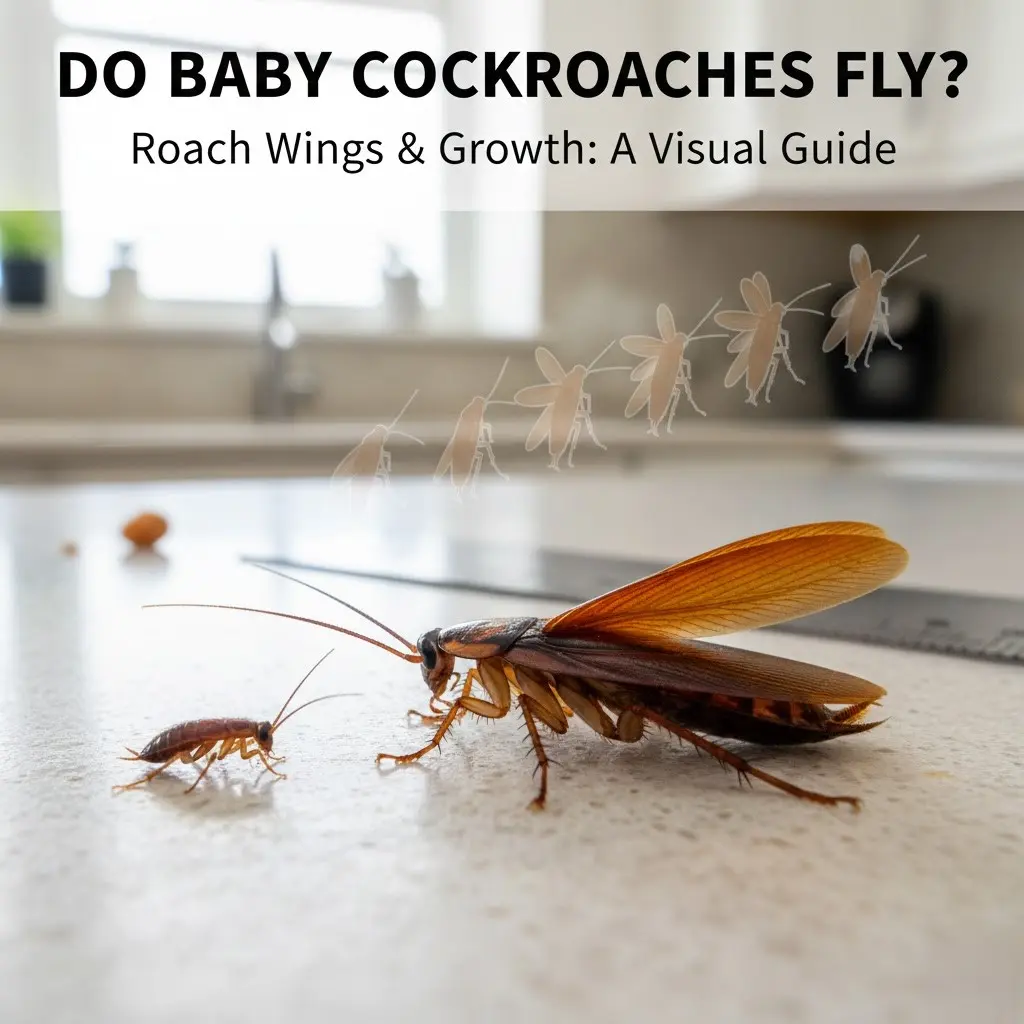
Can cockroaches fly? Discover which roach species actually take to the air (American, Wood, Asian) and why German roaches prefer to run.
The Nightmarish Reality of Airborne Roaches:
For many people, the only thing worse than a cockroach running across the floor is a cockroach flying directly at their face. The sudden realisation that these pests can take to the air is the stuff of nightmares. But can all cockroaches fly? The short answer is no, but the long answer requires looking at specific species.
The Myth of the Flying German Cockroach:
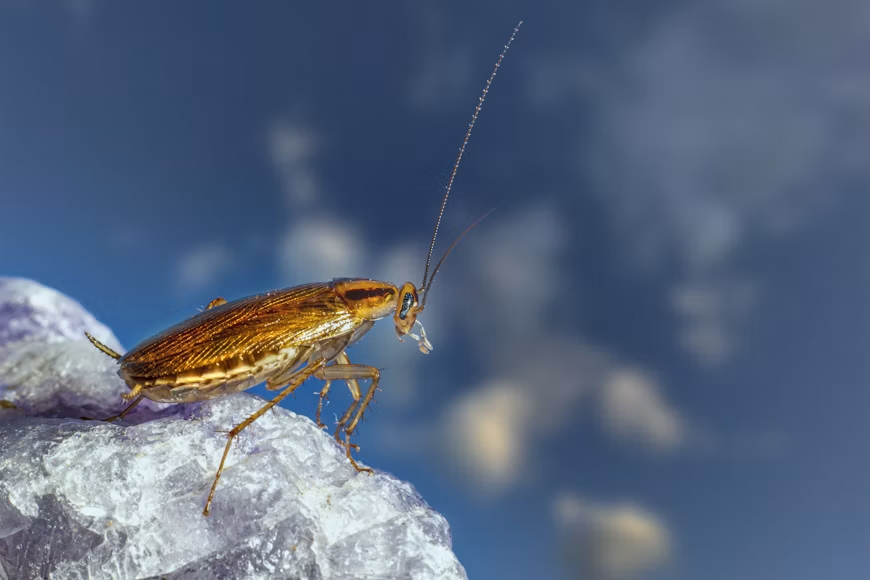
Most cockroaches have wings as adults, but having wings does not necessarily mean they are skilled aviators. The German cockroach, the most common indoor pest causing infestations in apartments and homes, has fully developed wings but cannot fly. They may flutter their wings if dropped from a height to break a fall or glide a short distance, but they strictly prefer to run to escape danger.
The True Aviators: American and Wood Roaches:
On the other hand, species that live primarily outdoors are much better equipped for flight. The American cockroach (often colloquially called a ‘palmetto bug’ or ‘waterbug’) is a capable flier. They are frequently seen flying around outdoor lights at night, particularly during hot, humid summer months. Similarly, the wood cockroach, which accidentally wanders indoors from wooded areas, is a strong flier and is highly attracted to artificial light.
The Light-Loving Asian Cockroach:
Another notable species is the Asian cockroach, which looks nearly identical to the German cockroach but is a very strong flier. If you turn on a light or a television in a dark room, Asian cockroaches have been known to fly directly toward the screen. In most cases, cockroaches use flight as a mechanism to escape danger, locate a mate, or travel to a new food source when environmental conditions become unfavourable.
Conclusion
To summarize the answer to the age-old question: do baby cockroaches fly? No, they do not. Flight is a privilege reserved for adult cockroaches who have completed their final molt. If you are seeing small, winged insects in your home that are taking flight, you are likely dealing with an adult of a smaller species or a different type of insect altogether.
However, the presence of wingless nymphs is a clear signal that your home has become a breeding ground. Because these babies are forced to stay on the ground, they are easier to target with baits and IGRs, but they also indicate that a nest is nearby.
Next Steps for Homeowners:
- Identify: Use the lack of wings to confirm you are looking at a nymph.
- Locate: Search for nests within 3-5 feet of where the nymph was found.
- Treat: Use IGRs to ensure those babies never reach the flying, breeding adult stage.
- Seal: Close up cracks and crevices to prevent new adults from flying in and starting the cycle over again.
By understanding the lifecycle and physical limitations of the cockroach, you can take control of your environment and ensure your home remains a pest-free zone.
FAQS: Flight & Wings
Based on common search intent and homeowner concerns, here are the answers to the most frequent questions regarding roach flight.
Do baby cockroaches have wings?
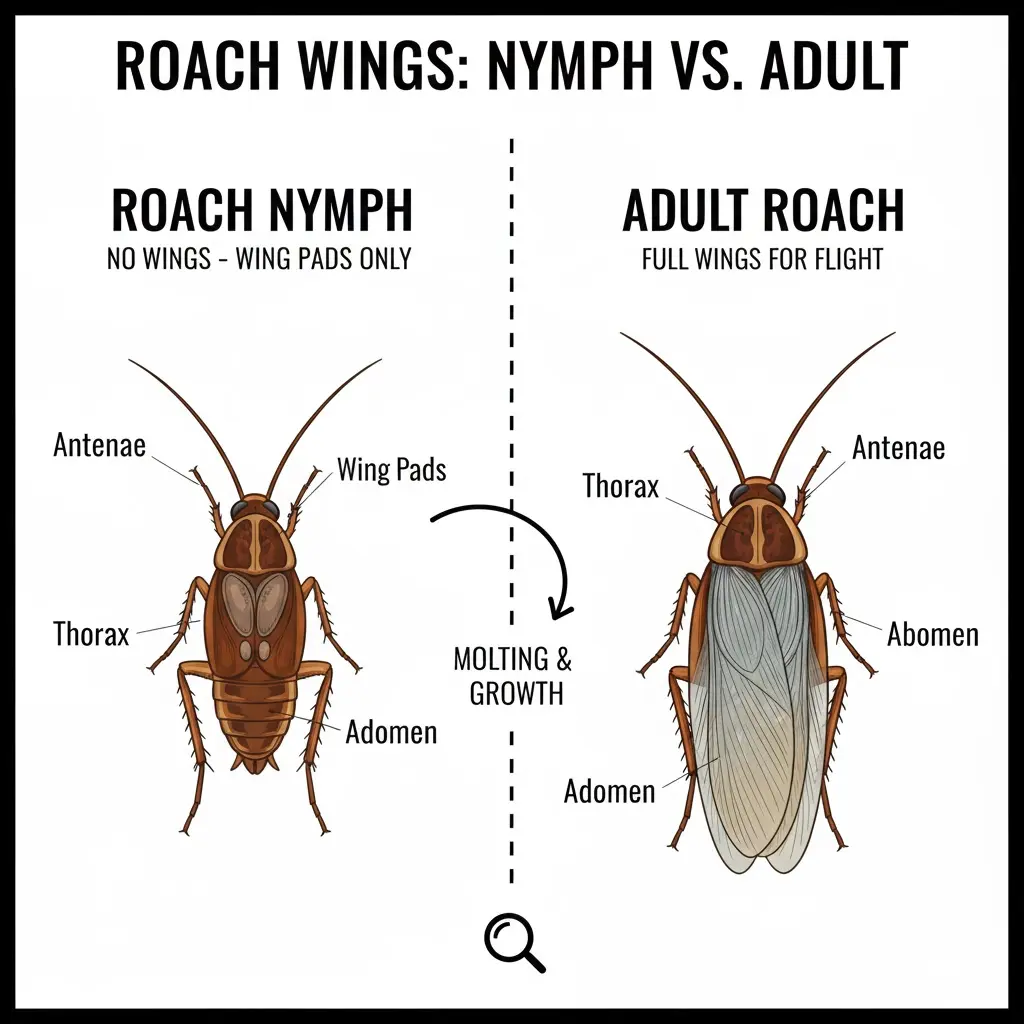
No, baby cockroaches (nymphs) do not have functional wings. They have small “wing pads” that grow larger with each molt, but they only develop full wings once they reach adulthood.
If a small roach flies at me, what is it?
It is likely an adult of a smaller species, such as a German cockroach (though they rarely fly) or a Brown-banded cockroach. It could also be a Wood roach, which is an outdoor species frequently attracted to indoor lights.
Can baby roaches jump?
While they don’t jump like crickets or fleas, cockroaches can “scurry” so quickly that it appears like a jump. They use their powerful legs to launch themselves into cracks or off surfaces if they feel threatened.
Why do some cockroaches fly and others don’t?
Flight is energy-intensive. Most indoor roaches, like the German roach, find everything they need on the ground and have evolved to be incredible runners. Outdoor species use flight to find mates or escape predators.
How can I tell a baby roach from a bed bug?
Both are small and brown, but baby roaches are more oval and have two small “spikes” (cerci) on their rear end. Bed bugs are flatter, rounder, and move much slower than the lightning-fast roach nymph.
Do flying cockroaches bite?
Cockroaches in general rarely bite humans. If they do, it is usually a result of an extreme infestation where food sources are scarce. Their flight is a defensive mechanism to escape, not an offensive one to attack.


