Learn how to distinguish harmless Pennsylvania wood roaches from invasive pest roaches, why they enter your home by accident, and how to keep them outside.
The Accidental Indoor Tourist:
Imagine this: you are bringing in a bundle of firewood on a crisp evening, or perhaps you left your porch light on with the door cracked open. Suddenly, a large cockroach scurries across the living room floor. Before you call an exterminator and throw out all your groceries, take a closer look. There is a very high chance you are dealing with a Wood Roach—an outdoor insect that has zero interest in infesting your home.
What is a Wood Roach?
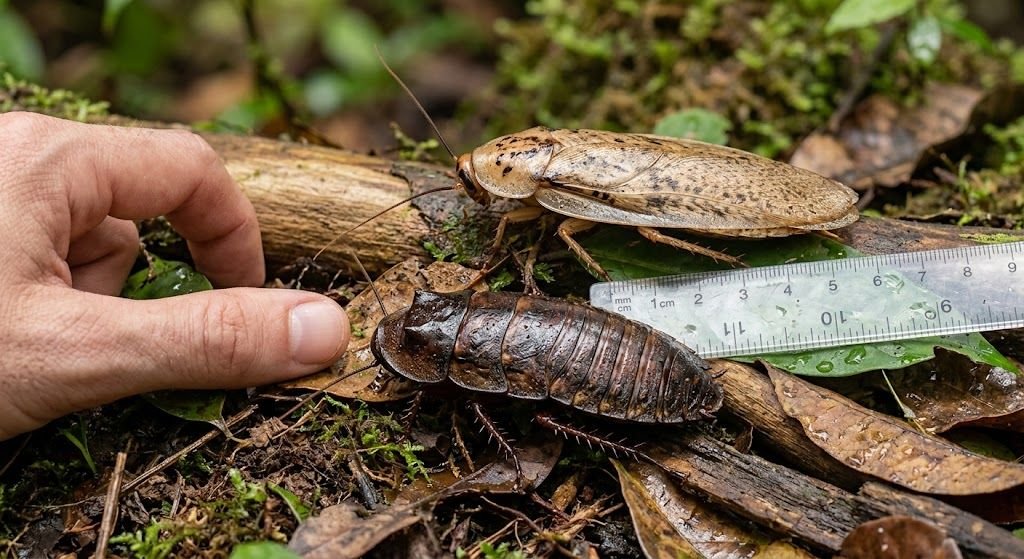
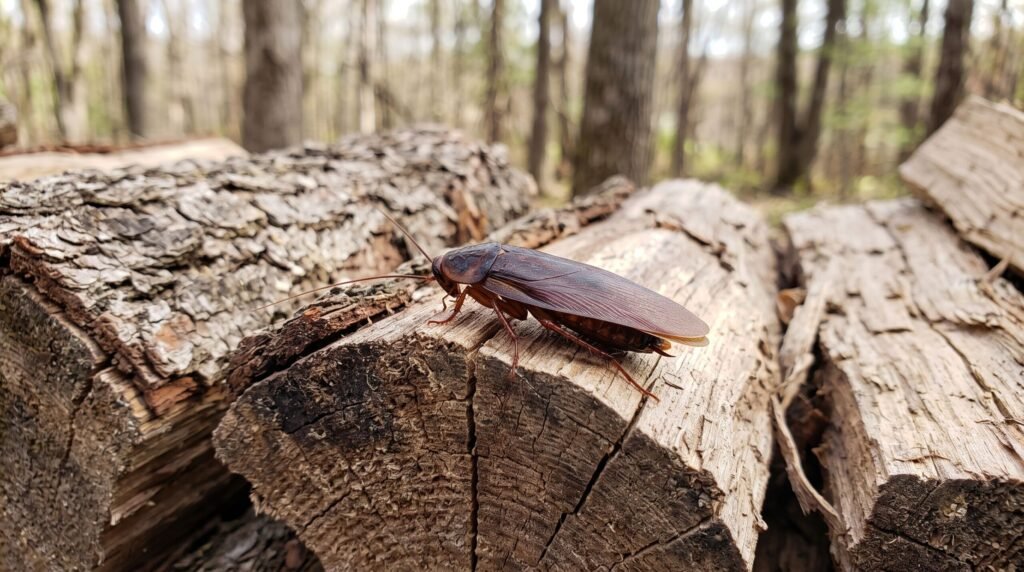
The Pennsylvania Wood Roach is a very common outdoor insect found across wooded areas of North America. They look quite similar to the American cockroach—large, brownish, and slightly flat. The males have fully developed wings and are incredibly strong fliers, while the females have short, non-functional wings.
Key Differences from Indoor Pests:
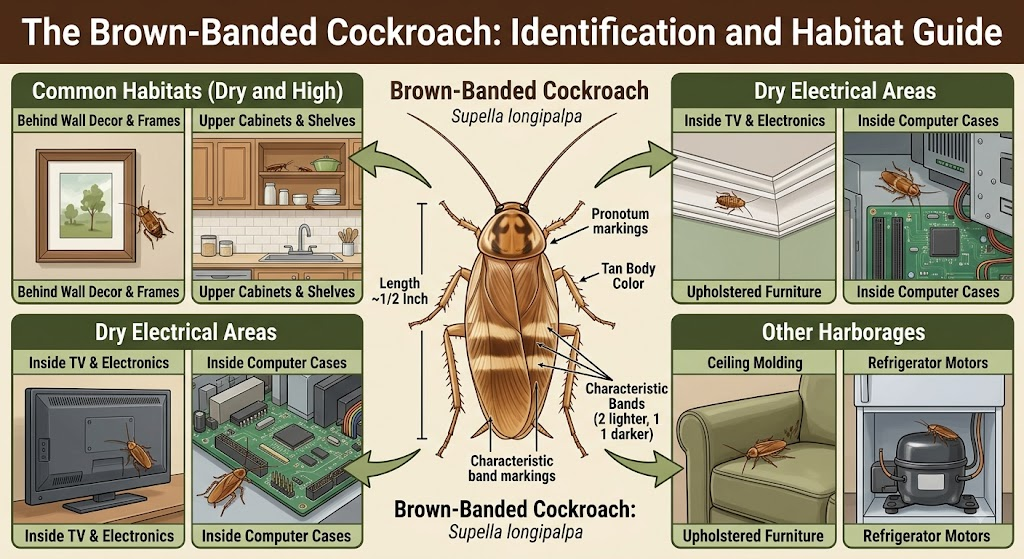
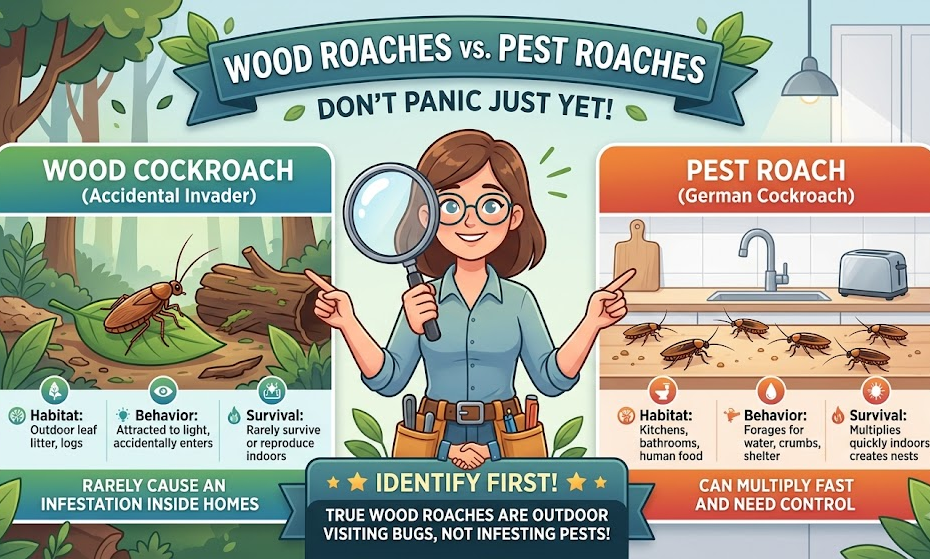
The difference between a Wood roach and an indoor pest roach comes down to behavior and biology. Wood roaches are not scavengers of human food. Their natural diet consists strictly of decaying organic matter, dead bark, and rotting wood. Furthermore, they require consistent, high-moisture outdoor environments to survive.
If a Wood roach wanders inside your house, it is almost entirely by accident. They are highly attracted to light (unlike German roaches, which scatter when the lights turn on). They often fly toward porch lights and accidentally wander through open doors, or hitch a ride indoors on a piece of firewood. Once inside, the dry air of a climate-controlled home usually kills them within a few days. They will not breed in your kitchen cabinets or raid your pantry.
How to Keep Them Outside:
You don’t need toxic chemical sprays inside your home to deal with Wood roaches. The best prevention method is simply managing the exterior of your house. Keep firewood stacked several feet away from the foundation, ensure window screens are tight and free of tears, and switch your bright white porch bulbs to yellow “bug lights” that are less attractive to flying insects at night.
Conclusion
Finding a baby wood roach in your home is rarely a cause for alarm. Unlike the pest species that haunt kitchens and bathrooms, these insects are simply outdoor creatures that have lost their way. By focusing on identifying the lack of stripes on the nymph’s head and implementing simple exclusion techniques like managing firewood and sealing window gaps, you can keep your home pest-free without the need for intensive chemical treatments.
Key Takeaways:
- Identify correctly: Wood roach nymphs lack the stripes found on German roaches.
- Don’t panic: They do not breed indoors and typically die from dehydration.
- Exclusion over chemicals: Focus on sealing gaps and moving woodpiles.
- Moisture is the magnet: Keep your gutters clean and your foundation dry.
Maintain a proactive approach to your home’s exterior, and you’ll find that these “accidental invaders” become a thing of the past.
FAQ: Frequently Asked Questions
1. Is a baby wood roach dangerous?
No. Wood roaches do not bite, sting, or carry the same types of bacteria associated with sewer-dwelling roaches. They are primarily a nuisance.
2. Do wood roaches eat wood like termites?
No. Despite their name, they do not eat the structural wood of your home. They eat decaying organic matter, fungi, and algae.
3. Will a baby wood roach infest my kitchen?
It is highly unlikely. Wood roaches need very high humidity to survive. The typical indoor environment is too dry for them to live long enough to reproduce.
4. Why am I seeing so many baby wood roaches in June?
Late spring and early summer are the peak activity periods for wood roaches. This is when they are most active in their natural habitat, leading to more accidental indoor sightings.
5. Can I use store-bought roach spray?
You can, but it is usually unnecessary. A vacuum or a soapy water spray is just as effective for an accidental invader and avoids the use of harsh chemicals in your home.