Learn the hidden dangers of storing items in cardboard boxes and paper bags, and how upgrading your storage solutions can eliminate a major cockroach food source and harborage.
Most homeowners associate cockroach infestations with dirty dishes in the sink, grease splatters behind the stove, or unsealed garbage cans.
However, a kitchen can be spotless, the floors freshly mopped, and the countertops gleaming, yet the home can still harbor a massive roach population. The culprit is often tucked away in the garage, basement, closet, or attic: cardboard storage boxes and paper clutter.
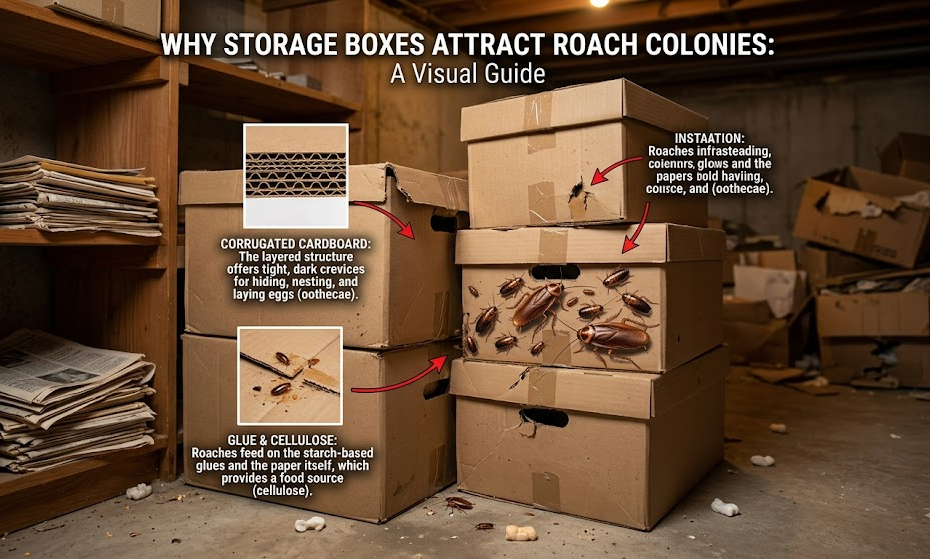
While cardboard seems like a harmless, cheap, and convenient packing material, to a cockroach, a stack of corrugated boxes represents the ultimate combination of high-density housing and an all-you-can-eat buffet.
1. The Cardboard Buffet: How Roaches Digest Paper & Adhesives
Most animals cannot extract usable calories from paper products. Cockroaches, however, are evolutionary detritivores equipped with specialized internal machinery:
- Cellulose Digestion via Gut Symbionts: Cockroaches harbor specialized bacteria and protozoa in their digestive tracts that produce cellulase enzymes. This allows them to break down the tough cellulose fibers in brown paper, cardboard, and newsprint into digestible carbohydrates.
- Organic Starch Adhesives: Corrugated cardboard is held together by heavy layers of plant-based starches and organic glues. These adhesive seams offer an easily accessible, calorie-dense meal for foraging nymphs.
- Pheromone Absorption: Cardboard is highly porous. When roaches gather on paper products, the material readily absorbs their aggregation pheromones (scent markers in feces and cuticular secretions). Over time, a cardboard box becomes permanently scented, continuously signaling to other roaches that the box is a safe gathering site.
2. Corrugated Tunnels: Architectural Luxury for Roaches
Beyond its nutritional value, corrugated cardboard provides the ideal physical environment for cockroach biology:
- Thigmotaxis in Action: Cockroaches are thigmotactic, meaning their biology compels them to seek shelter in tight crevices where their dorsal (back) and ventral (belly) surfaces make simultaneous contact with solid materials.
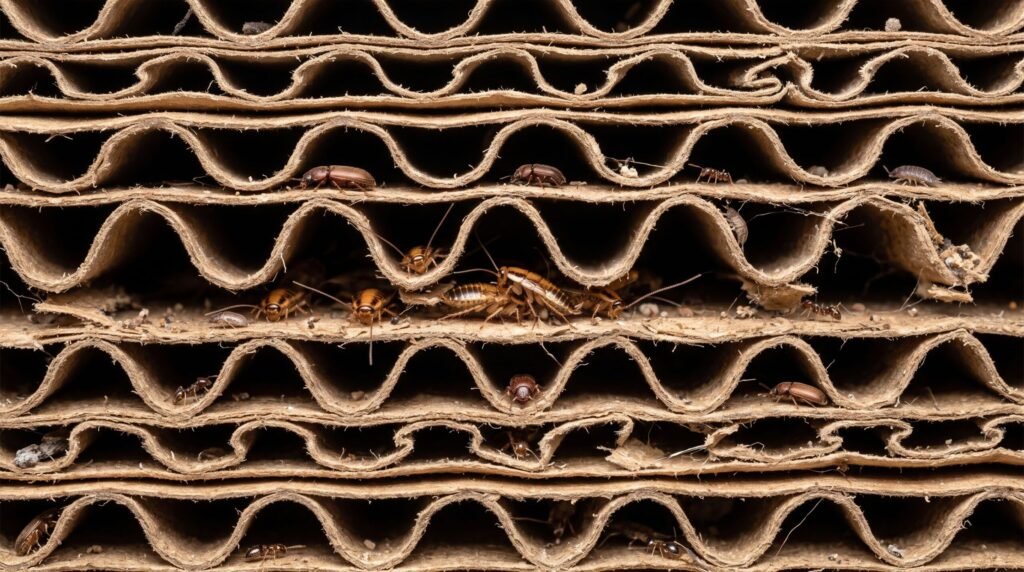
- The Fluted Micro-Tunnel: The wavy middle layer of corrugated cardboard (the fluting) creates an endless series of dark, narrow, insulated tunnels. A roach can squeeze into these flutes to sleep, molt, and hide away from predators and pesticide sprays.
- Egg Case Incubation: Female cockroaches—particularly German and Brown-Banded species—routinely glue their egg capsules (oothecae) directly into the inner crevices and underside seams of cardboard boxes, ensuring dozens of nymphs hatch safely inside a protected food source.
3. The “Cold Storage” Factor: Dark, Humid, and Undisturbed
The reason cardboard-driven infestations frequently spin out of control is human neglect.
Cardboard boxes are rarely kept in high-traffic, brightly lit rooms. Instead, they are stacked in the darkest, least-disturbed zones of a home:
- Basements & Crawl Spaces: Cardboard acts like a sponge, absorbing ambient humidity from concrete subfloors and damp air. This creates the warm, moist microclimate roaches need to prevent dehydration.
- Attics & Utility Closets: Piles of seasonal clothing, holiday decorations, and old tax records sit untouched for months or years at a time.
- Garages & Breezeways: Stacks of broken-down delivery boxes stored against garage drywall provide shelter for American and Oriental roaches migrating in from outdoors.
By the time you open an old storage box to retrieve seasonal decorations, multiple generations of cockroaches may have lived, bred, and established a thriving colony within the layers of paper.
Cardboard vs. Plastic Storage: The Direct Comparison
| Feature | Corrugated Cardboard Boxes | Heavy-Duty Plastic Bins (Latching) |
| Nutritional Value | High (Edible cellulose & starch glue) | Zero (Inedible polyethylene/polypropylene) |
| Pest Harborage | Fluted tunnels provide built-in shelter | Smooth walls offer zero crevices |
| Moisture Resistance | Absorbs water, softens, and breeds mold | Waterproof; blocks exterior humidity |
| Pest Exclusion | Easily chewed through or penetrated | Airtight seals block insect entry |
| Chemical Absorption | Absorbs roach pheromones permanently | Easily washed, sanitized, and wiped clean |
The Delivery Box “Trojan Horse”
In the modern era of e-commerce, the most common way cockroaches enter clean homes is through delivery packages and grocery boxes.
- Online fulfillment warehouses, shipping hubs, and delivery trucks are major crossroads for insect activity.
- Corrugated boxes often pick up hitchhiking roaches or egg capsules while stored in transit hubs.
- Bringing delivery boxes straight into your living room or kitchen pantry provides pest hitchhikers with immediate access to your home.
4 Steps to Eliminate Paper Vulnerabilities
Transform your home from an inviting habitat into a pest-proof environment with this storage overhaul plan:
Digitize Paper Files: Minimize stacks of old magazines, newspapers, and loose documents. Store essential paper documents inside sealed plastic file containers.
Purge the Cardboard Stash: Transfer all long-term belongings (clothing, family keepsakes, documents) from cardboard boxes into clear, heavy-duty plastic storage bins with secure latching lids.
Quarantine and Unpack Outside: Open online delivery packages in the garage or outside on the porch when possible. Inspect items before bringing them indoors.
Immediate Recycling: Never accumulate broken-down shipping boxes or paper grocery bags inside utility closets or under sinks. Flatten boxes and move them to outdoor recycling bins immediately.
Conclusion: Ditch the Cardboard to Protect Your Home
Eliminating cockroaches requires looking beyond basic kitchen sanitation. As long as attics, closets, and garages are filled with corrugated cardboard, roaches have access to an abundant food supply, a sponge for moisture, and ideal harborage.
Phasing out cardboard in favor of sealed, hard-plastic storage containers removes one of the most significant nesting resources in your home. Combined with immediate package disposal and routine perimeter checks, upgrading your storage is one of the most effective long-term pest prevention investments you can make.
Frequently Asked Questions (FAQ)
1. Can cockroaches actually chew through cardboard boxes?
Yes. Cockroaches have strong chewing mouthparts (mandibles) capable of biting through paper, cardboard, thin plastic wrap, and paperboard food containers (such as cereal boxes). They can easily chew their way into a closed cardboard box to access whatever is stored inside.
2. Can roaches survive exclusively on paper and cardboard without other food?
Yes, for extended periods. Thanks to symbiotic gut bacteria that digest cellulose and starch adhesives, cockroaches can survive on cardboard alone if water or ambient humidity is available. However, a diet rich in fats and proteins is still necessary for maximum reproductive speed.
3. How do I safely inspect old cardboard storage boxes without scattering roaches?
Take the box outdoors onto a driveway or patio before opening it. Carefully unpack items onto a light-colored sheet or tarp. Keep a vacuum cleaner (with a HEPA filter) or a soapy water spray bottle nearby to immediately capture any nymphs or adults that attempt to flee.
4. What types of plastic storage containers are truly roach-proof?
Look for bins made from heavy-duty polypropylene or polyethylene featuring rubber gasket seals and locking latch handles. Simple snap-on lids without gaskets or latches often leave hairline gaps along the rim that tiny German cockroach nymphs can slip through.
5. Why are brown paper grocery bags just as dangerous as cardboard?
Brown paper grocery bags are manufactured from coarse kraft paper rich in raw plant cellulose. When folded and stored together in narrow gaps (such as between the refrigerator and the counter), they create tight, dark, thigmotactic harborages with an unlimited supply of edible paper fibers.
6. How long can cockroach egg cases survive inside stored cardboard?
Cockroach egg capsules (oothecae) can remain viable inside dry cardboard for several weeks to a few months, depending on ambient temperature and species. In warm environments, German roach eggs hatch in approximately 28 days, while brown-banded roach eggs can incubate for up to 90 days before releasing nymphs.
7. Does spraying cardboard boxes with insecticide solve the problem?
No. Cardboard readily absorbs liquid pesticides, which dilutes their surface effectiveness while ruining the structural integrity of the box. Spraying cardboard also leaves pesticide residues soaked into items you may want to handle later. Replacing the box with a plastic container is far safer and more permanent.