Eliminate cockroaches from your kitchen cabinets with this food-safe, step-by-step guide using deep cleaning, caulk, and strategic gel baits.
The Ultimate Kitchen Invasion:
Opening a kitchen cabinet to grab a coffee mug, only to see a cockroach scramble over your plates, is a deeply unsettling experience. Cabinets provide the perfect trinity for roaches: darkness, warmth, and proximity to food crumbs. Evicting them from areas where you store your food and eating utensils requires a careful, methodical approach.
Step 1: Empty and Sanitize Completely:
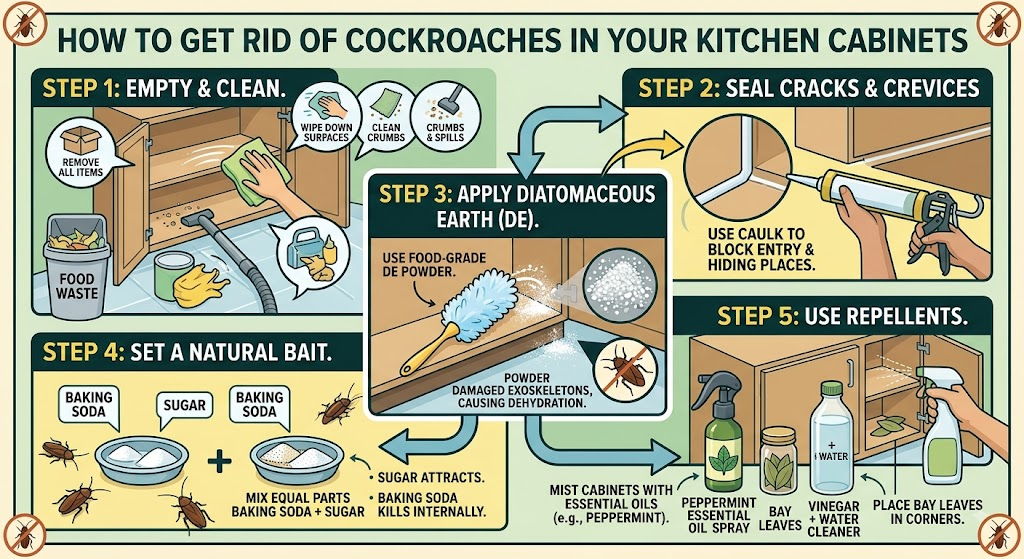
You cannot treat a full cabinet. Remove every single item—plates, boxes of pasta, canned goods, and shelf liners. Once empty, use a vacuum with a hose attachment to suck up crumbs from the corners. Follow up by scrubbing the interior with hot, soapy water. Pay special attention to the hinges and the gap where the cabinet meets the wall, as these are prime nesting spots.
Step 2: Seal the Structural Cracks:
Cockroaches rarely enter a cabinet through the front door. They slip in through tiny gaps in the back. Get a tube of silicone caulk and seal up any cracks along the back panels of your cabinets, especially around the areas where plumbing pipes for the sink go through the wood.
Step 3: Apply Gel Baits (Not Sprays):
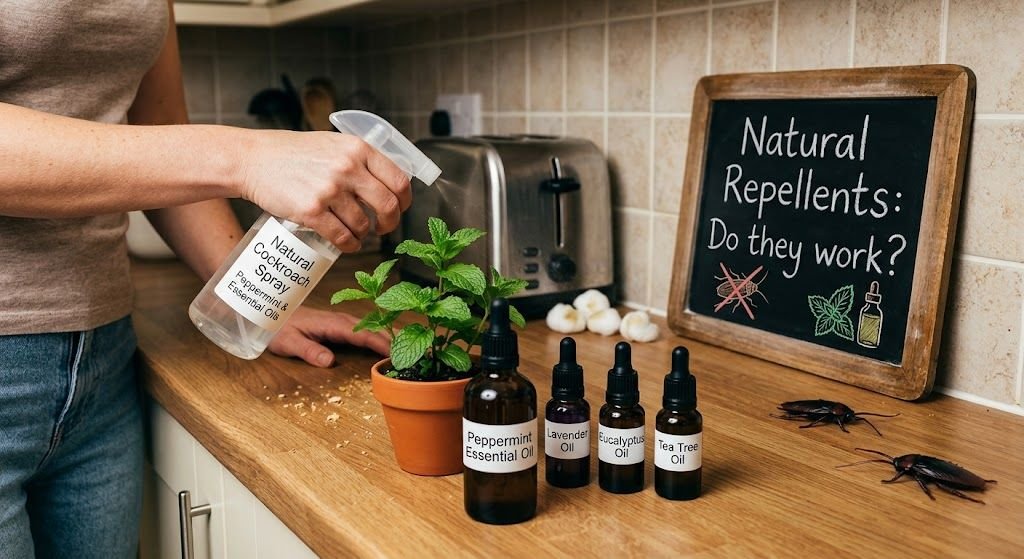
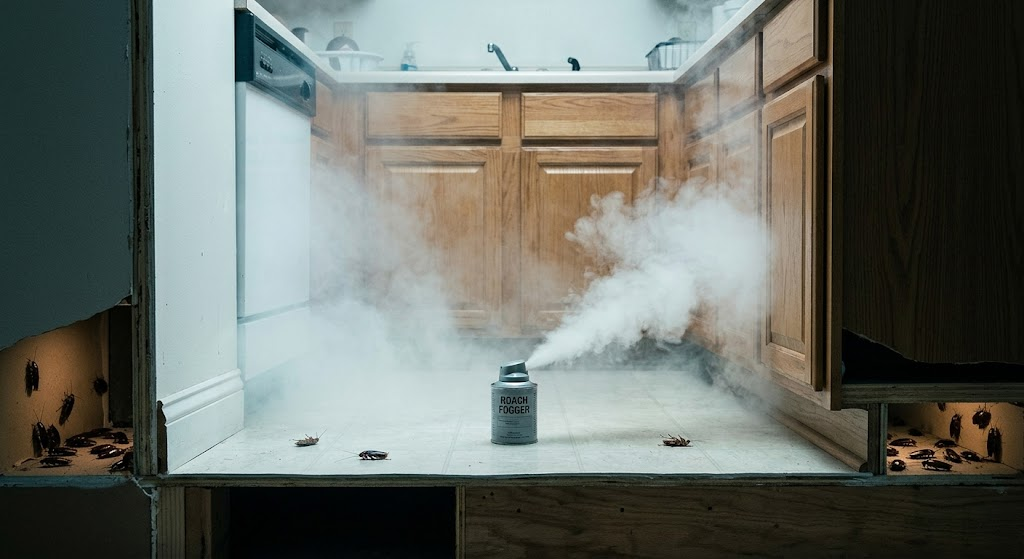
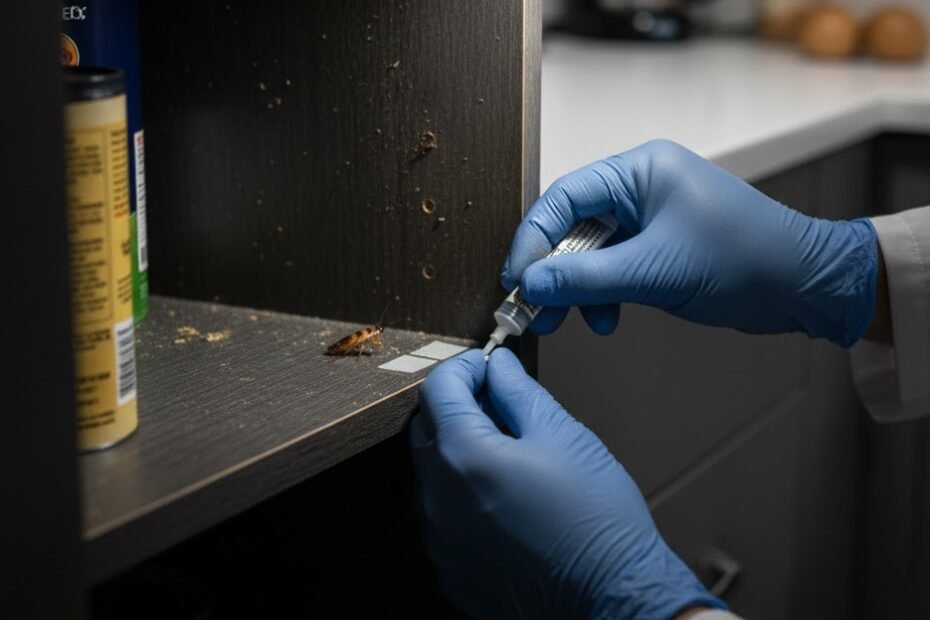
Never spray aerosol pesticides inside cabinets where you store food and dishes. Instead, use a high-quality cockroach gel bait. Apply tiny, pea-sized dots of bait directly into the hinges, into the top interior corners, and along the very back edges where the shelves meet the wall. The roaches will eat the bait, retreat to their nest in the walls, and die, taking the poison with them.
Step 4: Upgrade Your Food Storage:
Once the cabinets are treated, do not put open bags of flour or sugar back inside. Transfer all dry goods into airtight, hard plastic or glass containers. By removing their food source and keeping the space sanitized, your cabinets will remain roach-free.
When to Call the Professionals
If you have applied bait and are still seeing baby roaches in the kitchen after two weeks, the infestation may be inside the wall voids or shared plumbing (common in apartments). At this point, the health risks to your family—including asthma triggers and salmonella—outweigh the cost of professional intervention.
Conclusion
Finding baby roaches in the kitchen is a serious situation, but it is entirely manageable with a systematic approach. By focusing on identification, removing their access to water, and using high-quality baits rather than repellent sprays, you can break the breeding cycle.
Key Takeaways:
- Identify: Confirm they are German cockroach nymphs.
- Sanitize: Use vinegar and vacuuming to remove pheromones and eggs.
- Bait: Use gel baits in hinges and cracks to reach the nest.
- Seal: Close up wall gaps to prevent future visitors.
Don’t wait for a few babies to become a massive colony. Take action today to ensure your kitchen remains a clean, safe, and healthy environment for your family.
FAQs
1. Why do I only see baby roaches and no adults?
This is common. Nymphs are smaller and more adventurous, often foraging earlier than adults. However, it usually indicates that an egg case recently hatched nearby. The adults are likely hidden deeper within your walls or appliances.
2. Does seeing one baby roach mean an infestation?
Yes. Cockroaches are social insects. A single nymph is a sign of a “complete life cycle” occurring on your property. For every one you see, there are likely 40-50 more hiding.
3. Can I use bleach to kill them?
Bleach kills roaches on contact, but it is a poor long-term solution. It has no residual effect, meaning it won’t kill the roaches hiding in the nest. It also cannot be safely used in the deep cracks and crevices where roaches actually live.
4. How did they get into my kitchen cabinets?
They usually hitchhike. They can enter your home via grocery bags, cardboard shipping boxes, or even inside second-hand electronics and appliances.
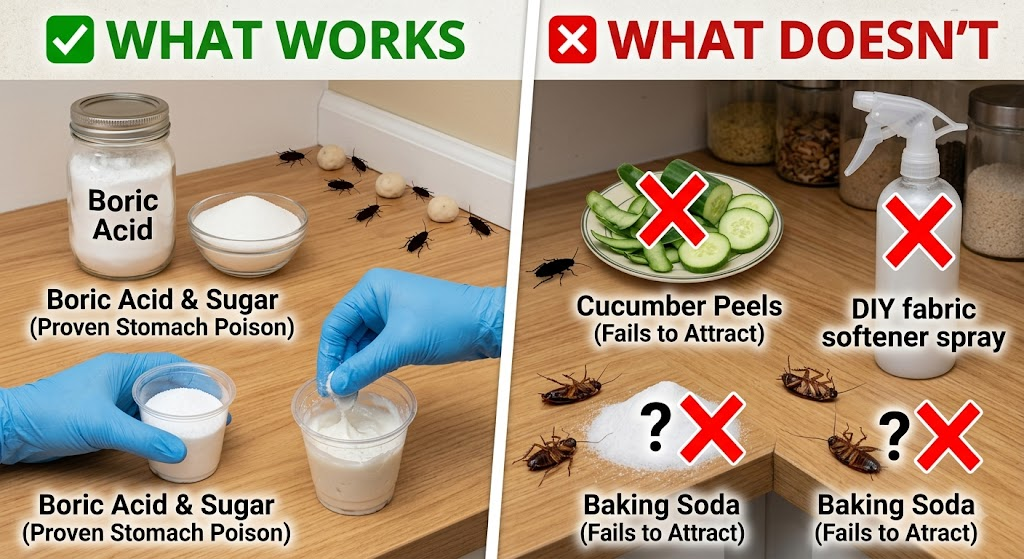
5. Is Boric Acid safe for kitchen counters?
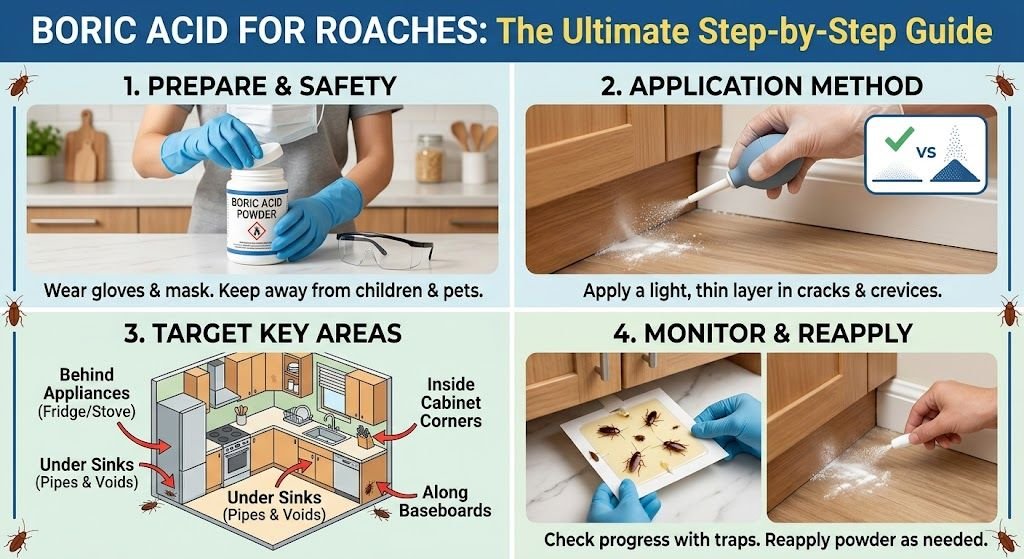
Boric acid is low-toxicity to humans but should not be placed directly on food-prep surfaces. It is best used under appliances and behind cabinets where pets and children cannot reach it.