.
A quick-reference emergency guide to help you instantly tell the difference between a baby cockroach (nymph) and a bed bug so you can apply the correct treatment before an infestation spreads.
The Panic of the Nighttime Discovery
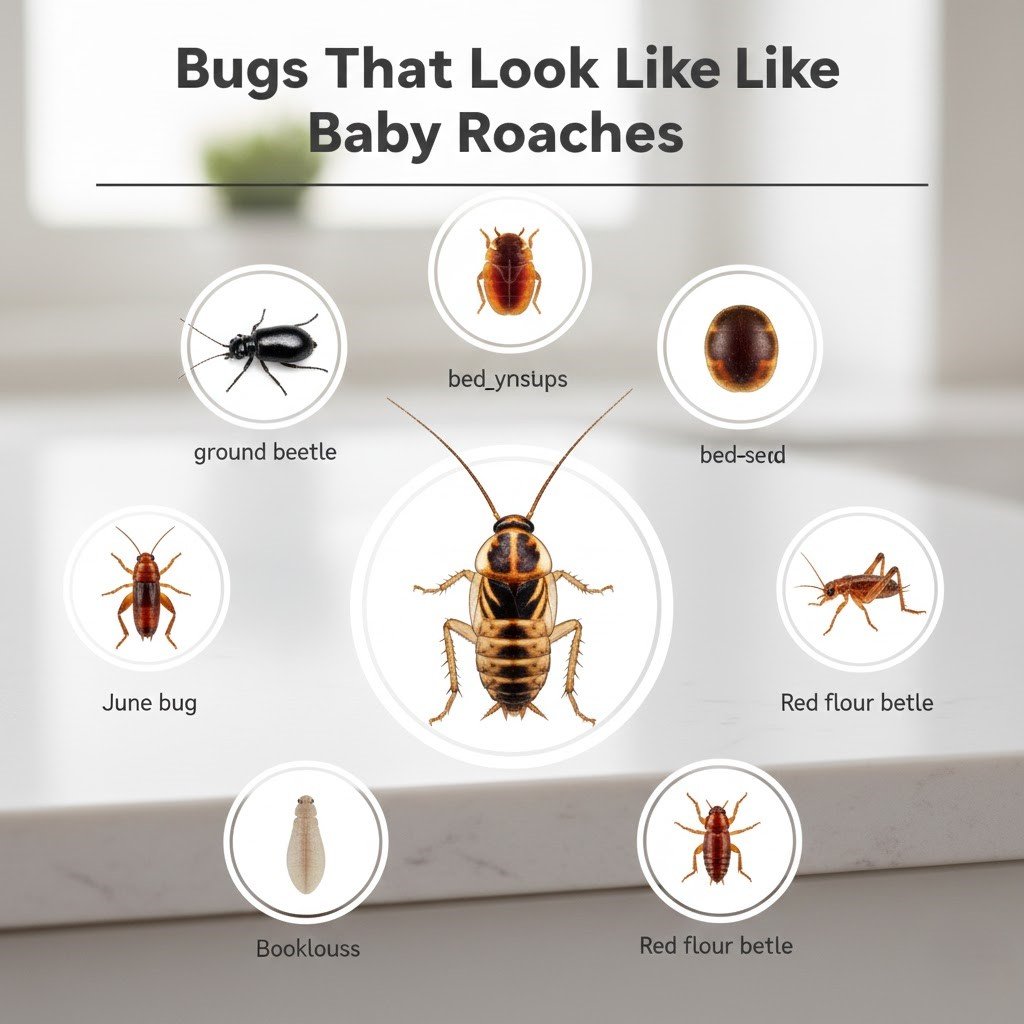
Waking up to find a tiny, brown insect crawling across your bedsheets, headboard, or bedroom baseboard is an immediate, heart-stopping moment. In the dim glow of a smartphone flashlight, a newly hatched baby cockroach (nymph) and an adult bed bug look terrifyingly similar.
Both are small, brownish, wingless crawlers that thrive under the cover of darkness.
However, misidentifying the pest will cost you weeks of frustration and hundreds—if not thousands—of dollars in wasted treatments.
- Treating a bed bug infestation with general roach foggers will scatter bed bugs deeper into your walls and adjoining rooms.
- Treating a German cockroach nest with mattress encasements and bed bug interceptor cups will leave the breeding roach colony completely untouched behind your kitchen appliances.
Here at babyroach.com, we’ve put together this definitive identification guide so you can diagnose the problem in seconds and deploy the right eradication protocol immediately.
Quick Comparison: Cockroach Nymph vs. Bed Bug
If you currently have a captured specimen in a clear cup, glass jar, or piece of tape, use this quick-reference matrix to identify it immediately:
| Feature | Baby Cockroach (Nymph) | Bed Bug (Cimex lectularius) |
| Body Shape | Cylindrical, elongated, oval-to-torpedo shaped | Flat, broad, oval (resembles an apple seed) |
| Color | Tan to dark brown; German nymphs have two dark parallel dorsal stripes | Mahogany to rust-red; deep crimson/bloated after feeding |
| Antennae | Very long, thin, whip-like (often longer than body) | Short, segmented (about half the length of head/thorax) |
| Rear Projections | Two small sensory prongs (cerci) on the tail end | Smooth, rounded rear abdomen (no cerci) |
| Movement | Extremely fast, erratic sprinter; darts toward cracks | Slow, steady, deliberate crawler; cannot sprint |
| Reaction to Light | Scatters instantly into hidden voids | Freezes or crawls slowly away to hide |
| Primary Food | Organic matter, food crumbs, grease, cardboard, hair | Human and mammal blood exclusively |
| Bite Symptoms | Do not bite sleeping humans (scavengers) | Clusters of itchy, red, raised welts (“breakfast, lunch, dinner” pattern) |
| Primary Habitat | Kitchens, bathrooms, moisture sources, warm electronics | Mattresses, box springs, headboards, bedframe joints |
Visual Differences: Shape, Color, and Anatomy
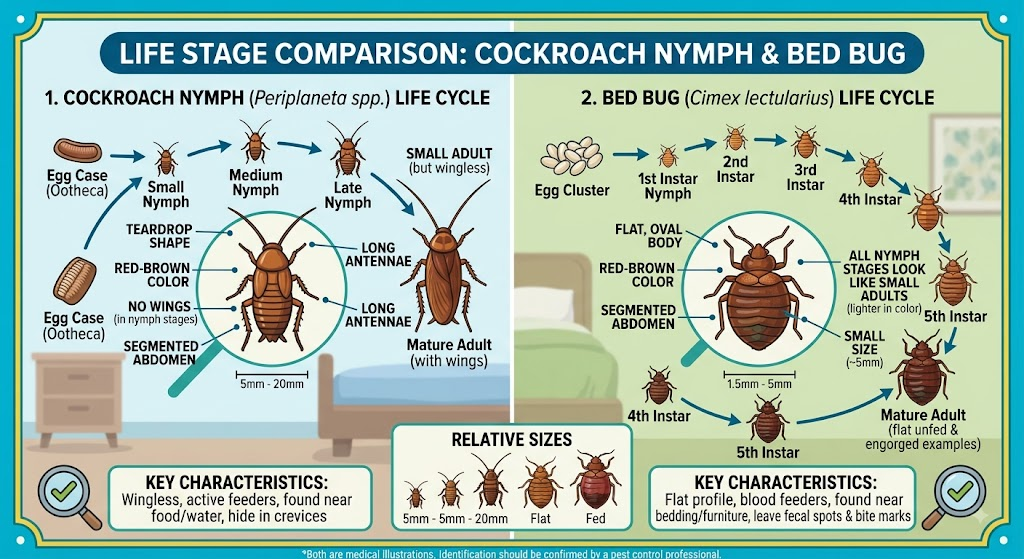
Examining the insect’s anatomical proportions under good lighting will give you an immediate answer.
1. Body Shape and Profile
- Bed Bug: Broad, horizontally flat, and shaped like a tear-drop or apple seed. When unfed, they are remarkably flat (like a piece of cardboard). When fully engorged on blood, their abdomen lengthens and swells into a rounded, torpedo-like cylinder.
- Cockroach Nymph: Slender, elongated, and oval-to-cylindrical. They maintain a slightly rounded dorsal profile regardless of whether they have recently eaten.
2. Antennae Length
- Bed Bug: Features short, distinct, four-segmented antennae that point forward and outward. They rarely exceed the length of the bug’s head and thorax combined.
- Cockroach Nymph: Features exceptionally long, thread-like antennae that constantly twitch and sweep the air. The antennae are often as long as—or longer than—their entire body.
3. The “Tail” Test (Cerci)
- Look closely at the rear tip of the insect’s abdomen.
- Cockroaches have two small, pointed sensory appendages extending outward from their rear called cerci.
- Bed bugs have a smooth, rounded posterior abdomen with no rear cerci.
4. Coloration and Pattern Markings
- German Cockroach Nymph: Starts dark brown or nearly black upon hatching, quickly developing a distinct light-tan/golden stripe down the center of its back, framed by two dark parallel bars running along the pronotum.
- Bed Bug: Uniform reddish-brown or rusty mahogany. If it has recently fed, you will see a dark, ruby-black blood pool visible through its translucent abdominal cuticle.
Behavioral Clues: Speed, Light, and Stealth
If you spot the bug moving across a surface, its behavior will instantly tell you what you’re dealing with:
Cockroach Nymphs: The Sprinters
- Speed: Cockroaches are among the fastest crawling insects on the planet relative to size. A nymph will dart across a nightstand or floor in a fraction of a second.
- Reaction to Light: When you flip on a bedroom switch, roach nymphs will instantly flee in panic, diving into baseboards, under base rugs, or behind electrical faceplates.
- Climbing Ability: Nymphs easily scale smooth vertical walls, metal legs, and plastic surfaces.
Bed Bugs: The Creepers
- Speed: Bed bugs move at a slow, plodding, steady pace—roughly comparable to an ant or ladybug. They lack the specialized leg musculature needed for sudden bursts of speed.
- Reaction to Light: Bed bugs are photophobic (they prefer darkness), but when exposed to sudden light, they do not sprint. They typically freeze or continue crawling at their standard, deliberate pace toward a seam.
- Climbing Ability: Bed bugs struggle on ultra-smooth surfaces (such as polished glass, porcelain, or slick plastic), which is why smooth plastic interceptor traps are so effective against them.
Location Context: Where Did You Spot It?
Where you found the insect provides 80% of the diagnostic context.
Why Finding a Roach in Bed Happens:
While finding a bed bug in your bed is expected, finding a baby cockroach in your bed can happen for two reasons:
- Extreme Infestation Overflow: When kitchen and bathroom colonies become overcrowded, nymphs wander along plumbing lines and wall voids into bedrooms searching for territory.
- Midnight Foraging: If you frequently eat snacks in bed or leave water cups on your nightstand, foraging roach nymphs will follow scent trails directly onto your sheets.
Secondary Evidence: Bites, Droppings, and Shells
If you couldn’t capture the bug, inspect your bedroom for physical evidence left behind.
1. Physical Bites on Your Skin
- Bed Bugs: Feed on blood while you sleep. Bites typically appear as intensely itchy, red, raised bumps arranged in lines or tight clusters of three to four (often nicknamed “breakfast, lunch, and dinner”).
- Cockroaches: Scavenge for decaying food, starch, and grease. They do not bite sleeping humans for sustenance. If you are waking up with itchy welts, you are almost certainly dealing with bed bugs, fleas, or mites.
2. Droppings and Markings
- Bed Bug Feces: Liquid digested blood that leaves smooth, inky-black or dark rust-colored spots on bedsheets, pillowcases, and mattress seams. These stains look like the tip of a fine-point black felt marker tapped onto fabric and will smear reddish when wiped with a damp cloth.
- Roach Nymph Feces: Resembles tiny, coarse black pepper specks or dark coffee grounds. They accumulate on hard surfaces, inside drawer corners, and along baseboard tracks.
3. Shed Skins (Exuviae)
- Both insects must molt to grow, leaving behind translucent amber exoskeletons.
- Bed bug skins retain the flat, round apple-seed shape and are found nested directly in mattress tufts and bedframe joints.
- Roach nymph skins are elongated, hollow cylinders found under appliances, in dark cabinet corners, and inside wall crevices.
Immediate Action Steps Based on Your Finding
Once you confirm the identity of the insect, execute the appropriate protocol immediately. Do not use generic supermarket bug bombs, which worsen both infestations.
If You Confirmed Bed Bugs:
- Isolate the Bed: Strip all sheets, blankets, and pillowcases; seal them in trash bags, and immediately wash and dry them on the highest heat setting for at least 45 minutes.
- Install Encasements: Encase your mattress and box spring in certified bed-bug-proof zippered covers to trap hidden bugs inside and eliminate hiding spots.
- Use Non-Repellents & Dusts: Apply an amorphous silica dust (like CimeXa) inside wall voids, bedframe joints, and baseboard cracks. For spray treatments, use professional non-repellent residuals (such as Crossfire or Alpine WSG).
If You Confirmed Roach Nymphs:
- Target the Kitchen & Bathrooms: Pull out the refrigerator, stove, and microwave. Clean every trace of standing grease, food residue, and water pooling.
- Apply Targeted Gel Baits: Place pea-sized dabs of professional cockroach bait (like Advion Cockroach Gel or Vendetta Plus) in hidden hinges, cabinet corners, and under sinks.
- Incorporate an IGR (Insect Growth Regulator): Use Gentrol Point Source or Pyriproxyfen discs to prevent surviving nymphs from developing into breeding adults.
Conclusion: Fast Identification Saves Your Sanity and Home
Discovering a mystery bug in your living quarters can trigger instant panic, but knowing whether you are battling a baby cockroach or a bed bug puts control back in your hands.
- A bed bug demands an immediate assault focused on the sleeping area—heat treatments, mattress encasements, and bed-safe residual insecticides.
- A cockroach nymph is a warning that an active breeding colony is nesting nearby—requiring immediate kitchen and plumbing sanitation, moisture control, and targeted gel baits.
Take a deep breath, verify the physical markers using this guide, secure a physical sample in a sealed plastic bag or piece of clear tape if you need professional verification, and deploy targeted treatments right away.
Frequently Asked Questions (FAQ)
1. Can a baby cockroach bite you while you sleep?
No. Cockroach nymphs do not seek out blood meals and do not have piercing mouthparts designed to bite humans. While an extremely heavy roach infestation may occasionally result in a foraging roach nibbling on dead skin flakes, eyelashes, or fingernails, they do not produce the red, itchy, allergic welts associated with bed bug bites.
2. Can baby cockroaches or bed bugs fly?
Neither baby cockroaches nor bed bugs can fly. Bed bugs only have vestigial wing pads and never develop functional wings at any lifecycle stage. Cockroach nymphs are completely wingless until their final molt into adulthood; even then, most common domestic roach species (like German cockroaches) rarely or never fly.
3. If I find just one baby cockroach in my bedroom, do I have an infestation?
Almost always, yes. Unlike adult cockroaches, which can occasionally wander in from outside through an open door or window, baby roach nymphs do not travel far from where their egg case (ootheca) hatched. Finding a nymph inside means an egg case hatched nearby within your living space, indicating an active breeding population.
4. Do bed bug sprays kill cockroach nymphs (and vice versa)?
Generally, no. Standard over-the-counter bed bug sprays rely on pyrethroids, to which German cockroaches have developed widespread genetic resistance. Conversely, spraying repellent roach insecticides around your bed will repel bed bugs, causing them to spread into other rooms rather than eliminating them. Always use products specifically formulated and labeled for the target pest.
5. What does a newly hatched bed bug look like compared to a baby roach?
A newly hatched bed bug nymph (first instar) is microscopic (about 1 mm), nearly translucent or pale straw-colored, and almost invisible until it feeds on blood and turns bright red. A newly hatched German roach nymph is roughly 2 to 3 mm long, dark brown to black, features long sweeping antennae, and runs rapidly immediately after emerging from the egg case.
6. Can diatomaceous earth kill both bed bugs and baby cockroaches?
Yes. Food-grade diatomaceous earth (DE) and engineered silica dusts (like CimeXa) damage the protective waxy outer cuticle of both bed bugs and cockroach nymphs, causing them to dehydrate and die within a few days. Apply it as an ultra-fine, barely visible dust inside dry baseboard crevices, wall voids, and behind furniture.
7. How can I safely catch a sample bug for an exterminator to examine?
Place a strip of clear packing tape or cellophane tape directly over the insect, pressing down gently so it adheres without crushing its anatomical features. Alternatively, invert a clear drinking glass over the insect, slide an index card underneath, and tip it into a sealable plastic sandwich bag. Store it in the freezer to preserve it for your pest management professional.